
Homework Answers
Add Answer to:
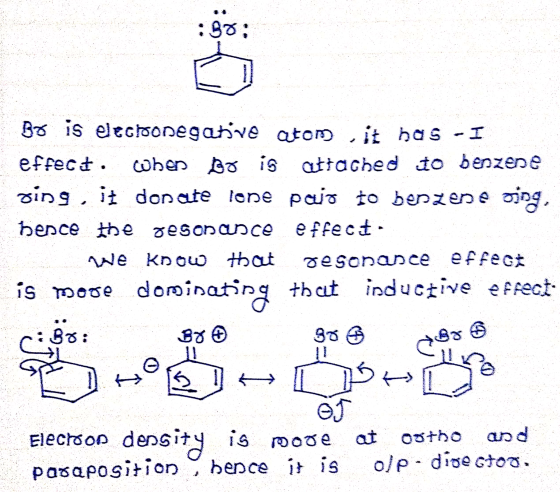
3. Explain how the electronics of a bromide on benzine can be both electron donaning and...
Can you explain basicity, and what makes a molecule a stronger base? How do electron withdrawing...
 Can
you explain basicity, and what makes a molecule a stronger base?
How do electron withdrawing groups such as sulfur or phosphorus
affect it?
Select the strongest base w eakp s cohjL9qte ACIP Li LiOH CH3OLİ 5. Rank the following compounds from the strongest base to the weakest base. Li IV
Can
you explain basicity, and what makes a molecule a stronger base?
How do electron withdrawing groups such as sulfur or phosphorus
affect it?
Select the strongest base w eakp s cohjL9qte ACIP Li LiOH CH3OLİ 5. Rank the following compounds from the strongest base to the weakest base. Li IV
Which is a stronger acid? Must explain with both, words and structures. Which is a stronger...
 Which is a stronger acid? Must explain with both, words and
structures.
Which is a stronger base? Must explain with both, words and
structures.
. Propose a mechanism for the following reaction:
2. a) Which is a stronger acid? Must explain with both, words and structures.10 pts. LOH OH 8 or b) Which is a stronger base? Must explain with both, words and structures. 5 pts. 3. Propose a mechanism for the following reaction: 15 pts. OH CH, CH H2SO4...
Which is a stronger acid? Must explain with both, words and
structures.
Which is a stronger base? Must explain with both, words and
structures.
. Propose a mechanism for the following reaction:
2. a) Which is a stronger acid? Must explain with both, words and structures.10 pts. LOH OH 8 or b) Which is a stronger base? Must explain with both, words and structures. 5 pts. 3. Propose a mechanism for the following reaction: 15 pts. OH CH, CH H2SO4...
Question 3 1s 3 ORTHO Today we learned about adding a second group to a mono-substituted...
 Question 3
1s 3 ORTHO Today we learned about adding a second group to a mono-substituted benzene ring. Any group on a benzene will affect the rate of the reaction (activated or deactivated relative to benzene) and the regioselectivity Where does the electrophile add? Ortho? Meta? Para? Some combination thereof? We found that EDGs (electron-donating groups) direct the electrophile to the ortho and para positions while EWGs (electron-withdrawing groups) direct the electrophile to the meta position. Now, it is time...
Question 3
1s 3 ORTHO Today we learned about adding a second group to a mono-substituted benzene ring. Any group on a benzene will affect the rate of the reaction (activated or deactivated relative to benzene) and the regioselectivity Where does the electrophile add? Ortho? Meta? Para? Some combination thereof? We found that EDGs (electron-donating groups) direct the electrophile to the ortho and para positions while EWGs (electron-withdrawing groups) direct the electrophile to the meta position. Now, it is time...
Please help me to find the answer Challenge Problem 08.94 9-Borabicyclo[3.3.1]nonane (9-BBN) is a reagent commonly...
 Please help me to find the answer
Challenge Problem 08.94 9-Borabicyclo[3.3.1]nonane (9-BBN) is a reagent commonly used in the hydroboration of alkynes, but it can also be employed in reactions with alkenes. The following table provides the relative rates of hydroboration (using 9-BBN) for a variety of alkenes (J. Am. Chem. Soc. 1989, 111, 1414-1418) : Relative Reactivity Alkenes CH—CHОBU, 1 CH2 CHBu, 2 CH2-CHCH2OMe, 3 CH CHOAC, 4 CH2 CHCH2OAC, 5 сH—CHCH,CN, 6 CH2 CHCH2C, 7 cis-2-Butene, 8 tans-CH,CH,CHСHC,...
Please help me to find the answer
Challenge Problem 08.94 9-Borabicyclo[3.3.1]nonane (9-BBN) is a reagent commonly used in the hydroboration of alkynes, but it can also be employed in reactions with alkenes. The following table provides the relative rates of hydroboration (using 9-BBN) for a variety of alkenes (J. Am. Chem. Soc. 1989, 111, 1414-1418) : Relative Reactivity Alkenes CH—CHОBU, 1 CH2 CHBu, 2 CH2-CHCH2OMe, 3 CH CHOAC, 4 CH2 CHCH2OAC, 5 сH—CHCH,CN, 6 CH2 CHCH2C, 7 cis-2-Butene, 8 tans-CH,CH,CHСHC,...
Can someone explain to me how to solve these. I dont understand how these answers are correct. II. (16/100) Which struct...
 Can someone explain to me how to solve these. I dont understand
how these answers are correct.
II. (16/100) Which structures represent likely products of the following reactions? Circle the letters corresponding to the structures of your choice. Each wrong answer will receive negative points. NC - ایک عام سا محلاه بعد - پوس-HC | ء Br , H2O H3CH2COH-3-2 methylene H CH H- CH, HgCCHCH CECHCH HgCHCCH CH3
Can someone explain to me how to solve these. I dont understand
how these answers are correct.
II. (16/100) Which structures represent likely products of the following reactions? Circle the letters corresponding to the structures of your choice. Each wrong answer will receive negative points. NC - ایک عام سا محلاه بعد - پوس-HC | ء Br , H2O H3CH2COH-3-2 methylene H CH H- CH, HgCCHCH CECHCH HgCHCCH CH3
OH- and CN- are both Brønsted bases, and both can form complexes with metal ions. Explain...
OH- and CN- are both Brønsted bases, and both can form complexes with metal ions. Explain how OH- can be a much stronger Brønsted base than CN-, and at the same time much lower in the spectrochemical series.
The mixture of dimethylsulfoxide (DMSO) and hydrobromic acid results in the formation of bromodimethylsulfonium bromide, which...
 The mixture of dimethylsulfoxide (DMSO) and hydrobromic acid
results in the formation of bromodimethylsulfonium bromide, which
can serves as a source of electrophilic bromine.
Draw the complete mechanism to generate the major product. Your
mechanism should include: generation of the active halogenating
species and the steps to provide the stable product, proper arrows,
formal charges, and labels for the rate-determining step. You
should also draw all important resonance structures for any
reaction intermediate(s).
active brominating species Br Br Br HBr...
The mixture of dimethylsulfoxide (DMSO) and hydrobromic acid
results in the formation of bromodimethylsulfonium bromide, which
can serves as a source of electrophilic bromine.
Draw the complete mechanism to generate the major product. Your
mechanism should include: generation of the active halogenating
species and the steps to provide the stable product, proper arrows,
formal charges, and labels for the rate-determining step. You
should also draw all important resonance structures for any
reaction intermediate(s).
active brominating species Br Br Br HBr...
Using resonance structures as part of your answer, explain why Br in bromobenzene is: a. A...
 Using resonance structures as part of your answer, explain why Br in bromobenzene is: a. A mild ring deactivator b. An o-, p-director. [Note: It is not enough to use resonance structures from part "a" to "prove" part "b". One must show that o-, p-attack is faster, i.e. has lower Ea (AGa) by actually showing an electrophile, e.g. the generalized E+, attacking at the o-, m-& p-positions and, using Hammond's Principle, explain why the o-, p-attacks are favored.] Explain what...
Resonance delocalization can also be used to rationalize the stability of cations (empty p-orbitals). Note that...
 Resonance delocalization can also be used to rationalize the
stability of cations (empty p-orbitals). Note that in the following
series of molecules the order of stability is D<E<F.
a) If the difference in stability was entirely due to
the inductive effect (the polarization of bonds by electron
withdrawing groups) what would be the expected order of stability
of the above cations? [Hint: Draw all bond dipoles for the above
molecules. Do any of the bond dipoles enhance the positive charge...
Resonance delocalization can also be used to rationalize the
stability of cations (empty p-orbitals). Note that in the following
series of molecules the order of stability is D<E<F.
a) If the difference in stability was entirely due to
the inductive effect (the polarization of bonds by electron
withdrawing groups) what would be the expected order of stability
of the above cations? [Hint: Draw all bond dipoles for the above
molecules. Do any of the bond dipoles enhance the positive charge...
please explain how you got all your answers 20. Calculate the MOLAR SOLUBILITY of silver bromide...
 please explain how you got all your answers
20. Calculate the MOLAR SOLUBILITY of silver bromide (Kp - 5.40 x 10¹³) in 1.0 M NH. Complex ion [Ag(NHs)2] can be formed (K, 1.70 x 10). Ag(NH,) (aq)+ Br' (aq) Overall Reaction: AgBr(s)+2 NH,(aq) 21. The pH of a 0.0412 M solution of a monoprotic acid is 1.39. Is this a STRONG ACID? a. Yes b. No c. Not enough information d. Unknown
please explain how you got all your answers
20. Calculate the MOLAR SOLUBILITY of silver bromide (Kp - 5.40 x 10¹³) in 1.0 M NH. Complex ion [Ag(NHs)2] can be formed (K, 1.70 x 10). Ag(NH,) (aq)+ Br' (aq) Overall Reaction: AgBr(s)+2 NH,(aq) 21. The pH of a 0.0412 M solution of a monoprotic acid is 1.39. Is this a STRONG ACID? a. Yes b. No c. Not enough information d. Unknown
 Can
you explain basicity, and what makes a molecule a stronger base?
How do electron withdrawing groups such as sulfur or phosphorus
affect it?
Select the strongest base w eakp s cohjL9qte ACIP Li LiOH CH3OLİ 5. Rank the following compounds from the strongest base to the weakest base. Li IV
Can
you explain basicity, and what makes a molecule a stronger base?
How do electron withdrawing groups such as sulfur or phosphorus
affect it?
Select the strongest base w eakp s cohjL9qte ACIP Li LiOH CH3OLİ 5. Rank the following compounds from the strongest base to the weakest base. Li IV
 Which is a stronger acid? Must explain with both, words and
structures.
Which is a stronger base? Must explain with both, words and
structures.
. Propose a mechanism for the following reaction:
2. a) Which is a stronger acid? Must explain with both, words and structures.10 pts. LOH OH 8 or b) Which is a stronger base? Must explain with both, words and structures. 5 pts. 3. Propose a mechanism for the following reaction: 15 pts. OH CH, CH H2SO4...
Which is a stronger acid? Must explain with both, words and
structures.
Which is a stronger base? Must explain with both, words and
structures.
. Propose a mechanism for the following reaction:
2. a) Which is a stronger acid? Must explain with both, words and structures.10 pts. LOH OH 8 or b) Which is a stronger base? Must explain with both, words and structures. 5 pts. 3. Propose a mechanism for the following reaction: 15 pts. OH CH, CH H2SO4...
 Question 3
1s 3 ORTHO Today we learned about adding a second group to a mono-substituted benzene ring. Any group on a benzene will affect the rate of the reaction (activated or deactivated relative to benzene) and the regioselectivity Where does the electrophile add? Ortho? Meta? Para? Some combination thereof? We found that EDGs (electron-donating groups) direct the electrophile to the ortho and para positions while EWGs (electron-withdrawing groups) direct the electrophile to the meta position. Now, it is time...
Question 3
1s 3 ORTHO Today we learned about adding a second group to a mono-substituted benzene ring. Any group on a benzene will affect the rate of the reaction (activated or deactivated relative to benzene) and the regioselectivity Where does the electrophile add? Ortho? Meta? Para? Some combination thereof? We found that EDGs (electron-donating groups) direct the electrophile to the ortho and para positions while EWGs (electron-withdrawing groups) direct the electrophile to the meta position. Now, it is time...
 Please help me to find the answer
Challenge Problem 08.94 9-Borabicyclo[3.3.1]nonane (9-BBN) is a reagent commonly used in the hydroboration of alkynes, but it can also be employed in reactions with alkenes. The following table provides the relative rates of hydroboration (using 9-BBN) for a variety of alkenes (J. Am. Chem. Soc. 1989, 111, 1414-1418) : Relative Reactivity Alkenes CH—CHОBU, 1 CH2 CHBu, 2 CH2-CHCH2OMe, 3 CH CHOAC, 4 CH2 CHCH2OAC, 5 сH—CHCH,CN, 6 CH2 CHCH2C, 7 cis-2-Butene, 8 tans-CH,CH,CHСHC,...
Please help me to find the answer
Challenge Problem 08.94 9-Borabicyclo[3.3.1]nonane (9-BBN) is a reagent commonly used in the hydroboration of alkynes, but it can also be employed in reactions with alkenes. The following table provides the relative rates of hydroboration (using 9-BBN) for a variety of alkenes (J. Am. Chem. Soc. 1989, 111, 1414-1418) : Relative Reactivity Alkenes CH—CHОBU, 1 CH2 CHBu, 2 CH2-CHCH2OMe, 3 CH CHOAC, 4 CH2 CHCH2OAC, 5 сH—CHCH,CN, 6 CH2 CHCH2C, 7 cis-2-Butene, 8 tans-CH,CH,CHСHC,...
 Can someone explain to me how to solve these. I dont understand
how these answers are correct.
II. (16/100) Which structures represent likely products of the following reactions? Circle the letters corresponding to the structures of your choice. Each wrong answer will receive negative points. NC - ایک عام سا محلاه بعد - پوس-HC | ء Br , H2O H3CH2COH-3-2 methylene H CH H- CH, HgCCHCH CECHCH HgCHCCH CH3
Can someone explain to me how to solve these. I dont understand
how these answers are correct.
II. (16/100) Which structures represent likely products of the following reactions? Circle the letters corresponding to the structures of your choice. Each wrong answer will receive negative points. NC - ایک عام سا محلاه بعد - پوس-HC | ء Br , H2O H3CH2COH-3-2 methylene H CH H- CH, HgCCHCH CECHCH HgCHCCH CH3
 The mixture of dimethylsulfoxide (DMSO) and hydrobromic acid
results in the formation of bromodimethylsulfonium bromide, which
can serves as a source of electrophilic bromine.
Draw the complete mechanism to generate the major product. Your
mechanism should include: generation of the active halogenating
species and the steps to provide the stable product, proper arrows,
formal charges, and labels for the rate-determining step. You
should also draw all important resonance structures for any
reaction intermediate(s).
active brominating species Br Br Br HBr...
The mixture of dimethylsulfoxide (DMSO) and hydrobromic acid
results in the formation of bromodimethylsulfonium bromide, which
can serves as a source of electrophilic bromine.
Draw the complete mechanism to generate the major product. Your
mechanism should include: generation of the active halogenating
species and the steps to provide the stable product, proper arrows,
formal charges, and labels for the rate-determining step. You
should also draw all important resonance structures for any
reaction intermediate(s).
active brominating species Br Br Br HBr...
 Using resonance structures as part of your answer, explain why Br in bromobenzene is: a. A mild ring deactivator b. An o-, p-director. [Note: It is not enough to use resonance structures from part "a" to "prove" part "b". One must show that o-, p-attack is faster, i.e. has lower Ea (AGa) by actually showing an electrophile, e.g. the generalized E+, attacking at the o-, m-& p-positions and, using Hammond's Principle, explain why the o-, p-attacks are favored.] Explain what...
 Resonance delocalization can also be used to rationalize the
stability of cations (empty p-orbitals). Note that in the following
series of molecules the order of stability is D<E<F.
a) If the difference in stability was entirely due to
the inductive effect (the polarization of bonds by electron
withdrawing groups) what would be the expected order of stability
of the above cations? [Hint: Draw all bond dipoles for the above
molecules. Do any of the bond dipoles enhance the positive charge...
Resonance delocalization can also be used to rationalize the
stability of cations (empty p-orbitals). Note that in the following
series of molecules the order of stability is D<E<F.
a) If the difference in stability was entirely due to
the inductive effect (the polarization of bonds by electron
withdrawing groups) what would be the expected order of stability
of the above cations? [Hint: Draw all bond dipoles for the above
molecules. Do any of the bond dipoles enhance the positive charge...
 please explain how you got all your answers
20. Calculate the MOLAR SOLUBILITY of silver bromide (Kp - 5.40 x 10¹³) in 1.0 M NH. Complex ion [Ag(NHs)2] can be formed (K, 1.70 x 10). Ag(NH,) (aq)+ Br' (aq) Overall Reaction: AgBr(s)+2 NH,(aq) 21. The pH of a 0.0412 M solution of a monoprotic acid is 1.39. Is this a STRONG ACID? a. Yes b. No c. Not enough information d. Unknown
please explain how you got all your answers
20. Calculate the MOLAR SOLUBILITY of silver bromide (Kp - 5.40 x 10¹³) in 1.0 M NH. Complex ion [Ag(NHs)2] can be formed (K, 1.70 x 10). Ag(NH,) (aq)+ Br' (aq) Overall Reaction: AgBr(s)+2 NH,(aq) 21. The pH of a 0.0412 M solution of a monoprotic acid is 1.39. Is this a STRONG ACID? a. Yes b. No c. Not enough information d. Unknown
Most questions answered within 3 hours.
-
Where is the error in this code sequence?
String s1 = "Hello";
String s2 = "ello";...
asked 10 months ago -
Financial data for Joel de Paris, Inc., for last year
follow:
Joel de Paris, Inc.
Balance...
asked 10 months ago -
Consider this reaction:
Al2(SO4)3 (aq)+ BaCl3
(aq) Al2Cl6 (aq)- +
3BaSO4(s) . What is the...
asked 10 months ago -
Suppose that Savneet is considering increasing her
recent random sample from 20 car rentals to 40...
asked 10 months ago -
Trucks arrive at an unloading terminal at an average rate of 120
per hour.
Trucks arrive...
asked 10 months ago -
Why are methanol and ethanol completely soluble in water while
octanol is not very little soluble....
asked 10 months ago -
A facilities manager at a university reads in a research report
that the mean amount of...
asked 10 months ago -
When the CuSO4 is rehydrated by adding water to the anhydrous
compound, is this an endothermic...
asked 10 months ago -
A ray of sunlight is passing from diamond into crown glass; the
angle of incidence is...
asked 10 months ago -
A block of mass 0.249 kg is placed on top of a light, vertical
spring of...
asked 10 months ago -
how do the kidneys compensate in the presences of acidosis
a) trigger hyperventilate
b) reserve acid...
asked 10 months ago -
Question 501 pts
The rental rate of capital to the firm increases. Which of the
following...
asked 10 months ago