
Homework Answers
a) Materials for use in manufacturing
Direct supplies can be defined as the act of acquiring raw materials usually in large quantities for production. These purchases are made frequently and are necessary for key business activities that directly impact business activities. Raw Materials are important in the manufacturing sector to produce goods and services. Without these materials, the business cannot conduct its operations at all. The rest of the options are indirect supplies since they merely increase the efficiency of the activities but do not directly impact the functions and profitability of the business.
Add Answer to:
Question 1 (1 point) Which of the following are direct supplies? Oa) Materials for use in...
5.) Which of the following is an example of a direct cost? A.) Raw materials applied...
 5.) Which of the following is an example of a direct cost? A.) Raw materials applied to a house during construction. B.) Labor for the sales department, trying to specifically sale house 1. C.) Labor for the cleanup crew. D.) Materials in the warehouse that is divided into the different projects (i.e. house 1, house 2, etc.) 6.) Which of the following accounts represents the costs associated with goods that were completed and sold? A.) Cost of Goods Sold. B.)...
I. Match: Determine whether each of the following is classified as a. Direct Materials b. Direct...
 I. Match: Determine whether each of the following is classified as a. Direct Materials b. Direct labor c. Manufacturing overhead. Write the appropriate letter in the space provided. A Factory machinery lubricants B. Depreciation on manufacturing building D. Wood used in manufacturing furniture C. Assembly line worker's wages Salaries for the night security guards for the factory building Glue, nails and other small parts used in production Insurance on factory machines Factory supervisor's salaries Metal used in manufacturing process -...
15) Which of the following costs is not included in factory overhead? A) Direct materials. B)...
 15) Which of the following costs is not included in factory overhead? A) Direct materials. B) Indirect labor. C) Payroll taxes on the wages of factory supervisors. D) Manufacturing supplies used. E) Depreciation of manufacturing equipment. D-3
Purchased $24,500 of materials on account. Issued $1,450 of supplies from the materials inventory. Purchased $25,900...
Purchased $24,500 of materials on account. Issued $1,450 of supplies from the materials inventory. Purchased $25,900 of materials on account. Paid for the materials purchased in transaction (1) using cash. Issued $30,900 in direct materials to the production department. Incurred direct labor costs of $29,500, which were credited to Wages Payable. Paid $22,400 cash for utilities, power, equipment maintenance, and other miscellaneous items for the manufacturing shop. Applied overhead on the basis of 120 percent of direct labor costs. Recognized...
determine period or product cost if a product cost which type direct labor, direct materials, or...
 determine period or product cost
if
a product cost which type direct labor, direct materials, or
factory overhead
Commissions to sales representatives Period Cost Payroll department salaries Select One Maintenance of factory equipment Select One VP of Manufacturing salary Select One Accounting department office supplies Select One Factory rent Select One Factory utilities Select One Wages of assembly line workers Select One Factory janitorial services Select One Factory supplies Select One Leather for bicycle seats Select One Depreciation of office...
determine period or product cost
if
a product cost which type direct labor, direct materials, or
factory overhead
Commissions to sales representatives Period Cost Payroll department salaries Select One Maintenance of factory equipment Select One VP of Manufacturing salary Select One Accounting department office supplies Select One Factory rent Select One Factory utilities Select One Wages of assembly line workers Select One Factory janitorial services Select One Factory supplies Select One Leather for bicycle seats Select One Depreciation of office...
Which of the following is not a product cost: Select one: A. Direct Materials B. Indirect...
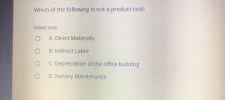 Which of the following is not a product cost: Select one: A. Direct Materials B. Indirect Labor o C. Depreciation of the office building D. Factory Maintenance
Wilson Manufacturing reports the following costs and expenses in June 2015. Indirect materials $ 900 Direct...
 Wilson Manufacturing reports the following costs and expenses in June 2015. Indirect materials $ 900 Direct labor $11,000 Depreciation on manufacturing Property taxes on factory building 2,100 equipment 11,000 Office equipment Indirect labor 3,000 repairs 300 Property taxes on office Office supplies 650 building 870 Factory utilities 1,490 CEO salary 12,000 Repairs on manufacturing Direct materials 13,200 equipment 2,180 Instructions Determine the total amount of (a) manufacturing overhead costs, (b) other product costs and (c) period costs.
Question 5 (1 point) Which of the following statements is correct? OA) The use of debt...
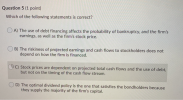 Question 5 (1 point) Which of the following statements is correct? OA) The use of debt financing affects the probability of bankruptcy, and the firm's earnings, as well as the firm's stock price. B) The riskiness of projected earnings and cash flows to stockholders does not depend on how the firm is financed. C) Stock prices are dependent on projected total cash flows and the use of debt, but not on the timing of the cash flow stream. D) The...
20. Costs other than direct materials cost and direct labor cost incurred in the manufacturing process...
 20. Costs other than direct materials cost and direct labor cost incurred in the manufacturing process are classified as a. factory overhead cost b. miscellaneous expense c. product costs d. period cost 21. Which of the following is an example of a factory overhead cost? a. repair and maintenance cost on the administrative building b. factory heating and lighting cost e. insurance premiums on salespersons' automobiles d. president's salary 22. Prime costs are a direct materials and factory overhead b....
Create an overview diagram SRS COST DATA Direct materials and supplies purchased on credit: $800 Direct...
 Create an overview diagram
SRS COST DATA Direct materials and supplies purchased on credit: $800 Direct materials used: $710 Indirect materials issued to various production departments: $100 Direct manufacturing labor: S1,300 Indirect manufacturing labor incurred by various production departments: $900 Depreciation on building and manufacturing equipment: $400 Miscellaneous manufacturing overhead incurred by various production departments:$550 o (Ordinarily, this would be detailed as repairs, photocopying, utilities, etc.) Manufacturing overhead allocated at 160% of direct manufacturing labor costs: ? Cost of goods...
Create an overview diagram
SRS COST DATA Direct materials and supplies purchased on credit: $800 Direct materials used: $710 Indirect materials issued to various production departments: $100 Direct manufacturing labor: S1,300 Indirect manufacturing labor incurred by various production departments: $900 Depreciation on building and manufacturing equipment: $400 Miscellaneous manufacturing overhead incurred by various production departments:$550 o (Ordinarily, this would be detailed as repairs, photocopying, utilities, etc.) Manufacturing overhead allocated at 160% of direct manufacturing labor costs: ? Cost of goods...
 5.) Which of the following is an example of a direct cost? A.) Raw materials applied to a house during construction. B.) Labor for the sales department, trying to specifically sale house 1. C.) Labor for the cleanup crew. D.) Materials in the warehouse that is divided into the different projects (i.e. house 1, house 2, etc.) 6.) Which of the following accounts represents the costs associated with goods that were completed and sold? A.) Cost of Goods Sold. B.)...
 I. Match: Determine whether each of the following is classified as a. Direct Materials b. Direct labor c. Manufacturing overhead. Write the appropriate letter in the space provided. A Factory machinery lubricants B. Depreciation on manufacturing building D. Wood used in manufacturing furniture C. Assembly line worker's wages Salaries for the night security guards for the factory building Glue, nails and other small parts used in production Insurance on factory machines Factory supervisor's salaries Metal used in manufacturing process -...
 15) Which of the following costs is not included in factory overhead? A) Direct materials. B) Indirect labor. C) Payroll taxes on the wages of factory supervisors. D) Manufacturing supplies used. E) Depreciation of manufacturing equipment. D-3
 determine period or product cost
if
a product cost which type direct labor, direct materials, or
factory overhead
Commissions to sales representatives Period Cost Payroll department salaries Select One Maintenance of factory equipment Select One VP of Manufacturing salary Select One Accounting department office supplies Select One Factory rent Select One Factory utilities Select One Wages of assembly line workers Select One Factory janitorial services Select One Factory supplies Select One Leather for bicycle seats Select One Depreciation of office...
determine period or product cost
if
a product cost which type direct labor, direct materials, or
factory overhead
Commissions to sales representatives Period Cost Payroll department salaries Select One Maintenance of factory equipment Select One VP of Manufacturing salary Select One Accounting department office supplies Select One Factory rent Select One Factory utilities Select One Wages of assembly line workers Select One Factory janitorial services Select One Factory supplies Select One Leather for bicycle seats Select One Depreciation of office...
 Which of the following is not a product cost: Select one: A. Direct Materials B. Indirect Labor o C. Depreciation of the office building D. Factory Maintenance
 Wilson Manufacturing reports the following costs and expenses in June 2015. Indirect materials $ 900 Direct labor $11,000 Depreciation on manufacturing Property taxes on factory building 2,100 equipment 11,000 Office equipment Indirect labor 3,000 repairs 300 Property taxes on office Office supplies 650 building 870 Factory utilities 1,490 CEO salary 12,000 Repairs on manufacturing Direct materials 13,200 equipment 2,180 Instructions Determine the total amount of (a) manufacturing overhead costs, (b) other product costs and (c) period costs.
 Question 5 (1 point) Which of the following statements is correct? OA) The use of debt financing affects the probability of bankruptcy, and the firm's earnings, as well as the firm's stock price. B) The riskiness of projected earnings and cash flows to stockholders does not depend on how the firm is financed. C) Stock prices are dependent on projected total cash flows and the use of debt, but not on the timing of the cash flow stream. D) The...
 20. Costs other than direct materials cost and direct labor cost incurred in the manufacturing process are classified as a. factory overhead cost b. miscellaneous expense c. product costs d. period cost 21. Which of the following is an example of a factory overhead cost? a. repair and maintenance cost on the administrative building b. factory heating and lighting cost e. insurance premiums on salespersons' automobiles d. president's salary 22. Prime costs are a direct materials and factory overhead b....
 Create an overview diagram
SRS COST DATA Direct materials and supplies purchased on credit: $800 Direct materials used: $710 Indirect materials issued to various production departments: $100 Direct manufacturing labor: S1,300 Indirect manufacturing labor incurred by various production departments: $900 Depreciation on building and manufacturing equipment: $400 Miscellaneous manufacturing overhead incurred by various production departments:$550 o (Ordinarily, this would be detailed as repairs, photocopying, utilities, etc.) Manufacturing overhead allocated at 160% of direct manufacturing labor costs: ? Cost of goods...
Create an overview diagram
SRS COST DATA Direct materials and supplies purchased on credit: $800 Direct materials used: $710 Indirect materials issued to various production departments: $100 Direct manufacturing labor: S1,300 Indirect manufacturing labor incurred by various production departments: $900 Depreciation on building and manufacturing equipment: $400 Miscellaneous manufacturing overhead incurred by various production departments:$550 o (Ordinarily, this would be detailed as repairs, photocopying, utilities, etc.) Manufacturing overhead allocated at 160% of direct manufacturing labor costs: ? Cost of goods...
Most questions answered within 3 hours.
-
Where is the error in this code sequence?
String s1 = "Hello";
String s2 = "ello";...
asked 11 months ago -
Financial data for Joel de Paris, Inc., for last year
follow:
Joel de Paris, Inc.
Balance...
asked 11 months ago -
Consider this reaction:
Al2(SO4)3 (aq)+ BaCl3
(aq) Al2Cl6 (aq)- +
3BaSO4(s) . What is the...
asked 11 months ago -
Suppose that Savneet is considering increasing her
recent random sample from 20 car rentals to 40...
asked 11 months ago -
Trucks arrive at an unloading terminal at an average rate of 120
per hour.
Trucks arrive...
asked 11 months ago -
Why are methanol and ethanol completely soluble in water while
octanol is not very little soluble....
asked 11 months ago -
A facilities manager at a university reads in a research report
that the mean amount of...
asked 11 months ago -
When the CuSO4 is rehydrated by adding water to the anhydrous
compound, is this an endothermic...
asked 11 months ago -
A ray of sunlight is passing from diamond into crown glass; the
angle of incidence is...
asked 11 months ago -
A block of mass 0.249 kg is placed on top of a light, vertical
spring of...
asked 11 months ago -
how do the kidneys compensate in the presences of acidosis
a) trigger hyperventilate
b) reserve acid...
asked 11 months ago -
Question 501 pts
The rental rate of capital to the firm increases. Which of the
following...
asked 11 months ago