homework
1.) reaction of propanal with tollen's regent
2.) reduction of cyclopropanone using a palladium catalyst
Homework Answers
Request Answer!
We need at least 10 more requests to produce the answer.
0 / 10 have requested this problem solution
The more requests, the faster the answer.
ela Lasica: Attemp Question 8 (1 point) The following reaction uses palladium, Pd, as a catalyst:...
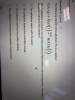 ela Lasica: Attemp Question 8 (1 point) The following reaction uses palladium, Pd, as a catalyst: co2 (g)+ Ho( d Hco, (1) (Pd) When palladium is absent, the reaction produces little product, even at long times. How does palladium influence the reaction? The palladium reacts with the water. The palladium lowers the activation energy. The palladium purifies the carbon dioxide. The palladium increases the reaction temperature. Save
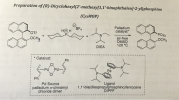
draw the mechanism of following reaction Preparation of (R)-Dicyclohexyl(2'-methoxy[1,1'-binaphthalen]-2-yl)phosphine (CyzMOP) BF4 HOH Palladium catalyst* OTf PCY2...
 draw the mechanism of following reaction
Preparation of (R)-Dicyclohexyl(2'-methoxy[1,1'-binaphthalen]-2-yl)phosphine (CyzMOP) BF4 HOH Palladium catalyst* OTf PCY2 + OCH3 air-free DMSO 120 °C DIEA Catalyst: Ph CI - Pd Pd- Ph Ligand Pd Source palladium -cinnamyl chloride dimer 1,1bis(disopropyphosphino) ferrocene DIPPF
Preparation of (R)-Dicyclohexyl(2'-methoxy[1,1'-binaphthalen]-2-yl)phosphine (CyzMOP) BF4 HOH Palladium catalyst* OTf PCY2 + OCH3 air-free DMSO 120 °C DIEA Catalyst: Ph CI - Pd Pd- Ph Ligand Pd Source palladium -cinnamyl chloride dimer 1,1bis(disopropyphosphino) ferrocene DIPPF
draw the mechanism of following reaction
Preparation of (R)-Dicyclohexyl(2'-methoxy[1,1'-binaphthalen]-2-yl)phosphine (CyzMOP) BF4 HOH Palladium catalyst* OTf PCY2 + OCH3 air-free DMSO 120 °C DIEA Catalyst: Ph CI - Pd Pd- Ph Ligand Pd Source palladium -cinnamyl chloride dimer 1,1bis(disopropyphosphino) ferrocene DIPPF
Preparation of (R)-Dicyclohexyl(2'-methoxy[1,1'-binaphthalen]-2-yl)phosphine (CyzMOP) BF4 HOH Palladium catalyst* OTf PCY2 + OCH3 air-free DMSO 120 °C DIEA Catalyst: Ph CI - Pd Pd- Ph Ligand Pd Source palladium -cinnamyl chloride dimer 1,1bis(disopropyphosphino) ferrocene DIPPF
Is the following reaction reversible, and if, under what conditions? The reaction is irreversible Yes, under...
 Is the following reaction reversible, and if, under what conditions? The reaction is irreversible Yes, under acidic conditions Yes, under basic conditions Yes, using hydrogen and palladium/carbon as catalyst
Palladium Acetate, Pd(OAC) is a common palladium catalyst and is the starting material used in the...
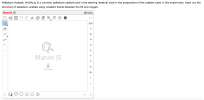 Palladium Acetate, Pd(OAC) is a common palladium catalyst and is the starting material used in the preparation of the catalyst used in this experiment. Draw out the structure of palladium acetate using covalent bonds between the Pd and oxygen. Marvin JS Help Iz oo - . Marvin JS Chemtxon ( 10000
provide the mechanism for the following reaction 4. Show the detailed mechanism for the following reduction...
 provide the mechanism for the following reaction
4. Show the detailed mechanism for the following reduction of propanenitrile to propanal using DIBAH in toluene. H₃C EN 1) DIBAH, Toluene, -78°C 2) H+, H,0 H₂C 0 + NH₃
provide the mechanism for the following reaction
4. Show the detailed mechanism for the following reduction of propanenitrile to propanal using DIBAH in toluene. H₃C EN 1) DIBAH, Toluene, -78°C 2) H+, H,0 H₂C 0 + NH₃
4. Provide reasonable products or reactants for the reactions below. (a) (reaction of aldehyde/ketone) H' Η...
 4. Provide reasonable products or reactants for the reactions below. (a) (reaction of aldehyde/ketone) H' Η CHO HO (b) (esterification) you 3) HCI 1) NaOH 2) HCI (d) (reaction of aldehyde/ketone) Tollen's reagent (e) (reaction of aldehyde/ketone) но он H* (1) (reduction reaction) NaBH ELOH
What is the distinctive in using Ruthenium complexes catalyst as a catalyst in reduction reaction of...
What is the distinctive in using Ruthenium complexes catalyst as a catalyst in reduction reaction of an alkene to alkane ?
If you use double the quantity of Palladium on Carbon catalyst. How would the rate of...
If you use double the quantity of Palladium on Carbon catalyst. How would the rate of the reaction change? The reaction would take twice as long. The reaction would be complete in half the time. No change in the outcome. The reaction would not work at all.
3. Tollen's Test Result + or- Functional Group Compound Observations/Conclusions acetone propanal unknown 4. Lucas Test...
 3. Tollen's Test Result + or- Functional Group Compound Observations/Conclusions acetone propanal unknown 4. Lucas Test Functional Group Alcohol Result Compound Observations Conclusions 1-butanol 2-butanol 2-methyl-2-propanol unknown 5. Iodoform Test Result +or-) Active Methyl? Compound Observations/Conclusions 2-pentanone 3-pentanone 1-butanol 2-butanol unknown
4. Show the detailed mechanism for the following reduction of propanenitrile to propanal using DIBAH in toluene. 1)...
 4. Show the detailed mechanism for the following reduction of propanenitrile to propanal using DIBAH in toluene. 1) DIBAH, Toluene, -78°c NHA Hас Hас 2) H+, H2O
 ela Lasica: Attemp Question 8 (1 point) The following reaction uses palladium, Pd, as a catalyst: co2 (g)+ Ho( d Hco, (1) (Pd) When palladium is absent, the reaction produces little product, even at long times. How does palladium influence the reaction? The palladium reacts with the water. The palladium lowers the activation energy. The palladium purifies the carbon dioxide. The palladium increases the reaction temperature. Save
 draw the mechanism of following reaction
Preparation of (R)-Dicyclohexyl(2'-methoxy[1,1'-binaphthalen]-2-yl)phosphine (CyzMOP) BF4 HOH Palladium catalyst* OTf PCY2 + OCH3 air-free DMSO 120 °C DIEA Catalyst: Ph CI - Pd Pd- Ph Ligand Pd Source palladium -cinnamyl chloride dimer 1,1bis(disopropyphosphino) ferrocene DIPPF
Preparation of (R)-Dicyclohexyl(2'-methoxy[1,1'-binaphthalen]-2-yl)phosphine (CyzMOP) BF4 HOH Palladium catalyst* OTf PCY2 + OCH3 air-free DMSO 120 °C DIEA Catalyst: Ph CI - Pd Pd- Ph Ligand Pd Source palladium -cinnamyl chloride dimer 1,1bis(disopropyphosphino) ferrocene DIPPF
draw the mechanism of following reaction
Preparation of (R)-Dicyclohexyl(2'-methoxy[1,1'-binaphthalen]-2-yl)phosphine (CyzMOP) BF4 HOH Palladium catalyst* OTf PCY2 + OCH3 air-free DMSO 120 °C DIEA Catalyst: Ph CI - Pd Pd- Ph Ligand Pd Source palladium -cinnamyl chloride dimer 1,1bis(disopropyphosphino) ferrocene DIPPF
Preparation of (R)-Dicyclohexyl(2'-methoxy[1,1'-binaphthalen]-2-yl)phosphine (CyzMOP) BF4 HOH Palladium catalyst* OTf PCY2 + OCH3 air-free DMSO 120 °C DIEA Catalyst: Ph CI - Pd Pd- Ph Ligand Pd Source palladium -cinnamyl chloride dimer 1,1bis(disopropyphosphino) ferrocene DIPPF
 Is the following reaction reversible, and if, under what conditions? The reaction is irreversible Yes, under acidic conditions Yes, under basic conditions Yes, using hydrogen and palladium/carbon as catalyst
 Palladium Acetate, Pd(OAC) is a common palladium catalyst and is the starting material used in the preparation of the catalyst used in this experiment. Draw out the structure of palladium acetate using covalent bonds between the Pd and oxygen. Marvin JS Help Iz oo - . Marvin JS Chemtxon ( 10000
 provide the mechanism for the following reaction
4. Show the detailed mechanism for the following reduction of propanenitrile to propanal using DIBAH in toluene. H₃C EN 1) DIBAH, Toluene, -78°C 2) H+, H,0 H₂C 0 + NH₃
provide the mechanism for the following reaction
4. Show the detailed mechanism for the following reduction of propanenitrile to propanal using DIBAH in toluene. H₃C EN 1) DIBAH, Toluene, -78°C 2) H+, H,0 H₂C 0 + NH₃
 4. Provide reasonable products or reactants for the reactions below. (a) (reaction of aldehyde/ketone) H' Η CHO HO (b) (esterification) you 3) HCI 1) NaOH 2) HCI (d) (reaction of aldehyde/ketone) Tollen's reagent (e) (reaction of aldehyde/ketone) но он H* (1) (reduction reaction) NaBH ELOH
 3. Tollen's Test Result + or- Functional Group Compound Observations/Conclusions acetone propanal unknown 4. Lucas Test Functional Group Alcohol Result Compound Observations Conclusions 1-butanol 2-butanol 2-methyl-2-propanol unknown 5. Iodoform Test Result +or-) Active Methyl? Compound Observations/Conclusions 2-pentanone 3-pentanone 1-butanol 2-butanol unknown
 4. Show the detailed mechanism for the following reduction of propanenitrile to propanal using DIBAH in toluene. 1) DIBAH, Toluene, -78°c NHA Hас Hас 2) H+, H2O
Most questions answered within 3 hours.
-
Where is the error in this code sequence?
String s1 = "Hello";
String s2 = "ello";...
asked 10 months ago -
Financial data for Joel de Paris, Inc., for last year
follow:
Joel de Paris, Inc.
Balance...
asked 10 months ago -
Consider this reaction:
Al2(SO4)3 (aq)+ BaCl3
(aq) Al2Cl6 (aq)- +
3BaSO4(s) . What is the...
asked 10 months ago -
Suppose that Savneet is considering increasing her
recent random sample from 20 car rentals to 40...
asked 10 months ago -
Trucks arrive at an unloading terminal at an average rate of 120
per hour.
Trucks arrive...
asked 10 months ago -
Why are methanol and ethanol completely soluble in water while
octanol is not very little soluble....
asked 10 months ago -
A facilities manager at a university reads in a research report
that the mean amount of...
asked 10 months ago -
When the CuSO4 is rehydrated by adding water to the anhydrous
compound, is this an endothermic...
asked 10 months ago -
A ray of sunlight is passing from diamond into crown glass; the
angle of incidence is...
asked 10 months ago -
A block of mass 0.249 kg is placed on top of a light, vertical
spring of...
asked 10 months ago -
how do the kidneys compensate in the presences of acidosis
a) trigger hyperventilate
b) reserve acid...
asked 10 months ago -
Question 501 pts
The rental rate of capital to the firm increases. Which of the
following...
asked 10 months ago