
Homework Answers
Request Answer!
We need at least 10 more requests to produce the answer.
0 / 10 have requested this problem solution
The more requests, the faster the answer.
Add Answer to:
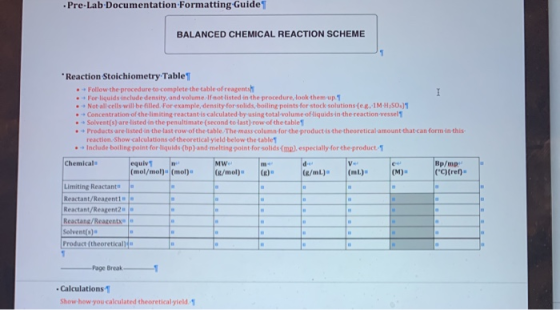
complete the stoichiometry table for the process above
Experimental Notes 4, H ОН NaBH4 NaOH OH...
using the procedure above complete the stoichiometry table Procedure In an oven-dried, 100 ml round bottom...
 using the procedure above complete the stoichiometry
table
Procedure In an oven-dried, 100 ml round bottom flask containing magnetic stirring bar was added hydrobenzoin (1.0 8.4.7 mmol), anhydrous iron(III) chloride (0.3 g, 1.8 mmol), and anhydrous acetone (30 ml). The mixture was heated to reflux and stirred for 30 min. The reaction mixture was cooled tort and transferred to a separatory funnel containing 10% aq potassium carbonate (10 mL). Water (50 mL) was added and the aqueous solution was extracted...
using the procedure above complete the stoichiometry
table
Procedure In an oven-dried, 100 ml round bottom flask containing magnetic stirring bar was added hydrobenzoin (1.0 8.4.7 mmol), anhydrous iron(III) chloride (0.3 g, 1.8 mmol), and anhydrous acetone (30 ml). The mixture was heated to reflux and stirred for 30 min. The reaction mixture was cooled tort and transferred to a separatory funnel containing 10% aq potassium carbonate (10 mL). Water (50 mL) was added and the aqueous solution was extracted...
used. Experimental . Place 2.0 g of salicylic acid in a 125-mL conical flask. 2. Add...
 used. Experimental . Place 2.0 g of salicylic acid in a 125-mL conical flask. 2. Add 4.0 ml (d = 1.08 g/mL; 4.3 g) of acetic anhydride and 6-8 drops of 85% phosphoric acid. 3. Swirl the flask to mix all reagents, and place it in a 70°C water bath. Heat for about 10 minutes. 4. Remove the flask from the water bath and add 2 mL of cold water drop- wise, swirling the flask after each addition, 5. Add...
I understand that equivalents is the ratio of the # of moles of a reactant or...
 I understand that equivalents is the ratio of the # of moles
of a reactant or reagent compared to the # of moles of the
substrate. But I am confused on how to answer this question and why
the procedure would call for more NaI than Vanillin if Vanillin is
the substance needed substituted. Can you help?
Thanks!
3. How many equivalents of sodium iodide are used in this experiment? Show your calculation Speculate about why the procedure calls for...
I understand that equivalents is the ratio of the # of moles
of a reactant or reagent compared to the # of moles of the
substrate. But I am confused on how to answer this question and why
the procedure would call for more NaI than Vanillin if Vanillin is
the substance needed substituted. Can you help?
Thanks!
3. How many equivalents of sodium iodide are used in this experiment? Show your calculation Speculate about why the procedure calls for...
Complete the table of reactants and products for the following two reactions. Compound Molar Mass (g/mol)...
Complete the table of reactants and products for the following two reactions. Compound Molar Mass (g/mol) Mass Volume Density (g/mL) # Mols Equivalents of Reactants (divide actual moles by stoichiometric moles) Other (indicate which is limiting reactant) Nitration of Methyl Benzoate In a 50 mL Erlenmeyer flask, cool 6 mL of conc. H2SO4 in ice and add 3.0 g of methyl benzoate. Make sure the temperature stays at 0 oC . Using a pipet, slowly add a cooled mixture of...
noinizdle dn Draw a flow sheet to describe the separation procedure. (10 pts) doprleoudenagne aded 6....
 noinizdle dn Draw a flow sheet to describe the separation procedure. (10 pts) doprleoudenagne aded 6. Are several small-scale extractions more efficient than one large-scale extraction? Why? (10 pts) 7. Why the upper layer should be poured out from the top of the separatory funnel but not be drained from the stopcock? (10 pts) Extraction: Separation of a Neutral and Basic Substances 1 Dissolve 2 g of a mixture of naphthalene and 4-chloroaniline in 20 mL of ethyl ether and...
Calculate the theoretical yield for Orange II (mw= 422g/mol; experimental weight of orange II azo-dye=0.4g). EXPERIMENTAL...
 Calculate the theoretical yield for Orange II (mw= 422g/mol;
experimental weight of orange II azo-dye=0.4g).
EXPERIMENTAL Calculate the theoretical yield before the lab. Caution: Orange II dyes clothing and other organic materials a permanent unique orange. As a measure of your technique, points may be subtracted for orange hands, etc. 1 DIAZOTIZATION OF SULFANILIC ACID Dissolve 0.4 g of anhydrous sodium carbonate in 7.5 mL of H.O. Use a 25 mL Erlenmever flask. 2. Add 0.45 g of sulfanilic acid...
Calculate the theoretical yield for Orange II (mw= 422g/mol;
experimental weight of orange II azo-dye=0.4g).
EXPERIMENTAL Calculate the theoretical yield before the lab. Caution: Orange II dyes clothing and other organic materials a permanent unique orange. As a measure of your technique, points may be subtracted for orange hands, etc. 1 DIAZOTIZATION OF SULFANILIC ACID Dissolve 0.4 g of anhydrous sodium carbonate in 7.5 mL of H.O. Use a 25 mL Erlenmever flask. 2. Add 0.45 g of sulfanilic acid...
R1= OCH2C6H5, R2= OCH3 Identify the limiting reagent and calculate the theoretical yield? NaOH H3C -H20...
 R1= OCH2C6H5, R2= OCH3
Identify the limiting reagent and calculate the theoretical
yield?
NaOH H3C -H20 R2 R1 Procedure: 1. Prepare a water bath for use later in the experiment by filling a pyrex dish -half full of water and heating it to 70 °C on a stirrer/hot plate. 2. Combine 3.5 mmol of your aldehyde and 3.5 mmol of your ketone with 2 mL of 95% ethanol in a 25- mL round-bottom flask and swirl the mixture briefly. 3....
R1= OCH2C6H5, R2= OCH3
Identify the limiting reagent and calculate the theoretical
yield?
NaOH H3C -H20 R2 R1 Procedure: 1. Prepare a water bath for use later in the experiment by filling a pyrex dish -half full of water and heating it to 70 °C on a stirrer/hot plate. 2. Combine 3.5 mmol of your aldehyde and 3.5 mmol of your ketone with 2 mL of 95% ethanol in a 25- mL round-bottom flask and swirl the mixture briefly. 3....
Bromination of Acetanilide In a 25-mL Erlenmeyer flask, dissolve 0.68 g of acetanilide in approximately 4...
Bromination of Acetanilide In a 25-mL Erlenmeyer flask, dissolve 0.68 g of acetanilide in approximately 4 mL glacial acetic acid. Record the exact amount of the limiting reactant that you used. Add a stir bar followed by 1.6 g pyridinium tribromide. Heat the mixture to ~60°C in a warm water bath for 10 minutes. After the 10 minutes, add 15 mL water and approximately 2 mL saturated sodium bisulfite solution to remove excess bromine, which shows by the disappearance of...
For the nitration of methyl benzoate: a. Which product did you get? What evidence do you...
 For the nitration of methyl benzoate:
a. Which product did you get? What evidence do you have for
this?
b. Was your product pure? What evidence do you have for this?
Explain your evidence.
c. Draw the mechanism for the product you got.
For the bromination of acetanilide:
a. Which product did you get? What evidence do you have for
this?
b. Was your product pure? What evidence do you have for this?
Explain your evidence.
c. Draw the mechanism...
For the nitration of methyl benzoate:
a. Which product did you get? What evidence do you have for
this?
b. Was your product pure? What evidence do you have for this?
Explain your evidence.
c. Draw the mechanism for the product you got.
For the bromination of acetanilide:
a. Which product did you get? What evidence do you have for
this?
b. Was your product pure? What evidence do you have for this?
Explain your evidence.
c. Draw the mechanism...
need help answering these questions Chemistry 2211(PRIVATE) LABORATORY PRACTICUM - 4 DO NOT CONSULT WITH OTHER...
 need help answering these questions
Chemistry 2211(PRIVATE) LABORATORY PRACTICUM - 4 DO NOT CONSULT WITH OTHER LABORATORY STUDENTS, THE LABORATORY INSTRUCTOR OR GRADUATE ASSISTANT UNLESS AN ISSUE OF SAFETY, EQUIPMENT NEEDS, OR EQUIPMENT FAILURE OCCURS. You may consult your laboratory notebook or the reference books in the laboratory You may take up to 150 minutes to carry out the procedure, complete your notebook writeup on the experiment, and submit to the instructor the notebook and clearly labeled product. THE MATERIALS...
need help answering these questions
Chemistry 2211(PRIVATE) LABORATORY PRACTICUM - 4 DO NOT CONSULT WITH OTHER LABORATORY STUDENTS, THE LABORATORY INSTRUCTOR OR GRADUATE ASSISTANT UNLESS AN ISSUE OF SAFETY, EQUIPMENT NEEDS, OR EQUIPMENT FAILURE OCCURS. You may consult your laboratory notebook or the reference books in the laboratory You may take up to 150 minutes to carry out the procedure, complete your notebook writeup on the experiment, and submit to the instructor the notebook and clearly labeled product. THE MATERIALS...
 using the procedure above complete the stoichiometry
table
Procedure In an oven-dried, 100 ml round bottom flask containing magnetic stirring bar was added hydrobenzoin (1.0 8.4.7 mmol), anhydrous iron(III) chloride (0.3 g, 1.8 mmol), and anhydrous acetone (30 ml). The mixture was heated to reflux and stirred for 30 min. The reaction mixture was cooled tort and transferred to a separatory funnel containing 10% aq potassium carbonate (10 mL). Water (50 mL) was added and the aqueous solution was extracted...
using the procedure above complete the stoichiometry
table
Procedure In an oven-dried, 100 ml round bottom flask containing magnetic stirring bar was added hydrobenzoin (1.0 8.4.7 mmol), anhydrous iron(III) chloride (0.3 g, 1.8 mmol), and anhydrous acetone (30 ml). The mixture was heated to reflux and stirred for 30 min. The reaction mixture was cooled tort and transferred to a separatory funnel containing 10% aq potassium carbonate (10 mL). Water (50 mL) was added and the aqueous solution was extracted...
 used. Experimental . Place 2.0 g of salicylic acid in a 125-mL conical flask. 2. Add 4.0 ml (d = 1.08 g/mL; 4.3 g) of acetic anhydride and 6-8 drops of 85% phosphoric acid. 3. Swirl the flask to mix all reagents, and place it in a 70°C water bath. Heat for about 10 minutes. 4. Remove the flask from the water bath and add 2 mL of cold water drop- wise, swirling the flask after each addition, 5. Add...
 I understand that equivalents is the ratio of the # of moles
of a reactant or reagent compared to the # of moles of the
substrate. But I am confused on how to answer this question and why
the procedure would call for more NaI than Vanillin if Vanillin is
the substance needed substituted. Can you help?
Thanks!
3. How many equivalents of sodium iodide are used in this experiment? Show your calculation Speculate about why the procedure calls for...
I understand that equivalents is the ratio of the # of moles
of a reactant or reagent compared to the # of moles of the
substrate. But I am confused on how to answer this question and why
the procedure would call for more NaI than Vanillin if Vanillin is
the substance needed substituted. Can you help?
Thanks!
3. How many equivalents of sodium iodide are used in this experiment? Show your calculation Speculate about why the procedure calls for...
 noinizdle dn Draw a flow sheet to describe the separation procedure. (10 pts) doprleoudenagne aded 6. Are several small-scale extractions more efficient than one large-scale extraction? Why? (10 pts) 7. Why the upper layer should be poured out from the top of the separatory funnel but not be drained from the stopcock? (10 pts) Extraction: Separation of a Neutral and Basic Substances 1 Dissolve 2 g of a mixture of naphthalene and 4-chloroaniline in 20 mL of ethyl ether and...
 Calculate the theoretical yield for Orange II (mw= 422g/mol;
experimental weight of orange II azo-dye=0.4g).
EXPERIMENTAL Calculate the theoretical yield before the lab. Caution: Orange II dyes clothing and other organic materials a permanent unique orange. As a measure of your technique, points may be subtracted for orange hands, etc. 1 DIAZOTIZATION OF SULFANILIC ACID Dissolve 0.4 g of anhydrous sodium carbonate in 7.5 mL of H.O. Use a 25 mL Erlenmever flask. 2. Add 0.45 g of sulfanilic acid...
Calculate the theoretical yield for Orange II (mw= 422g/mol;
experimental weight of orange II azo-dye=0.4g).
EXPERIMENTAL Calculate the theoretical yield before the lab. Caution: Orange II dyes clothing and other organic materials a permanent unique orange. As a measure of your technique, points may be subtracted for orange hands, etc. 1 DIAZOTIZATION OF SULFANILIC ACID Dissolve 0.4 g of anhydrous sodium carbonate in 7.5 mL of H.O. Use a 25 mL Erlenmever flask. 2. Add 0.45 g of sulfanilic acid...
 R1= OCH2C6H5, R2= OCH3
Identify the limiting reagent and calculate the theoretical
yield?
NaOH H3C -H20 R2 R1 Procedure: 1. Prepare a water bath for use later in the experiment by filling a pyrex dish -half full of water and heating it to 70 °C on a stirrer/hot plate. 2. Combine 3.5 mmol of your aldehyde and 3.5 mmol of your ketone with 2 mL of 95% ethanol in a 25- mL round-bottom flask and swirl the mixture briefly. 3....
R1= OCH2C6H5, R2= OCH3
Identify the limiting reagent and calculate the theoretical
yield?
NaOH H3C -H20 R2 R1 Procedure: 1. Prepare a water bath for use later in the experiment by filling a pyrex dish -half full of water and heating it to 70 °C on a stirrer/hot plate. 2. Combine 3.5 mmol of your aldehyde and 3.5 mmol of your ketone with 2 mL of 95% ethanol in a 25- mL round-bottom flask and swirl the mixture briefly. 3....
 For the nitration of methyl benzoate:
a. Which product did you get? What evidence do you have for
this?
b. Was your product pure? What evidence do you have for this?
Explain your evidence.
c. Draw the mechanism for the product you got.
For the bromination of acetanilide:
a. Which product did you get? What evidence do you have for
this?
b. Was your product pure? What evidence do you have for this?
Explain your evidence.
c. Draw the mechanism...
For the nitration of methyl benzoate:
a. Which product did you get? What evidence do you have for
this?
b. Was your product pure? What evidence do you have for this?
Explain your evidence.
c. Draw the mechanism for the product you got.
For the bromination of acetanilide:
a. Which product did you get? What evidence do you have for
this?
b. Was your product pure? What evidence do you have for this?
Explain your evidence.
c. Draw the mechanism...
 need help answering these questions
Chemistry 2211(PRIVATE) LABORATORY PRACTICUM - 4 DO NOT CONSULT WITH OTHER LABORATORY STUDENTS, THE LABORATORY INSTRUCTOR OR GRADUATE ASSISTANT UNLESS AN ISSUE OF SAFETY, EQUIPMENT NEEDS, OR EQUIPMENT FAILURE OCCURS. You may consult your laboratory notebook or the reference books in the laboratory You may take up to 150 minutes to carry out the procedure, complete your notebook writeup on the experiment, and submit to the instructor the notebook and clearly labeled product. THE MATERIALS...
need help answering these questions
Chemistry 2211(PRIVATE) LABORATORY PRACTICUM - 4 DO NOT CONSULT WITH OTHER LABORATORY STUDENTS, THE LABORATORY INSTRUCTOR OR GRADUATE ASSISTANT UNLESS AN ISSUE OF SAFETY, EQUIPMENT NEEDS, OR EQUIPMENT FAILURE OCCURS. You may consult your laboratory notebook or the reference books in the laboratory You may take up to 150 minutes to carry out the procedure, complete your notebook writeup on the experiment, and submit to the instructor the notebook and clearly labeled product. THE MATERIALS...
Most questions answered within 3 hours.
-
Where is the error in this code sequence?
String s1 = "Hello";
String s2 = "ello";...
asked 11 months ago -
Financial data for Joel de Paris, Inc., for last year
follow:
Joel de Paris, Inc.
Balance...
asked 11 months ago -
Consider this reaction:
Al2(SO4)3 (aq)+ BaCl3
(aq) Al2Cl6 (aq)- +
3BaSO4(s) . What is the...
asked 11 months ago -
Suppose that Savneet is considering increasing her
recent random sample from 20 car rentals to 40...
asked 11 months ago -
Trucks arrive at an unloading terminal at an average rate of 120
per hour.
Trucks arrive...
asked 11 months ago -
Why are methanol and ethanol completely soluble in water while
octanol is not very little soluble....
asked 11 months ago -
A facilities manager at a university reads in a research report
that the mean amount of...
asked 11 months ago -
When the CuSO4 is rehydrated by adding water to the anhydrous
compound, is this an endothermic...
asked 11 months ago -
A ray of sunlight is passing from diamond into crown glass; the
angle of incidence is...
asked 11 months ago -
A block of mass 0.249 kg is placed on top of a light, vertical
spring of...
asked 11 months ago -
how do the kidneys compensate in the presences of acidosis
a) trigger hyperventilate
b) reserve acid...
asked 11 months ago -
Question 501 pts
The rental rate of capital to the firm increases. Which of the
following...
asked 11 months ago