
Homework Answers

Add Answer to:
Moist air at 20°C, 1 atm, and 43% relative humidity and a volumetric flow rate of...
Moist air at 20°C, 1 atm, and 43% relative humidity and a volumetric flow rate of...
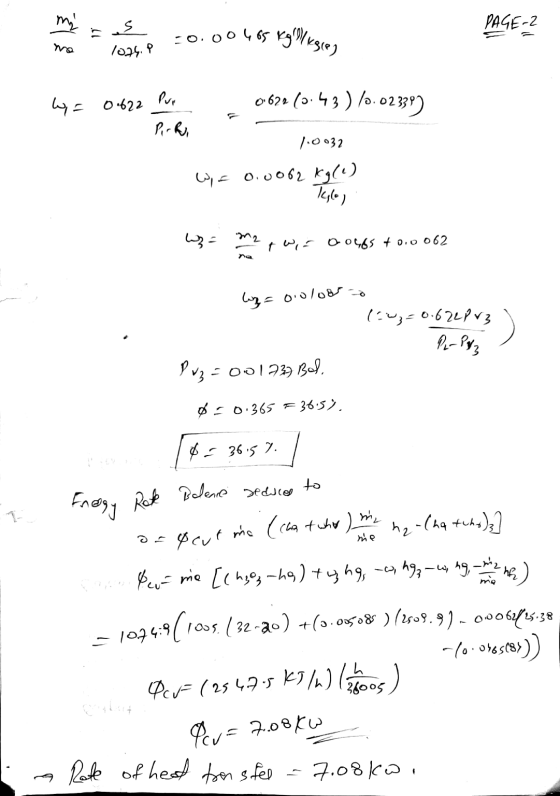
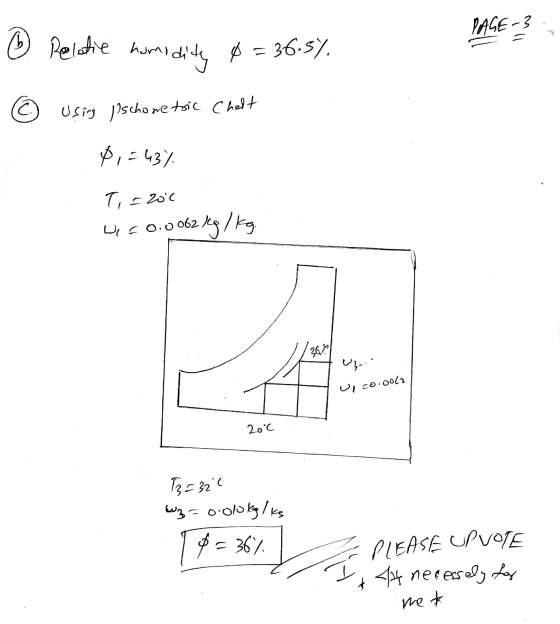
 Moist air at 20°C, 1 atm, and 43% relative humidity and a volumetric flow rate of 900 m²/hrs. enters a control volume at steady state and flow along a surface maintained at 65°C, through which heat transfer occurs. Liquid water at 20°C is injected at a rate of 5 kg/hr and evaporates into flowing stream. For the control volume, Wev=0, and kinetic and potential energy effects are negligible. Moist air exits at 32°C, 1 atm. (a) draw the system schematic...
Moist air at 20° c, 1 atm, and 43% relative humidity and a volumetric flow rate...
 Moist air at 20° c, 1 atm, and 43% relative humidity and a volumetric flow rate of 900 m/hrs. enters a control volume at steady state and flow along a surface maintained at 65 C, through which heat transfer occurs. Liquid water at 20" C is injected at a rate of 5 kg/hr and evaporates into flowing stream. For the control volume, Wa=0, and kinetic and potential energy effects are negligible. Moist air exits at 32c, 1 atm, (a) draw...
Moist air enters a duct at 10 °C, 80% relative humidity, and a volumetric flow rate...
Moist air enters a duct at 10 °C, 80% relative humidity, and a volumetric flow rate of 150 m3/min. The mixture is heated as it flows through the duct and exits at 30 °C. No moisture is added or removed and the mixture stays at 1 atm. Determine the rate of heat transfer and the relative humidity at the exit.
Moist air at 24°C, 1 atm, and 35% relative humidity enters an evaporative cooling unit operating...
 Moist air at 24°C, 1 atm, and 35% relative humidity enters an evaporative cooling unit operating at steady state consisting of a heating section followed by a soaked pad evaporative cooler operating adiabatically. The air passing through the heating section is heated to 45°C. Next, the air passes through a soaked pad exiting with 50% relative humidity. Using data from the psychrometric chart, determine: (a) the humidity ratio of the entering moist air mixture, in kg(vapor) per kg(dry air). (b)...
use engineering methodology and show units calculations please B5. (15%) (Show all your calculation steps.) Moist...
 use
engineering methodology and show units calculations please
B5. (15%) (Show all your calculation steps.) Moist air at 20°C, 1 atm, and 43% relative humidity and a volumetric flow rate of 900 m3/hrs. enters a control volume at steady state and flow along a surface maintained at 65° C, through which heat transfer occurs. Liquid water at 20° C is injected at a rate of 5 kg/hr and evaporates into flowing stream. For the control volume, Wex=0, and kinetic and...
use
engineering methodology and show units calculations please
B5. (15%) (Show all your calculation steps.) Moist air at 20°C, 1 atm, and 43% relative humidity and a volumetric flow rate of 900 m3/hrs. enters a control volume at steady state and flow along a surface maintained at 65° C, through which heat transfer occurs. Liquid water at 20° C is injected at a rate of 5 kg/hr and evaporates into flowing stream. For the control volume, Wex=0, and kinetic and...
Please answer the relative humidity A humidifier takes in moist air at 29 °C, 1 bar,...
 Please answer the relative humidity
A humidifier takes in moist air at 29 °C, 1 bar, and 50% relative humidity with a volumetric flow rate of 13 m3/s. To increase the moisture of the air, liquid water at 40 °C is sprayed into the moist air witha flow rate of 22 kg/s. Some of the liquid water evaporates into the moist air stream and the rest drain:s out of the humidifier with a temperature of 26 °C and a mass...
Please answer the relative humidity
A humidifier takes in moist air at 29 °C, 1 bar, and 50% relative humidity with a volumetric flow rate of 13 m3/s. To increase the moisture of the air, liquid water at 40 °C is sprayed into the moist air witha flow rate of 22 kg/s. Some of the liquid water evaporates into the moist air stream and the rest drain:s out of the humidifier with a temperature of 26 °C and a mass...
Air at 95°F, 1 atm, and 10% relative humidity enters an evaporative cooler operating at steady...
Air at 95°F, 1 atm, and 10% relative humidity enters an evaporative cooler operating at steady state. The volumetric flow rate of the incoming air is 895 ft3/min. Liquid water at 68°F enters the cooler and fully evaporates. Moist air exits the cooler at 70°F, 1 atm. There is no significant heat transfer between the device and its surroundings and kinetic and potential energy effects can be neglected. a)Determine the mass flow rate of the dry air in lb(dry air)/min....
An air conditioner operating at steady state takes in moist air at 28ºC, 1 atm and...
An air conditioner operating at steady state takes in moist air at 28ºC, 1 atm and 70% relative humidity. The moist air first passes over a cooling coil in the dehumidifier unit and some water vapor is condensed. The rate of heat transfer between the moist air and the cooling coil is 38.69 kW. Both saturated moist air and condensate streams exit the dehumidifier unit at the same temperature. The moist air then passes through a heating unit, exiting at...
QUESTION 4 Air at 25 C° and 1 atm has a relative humidity of 20%. Using...
 QUESTION 4 Air at 25 C° and 1 atm has a relative humidity of 20%. Using the psychrometric chart, the absolute humidity is the wet bulb temperature is , dew point is , and humid volume is Note: Take care of units (write the unit)
12.54 Air at 12°C, 1 atm, and 40% relative humidity enters a heat exchanger with a...
 12.54 Air at 12°C, 1 atm, and 40% relative humidity enters a heat exchanger with a volumetric flow rate of 1 m'/s. A separate stream of dry air enters at 280°C, 1 atm with a mass flow rate of 0.875 kg/s and exits at 220°C. Neglecting heat transfer between the heat exchanger and its surroundings, pressure drops of ach stream, and kinetic and potential energy effects, determine (a) the temperature of the exiting moist air, in °C
 Moist air at 20°C, 1 atm, and 43% relative humidity and a volumetric flow rate of 900 m²/hrs. enters a control volume at steady state and flow along a surface maintained at 65°C, through which heat transfer occurs. Liquid water at 20°C is injected at a rate of 5 kg/hr and evaporates into flowing stream. For the control volume, Wev=0, and kinetic and potential energy effects are negligible. Moist air exits at 32°C, 1 atm. (a) draw the system schematic...
 Moist air at 20° c, 1 atm, and 43% relative humidity and a volumetric flow rate of 900 m/hrs. enters a control volume at steady state and flow along a surface maintained at 65 C, through which heat transfer occurs. Liquid water at 20" C is injected at a rate of 5 kg/hr and evaporates into flowing stream. For the control volume, Wa=0, and kinetic and potential energy effects are negligible. Moist air exits at 32c, 1 atm, (a) draw...
 Moist air at 24°C, 1 atm, and 35% relative humidity enters an evaporative cooling unit operating at steady state consisting of a heating section followed by a soaked pad evaporative cooler operating adiabatically. The air passing through the heating section is heated to 45°C. Next, the air passes through a soaked pad exiting with 50% relative humidity. Using data from the psychrometric chart, determine: (a) the humidity ratio of the entering moist air mixture, in kg(vapor) per kg(dry air). (b)...
 use
engineering methodology and show units calculations please
B5. (15%) (Show all your calculation steps.) Moist air at 20°C, 1 atm, and 43% relative humidity and a volumetric flow rate of 900 m3/hrs. enters a control volume at steady state and flow along a surface maintained at 65° C, through which heat transfer occurs. Liquid water at 20° C is injected at a rate of 5 kg/hr and evaporates into flowing stream. For the control volume, Wex=0, and kinetic and...
use
engineering methodology and show units calculations please
B5. (15%) (Show all your calculation steps.) Moist air at 20°C, 1 atm, and 43% relative humidity and a volumetric flow rate of 900 m3/hrs. enters a control volume at steady state and flow along a surface maintained at 65° C, through which heat transfer occurs. Liquid water at 20° C is injected at a rate of 5 kg/hr and evaporates into flowing stream. For the control volume, Wex=0, and kinetic and...
 Please answer the relative humidity
A humidifier takes in moist air at 29 °C, 1 bar, and 50% relative humidity with a volumetric flow rate of 13 m3/s. To increase the moisture of the air, liquid water at 40 °C is sprayed into the moist air witha flow rate of 22 kg/s. Some of the liquid water evaporates into the moist air stream and the rest drain:s out of the humidifier with a temperature of 26 °C and a mass...
Please answer the relative humidity
A humidifier takes in moist air at 29 °C, 1 bar, and 50% relative humidity with a volumetric flow rate of 13 m3/s. To increase the moisture of the air, liquid water at 40 °C is sprayed into the moist air witha flow rate of 22 kg/s. Some of the liquid water evaporates into the moist air stream and the rest drain:s out of the humidifier with a temperature of 26 °C and a mass...
 QUESTION 4 Air at 25 C° and 1 atm has a relative humidity of 20%. Using the psychrometric chart, the absolute humidity is the wet bulb temperature is , dew point is , and humid volume is Note: Take care of units (write the unit)
 12.54 Air at 12°C, 1 atm, and 40% relative humidity enters a heat exchanger with a volumetric flow rate of 1 m'/s. A separate stream of dry air enters at 280°C, 1 atm with a mass flow rate of 0.875 kg/s and exits at 220°C. Neglecting heat transfer between the heat exchanger and its surroundings, pressure drops of ach stream, and kinetic and potential energy effects, determine (a) the temperature of the exiting moist air, in °C
Most questions answered within 3 hours.
-
Where is the error in this code sequence?
String s1 = "Hello";
String s2 = "ello";...
asked 11 months ago -
Financial data for Joel de Paris, Inc., for last year
follow:
Joel de Paris, Inc.
Balance...
asked 11 months ago -
Consider this reaction:
Al2(SO4)3 (aq)+ BaCl3
(aq) Al2Cl6 (aq)- +
3BaSO4(s) . What is the...
asked 11 months ago -
Suppose that Savneet is considering increasing her
recent random sample from 20 car rentals to 40...
asked 11 months ago -
Trucks arrive at an unloading terminal at an average rate of 120
per hour.
Trucks arrive...
asked 11 months ago -
Why are methanol and ethanol completely soluble in water while
octanol is not very little soluble....
asked 11 months ago -
A facilities manager at a university reads in a research report
that the mean amount of...
asked 11 months ago -
When the CuSO4 is rehydrated by adding water to the anhydrous
compound, is this an endothermic...
asked 11 months ago -
A ray of sunlight is passing from diamond into crown glass; the
angle of incidence is...
asked 11 months ago -
A block of mass 0.249 kg is placed on top of a light, vertical
spring of...
asked 11 months ago -
how do the kidneys compensate in the presences of acidosis
a) trigger hyperventilate
b) reserve acid...
asked 11 months ago -
Question 501 pts
The rental rate of capital to the firm increases. Which of the
following...
asked 11 months ago