
Homework Answers
Since you have mentioned not to answer first question heres the solution to the other three
2)




3)
P(a<=X<=b) using pdf of X, fx(x) we
have,

Now, P(a<=X<=b) using CDF of X, F(x) we have,

4)
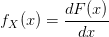
We can obtain PDF from CDF by differentiating the CDF F(x) of X
with respect to x. That is,
Add Answer to:
no
need to answer part a.
(1) In week 4, Lecture 1 we saw 7 remarks...
PLEASE ANSWER ALL QUESTION 1 1 points Save Answer A random variable is a uniform random...
 PLEASE ANSWER ALL
QUESTION 1 1 points Save Answer A random variable is a uniform random variable between 0 and 8. The probability density is 1/8, when 0<x<8 and O elsewhere. What is the probability that the random variable has a value greater than 2? QUESTION 2 1 points Save Answer The total area under a probability density curve of a continuous random variable is QUESTION 3 1 points Save Answer X is a continuous random variable with probability density...
PLEASE ANSWER ALL
QUESTION 1 1 points Save Answer A random variable is a uniform random variable between 0 and 8. The probability density is 1/8, when 0<x<8 and O elsewhere. What is the probability that the random variable has a value greater than 2? QUESTION 2 1 points Save Answer The total area under a probability density curve of a continuous random variable is QUESTION 3 1 points Save Answer X is a continuous random variable with probability density...
Question 1 A continuous random variable X which represents the amount of sugar (in kg) used...
 Question 1 A continuous random variable X which represents the amount of sugar (in kg) used by a family per week, has the probability density function c(x-102-x) 1sxs2 ; otherwise (0) (ii) (ii) Determine the value of c. Obtain cumulative distribution function Find P(X < 1.2). Consider the following cumulative distribution function for X. 06 0.8 1.0 Fx) 0.9 (i) Determine the probability distribution. (ii) Find P(X 1). (ii) Find P(OX5) Question 3 Consider the following pdf otherwise (i) (ii)...
please 6 and 7 6. (3.18, 20) A continuous random variable X that can assume values...
 please 6 and 7
6. (3.18, 20) A continuous random variable X that can assume values between r = 2 and x = 5 has a density function given by f(x) = 2(1+x)/27. Find the Cumulative Distribution Function F(x). 7. (3.14) The waiting time, in hours, between successive speeders spotted by a radar unit is a continuous random variable with a cumulative distribution function x<0, F(x) = -e-41, x20 Find the probability of waiting between 3 to 7 minutes a)...
please 6 and 7
6. (3.18, 20) A continuous random variable X that can assume values between r = 2 and x = 5 has a density function given by f(x) = 2(1+x)/27. Find the Cumulative Distribution Function F(x). 7. (3.14) The waiting time, in hours, between successive speeders spotted by a radar unit is a continuous random variable with a cumulative distribution function x<0, F(x) = -e-41, x20 Find the probability of waiting between 3 to 7 minutes a)...
All the steps/working of the answers need to be shown for all subquestions. Thank you! Problem...
 All the steps/working of the answers need to be shown for all
subquestions. Thank you!
Problem 5: Let X be a random variable with probability density function fx (r) = crm-l < z < 1} (1) Find the value of c (2) Find the cumulative probability distribution function of X (3) Assuming that U~U(0,1), transform this random variable to obtain a random variable with the same distribution as X.
All the steps/working of the answers need to be shown for all
subquestions. Thank you!
Problem 5: Let X be a random variable with probability density function fx (r) = crm-l < z < 1} (1) Find the value of c (2) Find the cumulative probability distribution function of X (3) Assuming that U~U(0,1), transform this random variable to obtain a random variable with the same distribution as X.
At the end of lecture 5 (see the recordings) we saw how to use predicate logic to prove that syll...
 Example of the syllogism to set-theoretic translation
At the end of lecture 5 (see the recordings) we saw how to use predicate logic to prove that syllogism types are valid. Prove that the following syllogism is valid by following the steps below My teapot is purple My teapot holds water There exist purple things that hold water a) Translate the syllogism into set-theoretic notation b) Translate your set-theoretic notation into the notation of predicate logic c) Give a proof that...
Example of the syllogism to set-theoretic translation
At the end of lecture 5 (see the recordings) we saw how to use predicate logic to prove that syllogism types are valid. Prove that the following syllogism is valid by following the steps below My teapot is purple My teapot holds water There exist purple things that hold water a) Translate the syllogism into set-theoretic notation b) Translate your set-theoretic notation into the notation of predicate logic c) Give a proof that...
2. Let X be an exponentially distributed random variable with parameter 1 = 2. Determine P(X...
 2. Let X be an exponentially distributed random variable with parameter 1 = 2. Determine P(X > 4). 3. Let X be a continuous random variable that only takes on values in the interval [0, 1]. The cumulative distribution function of X is given by: F(x) = 2x² – x4 for 0 sxsl. (1) (a) How do we know F(x) is a valid cumulative distribution function? (b) Use F(x) to compute P(i sX så)? (c) What is the probability density...
Question 1 A continuous random variable X which represents the amount of sugar (in kg) used...
 Question 1 A continuous random variable X which represents the amount of sugar (in kg) used by a family per week, has the probability density function c(x-1(2-xsxs2 ; otherwise f(x) (i) Determine the value of c ii) Obtain cumulative distribution function (iii) Find P(X<1.2). Question 2 Consider the following cumulative distribution function for X 0.3 0.6 0.8 0.9 1.0 (i) Determine the probability distribution. ii) Find P(X<1). iii Find P(O <Xs5). Consider the following pdf ,f(x) = 2k ; 1<x<2...
Please don’t answer me by hand written.. Would be better if you use your PC to...
 Please don’t answer me by hand written.. Would be better if
you use your PC to answer so it’s clear for me to read . Thanks
!
Question 1 A continuous random variable X which represents the amount of sugar (in kg) used by a family per week, has the probability density function c(x-1(2-xsxs2 ; otherwise f(x) (i) Determine the value of c ii) Obtain cumulative distribution function (iii) Find P(X<1.2). Question 2 Consider the following cumulative distribution function for...
Please don’t answer me by hand written.. Would be better if
you use your PC to answer so it’s clear for me to read . Thanks
!
Question 1 A continuous random variable X which represents the amount of sugar (in kg) used by a family per week, has the probability density function c(x-1(2-xsxs2 ; otherwise f(x) (i) Determine the value of c ii) Obtain cumulative distribution function (iii) Find P(X<1.2). Question 2 Consider the following cumulative distribution function for...
Problem 1. (Bootstrap tests for goodness-of-fit)We saw in lecture that when it comes togoodness-of-fit (GOF) testing, it...
Problem 1. (Bootstrap tests for goodness-of-fit)We saw in lecture that when it comes togoodness-of-fit (GOF) testing, it is quite “natural” to obtain a p-value by permutation. It is alsopossible, however, to use the bootstrap for that purpose. Consider the two-sample situation forsimplicity, although this generalizes to any number of samples. Thus assume a situation where weobserveX1, . . . , Xmiid fromFand (independently)Y1, . . . , Yniid fromG, whereFandGare twodistributions on the real line. We want to testF=GversusF6=G. We...
about something, ask! Part .Do any eight (8) of 1-9 1. Two numbers are chosen at...
 about something, ask! Part .Do any eight (8) of 1-9 1. Two numbers are chosen at random in succession, with replacement, from the set 1, 2, 3, , 100J. What is the probability that the first one is larger than the second one? [15) 2. In a set of dominoes, each piece is marked with two numbers, one on each end. The pieces are symmetrical, so that the two numbers are unordered. (That is, you can't tell (1,4) and (4,1)...
 PLEASE ANSWER ALL
QUESTION 1 1 points Save Answer A random variable is a uniform random variable between 0 and 8. The probability density is 1/8, when 0<x<8 and O elsewhere. What is the probability that the random variable has a value greater than 2? QUESTION 2 1 points Save Answer The total area under a probability density curve of a continuous random variable is QUESTION 3 1 points Save Answer X is a continuous random variable with probability density...
PLEASE ANSWER ALL
QUESTION 1 1 points Save Answer A random variable is a uniform random variable between 0 and 8. The probability density is 1/8, when 0<x<8 and O elsewhere. What is the probability that the random variable has a value greater than 2? QUESTION 2 1 points Save Answer The total area under a probability density curve of a continuous random variable is QUESTION 3 1 points Save Answer X is a continuous random variable with probability density...
 Question 1 A continuous random variable X which represents the amount of sugar (in kg) used by a family per week, has the probability density function c(x-102-x) 1sxs2 ; otherwise (0) (ii) (ii) Determine the value of c. Obtain cumulative distribution function Find P(X < 1.2). Consider the following cumulative distribution function for X. 06 0.8 1.0 Fx) 0.9 (i) Determine the probability distribution. (ii) Find P(X 1). (ii) Find P(OX5) Question 3 Consider the following pdf otherwise (i) (ii)...
 please 6 and 7
6. (3.18, 20) A continuous random variable X that can assume values between r = 2 and x = 5 has a density function given by f(x) = 2(1+x)/27. Find the Cumulative Distribution Function F(x). 7. (3.14) The waiting time, in hours, between successive speeders spotted by a radar unit is a continuous random variable with a cumulative distribution function x<0, F(x) = -e-41, x20 Find the probability of waiting between 3 to 7 minutes a)...
please 6 and 7
6. (3.18, 20) A continuous random variable X that can assume values between r = 2 and x = 5 has a density function given by f(x) = 2(1+x)/27. Find the Cumulative Distribution Function F(x). 7. (3.14) The waiting time, in hours, between successive speeders spotted by a radar unit is a continuous random variable with a cumulative distribution function x<0, F(x) = -e-41, x20 Find the probability of waiting between 3 to 7 minutes a)...
 All the steps/working of the answers need to be shown for all
subquestions. Thank you!
Problem 5: Let X be a random variable with probability density function fx (r) = crm-l < z < 1} (1) Find the value of c (2) Find the cumulative probability distribution function of X (3) Assuming that U~U(0,1), transform this random variable to obtain a random variable with the same distribution as X.
All the steps/working of the answers need to be shown for all
subquestions. Thank you!
Problem 5: Let X be a random variable with probability density function fx (r) = crm-l < z < 1} (1) Find the value of c (2) Find the cumulative probability distribution function of X (3) Assuming that U~U(0,1), transform this random variable to obtain a random variable with the same distribution as X.
 Example of the syllogism to set-theoretic translation
At the end of lecture 5 (see the recordings) we saw how to use predicate logic to prove that syllogism types are valid. Prove that the following syllogism is valid by following the steps below My teapot is purple My teapot holds water There exist purple things that hold water a) Translate the syllogism into set-theoretic notation b) Translate your set-theoretic notation into the notation of predicate logic c) Give a proof that...
Example of the syllogism to set-theoretic translation
At the end of lecture 5 (see the recordings) we saw how to use predicate logic to prove that syllogism types are valid. Prove that the following syllogism is valid by following the steps below My teapot is purple My teapot holds water There exist purple things that hold water a) Translate the syllogism into set-theoretic notation b) Translate your set-theoretic notation into the notation of predicate logic c) Give a proof that...
 2. Let X be an exponentially distributed random variable with parameter 1 = 2. Determine P(X > 4). 3. Let X be a continuous random variable that only takes on values in the interval [0, 1]. The cumulative distribution function of X is given by: F(x) = 2x² – x4 for 0 sxsl. (1) (a) How do we know F(x) is a valid cumulative distribution function? (b) Use F(x) to compute P(i sX så)? (c) What is the probability density...
 Question 1 A continuous random variable X which represents the amount of sugar (in kg) used by a family per week, has the probability density function c(x-1(2-xsxs2 ; otherwise f(x) (i) Determine the value of c ii) Obtain cumulative distribution function (iii) Find P(X<1.2). Question 2 Consider the following cumulative distribution function for X 0.3 0.6 0.8 0.9 1.0 (i) Determine the probability distribution. ii) Find P(X<1). iii Find P(O <Xs5). Consider the following pdf ,f(x) = 2k ; 1<x<2...
 Please don’t answer me by hand written.. Would be better if
you use your PC to answer so it’s clear for me to read . Thanks
!
Question 1 A continuous random variable X which represents the amount of sugar (in kg) used by a family per week, has the probability density function c(x-1(2-xsxs2 ; otherwise f(x) (i) Determine the value of c ii) Obtain cumulative distribution function (iii) Find P(X<1.2). Question 2 Consider the following cumulative distribution function for...
Please don’t answer me by hand written.. Would be better if
you use your PC to answer so it’s clear for me to read . Thanks
!
Question 1 A continuous random variable X which represents the amount of sugar (in kg) used by a family per week, has the probability density function c(x-1(2-xsxs2 ; otherwise f(x) (i) Determine the value of c ii) Obtain cumulative distribution function (iii) Find P(X<1.2). Question 2 Consider the following cumulative distribution function for...
 about something, ask! Part .Do any eight (8) of 1-9 1. Two numbers are chosen at random in succession, with replacement, from the set 1, 2, 3, , 100J. What is the probability that the first one is larger than the second one? [15) 2. In a set of dominoes, each piece is marked with two numbers, one on each end. The pieces are symmetrical, so that the two numbers are unordered. (That is, you can't tell (1,4) and (4,1)...
Most questions answered within 3 hours.
-
Where is the error in this code sequence?
String s1 = "Hello";
String s2 = "ello";...
asked 10 months ago -
Financial data for Joel de Paris, Inc., for last year
follow:
Joel de Paris, Inc.
Balance...
asked 10 months ago -
Consider this reaction:
Al2(SO4)3 (aq)+ BaCl3
(aq) Al2Cl6 (aq)- +
3BaSO4(s) . What is the...
asked 10 months ago -
Suppose that Savneet is considering increasing her
recent random sample from 20 car rentals to 40...
asked 10 months ago -
Trucks arrive at an unloading terminal at an average rate of 120
per hour.
Trucks arrive...
asked 10 months ago -
Why are methanol and ethanol completely soluble in water while
octanol is not very little soluble....
asked 10 months ago -
A facilities manager at a university reads in a research report
that the mean amount of...
asked 10 months ago -
When the CuSO4 is rehydrated by adding water to the anhydrous
compound, is this an endothermic...
asked 10 months ago -
A ray of sunlight is passing from diamond into crown glass; the
angle of incidence is...
asked 10 months ago -
A block of mass 0.249 kg is placed on top of a light, vertical
spring of...
asked 10 months ago -
how do the kidneys compensate in the presences of acidosis
a) trigger hyperventilate
b) reserve acid...
asked 10 months ago -
Question 501 pts
The rental rate of capital to the firm increases. Which of the
following...
asked 10 months ago