Problem 6-1B Perpetual: Alternative Cost Flows: Ming Company uses a perpetual inventory system.
 Screen Shot 2020-10-10 at 6.03.50 PM.png
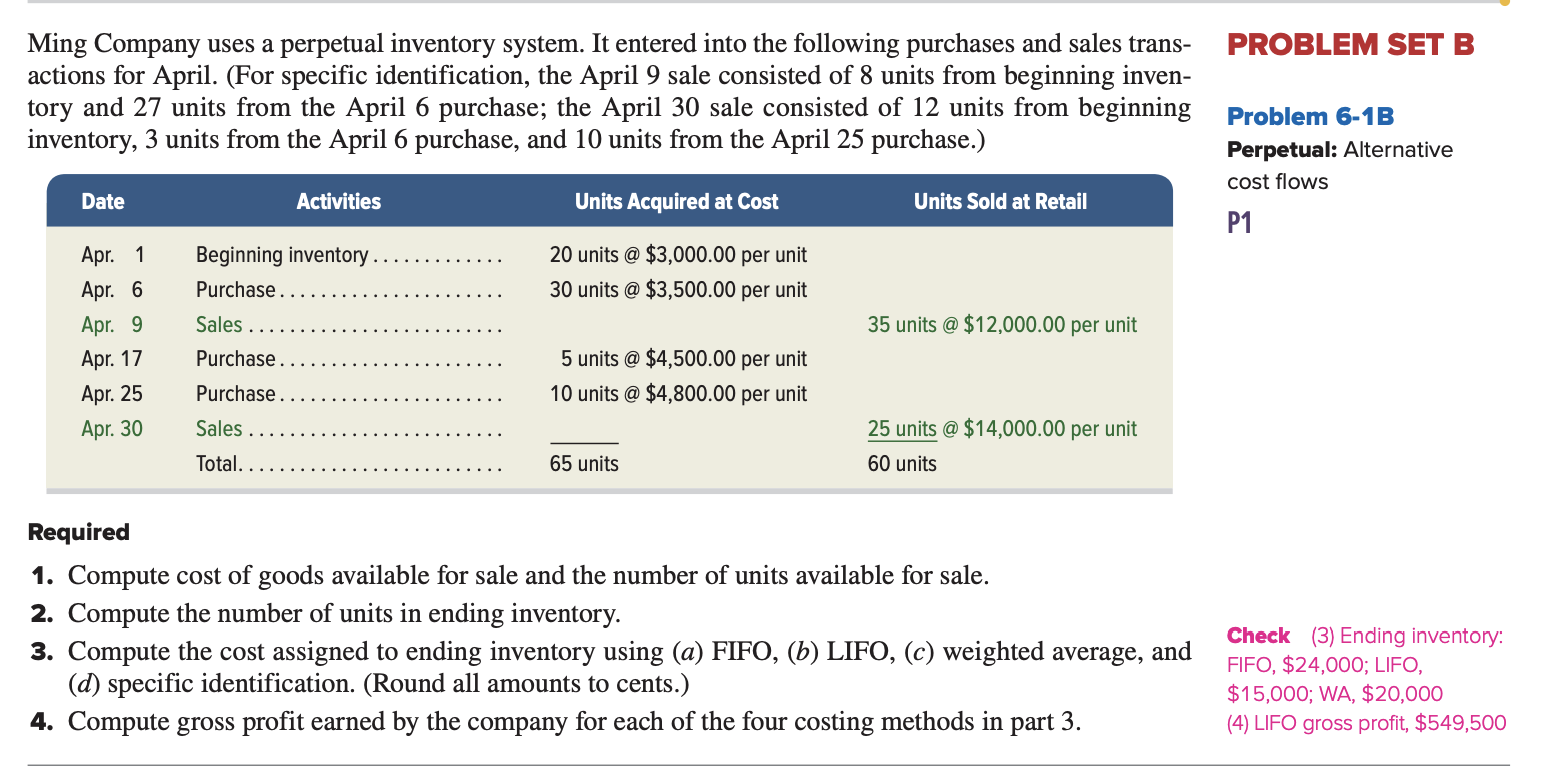
Ming Company uses a perpetual inventory system. It entered into the following purchases and sales transactions for April. (For specific identification, the April 9 sale consisted of 8 units from beginning inventory and 27 units from the April 6 purchase; the April 30 sale consisted of 12 units from beginning inventory, 3 units from the April 6 purchase, and 10 units from the April 25 purchase.)
Compute cost of goods available for sale and the number of units available for sale. 2. Compute the number of units in ending inventory. 3. Compute the cost assigned to ending inventory using (a) FIFO, (b) LIFO, (c) weighted average, and (d) specific identification. (Round all amounts to cents.) 4. Compute gross profit earned by the company for each of the four costing methods in part 3.
*Check (3) Ending inventory: FIFO, $24,000; LIFO, $15,000; WA, $20,000 (4) LIFO gross profit, $549,500*
Homework Answers
Cost of goods sold
Cost of goods sold is the cost for the company for goods which are sold. Cost of goods would include purchase price of goods sold or manufacturing costs of goods sold.
Inventory
Inventory are the goods which are not yet sold by company and therefore are assets of business. These are shown as current assets as the inventory are generally sold within one year from balance sheet date and therefore converted into cash.
FIFO method
Under this method, goods which are purchased first are sold first and therefore the remaining goods are part of inventory. The inventory is valued based on latest purchases and therefore value of inventory is higher.
LIFO method
Under this method, goods which are purchased latest are sold first and the earlier goods purchased are held as inventory and therefore inventory is valued based on earlier goods and therefore value of inventory would be lower as earlier purchase would cost lower than current purchase.
Specific identification method
Under this method, company is able to identify the ending inventory is from which batch of purchases and therefore is able to value inventory based on purchase price of that batch of purchases.
Weighted average method
Under this method, inventory is valued based on weighted average cost of purchases. In this method, weighted average per unit is calculate which is multiplied by ending inventory in units to calculate value of inventory.
Gross profit
Gross profit is the excess of profit earned over sales which is calculated as sales less cost of goods sold. Gross profit is the profit earned after deducting the direct cost of goods from sale.
Formula to calculate gross profit

1.
Calculation of cost of goods available for sale and number of units available for sale is shown below

Thus, number of units available for sale is 65 and cost of goods available for sale is $235,500.
Following shows the working

2.
Calculation of number of units in ending inventory is shown below

Thus, number of units in ending inventory is 5 units.
3.
a.
Calculation of cost assigned to ending inventory using FIFO method is shown below

Thus, cost assigned to ending inventory using FIFO method is $24,000.
Following shows the working

b.
Calculation of cost assigned to ending inventory using LIFO method is shown below

Thus, cost assigned to ending inventory using LIFO method is $15,000.
Following shows the working

c.
Calculation of cost assigned to ending inventory using weighted average method is shown below

Following shows the working

d.
Calculation of cost assigned to ending inventory using specific identification method is shown below

Thus, cost assigned to ending inventory using specific identification method is $22,500.
Following shows the working

4.
Calculation of gross profit for each of the four costing method is shown below.

Following shows the working

Add Answer to:
Problem 6-1B Perpetual: Alternative Cost Flows: Ming Company uses a perpetual inventory system.
PROBLEM SET A connect Problem 6-1A Perpetual: Alternative cost flows P1 Warnerwoods Company uses a perpetual...
 PROBLEM SET A connect Problem 6-1A Perpetual: Alternative cost flows P1 Warnerwoods Company uses a perpetual inventory system. It entered into the following purchases and sales transactions for March. (For specific identification, the March 9 sale consisted of 8o units from beginning inventory and 340 units from the March 5 purchase; the March 29 sale consisted of 40 units from the March 18 purchase and 120 units from the March 25 purchase.) Date Activities Units Acquired at Cost Units Sold...
1 Problem 6-3A Perpetual: Alternative cost flows P1 Montoure Company uses a perpetual inventory system. It...
 1 Problem 6-3A Perpetual: Alternative cost flows P1 Montoure Company uses a perpetual inventory system. It entered into the following calendar-year purchases and sales transactions. (For specific identification, units sold consist of 600 units from beginning inventory, 300 from the February 10 purchase, 200 from the March 13 purchase, 50 from the August 21 purchase, and 250 from the September 5 purchase.) Date Activities Units Acquired at Cost Units Sold at Retail Jan. Beginning inventory 600 units o $45.00 per...
Problem 6-1A Perpetual: Alternative cost flowsP Warnerwoods Company uses a perpetual inventory system. It entered into...
 Problem 6-1A Perpetual: Alternative cost flowsP Warnerwoods Company uses a perpetual inventory system. It entered into the following purchases and sales transactions for March. (For specific identification, the March 9 sale consisted of 80 units from beginning inventory and 340 units from the March 5 purchase; the March 29 sale consisted of 40 units from the March 18 purchase and 120 units from the March 25 purchase.) Units Acquired at Cost Date Activities Units Sold at Retail Beginning inventory 100...
PROBLEM SET A Warnerwoods Company uses a perpetual inventory system. It entered into the following purchases...
 PROBLEM SET A Warnerwoods Company uses a perpetual inventory system. It entered into the following purchases and sales transactions for March. (For specific identification, the March 9 sale consisted of 80 units from beginning inventory and 340 units from the March 5 purchase the March 29 sale consisted of 40 units from the March 18 purchase and 120 units from the March 25 purchase.) Problem 6-1A Perpetual: Alternative cost flows P1 Date Activities Units Acquired at Cost Units Sold at...
Problem 5-4AA Perpetual: Alternative cost flows LO P3 Montoure Company uses a perpetual inventory system. It...
 Problem 5-4AA Perpetual: Alternative cost flows LO P3 Montoure Company uses a perpetual inventory system. It entered into the following calendar-year purchases and sales transactions. Units Sold at Retail Units Acquired at Cost 660 units @ $60 per unit 330 units @ $57 per unit 110 units @ $45 per unit Activities Jan. 1 Beginning inventory Feb. 10 Purchase Mar. 13 Purchase Mar. 15 Sales Aug. 21 Purchase Sept. 5 Purchase Sept. 10 Sales Totals 715 units @ $70 per...
Warnerwoods Company uses a perpetual inventory system. It entered into the following purchases and sales transactions for March
 Warnerwoods Company uses a perpetual inventory system. It entered into the following purchases and sales transactions for March. (For specific identification, the March 9 sale consisted of 80 units from beginning inventory and 340 units from the March 5 purchase; the March 29 sale consisted of 40 units from the March 18 purchase and 120 units from the March 25 purchase.) Required 1. Compute cost of goods available for sale and the number of units available for sale. 2. Compute the number of...
what is the perpetual inventory PROBLEM SET B Ming Company uses a perpetual inventory system. It...
 what is the perpetual inventory
PROBLEM SET B Ming Company uses a perpetual inventory system. It entered into the following purchases and sales trans- actions for April. (For specific identification, the April 9 sale consisted of 8 units from beginning inven- tory and 27 units from the April 6 purchase; the April 30 sale consisted of 12 units from beginning inventory, 3 units from the April 6 purchase, and 10 units from the April 25 purchase.) Problem 6-1B Perpetual: Alternative...
what is the perpetual inventory
PROBLEM SET B Ming Company uses a perpetual inventory system. It entered into the following purchases and sales trans- actions for April. (For specific identification, the April 9 sale consisted of 8 units from beginning inven- tory and 27 units from the April 6 purchase; the April 30 sale consisted of 12 units from beginning inventory, 3 units from the April 6 purchase, and 10 units from the April 25 purchase.) Problem 6-1B Perpetual: Alternative...
problem 5-3A perpetual: alternative cost flows LO P Problem 5-3A Perpetual: Alternative cost flows LO P1...
 problem 5-3A perpetual: alternative cost flows LO P
Problem 5-3A Perpetual: Alternative cost flows LO P1 Montoure Company uses a perpetual Inventory system. It entered into the following calendar year purchases and sales transactions Units Sold at Retail Units Acquired at Cost 600 units $600 per unit 400 units $57 per unit 120 units $42 per unit Date Activities Jan. 1 Beginning inventory Feb. 10 Purchase Mar. 13 Purchase Mar. 15 Sales Aug. 21 Purchase Sept. 5 Purchase Sept. 10...
problem 5-3A perpetual: alternative cost flows LO P
Problem 5-3A Perpetual: Alternative cost flows LO P1 Montoure Company uses a perpetual Inventory system. It entered into the following calendar year purchases and sales transactions Units Sold at Retail Units Acquired at Cost 600 units $600 per unit 400 units $57 per unit 120 units $42 per unit Date Activities Jan. 1 Beginning inventory Feb. 10 Purchase Mar. 13 Purchase Mar. 15 Sales Aug. 21 Purchase Sept. 5 Purchase Sept. 10...
Warnerwoods Company uses a perpetual inventory system. It entered into the following purchases and sales transactions...
 Warnerwoods Company uses a perpetual inventory system. It entered into the following purchases and sales transactions for March. Units Sold at Retail Units Acquired at Cost 200 units @ $53.00 per unit 275 units@ $58.00 per unit Date Activities Mar. 1 Beginning inventory Mar. 5 Purchase Mar. 9 Sales Mar. 18 Purchase Mar. 25 Purchase Mar. 29 Sales Totals 360 units @ $88.00 per unit 135 units @ $63.00 per unit 250 units @ $65.00 per unit 230 units @...
Module II: Week 6: Chapter 7: Problem Solving Assignment Warnerwoods Company uses a perpetual inventory system....
 Module II: Week 6: Chapter 7: Problem Solving Assignment Warnerwoods Company uses a perpetual inventory system. It entered into the following purchases and sales transactions for March. (For special identification, the March 9 sale consisted of 80 units from beginning inventory and 340 units from March 5 purchase; the March 29 sale consisted of 40 units from the March 18 purchase and 120 units from the March 25 purchase.) Date Activities March 1 March 5 March 9 March 18 March...
 PROBLEM SET A connect Problem 6-1A Perpetual: Alternative cost flows P1 Warnerwoods Company uses a perpetual inventory system. It entered into the following purchases and sales transactions for March. (For specific identification, the March 9 sale consisted of 8o units from beginning inventory and 340 units from the March 5 purchase; the March 29 sale consisted of 40 units from the March 18 purchase and 120 units from the March 25 purchase.) Date Activities Units Acquired at Cost Units Sold...
 1 Problem 6-3A Perpetual: Alternative cost flows P1 Montoure Company uses a perpetual inventory system. It entered into the following calendar-year purchases and sales transactions. (For specific identification, units sold consist of 600 units from beginning inventory, 300 from the February 10 purchase, 200 from the March 13 purchase, 50 from the August 21 purchase, and 250 from the September 5 purchase.) Date Activities Units Acquired at Cost Units Sold at Retail Jan. Beginning inventory 600 units o $45.00 per...
 Problem 6-1A Perpetual: Alternative cost flowsP Warnerwoods Company uses a perpetual inventory system. It entered into the following purchases and sales transactions for March. (For specific identification, the March 9 sale consisted of 80 units from beginning inventory and 340 units from the March 5 purchase; the March 29 sale consisted of 40 units from the March 18 purchase and 120 units from the March 25 purchase.) Units Acquired at Cost Date Activities Units Sold at Retail Beginning inventory 100...
 PROBLEM SET A Warnerwoods Company uses a perpetual inventory system. It entered into the following purchases and sales transactions for March. (For specific identification, the March 9 sale consisted of 80 units from beginning inventory and 340 units from the March 5 purchase the March 29 sale consisted of 40 units from the March 18 purchase and 120 units from the March 25 purchase.) Problem 6-1A Perpetual: Alternative cost flows P1 Date Activities Units Acquired at Cost Units Sold at...
 Problem 5-4AA Perpetual: Alternative cost flows LO P3 Montoure Company uses a perpetual inventory system. It entered into the following calendar-year purchases and sales transactions. Units Sold at Retail Units Acquired at Cost 660 units @ $60 per unit 330 units @ $57 per unit 110 units @ $45 per unit Activities Jan. 1 Beginning inventory Feb. 10 Purchase Mar. 13 Purchase Mar. 15 Sales Aug. 21 Purchase Sept. 5 Purchase Sept. 10 Sales Totals 715 units @ $70 per...
 what is the perpetual inventory
PROBLEM SET B Ming Company uses a perpetual inventory system. It entered into the following purchases and sales trans- actions for April. (For specific identification, the April 9 sale consisted of 8 units from beginning inven- tory and 27 units from the April 6 purchase; the April 30 sale consisted of 12 units from beginning inventory, 3 units from the April 6 purchase, and 10 units from the April 25 purchase.) Problem 6-1B Perpetual: Alternative...
what is the perpetual inventory
PROBLEM SET B Ming Company uses a perpetual inventory system. It entered into the following purchases and sales trans- actions for April. (For specific identification, the April 9 sale consisted of 8 units from beginning inven- tory and 27 units from the April 6 purchase; the April 30 sale consisted of 12 units from beginning inventory, 3 units from the April 6 purchase, and 10 units from the April 25 purchase.) Problem 6-1B Perpetual: Alternative...
 problem 5-3A perpetual: alternative cost flows LO P
Problem 5-3A Perpetual: Alternative cost flows LO P1 Montoure Company uses a perpetual Inventory system. It entered into the following calendar year purchases and sales transactions Units Sold at Retail Units Acquired at Cost 600 units $600 per unit 400 units $57 per unit 120 units $42 per unit Date Activities Jan. 1 Beginning inventory Feb. 10 Purchase Mar. 13 Purchase Mar. 15 Sales Aug. 21 Purchase Sept. 5 Purchase Sept. 10...
problem 5-3A perpetual: alternative cost flows LO P
Problem 5-3A Perpetual: Alternative cost flows LO P1 Montoure Company uses a perpetual Inventory system. It entered into the following calendar year purchases and sales transactions Units Sold at Retail Units Acquired at Cost 600 units $600 per unit 400 units $57 per unit 120 units $42 per unit Date Activities Jan. 1 Beginning inventory Feb. 10 Purchase Mar. 13 Purchase Mar. 15 Sales Aug. 21 Purchase Sept. 5 Purchase Sept. 10...
 Warnerwoods Company uses a perpetual inventory system. It entered into the following purchases and sales transactions for March. Units Sold at Retail Units Acquired at Cost 200 units @ $53.00 per unit 275 units@ $58.00 per unit Date Activities Mar. 1 Beginning inventory Mar. 5 Purchase Mar. 9 Sales Mar. 18 Purchase Mar. 25 Purchase Mar. 29 Sales Totals 360 units @ $88.00 per unit 135 units @ $63.00 per unit 250 units @ $65.00 per unit 230 units @...
 Module II: Week 6: Chapter 7: Problem Solving Assignment Warnerwoods Company uses a perpetual inventory system. It entered into the following purchases and sales transactions for March. (For special identification, the March 9 sale consisted of 80 units from beginning inventory and 340 units from March 5 purchase; the March 29 sale consisted of 40 units from the March 18 purchase and 120 units from the March 25 purchase.) Date Activities March 1 March 5 March 9 March 18 March...
Most questions answered within 3 hours.
-
Where is the error in this code sequence?
String s1 = "Hello";
String s2 = "ello";...
asked 10 months ago -
Financial data for Joel de Paris, Inc., for last year
follow:
Joel de Paris, Inc.
Balance...
asked 10 months ago -
Consider this reaction:
Al2(SO4)3 (aq)+ BaCl3
(aq) Al2Cl6 (aq)- +
3BaSO4(s) . What is the...
asked 10 months ago -
Suppose that Savneet is considering increasing her
recent random sample from 20 car rentals to 40...
asked 10 months ago -
Trucks arrive at an unloading terminal at an average rate of 120
per hour.
Trucks arrive...
asked 10 months ago -
Why are methanol and ethanol completely soluble in water while
octanol is not very little soluble....
asked 10 months ago -
A facilities manager at a university reads in a research report
that the mean amount of...
asked 10 months ago -
When the CuSO4 is rehydrated by adding water to the anhydrous
compound, is this an endothermic...
asked 10 months ago -
A ray of sunlight is passing from diamond into crown glass; the
angle of incidence is...
asked 10 months ago -
A block of mass 0.249 kg is placed on top of a light, vertical
spring of...
asked 10 months ago -
how do the kidneys compensate in the presences of acidosis
a) trigger hyperventilate
b) reserve acid...
asked 10 months ago -
Question 501 pts
The rental rate of capital to the firm increases. Which of the
following...
asked 10 months ago