
Homework Answers
Request Answer!
We need at least 10 more requests to produce the answer.
0 / 10 have requested this problem solution
The more requests, the faster the answer.
Add Answer to:
Which of the following is the best representation of potassium chloride in water? The water molecules...
7. Which of the following drawings is the best representation of the reaction bet calcium chloride...
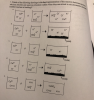 7. Which of the following drawings is the best representation of the reaction bet calcium chloride and aqueous potassium sulfate when they are mixed in stoichiomat (neither reactant is limiting)? between aques iometric amount Ca2+ / k + S02 CT CIK* S02 K* Ca2+ K CI K* CI CI t(solid) cr S02 t(solid) Caze к cr 1 + CI so Ca²+ (solid) Ca²+ K-K Cl-CI SO? CaSO4 CHCI K-K
the solubility of potassium chloride is 34.2g/100.0g of water at 20°C. Which one of the following...
the solubility of potassium chloride is 34.2g/100.0g of water at 20°C. Which one of the following best describes a solution prepared by adding 58.3 g of potassium chloride to 150.0 g of water at this temperature?
Potassium hydroxide completely dissolves in water. How would you best describe potassium hydroxide? O A weak...
 Potassium hydroxide completely dissolves in water. How would you best describe potassium hydroxide? O A weak base O B. weak nold O strong acid OD strong base QUESTION 14 When an ionic compound dissolves in water A the hydrogen end of water molecules surround the cations B. none of these are correct o the oxygen end of water molecules surround both the anions and the cations on the oxygen end of water molecules surround the cations O E the oxygen...
Question : Potassium chloride , KCl , dissolves in water . Draw a picture that shows...
Question : Potassium chloride , KCl , dissolves in water . Draw a picture that shows the hydration of the ions ( both the cation and the anion ) by water molecules . Be careful with the orientation of the water molecules , and depict any charges , partial charges , or dipole vectors .
Question: Potassium chloride, KCl, dissolves in water. Draw a picture that shows the hydration of the...
 Question: Potassium chloride, KCl, dissolves in water. Draw a picture that shows the hydration of the ions (both the cation and the anion) by water molecules. Be careful with the orientation of the water molecules, and depict any charges, partial charges, or dipole vectors.
Potassium bicarbonate, sodium iodide, zinc chloride, methanol (CH3OH) and ammonium chloride are soluble in water. Which...
Potassium bicarbonate, sodium iodide, zinc chloride, methanol (CH3OH) and ammonium chloride are soluble in water. Which produces the largest number of dissolved particles per mole of dissolved solute?
UTILU URSUS VULLIG uraru. Question: Potassium chloride, KCI, dissolves in water. Draw a picture that shows...
 UTILU URSUS VULLIG uraru. Question: Potassium chloride, KCI, dissolves in water. Draw a picture that shows the hydration of the ions (both the cation and the anion) by water molecules. Be careful with the orientation of the water molecules, and depict any charges, partial charges, or dipole vectors.
Potassium metal and chlorine gas react vigorously to form potassium chloride. Which statement is correct? A....
Potassium metal and chlorine gas react vigorously to form potassium chloride. Which statement is correct? A. K atoms lose an electron and become Ar atoms. B. Cl atoms gain an electron and become Ar atoms. C. K atoms gain an electron and attain the same electron configuration as an Ar atom. D. Cl atoms gain an electron and attain the same electron configuration as an Ar atom. E. The K and Cl atoms change into different, more stable atoms.
In the context of sampling accuracy “representation” is best described as which one of the following definitions. a) The...
In the context of sampling accuracy “representation” is best described as which one of the following definitions. a) The ability of the employed method to accurately represent the variables included in the study. b) How well the sampling procedure conforms to best practices in the extant literature. c) The accuracy by which the statistical analysis detects direct effects. d) The degree to which a sample has similar characteristics to the population in the properties that are relevant to the study.
An aqueous potassium chloride, KCI, solution is made by dissolving 0,350 mol KCl in 6000 g...
 An aqueous potassium chloride, KCI, solution is made by dissolving 0,350 mol KCl in 6000 g of water. Calculate the molality of the solution molality: Choose the best definition for the activated complex, or transition state, from the list below. O A material in the process of changing from solid to liquid or liquid to as A low energy, short-lived molecule that is made in an early step of the reaction and consumed in a later step. A transient, high...
 7. Which of the following drawings is the best representation of the reaction bet calcium chloride and aqueous potassium sulfate when they are mixed in stoichiomat (neither reactant is limiting)? between aques iometric amount Ca2+ / k + S02 CT CIK* S02 K* Ca2+ K CI K* CI CI t(solid) cr S02 t(solid) Caze к cr 1 + CI so Ca²+ (solid) Ca²+ K-K Cl-CI SO? CaSO4 CHCI K-K
 Potassium hydroxide completely dissolves in water. How would you best describe potassium hydroxide? O A weak base O B. weak nold O strong acid OD strong base QUESTION 14 When an ionic compound dissolves in water A the hydrogen end of water molecules surround the cations B. none of these are correct o the oxygen end of water molecules surround both the anions and the cations on the oxygen end of water molecules surround the cations O E the oxygen...
 Question: Potassium chloride, KCl, dissolves in water. Draw a picture that shows the hydration of the ions (both the cation and the anion) by water molecules. Be careful with the orientation of the water molecules, and depict any charges, partial charges, or dipole vectors.
 UTILU URSUS VULLIG uraru. Question: Potassium chloride, KCI, dissolves in water. Draw a picture that shows the hydration of the ions (both the cation and the anion) by water molecules. Be careful with the orientation of the water molecules, and depict any charges, partial charges, or dipole vectors.
 An aqueous potassium chloride, KCI, solution is made by dissolving 0,350 mol KCl in 6000 g of water. Calculate the molality of the solution molality: Choose the best definition for the activated complex, or transition state, from the list below. O A material in the process of changing from solid to liquid or liquid to as A low energy, short-lived molecule that is made in an early step of the reaction and consumed in a later step. A transient, high...
Most questions answered within 3 hours.
-
Where is the error in this code sequence?
String s1 = "Hello";
String s2 = "ello";...
asked 11 months ago -
Financial data for Joel de Paris, Inc., for last year
follow:
Joel de Paris, Inc.
Balance...
asked 11 months ago -
Consider this reaction:
Al2(SO4)3 (aq)+ BaCl3
(aq) Al2Cl6 (aq)- +
3BaSO4(s) . What is the...
asked 11 months ago -
Suppose that Savneet is considering increasing her
recent random sample from 20 car rentals to 40...
asked 11 months ago -
Trucks arrive at an unloading terminal at an average rate of 120
per hour.
Trucks arrive...
asked 11 months ago -
Why are methanol and ethanol completely soluble in water while
octanol is not very little soluble....
asked 11 months ago -
A facilities manager at a university reads in a research report
that the mean amount of...
asked 11 months ago -
When the CuSO4 is rehydrated by adding water to the anhydrous
compound, is this an endothermic...
asked 11 months ago -
A ray of sunlight is passing from diamond into crown glass; the
angle of incidence is...
asked 11 months ago -
A block of mass 0.249 kg is placed on top of a light, vertical
spring of...
asked 11 months ago -
how do the kidneys compensate in the presences of acidosis
a) trigger hyperventilate
b) reserve acid...
asked 11 months ago -
Question 501 pts
The rental rate of capital to the firm increases. Which of the
following...
asked 11 months ago