
Homework Answers
Complete solution as per given stress strain curve is shown below.
i) Approximate load causing specified strength = maximum stress on curve * cross section area
Approximate load causing specified strength = 3 * (pi * 6 * 6 /4)
Approximate load causing specified strength = 84.82 k
ii) Tensile strength as per ACI, ft = 7.5 * sqrt (fc')
ft = 7.5 * sqrt (3000) = 410.8 psi
ft = 0.4108 ksi
iii) Calculation of Modulus of elasticity
a) As per ACI expression
E = 57000 * sqrt (fc')
E = 57000 * sqrt (3000)
E = 3122018.6 psi
E = 3122 ksi
b) Secant approach modulus of elasticity is obtained by following procedure
- Draw a line from starting point of the curve to point on the curve.
- Slope of the line gives the modulus of elasticity.
E = (2-1) / (0.001 - 0.0005)
E = 2000 ksi
Add Answer to:
Stress-strain curve represents the result of 6" x 12" concrete cylinders tested in compression. From the...
A 6 x 12-in. concrete cylinder was tested to failure. The following loads and strains were...
 A 6 x 12-in. concrete cylinder was tested to failure. The following loads and strains were recorded: Load, kips Strain 10-4 Load, kips Strain×10-4 0.0 12 24 36 48 60 0.0 1.2 2.0 3.2 5.2 7.2 72 84 96 108 95 82 10.0 13.6 18.0 30.0 39.0 42.0 a. Draw the stress-strain diagram of concrete and determine the maximum stress and corresponding strain b. Determine the initial modulus and secant modulus. c. Calculate the modulus of elasticity of concrete using...
A 6*12-in. concrete cylinder was tested under compression, and the ultimate load was calculated as 141,371.7...
A 6*12-in. concrete cylinder was tested under compression, and the ultimate load was calculated as 141,371.7 lb. Calculate the ultimate compressive strength of the cylinder in psi. A similar specimen with the same strength was initially loaded to 50 psi and strain was measured as 0.00050. After that, the specimen was loaded to 40% of its ultimate strength and the measured strain was 0.00078. Calculate the modulus of elasticity of concrete. c. Under the same loading conditions stated in part...
Q1 (10 points): Consider the two stress-strain curves shown to the right. Based on each of...
 Q1 (10 points): Consider the two stress-strain curves shown to the right. Based on each of these stress-strain curves, calculate or identify the following items: (a) • Modulus of elasticity Yield stress Yield strain Ultimate stress Ultimate strain Fracture stress Fracture strain • Ductility ratio Modulus of resilience Modulus of toughness u oo Stress (ksi) Straini 0.0012 0.0031 0.0039 0.0064 0.0079 O Note: If any of the values you need to identify or calculate are not explicitly clear from the...
The stress–strain diagram for a steel alloy having an original diameter of 0.5 in. and a...
 The stress–strain diagram for a steel alloy having an original
diameter of 0.5 in. and a gauge length of 2 in. is given in the
figure. If the specimen is loaded until it is stressed to 90 ksi,
determine the approximate amount of elastic recovery and the
increase in the gauge length after it is unloaded. Determine also
approximately the modulus of resilience and the modulus of
toughness for the material.
in. /in.) 0 0 - 0.05 0.10 0.15 0.20...
The stress–strain diagram for a steel alloy having an original
diameter of 0.5 in. and a gauge length of 2 in. is given in the
figure. If the specimen is loaded until it is stressed to 90 ksi,
determine the approximate amount of elastic recovery and the
increase in the gauge length after it is unloaded. Determine also
approximately the modulus of resilience and the modulus of
toughness for the material.
in. /in.) 0 0 - 0.05 0.10 0.15 0.20...
1-Determine the % elongation, yield stress and ultimate tensile strength of the material tested above 2-Calculate...
 1-Determine the % elongation, yield stress and ultimate tensile
strength of the material tested above
2-Calculate the elastic modulus of the material tested above
3-If a 200mm cylindrical rod of the material tested above, with
radius 20mm, was subjected to a tensile load of 200kN, what would
the length be?
4-An underground wastewater steel pipe with 2mm walls carries an
ammonia solution of 40 g/m3. The pipe is in contact with
groundwater (assume 0 g/m3 ammonia). Determine the
diffusion rate...
1-Determine the % elongation, yield stress and ultimate tensile
strength of the material tested above
2-Calculate the elastic modulus of the material tested above
3-If a 200mm cylindrical rod of the material tested above, with
radius 20mm, was subjected to a tensile load of 200kN, what would
the length be?
4-An underground wastewater steel pipe with 2mm walls carries an
ammonia solution of 40 g/m3. The pipe is in contact with
groundwater (assume 0 g/m3 ammonia). Determine the
diffusion rate...
Question 2. (Total 18 marks) 350 350 300 300 Same plot, but with expanded x axis...
 Question 2. (Total 18 marks) 350 350 300 300 Same plot, but with expanded x axis 250 250 200 Stress (MPa) Stress (MPa) 150 $150 100 100 0 0 0 0.02 0.04 0.06 0.12 0.14 0.16 0.18 0 0.08 0.1 Strain 0.001 0.002 0.003 0.004 0.005 0.006 0.007 0.008 0.009 0.01 Strain (a) Determine the % elongation, yield stress and ultimate tensile strength of the material tested above (3 marks) (b) Calculate the elastic modulus of the material tested above...
QUESTION 6 Which of the following materials is likely to have a stress strain curve as...
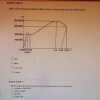 QUESTION 6 Which of the following materials is likely to have a stress strain curve as shown below? b 500 MPa 400 MPa 250 MPa 150 MPa 0.00075 0.02 0.0013 0.2 0.25 0.28 € O steel O glass O a ceramic copper QUESTION 7 Which of the following properties cannot be determined from a tensile test? modulus of elasticity yield strength ductility fatigue life
Identify the material. that fits the stress-strain curve. A) MILD STEEL Yield Strength: 30 kN, Ultimate...
 Identify the material. that fits the stress-strain
curve.
A)
MILD STEEL
Yield Strength: 30 kN, Ultimate Strength: 40 kN, Young Modulus:
30/0.7 kN/mm = 43 kN/mm
B)
ALUMINUM
Yield Strength: 20 kN, Ultimate Strength: 26 kN, Young Modulus:
20 kN/mm
C)
CAST IRON
Yield Strength: N/A, Ultimate Strength: 20 kN, Young Modulus:
20/0.4 kN/mm = 50 kN/mm
D)
COPPER
Yield Strength: 30 kN, Ultimate Strength: 35 kN, Young Modulus:
30 kN/mm
Instructions CLI Tesile TesTeR Test Specimens Material - Mild...
Identify the material. that fits the stress-strain
curve.
A)
MILD STEEL
Yield Strength: 30 kN, Ultimate Strength: 40 kN, Young Modulus:
30/0.7 kN/mm = 43 kN/mm
B)
ALUMINUM
Yield Strength: 20 kN, Ultimate Strength: 26 kN, Young Modulus:
20 kN/mm
C)
CAST IRON
Yield Strength: N/A, Ultimate Strength: 20 kN, Young Modulus:
20/0.4 kN/mm = 50 kN/mm
D)
COPPER
Yield Strength: 30 kN, Ultimate Strength: 35 kN, Young Modulus:
30 kN/mm
Instructions CLI Tesile TesTeR Test Specimens Material - Mild...
 A 6 x 12-in. concrete cylinder was tested to failure. The following loads and strains were recorded: Load, kips Strain 10-4 Load, kips Strain×10-4 0.0 12 24 36 48 60 0.0 1.2 2.0 3.2 5.2 7.2 72 84 96 108 95 82 10.0 13.6 18.0 30.0 39.0 42.0 a. Draw the stress-strain diagram of concrete and determine the maximum stress and corresponding strain b. Determine the initial modulus and secant modulus. c. Calculate the modulus of elasticity of concrete using...
 Q1 (10 points): Consider the two stress-strain curves shown to the right. Based on each of these stress-strain curves, calculate or identify the following items: (a) • Modulus of elasticity Yield stress Yield strain Ultimate stress Ultimate strain Fracture stress Fracture strain • Ductility ratio Modulus of resilience Modulus of toughness u oo Stress (ksi) Straini 0.0012 0.0031 0.0039 0.0064 0.0079 O Note: If any of the values you need to identify or calculate are not explicitly clear from the...
 The stress–strain diagram for a steel alloy having an original
diameter of 0.5 in. and a gauge length of 2 in. is given in the
figure. If the specimen is loaded until it is stressed to 90 ksi,
determine the approximate amount of elastic recovery and the
increase in the gauge length after it is unloaded. Determine also
approximately the modulus of resilience and the modulus of
toughness for the material.
in. /in.) 0 0 - 0.05 0.10 0.15 0.20...
The stress–strain diagram for a steel alloy having an original
diameter of 0.5 in. and a gauge length of 2 in. is given in the
figure. If the specimen is loaded until it is stressed to 90 ksi,
determine the approximate amount of elastic recovery and the
increase in the gauge length after it is unloaded. Determine also
approximately the modulus of resilience and the modulus of
toughness for the material.
in. /in.) 0 0 - 0.05 0.10 0.15 0.20...
 1-Determine the % elongation, yield stress and ultimate tensile
strength of the material tested above
2-Calculate the elastic modulus of the material tested above
3-If a 200mm cylindrical rod of the material tested above, with
radius 20mm, was subjected to a tensile load of 200kN, what would
the length be?
4-An underground wastewater steel pipe with 2mm walls carries an
ammonia solution of 40 g/m3. The pipe is in contact with
groundwater (assume 0 g/m3 ammonia). Determine the
diffusion rate...
1-Determine the % elongation, yield stress and ultimate tensile
strength of the material tested above
2-Calculate the elastic modulus of the material tested above
3-If a 200mm cylindrical rod of the material tested above, with
radius 20mm, was subjected to a tensile load of 200kN, what would
the length be?
4-An underground wastewater steel pipe with 2mm walls carries an
ammonia solution of 40 g/m3. The pipe is in contact with
groundwater (assume 0 g/m3 ammonia). Determine the
diffusion rate...
 Question 2. (Total 18 marks) 350 350 300 300 Same plot, but with expanded x axis 250 250 200 Stress (MPa) Stress (MPa) 150 $150 100 100 0 0 0 0.02 0.04 0.06 0.12 0.14 0.16 0.18 0 0.08 0.1 Strain 0.001 0.002 0.003 0.004 0.005 0.006 0.007 0.008 0.009 0.01 Strain (a) Determine the % elongation, yield stress and ultimate tensile strength of the material tested above (3 marks) (b) Calculate the elastic modulus of the material tested above...
 QUESTION 6 Which of the following materials is likely to have a stress strain curve as shown below? b 500 MPa 400 MPa 250 MPa 150 MPa 0.00075 0.02 0.0013 0.2 0.25 0.28 € O steel O glass O a ceramic copper QUESTION 7 Which of the following properties cannot be determined from a tensile test? modulus of elasticity yield strength ductility fatigue life
 Identify the material. that fits the stress-strain
curve.
A)
MILD STEEL
Yield Strength: 30 kN, Ultimate Strength: 40 kN, Young Modulus:
30/0.7 kN/mm = 43 kN/mm
B)
ALUMINUM
Yield Strength: 20 kN, Ultimate Strength: 26 kN, Young Modulus:
20 kN/mm
C)
CAST IRON
Yield Strength: N/A, Ultimate Strength: 20 kN, Young Modulus:
20/0.4 kN/mm = 50 kN/mm
D)
COPPER
Yield Strength: 30 kN, Ultimate Strength: 35 kN, Young Modulus:
30 kN/mm
Instructions CLI Tesile TesTeR Test Specimens Material - Mild...
Identify the material. that fits the stress-strain
curve.
A)
MILD STEEL
Yield Strength: 30 kN, Ultimate Strength: 40 kN, Young Modulus:
30/0.7 kN/mm = 43 kN/mm
B)
ALUMINUM
Yield Strength: 20 kN, Ultimate Strength: 26 kN, Young Modulus:
20 kN/mm
C)
CAST IRON
Yield Strength: N/A, Ultimate Strength: 20 kN, Young Modulus:
20/0.4 kN/mm = 50 kN/mm
D)
COPPER
Yield Strength: 30 kN, Ultimate Strength: 35 kN, Young Modulus:
30 kN/mm
Instructions CLI Tesile TesTeR Test Specimens Material - Mild...
Most questions answered within 3 hours.
-
Where is the error in this code sequence?
String s1 = "Hello";
String s2 = "ello";...
asked 11 months ago -
Financial data for Joel de Paris, Inc., for last year
follow:
Joel de Paris, Inc.
Balance...
asked 11 months ago -
Consider this reaction:
Al2(SO4)3 (aq)+ BaCl3
(aq) Al2Cl6 (aq)- +
3BaSO4(s) . What is the...
asked 11 months ago -
Suppose that Savneet is considering increasing her
recent random sample from 20 car rentals to 40...
asked 11 months ago -
Trucks arrive at an unloading terminal at an average rate of 120
per hour.
Trucks arrive...
asked 11 months ago -
Why are methanol and ethanol completely soluble in water while
octanol is not very little soluble....
asked 11 months ago -
A facilities manager at a university reads in a research report
that the mean amount of...
asked 11 months ago -
When the CuSO4 is rehydrated by adding water to the anhydrous
compound, is this an endothermic...
asked 11 months ago -
A ray of sunlight is passing from diamond into crown glass; the
angle of incidence is...
asked 11 months ago -
A block of mass 0.249 kg is placed on top of a light, vertical
spring of...
asked 11 months ago -
how do the kidneys compensate in the presences of acidosis
a) trigger hyperventilate
b) reserve acid...
asked 11 months ago -
Question 501 pts
The rental rate of capital to the firm increases. Which of the
following...
asked 11 months ago