
Homework Answers
This equation is of the form,
And its soluton is given by,
In this case,
So, we have our solution,
so we have,
So, from this we have,
So, our wave equation is given by,
Or putting the value of k,
b)
For spatial period, that is the wavelength, we find the distance between the two alternate points where this function vanishes
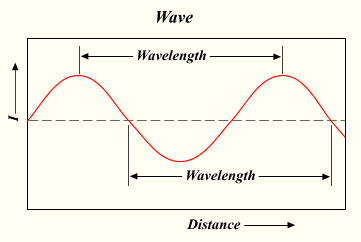
So,
Distance between alternate point = 2*pi,
So,
c)
Given that,
So, we get,
Add Answer to:
Free quantum particle. In Quantum Mechanics, is the time-independent Schrodinger's equation for a free particle in...
a) What is Schrodinger's equation for a particle of mass m that is constrained to move...
a) What is Schrodinger's equation for a particle of mass m that is constrained to move in a circle of radius R, so that psi depends only on phi? b) Solve this equation for psi and evaluate the normalization constant. (Hint: review the solution of Schrodinger's equation for the hydrogen atom) c) Find the possible energies of the particle. d)Find the possible angular momenta of the particle.
a) What is Schrodinger's equation for a particle of mass m that is constrained to move...
a) What is Schrodinger's equation for a particle of mass m that is constrained to move in a circle of radius R, so that psi depends only on phi? b) Solve this equation for psi and evaluate the normalization constant.. d)Find the possible angular momenta of the particle.
QUESTION 1: In quantum mechanics, the behaviour of a quantum particle (like an electron, for example)...
 QUESTION 1: In quantum mechanics, the behaviour of a quantum particle (like an electron, for example) is described by the Schrödinger equation. The time-independent Schrödinger equation can be written in operator notation as H{y(x, y, z))-Ey(x, y, z) where H is known as the Hamiltonian operator and is defined as h2 2m Here, is a positive physical) constant known as Planck's constant and m is the mass of the particle (also Just a constant). V(x,y,Z) is a real-valued function. The...
-36 Imagine an alternate universe where the value of the Planck constant is 6.62607x 10J- In that universe, which of the following objects would require quantum mechanics to describe, that is, would...
 -36 Imagine an alternate universe where the value of the Planck constant is 6.62607x 10J- In that universe, which of the following objects would require quantum mechanics to describe, that is, would show both particle and wave properties? Which objects would act like everyday objects, and be adequately described by classical mechanics? object quantum or classical? classical A human with a mass of 70. kg, 2.4 m high, moving at 4.5 m/s. quantum classical A ball with a mass of...
What would be the result of a kinetic energy measurement on a free quantum particle? (i.e....
What would be the result of a kinetic energy measurement on a free quantum particle? (i.e. potential energy V(x) = 0) of mass m with a wave-function ψ(x) = e^(-x^2) A hint for this question: Consider only the kinetic energy operator. Is the given function an eigenfunction of this operator? If yes, what will be the result of the measurement? If not an eigenfunction, what would be the result of the measurement?
Introduction to Quantum Mechanics problem: 3. Find the normalized stationary states and allowed bound state energies...
 Introduction to Quantum Mechanics
problem:
3. Find the normalized stationary states and allowed bound state energies of the Schrodinger equation for a particle of mass m and energy E < Vo in the semi-infinite potential well Vo 0.
Introduction to Quantum Mechanics
problem:
3. Find the normalized stationary states and allowed bound state energies of the Schrodinger equation for a particle of mass m and energy E < Vo in the semi-infinite potential well Vo 0.
The time-independent Schroedinger equation is given by: − Wave functions that satisfy this equation are called...
 The time-independent Schroedinger equation is given by:
− Wave functions that satisfy this equation are called energy
eigenstates. a) If U=0 for all positions, this represents a free
particle. For a wave function with definite momentum ℏ,, compute E.
b) Is the relationship derived from a) consistent with what we know
from classical mechanics for a free particle? Explain how or how
not. c) Consider the wave function ((^b[j + ^bâj), with A some
number and c, d not equal...
The time-independent Schroedinger equation is given by:
− Wave functions that satisfy this equation are called energy
eigenstates. a) If U=0 for all positions, this represents a free
particle. For a wave function with definite momentum ℏ,, compute E.
b) Is the relationship derived from a) consistent with what we know
from classical mechanics for a free particle? Explain how or how
not. c) Consider the wave function ((^b[j + ^bâj), with A some
number and c, d not equal...
3. A particle of mass m moves in one dimension, and has position r(t) at time t. The particle has...
 Mechanics.
3. A particle of mass m moves in one dimension, and has position r(t) at time t. The particle has potential energy V(x) and its relativistic Lagrangian is given by where mo is the rest mass of the particle and c is the speed of light (a) Writing qr and denoting by p its associated canonical momenta, show that the Hamiltonian is given by (show it from first principles rather than using the energy mzc2 6 marks (b) Write...
Mechanics.
3. A particle of mass m moves in one dimension, and has position r(t) at time t. The particle has potential energy V(x) and its relativistic Lagrangian is given by where mo is the rest mass of the particle and c is the speed of light (a) Writing qr and denoting by p its associated canonical momenta, show that the Hamiltonian is given by (show it from first principles rather than using the energy mzc2 6 marks (b) Write...
9. The wavefunction, p(x,t), of a particle moving along the x-axis, whose potential energy V(x) i...
 Question #9 all parts thanks
9. The wavefunction, p(x,t), of a particle moving along the x-axis, whose potential energy V(x) is independent of time, is described by the one-dimensional non-relativistic Schrödinger equation (where m is its mass, h is the reduced Planck constant, i is the imaginary number): 2m (a) Verify that it is a parabolic equation (page E-1-2). [It has wave-like solutions, however.] (b) Use the substitution Px,t)-Xx)Tt) to separate the equation into two ODEs. (c) Solve for T,...
Question #9 all parts thanks
9. The wavefunction, p(x,t), of a particle moving along the x-axis, whose potential energy V(x) is independent of time, is described by the one-dimensional non-relativistic Schrödinger equation (where m is its mass, h is the reduced Planck constant, i is the imaginary number): 2m (a) Verify that it is a parabolic equation (page E-1-2). [It has wave-like solutions, however.] (b) Use the substitution Px,t)-Xx)Tt) to separate the equation into two ODEs. (c) Solve for T,...
Question 21 Consider a free electron in one dimension (i.e. an electron free to move along...
 Question 21 Consider a free electron in one dimension (i.e. an electron free to move along say the x-direction on (a) The time-independent Schrödinger equation is Αψη (x)-Εηψη (x), where is the Hamiltonian (total energy) operator, and ψη (x) are the electron wave functions associated with energies En Assuming the electron's energy entirely comprises kinetic energy (as it is 'free' there is no potential energy term), write down the Schrödinger equation given that the momentum operator in one- dimension is...
 QUESTION 1: In quantum mechanics, the behaviour of a quantum particle (like an electron, for example) is described by the Schrödinger equation. The time-independent Schrödinger equation can be written in operator notation as H{y(x, y, z))-Ey(x, y, z) where H is known as the Hamiltonian operator and is defined as h2 2m Here, is a positive physical) constant known as Planck's constant and m is the mass of the particle (also Just a constant). V(x,y,Z) is a real-valued function. The...
 -36 Imagine an alternate universe where the value of the Planck constant is 6.62607x 10J- In that universe, which of the following objects would require quantum mechanics to describe, that is, would show both particle and wave properties? Which objects would act like everyday objects, and be adequately described by classical mechanics? object quantum or classical? classical A human with a mass of 70. kg, 2.4 m high, moving at 4.5 m/s. quantum classical A ball with a mass of...
 Introduction to Quantum Mechanics
problem:
3. Find the normalized stationary states and allowed bound state energies of the Schrodinger equation for a particle of mass m and energy E < Vo in the semi-infinite potential well Vo 0.
Introduction to Quantum Mechanics
problem:
3. Find the normalized stationary states and allowed bound state energies of the Schrodinger equation for a particle of mass m and energy E < Vo in the semi-infinite potential well Vo 0.
 The time-independent Schroedinger equation is given by:
− Wave functions that satisfy this equation are called energy
eigenstates. a) If U=0 for all positions, this represents a free
particle. For a wave function with definite momentum ℏ,, compute E.
b) Is the relationship derived from a) consistent with what we know
from classical mechanics for a free particle? Explain how or how
not. c) Consider the wave function ((^b[j + ^bâj), with A some
number and c, d not equal...
The time-independent Schroedinger equation is given by:
− Wave functions that satisfy this equation are called energy
eigenstates. a) If U=0 for all positions, this represents a free
particle. For a wave function with definite momentum ℏ,, compute E.
b) Is the relationship derived from a) consistent with what we know
from classical mechanics for a free particle? Explain how or how
not. c) Consider the wave function ((^b[j + ^bâj), with A some
number and c, d not equal...
 Mechanics.
3. A particle of mass m moves in one dimension, and has position r(t) at time t. The particle has potential energy V(x) and its relativistic Lagrangian is given by where mo is the rest mass of the particle and c is the speed of light (a) Writing qr and denoting by p its associated canonical momenta, show that the Hamiltonian is given by (show it from first principles rather than using the energy mzc2 6 marks (b) Write...
Mechanics.
3. A particle of mass m moves in one dimension, and has position r(t) at time t. The particle has potential energy V(x) and its relativistic Lagrangian is given by where mo is the rest mass of the particle and c is the speed of light (a) Writing qr and denoting by p its associated canonical momenta, show that the Hamiltonian is given by (show it from first principles rather than using the energy mzc2 6 marks (b) Write...
 Question #9 all parts thanks
9. The wavefunction, p(x,t), of a particle moving along the x-axis, whose potential energy V(x) is independent of time, is described by the one-dimensional non-relativistic Schrödinger equation (where m is its mass, h is the reduced Planck constant, i is the imaginary number): 2m (a) Verify that it is a parabolic equation (page E-1-2). [It has wave-like solutions, however.] (b) Use the substitution Px,t)-Xx)Tt) to separate the equation into two ODEs. (c) Solve for T,...
Question #9 all parts thanks
9. The wavefunction, p(x,t), of a particle moving along the x-axis, whose potential energy V(x) is independent of time, is described by the one-dimensional non-relativistic Schrödinger equation (where m is its mass, h is the reduced Planck constant, i is the imaginary number): 2m (a) Verify that it is a parabolic equation (page E-1-2). [It has wave-like solutions, however.] (b) Use the substitution Px,t)-Xx)Tt) to separate the equation into two ODEs. (c) Solve for T,...
 Question 21 Consider a free electron in one dimension (i.e. an electron free to move along say the x-direction on (a) The time-independent Schrödinger equation is Αψη (x)-Εηψη (x), where is the Hamiltonian (total energy) operator, and ψη (x) are the electron wave functions associated with energies En Assuming the electron's energy entirely comprises kinetic energy (as it is 'free' there is no potential energy term), write down the Schrödinger equation given that the momentum operator in one- dimension is...
Most questions answered within 3 hours.
-
Where is the error in this code sequence?
String s1 = "Hello";
String s2 = "ello";...
asked 10 months ago -
Financial data for Joel de Paris, Inc., for last year
follow:
Joel de Paris, Inc.
Balance...
asked 10 months ago -
Consider this reaction:
Al2(SO4)3 (aq)+ BaCl3
(aq) Al2Cl6 (aq)- +
3BaSO4(s) . What is the...
asked 10 months ago -
Suppose that Savneet is considering increasing her
recent random sample from 20 car rentals to 40...
asked 10 months ago -
Trucks arrive at an unloading terminal at an average rate of 120
per hour.
Trucks arrive...
asked 10 months ago -
Why are methanol and ethanol completely soluble in water while
octanol is not very little soluble....
asked 10 months ago -
A facilities manager at a university reads in a research report
that the mean amount of...
asked 10 months ago -
When the CuSO4 is rehydrated by adding water to the anhydrous
compound, is this an endothermic...
asked 10 months ago -
A ray of sunlight is passing from diamond into crown glass; the
angle of incidence is...
asked 10 months ago -
A block of mass 0.249 kg is placed on top of a light, vertical
spring of...
asked 10 months ago -
how do the kidneys compensate in the presences of acidosis
a) trigger hyperventilate
b) reserve acid...
asked 10 months ago -
Question 501 pts
The rental rate of capital to the firm increases. Which of the
following...
asked 10 months ago