
Homework Answers


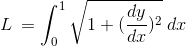
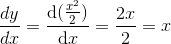
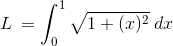

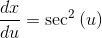







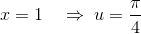
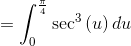


![=\left[\frac{\sec ^2\left(u\right)\sin \left(u\right)}{2}\right]^{\frac{\pi }{4}}_0+\frac{1}{2}\cdot \int _0^{\frac{\pi }{4}}\sec \left(u\right)du --------- (1)](http://img.homeworklib.com/questions/ae340ea0-3352-11eb-a8f3-2d084efc1b8f.png?x-oss-process=image/resize,w_560)
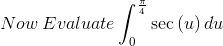

![=\left[\ln \left|\tan \left(u\right)+\sec \left(u\right)\right|\right]^{\frac{\pi }{4}}_0](http://img.homeworklib.com/questions/af429030-3352-11eb-bfb1-1f2c2fa05ffb.png?x-oss-process=image/resize,w_560)

![\left[\ln \left|\tan \left(u\right)+\sec \left(u\right)\right|\right]^{\frac{\pi }{4}}_0=\ln \left(1+\sqrt{2}\right)](http://img.homeworklib.com/questions/afe97e00-3352-11eb-9c99-65ed75830107.png?x-oss-process=image/resize,w_560)

![=\left[\frac{\sec ^2\left(u\right)\sin \left(u\right)}{2}\right]^{\frac{\pi }{4}}_0+\frac{1}{2}\ln \left(1+\sqrt{2}\right)](http://img.homeworklib.com/questions/b099b170-3352-11eb-a357-674e0e3be6b3.png?x-oss-process=image/resize,w_560)

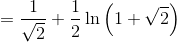
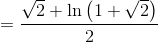
![=\left[\frac{\sec \left(u\right)\tan \left(u\right)}{2}\right]^{\frac{\pi }{4}}_0+\frac{1}{2}\ln \left(1+\sqrt{2}\right)](http://img.homeworklib.com/questions/b14bbbd0-3352-11eb-ad22-e12517d01f16.png?x-oss-process=image/resize,w_560)

Add Answer to:
26 20: Find the cray length of the curvey from =0 tox= 1. Show all of...
1. (20 points) Suppose B is the solid region inside the sphere 2+ y2 +2 4, above the plane = 1, a...
 Please show all steps. Thank you, need to verify what I'm doing
wrong.
1. (20 points) Suppose B is the solid region inside the sphere 2+ y2 +2 4, above the plane = 1, and in the first octant (z, y, z 0)、z, y and z are measured in meters and the density over B is given by the function p(z, y, z)-(12 + y2 + ?)-1 kg/m3 (a) Set up and write the triple integral that gives the mass...
Please show all steps. Thank you, need to verify what I'm doing
wrong.
1. (20 points) Suppose B is the solid region inside the sphere 2+ y2 +2 4, above the plane = 1, and in the first octant (z, y, z 0)、z, y and z are measured in meters and the density over B is given by the function p(z, y, z)-(12 + y2 + ?)-1 kg/m3 (a) Set up and write the triple integral that gives the mass...
1. Find the derivative of the function y (x) , showing all steps used 2. Find...
 1. Find the derivative of the function y (x) , showing all steps used 2. Find the derivative of the function y(x)In x), showing all steps used. 3. Show that sin(x) 1- (sin(x) cot (x))2, showing all steps 4. Evaluate the following integral:珓 1-cos' (x) cos(x) dx, showing all steps. 5. If the rate at which a car's position is changing is given by the formula0.3t2 - 2.0t +100, where x is in meters and t is in seconds, find...
Please show work clearly! will give a thumbs up! 3. ( Practice ) Our goal is...
 Please show work clearly! will give a thumbs up!
3. ( Practice ) Our goal is to find the arc length of the spiral r = 0 from 0 <O<1. (a) Using techniques from Trigonometric Integrals, show that the following integral equality holds: I sec r tandx = = / secx dx - Insec +tangl. 1/4 0 (b) Using Integration By Parts and part (a), evaluate secs x dx. Hint: let u = sec. in the IBP. (c) Use the...
Please show work clearly! will give a thumbs up!
3. ( Practice ) Our goal is to find the arc length of the spiral r = 0 from 0 <O<1. (a) Using techniques from Trigonometric Integrals, show that the following integral equality holds: I sec r tandx = = / secx dx - Insec +tangl. 1/4 0 (b) Using Integration By Parts and part (a), evaluate secs x dx. Hint: let u = sec. in the IBP. (c) Use the...
You must show ALL (including u and du) steps to find the moment generating function. The...
 You must show ALL (including u and du) steps to find the moment generating function. The integral ſex. f(x)dx where f(x) has the variable x (in our case it is also the function e*) leads to easy integration as long as u and du are properly defined. As you know from class lecture and book readings, a MGF has only the variablet, no x. After reviewing your materials, knowing that the function is continuous, find: a) the MGF for f(x)...
Show all of your work. Label the axes and scale on your graph. The sketch should...
 Show all of your work. Label the axes and scale on your graph. The sketch should include at least three . to five points including the points of intersection and at least one point in between The integration techniques used should be clear and easy to follow step by step with all techniques shown in detail, including the substitution method. . . All steps must be shown in your own writing to receive any credit. Circle or box your final...
. Show all of your work. o Label the axes and scale on your graph. The...
 . Show all of your work. o Label the axes and scale on your graph. The sketch should include at least three to five points including the points of intersection and at least one point in between • The integration techniques used should be clear and easy to follow step by step with all techniques shown in detail, including the substitution method. o All steps must be shown in your own writing to receive any credit. Circle or box your...
Show all work please! 1. Graph the polar equations r = 3-2sin(0) and r = 2....
 Show all work please! 1. Graph the polar equations r = 3-2sin(0) and r = 2. Find and label any key points that you will need to find the area that lies in the common interior of the two polar curves. Set up the integral(s) and please show all the work to integrate and evaluate your integral manually.
Show steps of derivation from equation (22-26) to (22-27) please include explanations. Thank you. where we...
 Show steps of derivation from equation (22-26) to (22-27)
please include explanations. Thank you.
where we have pulled the constants (including z) out of the integral. T this integral, wecast it in the form f X ndX by setting X = (z2 + r2). )o solve and dx (2r) dr. For the recast integral we have m+ 1 and so Eq. 22-24 becomes (22-25) 0 Taking the limits in Eq. 22-25 and rearranging, we find (22-26) 2e(charged disk) as the...
Show steps of derivation from equation (22-26) to (22-27)
please include explanations. Thank you.
where we have pulled the constants (including z) out of the integral. T this integral, wecast it in the form f X ndX by setting X = (z2 + r2). )o solve and dx (2r) dr. For the recast integral we have m+ 1 and so Eq. 22-24 becomes (22-25) 0 Taking the limits in Eq. 22-25 and rearranging, we find (22-26) 2e(charged disk) as the...
Please help with 1-10 and please show all work thanks. Show all of your work neatly,...
 Please help with 1-10 and please show all work thanks.
Show all of your work neatly, and express solutions as exact answers unless otherwise requested. No credit will be given to solutions that have no work shown! BOX or CIRCLE your final answer. 1. Sketch a graph and shade the area of the region bounded by the following equations. Set up an integral that would give this area. 2x + y2 = 6 and y=x+1 2. Sketch a graph and...
Please help with 1-10 and please show all work thanks.
Show all of your work neatly, and express solutions as exact answers unless otherwise requested. No credit will be given to solutions that have no work shown! BOX or CIRCLE your final answer. 1. Sketch a graph and shade the area of the region bounded by the following equations. Set up an integral that would give this area. 2x + y2 = 6 and y=x+1 2. Sketch a graph and...
please help me and show all the steps and make sure it's correct [10pts.) 5. Find...
 please help me and show all the steps and make sure it's
correct
[10pts.) 5. Find dy and the equation of the tangent line at the point (x,y)=(-2, 0) on the curve r = 21-sin(@)). Include a graph of the polar curve with the orienation indicated. dx [10 pts.) 6. Graph the polar equations r = 5 cos(30) and r = 3cos() for --/2S15 /2. Label any key points needed to find the area that lies in the common interior...
please help me and show all the steps and make sure it's
correct
[10pts.) 5. Find dy and the equation of the tangent line at the point (x,y)=(-2, 0) on the curve r = 21-sin(@)). Include a graph of the polar curve with the orienation indicated. dx [10 pts.) 6. Graph the polar equations r = 5 cos(30) and r = 3cos() for --/2S15 /2. Label any key points needed to find the area that lies in the common interior...
 Please show all steps. Thank you, need to verify what I'm doing
wrong.
1. (20 points) Suppose B is the solid region inside the sphere 2+ y2 +2 4, above the plane = 1, and in the first octant (z, y, z 0)、z, y and z are measured in meters and the density over B is given by the function p(z, y, z)-(12 + y2 + ?)-1 kg/m3 (a) Set up and write the triple integral that gives the mass...
Please show all steps. Thank you, need to verify what I'm doing
wrong.
1. (20 points) Suppose B is the solid region inside the sphere 2+ y2 +2 4, above the plane = 1, and in the first octant (z, y, z 0)、z, y and z are measured in meters and the density over B is given by the function p(z, y, z)-(12 + y2 + ?)-1 kg/m3 (a) Set up and write the triple integral that gives the mass...
 1. Find the derivative of the function y (x) , showing all steps used 2. Find the derivative of the function y(x)In x), showing all steps used. 3. Show that sin(x) 1- (sin(x) cot (x))2, showing all steps 4. Evaluate the following integral:珓 1-cos' (x) cos(x) dx, showing all steps. 5. If the rate at which a car's position is changing is given by the formula0.3t2 - 2.0t +100, where x is in meters and t is in seconds, find...
 Please show work clearly! will give a thumbs up!
3. ( Practice ) Our goal is to find the arc length of the spiral r = 0 from 0 <O<1. (a) Using techniques from Trigonometric Integrals, show that the following integral equality holds: I sec r tandx = = / secx dx - Insec +tangl. 1/4 0 (b) Using Integration By Parts and part (a), evaluate secs x dx. Hint: let u = sec. in the IBP. (c) Use the...
Please show work clearly! will give a thumbs up!
3. ( Practice ) Our goal is to find the arc length of the spiral r = 0 from 0 <O<1. (a) Using techniques from Trigonometric Integrals, show that the following integral equality holds: I sec r tandx = = / secx dx - Insec +tangl. 1/4 0 (b) Using Integration By Parts and part (a), evaluate secs x dx. Hint: let u = sec. in the IBP. (c) Use the...
 You must show ALL (including u and du) steps to find the moment generating function. The integral ſex. f(x)dx where f(x) has the variable x (in our case it is also the function e*) leads to easy integration as long as u and du are properly defined. As you know from class lecture and book readings, a MGF has only the variablet, no x. After reviewing your materials, knowing that the function is continuous, find: a) the MGF for f(x)...
 Show all of your work. Label the axes and scale on your graph. The sketch should include at least three . to five points including the points of intersection and at least one point in between The integration techniques used should be clear and easy to follow step by step with all techniques shown in detail, including the substitution method. . . All steps must be shown in your own writing to receive any credit. Circle or box your final...
 . Show all of your work. o Label the axes and scale on your graph. The sketch should include at least three to five points including the points of intersection and at least one point in between • The integration techniques used should be clear and easy to follow step by step with all techniques shown in detail, including the substitution method. o All steps must be shown in your own writing to receive any credit. Circle or box your...
 Show all work please! 1. Graph the polar equations r = 3-2sin(0) and r = 2. Find and label any key points that you will need to find the area that lies in the common interior of the two polar curves. Set up the integral(s) and please show all the work to integrate and evaluate your integral manually.
 Show steps of derivation from equation (22-26) to (22-27)
please include explanations. Thank you.
where we have pulled the constants (including z) out of the integral. T this integral, wecast it in the form f X ndX by setting X = (z2 + r2). )o solve and dx (2r) dr. For the recast integral we have m+ 1 and so Eq. 22-24 becomes (22-25) 0 Taking the limits in Eq. 22-25 and rearranging, we find (22-26) 2e(charged disk) as the...
Show steps of derivation from equation (22-26) to (22-27)
please include explanations. Thank you.
where we have pulled the constants (including z) out of the integral. T this integral, wecast it in the form f X ndX by setting X = (z2 + r2). )o solve and dx (2r) dr. For the recast integral we have m+ 1 and so Eq. 22-24 becomes (22-25) 0 Taking the limits in Eq. 22-25 and rearranging, we find (22-26) 2e(charged disk) as the...
 Please help with 1-10 and please show all work thanks.
Show all of your work neatly, and express solutions as exact answers unless otherwise requested. No credit will be given to solutions that have no work shown! BOX or CIRCLE your final answer. 1. Sketch a graph and shade the area of the region bounded by the following equations. Set up an integral that would give this area. 2x + y2 = 6 and y=x+1 2. Sketch a graph and...
Please help with 1-10 and please show all work thanks.
Show all of your work neatly, and express solutions as exact answers unless otherwise requested. No credit will be given to solutions that have no work shown! BOX or CIRCLE your final answer. 1. Sketch a graph and shade the area of the region bounded by the following equations. Set up an integral that would give this area. 2x + y2 = 6 and y=x+1 2. Sketch a graph and...
 please help me and show all the steps and make sure it's
correct
[10pts.) 5. Find dy and the equation of the tangent line at the point (x,y)=(-2, 0) on the curve r = 21-sin(@)). Include a graph of the polar curve with the orienation indicated. dx [10 pts.) 6. Graph the polar equations r = 5 cos(30) and r = 3cos() for --/2S15 /2. Label any key points needed to find the area that lies in the common interior...
please help me and show all the steps and make sure it's
correct
[10pts.) 5. Find dy and the equation of the tangent line at the point (x,y)=(-2, 0) on the curve r = 21-sin(@)). Include a graph of the polar curve with the orienation indicated. dx [10 pts.) 6. Graph the polar equations r = 5 cos(30) and r = 3cos() for --/2S15 /2. Label any key points needed to find the area that lies in the common interior...
Most questions answered within 3 hours.
-
Where is the error in this code sequence?
String s1 = "Hello";
String s2 = "ello";...
asked 11 months ago -
Financial data for Joel de Paris, Inc., for last year
follow:
Joel de Paris, Inc.
Balance...
asked 11 months ago -
Consider this reaction:
Al2(SO4)3 (aq)+ BaCl3
(aq) Al2Cl6 (aq)- +
3BaSO4(s) . What is the...
asked 11 months ago -
Suppose that Savneet is considering increasing her
recent random sample from 20 car rentals to 40...
asked 11 months ago -
Trucks arrive at an unloading terminal at an average rate of 120
per hour.
Trucks arrive...
asked 11 months ago -
Why are methanol and ethanol completely soluble in water while
octanol is not very little soluble....
asked 11 months ago -
A facilities manager at a university reads in a research report
that the mean amount of...
asked 11 months ago -
When the CuSO4 is rehydrated by adding water to the anhydrous
compound, is this an endothermic...
asked 11 months ago -
A ray of sunlight is passing from diamond into crown glass; the
angle of incidence is...
asked 11 months ago -
A block of mass 0.249 kg is placed on top of a light, vertical
spring of...
asked 11 months ago -
how do the kidneys compensate in the presences of acidosis
a) trigger hyperventilate
b) reserve acid...
asked 11 months ago -
Question 501 pts
The rental rate of capital to the firm increases. Which of the
following...
asked 11 months ago