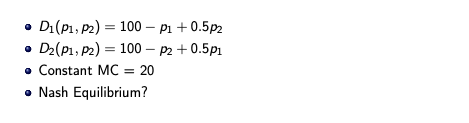
Please show the details and answer.Thank you!
Homework Answers
Request Answer!
We need at least 10 more requests to produce the answer.
0 / 10 have requested this problem solution
The more requests, the faster the answer.
Add Answer to:
Please show the details and answer.Thank you!
DI(P, P2) 100 p0.5p2 D2(P,P2 100 P2 0.5pl o...
T DETAIL T37 T T4 D2 P2 DI EAD DETAIL P1 (N) P2 (N) L1 (mm)...
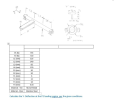 T DETAIL T37 T T4 D2 P2 DI EAD DETAIL P1 (N) P2 (N) L1 (mm) L2 (mm) 735 720 125 140 L3 (mm) L4 (mm) 65 120 D1 (mm) 30 D2 (mm) T1 (mm) 20 6 T2 (mm) T3 (mm) T4 (mm) 12 16 4.55 Material Tee Monel Metal Material Pipe Stainless Steel Calculate the Y- Deflection at the P1 loading region per the given conditions.
T DETAIL T37 T T4 D2 P2 DI EAD DETAIL P1 (N) P2...
T DETAIL T37 T T4 D2 P2 DI EAD DETAIL P1 (N) P2 (N) L1 (mm) L2 (mm) 735 720 125 140 L3 (mm) L4 (mm) 65 120 D1 (mm) 30 D2 (mm) T1 (mm) 20 6 T2 (mm) T3 (mm) T4 (mm) 12 16 4.55 Material Tee Monel Metal Material Pipe Stainless Steel Calculate the Y- Deflection at the P1 loading region per the given conditions.
T DETAIL T37 T T4 D2 P2 DI EAD DETAIL P1 (N) P2...
please explain all details. Market demand curve for a good produced only by two firms is...
 please explain all details.
Market demand curve for a good produced only by two
firms is given by P= 70- 20. Both firms produce with constant and
identical marginal cost of 3. 10, that is MC, = MC, = 10.
(P,Q.4-42,) in Cournot equilibrium. a) Find b) Find (P,Q,q1,92,,,
2) in Stackelberg equilibrium with Firm 1 acting as the leader. c)
Compare your findings with monopoly and competitive equilibria.
Market demand curve for a good produced only by two firms...
please explain all details.
Market demand curve for a good produced only by two
firms is given by P= 70- 20. Both firms produce with constant and
identical marginal cost of 3. 10, that is MC, = MC, = 10.
(P,Q.4-42,) in Cournot equilibrium. a) Find b) Find (P,Q,q1,92,,,
2) in Stackelberg equilibrium with Firm 1 acting as the leader. c)
Compare your findings with monopoly and competitive equilibria.
Market demand curve for a good produced only by two firms...
please show detailed solution, answer if you are 100% sure 11 Points] DETAILS SCALCET9 8.3.032. Find...
 please show detailed solution, answer if you are 100%
sure
11 Points] DETAILS SCALCET9 8.3.032. Find the centroid of the region bounded by the given curves. y = x3, x + y = 10,
please show detailed solution, answer if you are 100%
sure
11 Points] DETAILS SCALCET9 8.3.032. Find the centroid of the region bounded by the given curves. y = x3, x + y = 10,
What is the binary number of 100? Please show the details of your calculation to get...
What is the binary number of 100? Please show the details of your calculation to get a full credit.
Two firms compete in a market with demand given by D(p) = 100 − p, where...
Two firms compete in a market with demand given by D(p) = 100 − p, where p is denoted in cents (p=100 is 1 dollar). Firms can only charge prices in whole cents – i.e. p can only take integer values, and not values like 1.5. Marginal costs for each firm are given by MC=10. Firms compete by simultaneously choosing prices. When prices are equal, each firm gets one half of total demand. b. Find all the Nash equilibria of...
A monopolist sells in two markets that have demand functions given by D1 (p1) = 100...
A monopolist sells in two markets that have demand functions given by D1 (p1) = 100 - p1 and D2 (p2) = 100 - (1/2) p2: The marginal cost of production is constant at c = 20. (a) Assume the firm charges different prices to each group. What will be the equilibrium quantities in markets 1 and 2? (b) What market pays a higher price? Why?
do appreciate the process in details and neat (b) The circuit shown in Figure 2 utilizes two diodes, Di and D2, a R, resistor R1 = 10 Ω. Assume a piecewise linear (PWL) model for the diode that ha...
 do appreciate the process in details and neat
(b) The circuit shown in Figure 2 utilizes two diodes, Di and D2, a R, resistor R1 = 10 Ω. Assume a piecewise linear (PWL) model for the diode that has VD 07 and r-5 Ω. Draw the output voltage, vo, as function of the input voltage, Vin, characteristics of this circuit at point assuming the input voltage has a peak-to-peak voltage of 3 Volt. There is no need to draw the...
do appreciate the process in details and neat
(b) The circuit shown in Figure 2 utilizes two diodes, Di and D2, a R, resistor R1 = 10 Ω. Assume a piecewise linear (PWL) model for the diode that has VD 07 and r-5 Ω. Draw the output voltage, vo, as function of the input voltage, Vin, characteristics of this circuit at point assuming the input voltage has a peak-to-peak voltage of 3 Volt. There is no need to draw the...
Please answer 3 Questions, thank you. 4. Consider the following game: PLAYER 2 (0,3) (2,0) (1,7)...
 Please answer 3 Questions, thank you.
4. Consider the following game: PLAYER 2 (0,3) (2,0) (1,7) PLAYER 1 (2,4) (0,6) (2,0) (1,3) (2,4) (0,3) a) Does this game have any pure-strategy Nash equilibrium? If so, identify it (or them) and explain why this is an equilibrium. b) Find a mixed-strategy Nash equilibrium to this game and explain your calculations. Note: a mixed strategy for player i may be expressed by o; = (P1, P2, 1- P1 - p2). c) Is...
Please answer 3 Questions, thank you.
4. Consider the following game: PLAYER 2 (0,3) (2,0) (1,7) PLAYER 1 (2,4) (0,6) (2,0) (1,3) (2,4) (0,3) a) Does this game have any pure-strategy Nash equilibrium? If so, identify it (or them) and explain why this is an equilibrium. b) Find a mixed-strategy Nash equilibrium to this game and explain your calculations. Note: a mixed strategy for player i may be expressed by o; = (P1, P2, 1- P1 - p2). c) Is...
Let p, (t) 6+t, P2(t) =t-3t, p3 (t) = 1 +t-2t. Complete parts (a) and (b) below. Use coordinate vectors to show that th...
 Let p, (t) 6+t, P2(t) =t-3t, p3 (t) = 1 +t-2t. Complete parts (a) and (b) below. Use coordinate vectors to show that these polynomials form a basis for P2. What are the coordinate vectors corresponding to p, p2, and pa? P- Place these coordinate vectors into the columns fa matrix A. What can be said about the matrix A? O A. The matrix A forms a basis for R3 by the Invertible Matrix Theorem because all square matrices are...
Market inverse demand for a homogeneous product is P = 100 - Q. On the supply-side,...
Market inverse demand for a homogeneous product is P = 100 - Q. On the supply-side, there is a Cournot duopoly; each firm faces a constant marginal cost of 10. At the Cournot-Nash equilibrium, the market price will be:
 T DETAIL T37 T T4 D2 P2 DI EAD DETAIL P1 (N) P2 (N) L1 (mm) L2 (mm) 735 720 125 140 L3 (mm) L4 (mm) 65 120 D1 (mm) 30 D2 (mm) T1 (mm) 20 6 T2 (mm) T3 (mm) T4 (mm) 12 16 4.55 Material Tee Monel Metal Material Pipe Stainless Steel Calculate the Y- Deflection at the P1 loading region per the given conditions.
T DETAIL T37 T T4 D2 P2 DI EAD DETAIL P1 (N) P2...
T DETAIL T37 T T4 D2 P2 DI EAD DETAIL P1 (N) P2 (N) L1 (mm) L2 (mm) 735 720 125 140 L3 (mm) L4 (mm) 65 120 D1 (mm) 30 D2 (mm) T1 (mm) 20 6 T2 (mm) T3 (mm) T4 (mm) 12 16 4.55 Material Tee Monel Metal Material Pipe Stainless Steel Calculate the Y- Deflection at the P1 loading region per the given conditions.
T DETAIL T37 T T4 D2 P2 DI EAD DETAIL P1 (N) P2...
 please explain all details.
Market demand curve for a good produced only by two
firms is given by P= 70- 20. Both firms produce with constant and
identical marginal cost of 3. 10, that is MC, = MC, = 10.
(P,Q.4-42,) in Cournot equilibrium. a) Find b) Find (P,Q,q1,92,,,
2) in Stackelberg equilibrium with Firm 1 acting as the leader. c)
Compare your findings with monopoly and competitive equilibria.
Market demand curve for a good produced only by two firms...
please explain all details.
Market demand curve for a good produced only by two
firms is given by P= 70- 20. Both firms produce with constant and
identical marginal cost of 3. 10, that is MC, = MC, = 10.
(P,Q.4-42,) in Cournot equilibrium. a) Find b) Find (P,Q,q1,92,,,
2) in Stackelberg equilibrium with Firm 1 acting as the leader. c)
Compare your findings with monopoly and competitive equilibria.
Market demand curve for a good produced only by two firms...
 please show detailed solution, answer if you are 100%
sure
11 Points] DETAILS SCALCET9 8.3.032. Find the centroid of the region bounded by the given curves. y = x3, x + y = 10,
please show detailed solution, answer if you are 100%
sure
11 Points] DETAILS SCALCET9 8.3.032. Find the centroid of the region bounded by the given curves. y = x3, x + y = 10,
 do appreciate the process in details and neat
(b) The circuit shown in Figure 2 utilizes two diodes, Di and D2, a R, resistor R1 = 10 Ω. Assume a piecewise linear (PWL) model for the diode that has VD 07 and r-5 Ω. Draw the output voltage, vo, as function of the input voltage, Vin, characteristics of this circuit at point assuming the input voltage has a peak-to-peak voltage of 3 Volt. There is no need to draw the...
do appreciate the process in details and neat
(b) The circuit shown in Figure 2 utilizes two diodes, Di and D2, a R, resistor R1 = 10 Ω. Assume a piecewise linear (PWL) model for the diode that has VD 07 and r-5 Ω. Draw the output voltage, vo, as function of the input voltage, Vin, characteristics of this circuit at point assuming the input voltage has a peak-to-peak voltage of 3 Volt. There is no need to draw the...
 Please answer 3 Questions, thank you.
4. Consider the following game: PLAYER 2 (0,3) (2,0) (1,7) PLAYER 1 (2,4) (0,6) (2,0) (1,3) (2,4) (0,3) a) Does this game have any pure-strategy Nash equilibrium? If so, identify it (or them) and explain why this is an equilibrium. b) Find a mixed-strategy Nash equilibrium to this game and explain your calculations. Note: a mixed strategy for player i may be expressed by o; = (P1, P2, 1- P1 - p2). c) Is...
Please answer 3 Questions, thank you.
4. Consider the following game: PLAYER 2 (0,3) (2,0) (1,7) PLAYER 1 (2,4) (0,6) (2,0) (1,3) (2,4) (0,3) a) Does this game have any pure-strategy Nash equilibrium? If so, identify it (or them) and explain why this is an equilibrium. b) Find a mixed-strategy Nash equilibrium to this game and explain your calculations. Note: a mixed strategy for player i may be expressed by o; = (P1, P2, 1- P1 - p2). c) Is...
 Let p, (t) 6+t, P2(t) =t-3t, p3 (t) = 1 +t-2t. Complete parts (a) and (b) below. Use coordinate vectors to show that these polynomials form a basis for P2. What are the coordinate vectors corresponding to p, p2, and pa? P- Place these coordinate vectors into the columns fa matrix A. What can be said about the matrix A? O A. The matrix A forms a basis for R3 by the Invertible Matrix Theorem because all square matrices are...
Most questions answered within 3 hours.
-
Where is the error in this code sequence?
String s1 = "Hello";
String s2 = "ello";...
asked 10 months ago -
Financial data for Joel de Paris, Inc., for last year
follow:
Joel de Paris, Inc.
Balance...
asked 10 months ago -
Consider this reaction:
Al2(SO4)3 (aq)+ BaCl3
(aq) Al2Cl6 (aq)- +
3BaSO4(s) . What is the...
asked 10 months ago -
Suppose that Savneet is considering increasing her
recent random sample from 20 car rentals to 40...
asked 10 months ago -
Trucks arrive at an unloading terminal at an average rate of 120
per hour.
Trucks arrive...
asked 10 months ago -
Why are methanol and ethanol completely soluble in water while
octanol is not very little soluble....
asked 10 months ago -
A facilities manager at a university reads in a research report
that the mean amount of...
asked 10 months ago -
When the CuSO4 is rehydrated by adding water to the anhydrous
compound, is this an endothermic...
asked 10 months ago -
A ray of sunlight is passing from diamond into crown glass; the
angle of incidence is...
asked 10 months ago -
A block of mass 0.249 kg is placed on top of a light, vertical
spring of...
asked 10 months ago -
how do the kidneys compensate in the presences of acidosis
a) trigger hyperventilate
b) reserve acid...
asked 10 months ago -
Question 501 pts
The rental rate of capital to the firm increases. Which of the
following...
asked 10 months ago