
Homework Answers
Add Answer to:
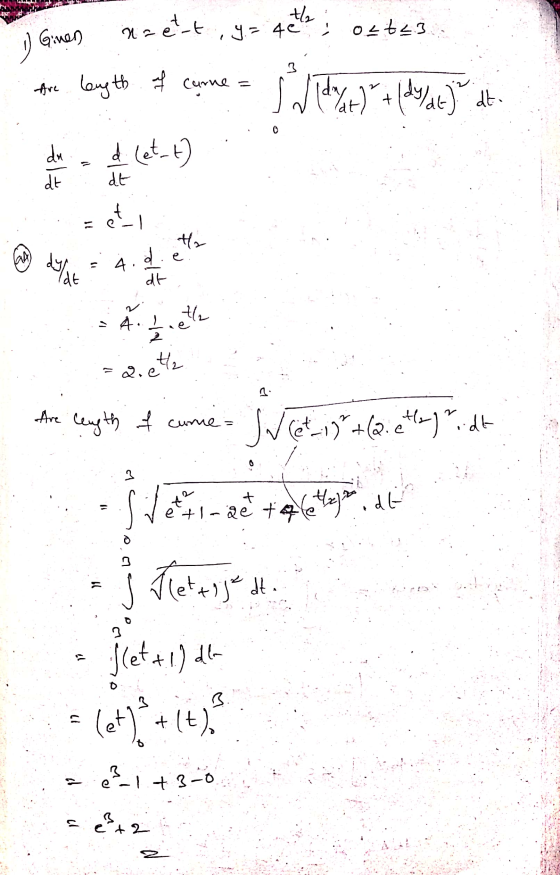
① Find the exact length of the curve. x=est, = = 40 ost 23 2 Find...
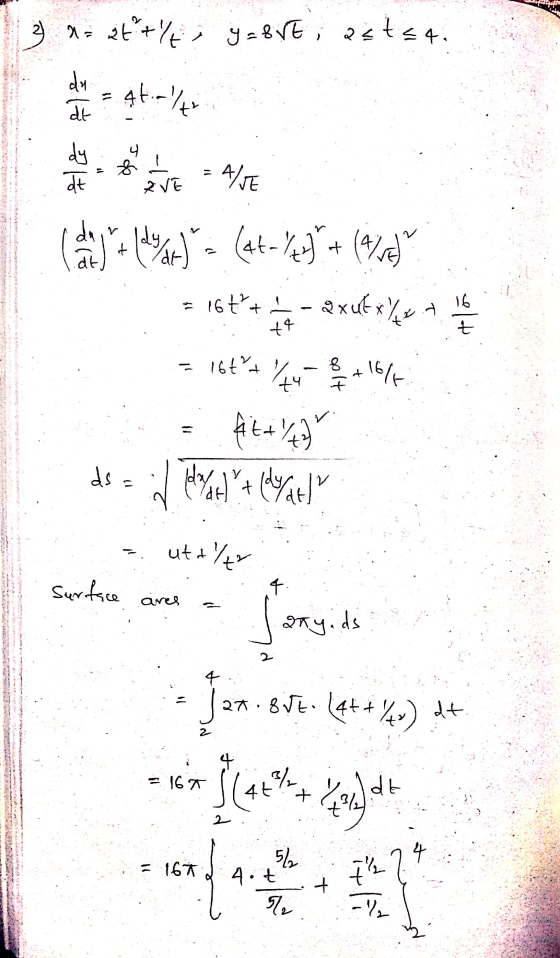
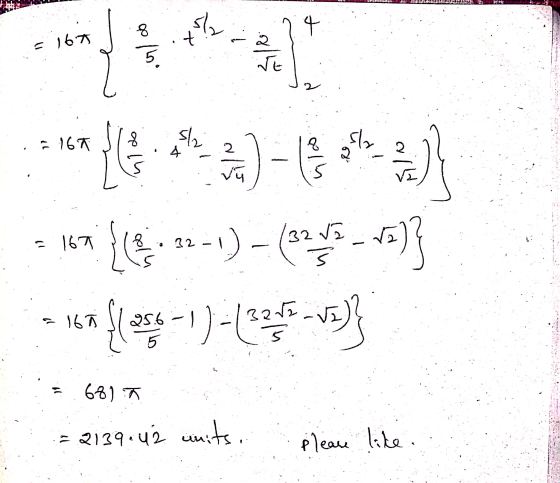
Find the exact surface area obtained by rotating the curve about x-axis y 1,0 3 Find...
 Find the exact surface area obtained by rotating the curve about x-axis y 1,0 3
Find the exact surface area obtained by rotating the curve about x-axis y 1,0 3
Find the exact surface area obtained by rotating the curve about x-axis y 1,0 3
Find the exact area of the surface obtained by rotating the curve about the x-axis. y...
 Find the exact area of the surface obtained by rotating the curve about the x-axis. y 2x 2 6 1SXS를 플+을- 263 X\ 266
Find the exact area of the surface obtained by rotating the curve about the x-axis. y 2x 2 6 1SXS를 플+을- 263 X\ 266
Find the exact area of the surface obtained by rotating the curve about the x-axis. y 2x 2 6 1SXS를 플+을- 263 X\ 266
Find the exact area of the surface obtained by rotating the curve about the x-axis. y...
 Find the exact area of the surface obtained by rotating the
curve about the x-axis.
y = sin( mx), osxs9
Find the exact area of the surface obtained by rotating the
curve about the x-axis.
y = sin( mx), osxs9
Find the exact area of the surface obtained by rotating the curve about the 2-axis. 1...
 Find the exact area of the surface obtained by rotating the curve about the 2-axis. 1 Given sec3 ᎾdᎾ 1 = = ln(2y), 1545v3. ( sec é tan + 5 in | sec O + tan ol
Find the exact area of the surface obtained by rotating the curve about the x-axis. y=1+5x,...
 Find the exact area of the surface obtained by rotating the curve about the x-axis. y=1+5x, 1sx57 a. 309/10 b. 3097/5 c. 3097/15 d. 3337/5 e. 333 1/25 a C b oc
1 1 a) Compute the length of the curve y = Inx, for 1 < x...
 1 1 a) Compute the length of the curve y = Inx, for 1 < x < 2. b) Compute the area of the surface obtained when rotating the curve in question a) about the y-axis, for 1 < x < 2.
Find the area of the surface obtained by rotating the given curve about the x-axis. x...
 Find the area of the surface obtained by rotating the given curve about the x-axis. x = 20 cos (0), y = 20 sinº (0), 0 <O< 2 Preview
Find the surface area of the solid of revolution obtained by rotating the curve x=(1/12)(y^2+8)^(3/2) from...
 Find the surface area of the solid of revolution obtained by
rotating the curve
x=(1/12)(y^2+8)^(3/2)
from ?=2 to ?=5 about the x-axis:
(1 point) Find the surface area of the solid of revolution obtained by rotating the curve X= +8)3/2 from y = 2 to y = 5 about the x-axis:
Find the surface area of the solid of revolution obtained by
rotating the curve
x=(1/12)(y^2+8)^(3/2)
from ?=2 to ?=5 about the x-axis:
(1 point) Find the surface area of the solid of revolution obtained by rotating the curve X= +8)3/2 from y = 2 to y = 5 about the x-axis:
2: Consider the curve with equation x2/3 + y2/3 = 1. -0.5 0 -0.51 a: Find...
 2: Consider the curve with equation x2/3 + y2/3 = 1. -0.5 0 -0.51 a: Find the exact length of the curve. (Make good use of the symmetric property of the graph. ) b: Find the surface area of the solid obtained by rotating the curve about y-axis. (Watch out for the symmetric property of the graph.)
problem 3 pls Problem 3. Consider the curve {> 1, y = 1/x}. Compute the length...
 problem 3 pls
Problem 3. Consider the curve {> 1, y = 1/x}. Compute the length of the part of this curve lying to the left of the line x = a for any a > 1. Show that the length of the whole curve is thus infinite. Compute the area of the surface obtained by rotating this curve about about the x axis by computing the corresponding improper integral; it should be infinite. What is the area of the...
problem 3 pls
Problem 3. Consider the curve {> 1, y = 1/x}. Compute the length of the part of this curve lying to the left of the line x = a for any a > 1. Show that the length of the whole curve is thus infinite. Compute the area of the surface obtained by rotating this curve about about the x axis by computing the corresponding improper integral; it should be infinite. What is the area of the...
 Find the exact surface area obtained by rotating the curve about x-axis y 1,0 3
Find the exact surface area obtained by rotating the curve about x-axis y 1,0 3
Find the exact surface area obtained by rotating the curve about x-axis y 1,0 3
 Find the exact area of the surface obtained by rotating the curve about the x-axis. y 2x 2 6 1SXS를 플+을- 263 X\ 266
Find the exact area of the surface obtained by rotating the curve about the x-axis. y 2x 2 6 1SXS를 플+을- 263 X\ 266
Find the exact area of the surface obtained by rotating the curve about the x-axis. y 2x 2 6 1SXS를 플+을- 263 X\ 266
 Find the exact area of the surface obtained by rotating the
curve about the x-axis.
y = sin( mx), osxs9
Find the exact area of the surface obtained by rotating the
curve about the x-axis.
y = sin( mx), osxs9
 Find the exact area of the surface obtained by rotating the curve about the 2-axis. 1 Given sec3 ᎾdᎾ 1 = = ln(2y), 1545v3. ( sec é tan + 5 in | sec O + tan ol
 Find the exact area of the surface obtained by rotating the curve about the x-axis. y=1+5x, 1sx57 a. 309/10 b. 3097/5 c. 3097/15 d. 3337/5 e. 333 1/25 a C b oc
 1 1 a) Compute the length of the curve y = Inx, for 1 < x < 2. b) Compute the area of the surface obtained when rotating the curve in question a) about the y-axis, for 1 < x < 2.
 Find the area of the surface obtained by rotating the given curve about the x-axis. x = 20 cos (0), y = 20 sinº (0), 0 <O< 2 Preview
 Find the surface area of the solid of revolution obtained by
rotating the curve
x=(1/12)(y^2+8)^(3/2)
from ?=2 to ?=5 about the x-axis:
(1 point) Find the surface area of the solid of revolution obtained by rotating the curve X= +8)3/2 from y = 2 to y = 5 about the x-axis:
Find the surface area of the solid of revolution obtained by
rotating the curve
x=(1/12)(y^2+8)^(3/2)
from ?=2 to ?=5 about the x-axis:
(1 point) Find the surface area of the solid of revolution obtained by rotating the curve X= +8)3/2 from y = 2 to y = 5 about the x-axis:
 2: Consider the curve with equation x2/3 + y2/3 = 1. -0.5 0 -0.51 a: Find the exact length of the curve. (Make good use of the symmetric property of the graph. ) b: Find the surface area of the solid obtained by rotating the curve about y-axis. (Watch out for the symmetric property of the graph.)
 problem 3 pls
Problem 3. Consider the curve {> 1, y = 1/x}. Compute the length of the part of this curve lying to the left of the line x = a for any a > 1. Show that the length of the whole curve is thus infinite. Compute the area of the surface obtained by rotating this curve about about the x axis by computing the corresponding improper integral; it should be infinite. What is the area of the...
problem 3 pls
Problem 3. Consider the curve {> 1, y = 1/x}. Compute the length of the part of this curve lying to the left of the line x = a for any a > 1. Show that the length of the whole curve is thus infinite. Compute the area of the surface obtained by rotating this curve about about the x axis by computing the corresponding improper integral; it should be infinite. What is the area of the...
Most questions answered within 3 hours.
-
Where is the error in this code sequence?
String s1 = "Hello";
String s2 = "ello";...
asked 11 months ago -
Financial data for Joel de Paris, Inc., for last year
follow:
Joel de Paris, Inc.
Balance...
asked 11 months ago -
Consider this reaction:
Al2(SO4)3 (aq)+ BaCl3
(aq) Al2Cl6 (aq)- +
3BaSO4(s) . What is the...
asked 11 months ago -
Suppose that Savneet is considering increasing her
recent random sample from 20 car rentals to 40...
asked 11 months ago -
Trucks arrive at an unloading terminal at an average rate of 120
per hour.
Trucks arrive...
asked 11 months ago -
Why are methanol and ethanol completely soluble in water while
octanol is not very little soluble....
asked 11 months ago -
A facilities manager at a university reads in a research report
that the mean amount of...
asked 11 months ago -
When the CuSO4 is rehydrated by adding water to the anhydrous
compound, is this an endothermic...
asked 11 months ago -
A ray of sunlight is passing from diamond into crown glass; the
angle of incidence is...
asked 11 months ago -
A block of mass 0.249 kg is placed on top of a light, vertical
spring of...
asked 11 months ago -
how do the kidneys compensate in the presences of acidosis
a) trigger hyperventilate
b) reserve acid...
asked 11 months ago -
Question 501 pts
The rental rate of capital to the firm increases. Which of the
following...
asked 11 months ago