A 5.53E+1 g sample of water at 9.967E+1 °C is placed in a constant pressure calorimeter....
A 5.53E+1 g sample of water at 9.967E+1 °C is placed in a constant pressure calorimeter. Then, 2.33E+1 g of zinc metal at 2.17E+1 °C is added to the water and the temperature drops to 9.63E+1 °C. What is the specific heat capacity of the zinc metal measured in this experiment?
Homework Answers
Q = mc∆T
Q = heat energy (Joules, J), m = mass of a substance (g)
c = specific heat (units J/g∙oC), ∆ is a symbol meaning "the change in"
∆T = change in temperature (oC Celcius)
The heat lost from water = The heat gained by Zinc
For Water
m = 55.3 gm c = 4.184 J/g∙oC ∆T = 99.67 oC - 96.3 oC = 3.37 oC
For Zinc
m = 23.3 gm c = ? J/g∙oC ∆T = 96.3 oC - 21.7 oC = 74.6 oC
55.3 x 4.184 J/g∙oC x 3.37 oC = 23.3 gm x Sp ht of Zn x 74.6 oC
Sp ht of Zn = 779.73 Joules / 1738.18 g∙oC = 0.44859 J/g∙oC
specific heat capacity of the zinc metal measured in this experiment is 0.44859 J/g∙oC
Add Answer to:
A 5.53E+1 g sample of water at 9.967E+1 °C is placed in a
constant pressure calorimeter....
A 32.0-g sample of an unknown metal at 99°C was placed in a constant-pressure calorimeter containing...
 A 32.0-g sample of an unknown metal at 99°C was placed in a constant-pressure calorimeter containing 60.0 g of water at 24.0°C, The final temperature of the system was found to be 28.4℃ Calculate the specific heat of the metal. (The heat capacity of the calorimeter is 14.4/C) J/g °C
In the laboratory a "coffee cup" calorimeter, or constant pressure calorimeter, is frequently used to determine...
 In the laboratory a "coffee cup" calorimeter, or constant pressure calorimeter, is frequently used to determine the specific heat of a solid, or to measure the energy of a solution phase reaction. Thermometer Stirring red A student heats 68.26 grams of titanium to 99.16 °C and then drops it into a cup containing 80.78 grams of water at 23.25 °C. She measures the final temperature to be 30.68 °C. The heat capacity of the calorimeter (sometimes referred to as the...
In the laboratory a "coffee cup" calorimeter, or constant pressure calorimeter, is frequently use...
 In the laboratory a "coffee cup" calorimeter, or constant pressure calorimeter, is frequently used to determine the specific heat of a solid, or to measure the energy of a solutiorn phase reaction. Thermometer Stirring rod A student heats 63.92 grams of iron to 98.03 °C and then drops it into a cup containing 75.92 grams of water at 24.47 °C. She measures the final temperature to be 30.66 °C The heat capacity of the calorimeter (sometimes referred to as the...
In the laboratory a "coffee cup" calorimeter, or constant pressure calorimeter, is frequently used to determine...
In the laboratory a "coffee cup" calorimeter, or constant pressure calorimeter, is frequently used to determine the specific heat of a solid, or to measure the energy of a solution phase reaction. Since the cup itself can absorb energy, a separate experiment is needed to determine the heat capacity of the calorimeter. This is known as calibrating the calorimeter and the value determined is called the calorimeter constant. One way to do this is to use a common metal of...
In the laboratory a "coffee cup" calorimeter, or constant pressure calorimeter, is frequently used to determine...
 In the laboratory a "coffee cup" calorimeter, or constant pressure calorimeter, is frequently used to determine the specific heat of a solid, or to measure the energy of a solution phase reaction. Thermometer Stirring rod A student heats 68.92 grams of zinc to 99.33 °C and then drops it into a cup containing 84.29 grams of water at 23.40 °C. She measures the final temperature to be 28.88 °C. The heat capacity of the calorimeter (sometimes referred to as the...
In the laboratory a "coffee cup calorimeter, or constant pressure calorimeter, is frequently used to determine...
 In the laboratory a "coffee cup calorimeter, or constant pressure calorimeter, is frequently used to determine the specific heat of a solid, or to measure the energy of a solution phase reaction. Since the cup itself can absorb energy, a separate experiment is needed to determine the heat capacity of the calorimeter. This is known as calibrating the calorimeter and the value determined is called the calorimeter constant One way to do this is to use a common metal of...
In the laboratory a "coffee cup" calorimeter, or constant pressure calorimeter, is frequently used to determine the spe...
 In the laboratory a "coffee cup" calorimeter, or constant pressure calorimeter, is frequently used to determine the specific heat of a solid, or to measure the energy of a solution phase reaction. Thermometer Stirring rod A student heats 66.99 grams of platinum to 98.27 °C and then drops it into a cup containing 81.09 grams of water at 21.93 °C. She measures the final temperature to be 23.97 °C. The heat capacity of the calorimeter (sometimes referred to as the...
Use the References to access importante In the laboratory a "coffee cup" calorimeter, or constant pressure...
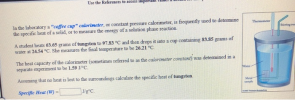 Use the References to access importante In the laboratory a "coffee cup" calorimeter, or constant pressure calorimeter, is frequently used to determine the specific heat of a solid, or to measure the energy of a solution phase reaction A student heats 63.65 grams of tungsten to 97.83 °C and then drops it into a cup containing 83.85 grams of water at 24.54 °C. She measures the final temperature to be 26.21 °C The heat capacity of the calorimeter (sometimes referred...
In the laboratory a "coffee cup" calorimeter, or constant pressure calorimeter, is frequently used to determine...
 In the laboratory a "coffee cup" calorimeter, or constant pressure calorimeter, is frequently used to determine the specific heat of a solid, or to measure the energy of a solution phase reaction. A student heats 67.53 grams of zinc to 98.12 °C and then drops it into a cup containing 80.36 grams of water at 22.73 °C. She measures the final temperature to be 28.00°C. The heat capacity of the calorimeter (sometimes referred to as the calorimeter constant) was determined...
In the laboratory a "coffee cup" calorimeter, or constant pressure calorimeter, is frequently used to determine...
 In the laboratory a "coffee cup" calorimeter, or constant pressure calorimeter, is frequently used to determine the specific heat of a solid, or to measure the energy of a solution phase reaction. A student heats 63.04 grams of silver to 98.96 °C and then drops it into a cup containing 83.17 grams of water at 22.31 °C. She measures the final temperature to be 25.59 °C. The heat capacity of the calorimeter (sometimes referred to as the calorimeter constant) was...
 A 32.0-g sample of an unknown metal at 99°C was placed in a constant-pressure calorimeter containing 60.0 g of water at 24.0°C, The final temperature of the system was found to be 28.4℃ Calculate the specific heat of the metal. (The heat capacity of the calorimeter is 14.4/C) J/g °C
 In the laboratory a "coffee cup" calorimeter, or constant pressure calorimeter, is frequently used to determine the specific heat of a solid, or to measure the energy of a solution phase reaction. Thermometer Stirring red A student heats 68.26 grams of titanium to 99.16 °C and then drops it into a cup containing 80.78 grams of water at 23.25 °C. She measures the final temperature to be 30.68 °C. The heat capacity of the calorimeter (sometimes referred to as the...
 In the laboratory a "coffee cup" calorimeter, or constant pressure calorimeter, is frequently used to determine the specific heat of a solid, or to measure the energy of a solutiorn phase reaction. Thermometer Stirring rod A student heats 63.92 grams of iron to 98.03 °C and then drops it into a cup containing 75.92 grams of water at 24.47 °C. She measures the final temperature to be 30.66 °C The heat capacity of the calorimeter (sometimes referred to as the...
 In the laboratory a "coffee cup" calorimeter, or constant pressure calorimeter, is frequently used to determine the specific heat of a solid, or to measure the energy of a solution phase reaction. Thermometer Stirring rod A student heats 68.92 grams of zinc to 99.33 °C and then drops it into a cup containing 84.29 grams of water at 23.40 °C. She measures the final temperature to be 28.88 °C. The heat capacity of the calorimeter (sometimes referred to as the...
 In the laboratory a "coffee cup calorimeter, or constant pressure calorimeter, is frequently used to determine the specific heat of a solid, or to measure the energy of a solution phase reaction. Since the cup itself can absorb energy, a separate experiment is needed to determine the heat capacity of the calorimeter. This is known as calibrating the calorimeter and the value determined is called the calorimeter constant One way to do this is to use a common metal of...
 In the laboratory a "coffee cup" calorimeter, or constant pressure calorimeter, is frequently used to determine the specific heat of a solid, or to measure the energy of a solution phase reaction. Thermometer Stirring rod A student heats 66.99 grams of platinum to 98.27 °C and then drops it into a cup containing 81.09 grams of water at 21.93 °C. She measures the final temperature to be 23.97 °C. The heat capacity of the calorimeter (sometimes referred to as the...
 Use the References to access importante In the laboratory a "coffee cup" calorimeter, or constant pressure calorimeter, is frequently used to determine the specific heat of a solid, or to measure the energy of a solution phase reaction A student heats 63.65 grams of tungsten to 97.83 °C and then drops it into a cup containing 83.85 grams of water at 24.54 °C. She measures the final temperature to be 26.21 °C The heat capacity of the calorimeter (sometimes referred...
 In the laboratory a "coffee cup" calorimeter, or constant pressure calorimeter, is frequently used to determine the specific heat of a solid, or to measure the energy of a solution phase reaction. A student heats 67.53 grams of zinc to 98.12 °C and then drops it into a cup containing 80.36 grams of water at 22.73 °C. She measures the final temperature to be 28.00°C. The heat capacity of the calorimeter (sometimes referred to as the calorimeter constant) was determined...
 In the laboratory a "coffee cup" calorimeter, or constant pressure calorimeter, is frequently used to determine the specific heat of a solid, or to measure the energy of a solution phase reaction. A student heats 63.04 grams of silver to 98.96 °C and then drops it into a cup containing 83.17 grams of water at 22.31 °C. She measures the final temperature to be 25.59 °C. The heat capacity of the calorimeter (sometimes referred to as the calorimeter constant) was...
Most questions answered within 3 hours.
-
Where is the error in this code sequence?
String s1 = "Hello";
String s2 = "ello";...
asked 11 months ago -
Financial data for Joel de Paris, Inc., for last year
follow:
Joel de Paris, Inc.
Balance...
asked 11 months ago -
Consider this reaction:
Al2(SO4)3 (aq)+ BaCl3
(aq) Al2Cl6 (aq)- +
3BaSO4(s) . What is the...
asked 11 months ago -
Suppose that Savneet is considering increasing her
recent random sample from 20 car rentals to 40...
asked 11 months ago -
Trucks arrive at an unloading terminal at an average rate of 120
per hour.
Trucks arrive...
asked 11 months ago -
Why are methanol and ethanol completely soluble in water while
octanol is not very little soluble....
asked 11 months ago -
A facilities manager at a university reads in a research report
that the mean amount of...
asked 11 months ago -
When the CuSO4 is rehydrated by adding water to the anhydrous
compound, is this an endothermic...
asked 11 months ago -
A ray of sunlight is passing from diamond into crown glass; the
angle of incidence is...
asked 11 months ago -
A block of mass 0.249 kg is placed on top of a light, vertical
spring of...
asked 11 months ago -
how do the kidneys compensate in the presences of acidosis
a) trigger hyperventilate
b) reserve acid...
asked 11 months ago -
Question 501 pts
The rental rate of capital to the firm increases. Which of the
following...
asked 11 months ago