A solid, uniform cylinder with mass 8.05kg and diameter 20.0cm is spinning with angular velocity 240rpm...
A solid, uniform cylinder with mass 8.05kg and diameter 20.0cm is spinning with angular velocity 240rpm on a thin, frictionless axle that passes along the cylinder axis. You design a simple friction-brake to stop the cylinder by pressing the brake against the outer rim with a normal force. The coefficient of kinetic friction between the brake and rim is 0.336.
What must the applied normal force be to bring the cylinder to rest after it has turned through 5.50 revolutions?
Homework Answers
Add Answer to:
A solid, uniform cylinder with mass 8.05kg and diameter 20.0cm
is spinning with angular velocity 240rpm...
Constants Part A A solid, uniform cylinder with mass 8.30 kg and diameter 19.0 cm is...
 Constants Part A A solid, uniform cylinder with mass 8.30 kg and diameter 19.0 cm is spinning with angular velocity 205 rpm on a thin, frictionless axle that passes along the cylinder axis. You design a simple friction- brake to stop the cylinder by pressing the brake against the outer rim with a normal force. The coefficient of kinetic friction between the brake and rim is 0.345. What must the applied normal force be to bring the cylinder to rest...
The cylinder of mass m has an angular velocity of ω when it is brought into contact with the horizontal surface at C. If the coefficient of kinetic friction is μc, determine how long it will take for the cylinder to stop spinning. What force is developed
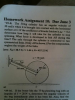 The cylinder of mass m has an angular velocity of ω when it is brought into contact with the horizontal surface at C. If the coefficient of kinetic friction is μc, determine how long it will take for the cylinder to stop spinning. What force is developed in link AB during this time? The axle through the cylinder is connected to two symmetrical links. (Only AB is shown). For the computation, neglect the weight of the links.
A machine part has the shape of a solid uniform sphere of mass 220 g and...
A machine part has the shape of a solid uniform sphere of mass 220 g and diameter 4.30 cm . It is spinning about a frictionless axle through its center, but at one point on its equator it is scraping against metal, resulting in a friction force of 0.0200 N at that point. Part A)Find its angular acceleration. Let the direction the sphere is spinning be the positive sense of rotation. Part B)How long will it take to decrease its...
A large solid disk of radius 0.51m freely rotates about a vertical frictionless axis at an...
 A large solid disk of radius 0.51m freely rotates about a vertical frictionless axis at an initial angular speed of 9 rad's. A small friction brake is used to bring the disk to rest in a time of 4.4 s by pressing the brake radially inward against the rim of the disk with a constant force of 36 N as shown in the figure below The coefficient of friction between the brake and the disk is 0.37 Side View Top...
A solid disc of uniform mass density has mass of 2 kg and a radius of...
A solid disc of uniform mass density has mass of 2 kg and a radius of 10 cm. The disc is placed horizontally on a frictionless table. A vertical axle passes through the center of the disc. Starting from rest, what is the angular velocity of the disc after a tangential force of 2 N is applied at the rim of the disc over a 5 second period? 31.42 rad/s 10 rad/s 3.142 rad/s 100 rad/s
A large solid disk of radius 0.56 m freely rotates about a vertical frictionless axis at...
 A large solid disk of radius 0.56 m freely rotates about a vertical frictionless axis at an initial angular speed of 8.3 rad/s. A small friction brake is used to bring the disk to rest in a time of 4.5 s by pressing the brake radially inward against the rim of the disk with a constant force of 36 N as shown in the figure below. The coefficient of friction between the brake and the disk is 0.4. Side View...
A flywheel (a uniform solid cylinder of radius 0.25 m and mass 80 kg) is initially...
A flywheel (a uniform solid cylinder of radius 0.25 m and mass 80 kg) is initially at rest, but free to rotate about the axis through its center. A belt wrapped around it is pulled off horizontally, providing a tangential force of 45 N to the outer rim of the flywheel for 2.00 s. Calculate the final kinetic energy of the wheel.
A potter's wheel having a radius of 0.500 m and mass 45.0 kg is rotating freely...
 A potter's wheel having a radius of 0.500 m and mass 45.0 kg is rotating freely at 50.0 rev/min in a clockwise direction. The potter can stop the wheel by pressing a wet rag against the outside rim of the wheel and exerting a radially inward force of 70.0 N. Since this force is in the radial direction, it alone cannot cause the wheel to slow its spinning. What can happen, however, is that a normal force can result from...
A uniform, solid cylinder with mass 3M and radius 2R rests on a horizontal tabletop. A...
 A uniform, solid cylinder with mass 3M and radius 2R rests on a
horizontal tabletop. A string is attached by a yoke to a
frictionless axle through the center of the cylinder so that the
cylinder can rotate about the axle. The string runs over a
disk-shaped pulley with mass M and radius R that is mounted on a
frictionless axle through its center. A block of mass M is
suspended from the free end of the string (the figure...
A uniform, solid cylinder with mass 3M and radius 2R rests on a
horizontal tabletop. A string is attached by a yoke to a
frictionless axle through the center of the cylinder so that the
cylinder can rotate about the axle. The string runs over a
disk-shaped pulley with mass M and radius R that is mounted on a
frictionless axle through its center. A block of mass M is
suspended from the free end of the string (the figure...
PartA A light string is wrapped around the outer rim of a solid uniform cylinder of...
 PartA A light string is wrapped around the outer rim of a solid uniform cylinder of diameter 75.0 cm that can rotate without friction about an axle through its center. A 3.00 kg stone is tied to the free end of the string, as shown in the figure (Figure 1) When the system is released from rest, you determine that the stone reaches a speed of 3.50 m/s after having fallien 2.50m What is the mass of the cylinder? kg...
 Constants Part A A solid, uniform cylinder with mass 8.30 kg and diameter 19.0 cm is spinning with angular velocity 205 rpm on a thin, frictionless axle that passes along the cylinder axis. You design a simple friction- brake to stop the cylinder by pressing the brake against the outer rim with a normal force. The coefficient of kinetic friction between the brake and rim is 0.345. What must the applied normal force be to bring the cylinder to rest...
 A large solid disk of radius 0.51m freely rotates about a vertical frictionless axis at an initial angular speed of 9 rad's. A small friction brake is used to bring the disk to rest in a time of 4.4 s by pressing the brake radially inward against the rim of the disk with a constant force of 36 N as shown in the figure below The coefficient of friction between the brake and the disk is 0.37 Side View Top...
 A large solid disk of radius 0.56 m freely rotates about a vertical frictionless axis at an initial angular speed of 8.3 rad/s. A small friction brake is used to bring the disk to rest in a time of 4.5 s by pressing the brake radially inward against the rim of the disk with a constant force of 36 N as shown in the figure below. The coefficient of friction between the brake and the disk is 0.4. Side View...
 A potter's wheel having a radius of 0.500 m and mass 45.0 kg is rotating freely at 50.0 rev/min in a clockwise direction. The potter can stop the wheel by pressing a wet rag against the outside rim of the wheel and exerting a radially inward force of 70.0 N. Since this force is in the radial direction, it alone cannot cause the wheel to slow its spinning. What can happen, however, is that a normal force can result from...
 A uniform, solid cylinder with mass 3M and radius 2R rests on a
horizontal tabletop. A string is attached by a yoke to a
frictionless axle through the center of the cylinder so that the
cylinder can rotate about the axle. The string runs over a
disk-shaped pulley with mass M and radius R that is mounted on a
frictionless axle through its center. A block of mass M is
suspended from the free end of the string (the figure...
A uniform, solid cylinder with mass 3M and radius 2R rests on a
horizontal tabletop. A string is attached by a yoke to a
frictionless axle through the center of the cylinder so that the
cylinder can rotate about the axle. The string runs over a
disk-shaped pulley with mass M and radius R that is mounted on a
frictionless axle through its center. A block of mass M is
suspended from the free end of the string (the figure...
 PartA A light string is wrapped around the outer rim of a solid uniform cylinder of diameter 75.0 cm that can rotate without friction about an axle through its center. A 3.00 kg stone is tied to the free end of the string, as shown in the figure (Figure 1) When the system is released from rest, you determine that the stone reaches a speed of 3.50 m/s after having fallien 2.50m What is the mass of the cylinder? kg...
Most questions answered within 3 hours.
-
Where is the error in this code sequence?
String s1 = "Hello";
String s2 = "ello";...
asked 1 year ago -
Financial data for Joel de Paris, Inc., for last year
follow:
Joel de Paris, Inc.
Balance...
asked 1 year ago -
Consider this reaction:
Al2(SO4)3 (aq)+ BaCl3
(aq) Al2Cl6 (aq)- +
3BaSO4(s) . What is the...
asked 1 year ago -
Suppose that Savneet is considering increasing her
recent random sample from 20 car rentals to 40...
asked 1 year ago -
Trucks arrive at an unloading terminal at an average rate of 120
per hour.
Trucks arrive...
asked 1 year ago -
Why are methanol and ethanol completely soluble in water while
octanol is not very little soluble....
asked 1 year ago -
A facilities manager at a university reads in a research report
that the mean amount of...
asked 1 year ago -
When the CuSO4 is rehydrated by adding water to the anhydrous
compound, is this an endothermic...
asked 1 year ago -
A ray of sunlight is passing from diamond into crown glass; the
angle of incidence is...
asked 1 year ago -
A block of mass 0.249 kg is placed on top of a light, vertical
spring of...
asked 1 year ago -
how do the kidneys compensate in the presences of acidosis
a) trigger hyperventilate
b) reserve acid...
asked 1 year ago -
Question 501 pts
The rental rate of capital to the firm increases. Which of the
following...
asked 1 year ago