

Homework Answers


Add Answer to:
Question 1 A company offers ID theft protection using leads obtained from client banks. Three employees...
A company offers ID theft protection using leads obtained from client banks. Three employees work 40...
A company offers ID theft protection using leads obtained from client banks. Three employees work 40 hours a week on the leads, at a pay rate of $12 per hour per employee. Each employee identifies an average of 3,400 potential leads a week from a list of 4,800. An average of 7 percent of potential leads actually sign up for the service, paying a one-time fee of $90. Material costs are $1,400 per week, and overhead costs are $8,900 per...
A company offers ID theft protection using leads obtained from client banks. Three employees work 40...
A company offers ID theft protection using leads obtained from client banks. Three employees work 40 hours a week on the leads, at a pay rate of $12 per hour per employee. Each employee identifies an average of 3,400 potential leads a week from a list of 4,600. An average of 6 percent of potential leads actually sign up for the service, paying a one-time fee of $80. Material costs are $1,500 per week, and overhead costs are $9,300 per...
A company offers ID theft protection using leads obtained from client banks. Three employees work 40...
A company offers ID theft protection using leads obtained from client banks. Three employees work 40 hours a week on the leads, at a pay rate of $12 per hour per employee. Each employee identifies an average of 3,400 potential leads a week from a list of 4,800. An average of 7 percent of potential leads actually sign up for the service, paying a one-time fee of $90. Material costs are $1,400 per week, and overhead costs are $8,900 per...
A company offers ID theft protection using leads obtained from client banks. Three employees each work...
A company offers ID theft protection using leads obtained from client banks. Three employees each work 40 hours a week on the leads. These employees are each paid $25 per hour. Each employee identifies an average of 3,000 potential leads a week. There are no duplications in these three lists. An average of 5 percent of the potential leads actually sign up for the service, paying a one-time fee of $70. Material costs are $1,000 per week, and overhead costs...
Question 47 5 pts Compute the multifactor productivity measure for each of the weeks shown for...
 Question 47 5 pts Compute the multifactor productivity measure for each of the weeks shown for production of chocolate bars. Assume 40-hour weeks and an hourly wage of $12. Overhead is 2 times weekly labor cost. Material cost is $6 per pound. What is the productivity of the most productive week? (Round your answers to 2 decimal places.) Week Output (units) Workers Material (lbs) 30,000 33,000 32,000 36,000 470 550 540 560 2.49 2.23 3.23 2.17 2.99
QUESTION 18 Questions 15-18) The following table shows data on the average number of chocolate bars...
 QUESTION 18 Questions 15-18) The following table shows data on the average number of chocolate bars produced each week, together with data for labor and material Assume 40-hour weeks and an hourly wage of $15 Overhead is 1.5 times weekly labor cost Material cost is $10 per pound #Chocolate bars Produced / Weekl#Workers Material (lbs Week 1 Week 2 40,000 45,000 6 510 530 Compute the productivity growth from Week 1 to Week 2 using the multifactor productivities. Round the...
Please answer the following question correctly please: Problem 2-3 Compute the multifactor productivity measure for each...
 Please answer the following question correctly please:
Problem 2-3 Compute the multifactor productivity measure for each of the weeks shown for production of chocolate bars. Assume 40-hour weeks and an hourly wage of $16. Overhead is 1.5 times weekly labor cost. Material cost is $9 per pound. (Round your answers to 2 decimal places.) Output (units) 32,000 37,000 28,000 38,000 Week Workers Material (lbs) 470 520 480 580 3 Week MFP (output /Total Cost)
Please answer the following question correctly please:
Problem 2-3 Compute the multifactor productivity measure for each of the weeks shown for production of chocolate bars. Assume 40-hour weeks and an hourly wage of $16. Overhead is 1.5 times weekly labor cost. Material cost is $9 per pound. (Round your answers to 2 decimal places.) Output (units) 32,000 37,000 28,000 38,000 Week Workers Material (lbs) 470 520 480 580 3 Week MFP (output /Total Cost)
Compute the multifactor productivity measure for each of the weeks shown for production of chocolate bars....
Compute the multifactor productivity measure for each of the weeks shown for production of chocolate bars. Assume 40-hour weeks and an hourly wage of $14. Overhead is 1.5 times weekly labor cost. Material cost is $8 per pound. (Round your answers to 2 decimal places.) Week Output (units) Workers Material (lbs) 1 29,000 4 470 2 34,000 7 540 3 30,000 7 490 4 35,000 9 530
Compute the multifactor productivity measure for each of the weeks shown for production of chocolate bars....
Compute the multifactor productivity measure for each of the weeks shown for production of chocolate bars. Assume 40-hour weeks and an hourly wage of $16. Overhead is 1.5 times weekly labor cost. Material cost is $9 per pound. (Round your answers to 2 decimal places.) ] Week Output (units) Workers Material (lbs) 1: 28,000 7 430 2: 33,000 8 480 3: 32,000 4 520 4: 42,000 9 620
Chapter 2 Homework 27 Problem 2-3 Compute the multifactor productivity measure for each of the weeks...
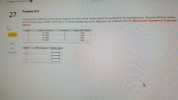 Chapter 2 Homework 27 Problem 2-3 Compute the multifactor productivity measure for each of the weeks shown for production of chocolate bars. Assume 40-hour weeks and an hourly wage of $16. Overhead is 1.5 times weekly labor cost Material cost is $9 per pound. (Round your answers to 2 decimal places.) 10 week Output (units)WorkersMaterial (lbs) 32,900 37,800 28,800 38,8e0 470 520 480 580 (Output/ Total Cost)
 Question 47 5 pts Compute the multifactor productivity measure for each of the weeks shown for production of chocolate bars. Assume 40-hour weeks and an hourly wage of $12. Overhead is 2 times weekly labor cost. Material cost is $6 per pound. What is the productivity of the most productive week? (Round your answers to 2 decimal places.) Week Output (units) Workers Material (lbs) 30,000 33,000 32,000 36,000 470 550 540 560 2.49 2.23 3.23 2.17 2.99
 QUESTION 18 Questions 15-18) The following table shows data on the average number of chocolate bars produced each week, together with data for labor and material Assume 40-hour weeks and an hourly wage of $15 Overhead is 1.5 times weekly labor cost Material cost is $10 per pound #Chocolate bars Produced / Weekl#Workers Material (lbs Week 1 Week 2 40,000 45,000 6 510 530 Compute the productivity growth from Week 1 to Week 2 using the multifactor productivities. Round the...
 Please answer the following question correctly please:
Problem 2-3 Compute the multifactor productivity measure for each of the weeks shown for production of chocolate bars. Assume 40-hour weeks and an hourly wage of $16. Overhead is 1.5 times weekly labor cost. Material cost is $9 per pound. (Round your answers to 2 decimal places.) Output (units) 32,000 37,000 28,000 38,000 Week Workers Material (lbs) 470 520 480 580 3 Week MFP (output /Total Cost)
Please answer the following question correctly please:
Problem 2-3 Compute the multifactor productivity measure for each of the weeks shown for production of chocolate bars. Assume 40-hour weeks and an hourly wage of $16. Overhead is 1.5 times weekly labor cost. Material cost is $9 per pound. (Round your answers to 2 decimal places.) Output (units) 32,000 37,000 28,000 38,000 Week Workers Material (lbs) 470 520 480 580 3 Week MFP (output /Total Cost)
 Chapter 2 Homework 27 Problem 2-3 Compute the multifactor productivity measure for each of the weeks shown for production of chocolate bars. Assume 40-hour weeks and an hourly wage of $16. Overhead is 1.5 times weekly labor cost Material cost is $9 per pound. (Round your answers to 2 decimal places.) 10 week Output (units)WorkersMaterial (lbs) 32,900 37,800 28,800 38,8e0 470 520 480 580 (Output/ Total Cost)
Most questions answered within 3 hours.
-
Where is the error in this code sequence?
String s1 = "Hello";
String s2 = "ello";...
asked 10 months ago -
Financial data for Joel de Paris, Inc., for last year
follow:
Joel de Paris, Inc.
Balance...
asked 10 months ago -
Consider this reaction:
Al2(SO4)3 (aq)+ BaCl3
(aq) Al2Cl6 (aq)- +
3BaSO4(s) . What is the...
asked 10 months ago -
Suppose that Savneet is considering increasing her
recent random sample from 20 car rentals to 40...
asked 10 months ago -
Trucks arrive at an unloading terminal at an average rate of 120
per hour.
Trucks arrive...
asked 10 months ago -
Why are methanol and ethanol completely soluble in water while
octanol is not very little soluble....
asked 10 months ago -
A facilities manager at a university reads in a research report
that the mean amount of...
asked 10 months ago -
When the CuSO4 is rehydrated by adding water to the anhydrous
compound, is this an endothermic...
asked 10 months ago -
A ray of sunlight is passing from diamond into crown glass; the
angle of incidence is...
asked 10 months ago -
A block of mass 0.249 kg is placed on top of a light, vertical
spring of...
asked 10 months ago -
how do the kidneys compensate in the presences of acidosis
a) trigger hyperventilate
b) reserve acid...
asked 10 months ago -
Question 501 pts
The rental rate of capital to the firm increases. Which of the
following...
asked 10 months ago