


Homework Answers
(1) Varification of equation (3)
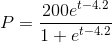
Equation (3) is given by:
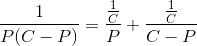
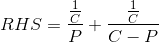


 Equation (3) varified.
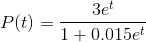
(2) We have equation (5) is:

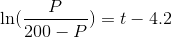
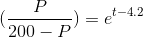
Substituting 0 for t and 10 for P we get:


 Substituting in equation 5 we get:







Add Answer to:
Exercises 1. Verify equation (3) 2. Use the techniques of Section 13.7 and the fact that...
Growth Rate Function for Logistic Model The logistic growth model in the form of a growth function rather than an updating function is given by the equation Pu+ P+ gpn) Pn0.05 p, (1 0.0001 p) Assu...
 Growth Rate Function for Logistic Model The logistic growth model in the form of a growth function rather than an updating function is given by the equation Pu+ P+ gpn) Pn0.05 p, (1 0.0001 p) Assume that Po-500 and find the population for the next three hours Pt, p2, and p. Find the equilibria for this model. Is it stable or unstable? a. b. What is the value of carrying capacity? c. Find the p-intercepts and the vertex for -...
POPULATION MODELS: PLEASE ANSWSER ASAP: ALL 3 AND WILL RATE U ASAP. The logistic growth model...
 POPULATION MODELS: PLEASE
ANSWSER ASAP: ALL 3 AND WILL RATE U ASAP.
The logistic growth model describes population growth when
resources are constrained. It
is an extension to the exponential growth model that includes an
additional term introducing
the carrying capacity of the habitat.
The differential equation for this model is:
dP/dt=kP(t)(1-P(t)/M)
Where P(t) is the population (or population density) at time t,
k > 0 is a growth constant,
and M is the carrying capacity of the habitat. This...
POPULATION MODELS: PLEASE
ANSWSER ASAP: ALL 3 AND WILL RATE U ASAP.
The logistic growth model describes population growth when
resources are constrained. It
is an extension to the exponential growth model that includes an
additional term introducing
the carrying capacity of the habitat.
The differential equation for this model is:
dP/dt=kP(t)(1-P(t)/M)
Where P(t) is the population (or population density) at time t,
k > 0 is a growth constant,
and M is the carrying capacity of the habitat. This...
8. Scientists use the Logistic Growth P.K P(t) = function P. +(K-P.)e FC to model population...
 8. Scientists use the Logistic Growth P.K P(t) = function P. +(K-P.)e FC to model population growth where P. is the population at some reference point, K is the carrying capacity which is a theoretical upper bound of the population and ro is the base growth rate of the population. e. Find the growth rate function of the world population. Be sure to show all steps. f. Use technology to graph P'(t) on the interval [0, 100] > [0, 0.1]....
2. [-75 Points] DETAILS SCALCCC4 7.5.007.MI. MY NOTES ASK YOUR TEACHER PRACTICE ANOTHER The population of...
 2. [-75 Points] DETAILS SCALCCC4 7.5.007.MI. MY NOTES ASK YOUR TEACHER PRACTICE ANOTHER The population of the world was about 5.3 billion in 1990. Birth rates in the 1990s ranged from 35 to 40 million per year and death rates ranged from 15 to 20 million per year. Let's assume that the carrying capacity for world population is 100 billion. (Assume that the difference in birth and death rates is 20 million/year 0.02 billion/year.) (a) Write the logistic differential equation...
(1 point) The population of Cook island has always been modeled by a logistic equation P'...
 (1 point) The population of Cook island has always been modeled by a logistic equation P' =r(C - P) with growth rate r = 2 and carrying capacity C = 6500 with time t in years. Starting in 2000, 8 citizens of Cook Island have left every year to become a mathematician, never to return. What is the new differential equation modeling the population of the island P? 4500 = 0
The growth of a certain bacteria in a reactor... 3. The growth of a certain bacteria...
 The growth of a certain bacteria in a reactor...
3. The growth of a certain bacteria in a reactor is assumed to be governed by the logistic equation: d P dt where P is the population in millions and t is the time in days. Recall that M is the carrying capacity of the reactor and k is a constant that depends on the growth rate (a) Suppose that the carrying capacity of the reactor is 10 million bacteria, and...
The growth of a certain bacteria in a reactor...
3. The growth of a certain bacteria in a reactor is assumed to be governed by the logistic equation: d P dt where P is the population in millions and t is the time in days. Recall that M is the carrying capacity of the reactor and k is a constant that depends on the growth rate (a) Suppose that the carrying capacity of the reactor is 10 million bacteria, and...
Hi, I'm stuck. HELP!!!!! 0/2.2 points 21. Previous Answers SCalcET8 9.4.501.XPM My Notes Ask Your Teacher...
 Hi, I'm stuck. HELP!!!!!
0/2.2 points 21. Previous Answers SCalcET8 9.4.501.XPM My Notes Ask Your Teacher The population assume that the carrying capacity for world population is 140 billion. (Assume that the difference in birth and death rates is 20 million/year f the world was about 5.3 billion in 1990. Birth rates in the 1990s ranged from 35 to 40 million per year and death rates ranged from 15 to 20 million per year. Let's 0.02 billion/year.) the initial (a)...
Hi, I'm stuck. HELP!!!!!
0/2.2 points 21. Previous Answers SCalcET8 9.4.501.XPM My Notes Ask Your Teacher The population assume that the carrying capacity for world population is 140 billion. (Assume that the difference in birth and death rates is 20 million/year f the world was about 5.3 billion in 1990. Birth rates in the 1990s ranged from 35 to 40 million per year and death rates ranged from 15 to 20 million per year. Let's 0.02 billion/year.) the initial (a)...
1. A population grows according to a logistic model, with carrying capacity of 10,000, and an...
 1. A population grows according to a logistic model, with carrying capacity of 10,000, and an initial population of 1000. (a) Determine the constant B. (b) The population grew to 2500 in one year. Find the growth constant k (c) Write down the particular solution with the values of k, B found in (a) and (b). What will the population be in another three years (that is, when t-4)?
4. Consider the equation N,+1 = N, exp[r(1-N/K)] This equation is sometimes called an analog of...
 4. Consider the equation N,+1 = N, exp[r(1-N/K)] This equation is sometimes called an analog of the logistic differential equation (May, 1975). The equation models a single-species population growing in an environment that has a carrying capacity K. By this we mean that the environ- ment can only sustain a maximal population level N = K. The expression reflects a density dependence in the reproductive rate. To verify this observa- tion, consider the following steps: (a) Sketch A as a...
6. 0.2/1 points | Previous Answers SCalcET8 9.4.009 My Notes Ask Your Suppose the population of the world was about 6.4 billion in 2000. Birth rates around that time ranged from 35 to 40 million per...
 6. 0.2/1 points | Previous Answers SCalcET8 9.4.009 My Notes Ask Your Suppose the population of the world was about 6.4 billion in 2000. Birth rates around that time ranged from 35 to 40 million per year and death rates ranged from 15 to 20 million per year. Let's assume that the carrying capacity for world population is 20 billion (a) Write the logistic differential equation for these data. (Because the initial population is small compared to the carrying capacity,...
 Growth Rate Function for Logistic Model The logistic growth model in the form of a growth function rather than an updating function is given by the equation Pu+ P+ gpn) Pn0.05 p, (1 0.0001 p) Assume that Po-500 and find the population for the next three hours Pt, p2, and p. Find the equilibria for this model. Is it stable or unstable? a. b. What is the value of carrying capacity? c. Find the p-intercepts and the vertex for -...
 POPULATION MODELS: PLEASE
ANSWSER ASAP: ALL 3 AND WILL RATE U ASAP.
The logistic growth model describes population growth when
resources are constrained. It
is an extension to the exponential growth model that includes an
additional term introducing
the carrying capacity of the habitat.
The differential equation for this model is:
dP/dt=kP(t)(1-P(t)/M)
Where P(t) is the population (or population density) at time t,
k > 0 is a growth constant,
and M is the carrying capacity of the habitat. This...
POPULATION MODELS: PLEASE
ANSWSER ASAP: ALL 3 AND WILL RATE U ASAP.
The logistic growth model describes population growth when
resources are constrained. It
is an extension to the exponential growth model that includes an
additional term introducing
the carrying capacity of the habitat.
The differential equation for this model is:
dP/dt=kP(t)(1-P(t)/M)
Where P(t) is the population (or population density) at time t,
k > 0 is a growth constant,
and M is the carrying capacity of the habitat. This...
 8. Scientists use the Logistic Growth P.K P(t) = function P. +(K-P.)e FC to model population growth where P. is the population at some reference point, K is the carrying capacity which is a theoretical upper bound of the population and ro is the base growth rate of the population. e. Find the growth rate function of the world population. Be sure to show all steps. f. Use technology to graph P'(t) on the interval [0, 100] > [0, 0.1]....
 2. [-75 Points] DETAILS SCALCCC4 7.5.007.MI. MY NOTES ASK YOUR TEACHER PRACTICE ANOTHER The population of the world was about 5.3 billion in 1990. Birth rates in the 1990s ranged from 35 to 40 million per year and death rates ranged from 15 to 20 million per year. Let's assume that the carrying capacity for world population is 100 billion. (Assume that the difference in birth and death rates is 20 million/year 0.02 billion/year.) (a) Write the logistic differential equation...
 (1 point) The population of Cook island has always been modeled by a logistic equation P' =r(C - P) with growth rate r = 2 and carrying capacity C = 6500 with time t in years. Starting in 2000, 8 citizens of Cook Island have left every year to become a mathematician, never to return. What is the new differential equation modeling the population of the island P? 4500 = 0
 The growth of a certain bacteria in a reactor...
3. The growth of a certain bacteria in a reactor is assumed to be governed by the logistic equation: d P dt where P is the population in millions and t is the time in days. Recall that M is the carrying capacity of the reactor and k is a constant that depends on the growth rate (a) Suppose that the carrying capacity of the reactor is 10 million bacteria, and...
The growth of a certain bacteria in a reactor...
3. The growth of a certain bacteria in a reactor is assumed to be governed by the logistic equation: d P dt where P is the population in millions and t is the time in days. Recall that M is the carrying capacity of the reactor and k is a constant that depends on the growth rate (a) Suppose that the carrying capacity of the reactor is 10 million bacteria, and...
 Hi, I'm stuck. HELP!!!!!
0/2.2 points 21. Previous Answers SCalcET8 9.4.501.XPM My Notes Ask Your Teacher The population assume that the carrying capacity for world population is 140 billion. (Assume that the difference in birth and death rates is 20 million/year f the world was about 5.3 billion in 1990. Birth rates in the 1990s ranged from 35 to 40 million per year and death rates ranged from 15 to 20 million per year. Let's 0.02 billion/year.) the initial (a)...
Hi, I'm stuck. HELP!!!!!
0/2.2 points 21. Previous Answers SCalcET8 9.4.501.XPM My Notes Ask Your Teacher The population assume that the carrying capacity for world population is 140 billion. (Assume that the difference in birth and death rates is 20 million/year f the world was about 5.3 billion in 1990. Birth rates in the 1990s ranged from 35 to 40 million per year and death rates ranged from 15 to 20 million per year. Let's 0.02 billion/year.) the initial (a)...
 1. A population grows according to a logistic model, with carrying capacity of 10,000, and an initial population of 1000. (a) Determine the constant B. (b) The population grew to 2500 in one year. Find the growth constant k (c) Write down the particular solution with the values of k, B found in (a) and (b). What will the population be in another three years (that is, when t-4)?
 4. Consider the equation N,+1 = N, exp[r(1-N/K)] This equation is sometimes called an analog of the logistic differential equation (May, 1975). The equation models a single-species population growing in an environment that has a carrying capacity K. By this we mean that the environ- ment can only sustain a maximal population level N = K. The expression reflects a density dependence in the reproductive rate. To verify this observa- tion, consider the following steps: (a) Sketch A as a...
 6. 0.2/1 points | Previous Answers SCalcET8 9.4.009 My Notes Ask Your Suppose the population of the world was about 6.4 billion in 2000. Birth rates around that time ranged from 35 to 40 million per year and death rates ranged from 15 to 20 million per year. Let's assume that the carrying capacity for world population is 20 billion (a) Write the logistic differential equation for these data. (Because the initial population is small compared to the carrying capacity,...
Most questions answered within 3 hours.
-
Where is the error in this code sequence?
String s1 = "Hello";
String s2 = "ello";...
asked 10 months ago -
Financial data for Joel de Paris, Inc., for last year
follow:
Joel de Paris, Inc.
Balance...
asked 10 months ago -
Consider this reaction:
Al2(SO4)3 (aq)+ BaCl3
(aq) Al2Cl6 (aq)- +
3BaSO4(s) . What is the...
asked 10 months ago -
Suppose that Savneet is considering increasing her
recent random sample from 20 car rentals to 40...
asked 10 months ago -
Trucks arrive at an unloading terminal at an average rate of 120
per hour.
Trucks arrive...
asked 10 months ago -
Why are methanol and ethanol completely soluble in water while
octanol is not very little soluble....
asked 10 months ago -
A facilities manager at a university reads in a research report
that the mean amount of...
asked 10 months ago -
When the CuSO4 is rehydrated by adding water to the anhydrous
compound, is this an endothermic...
asked 10 months ago -
A ray of sunlight is passing from diamond into crown glass; the
angle of incidence is...
asked 10 months ago -
A block of mass 0.249 kg is placed on top of a light, vertical
spring of...
asked 10 months ago -
how do the kidneys compensate in the presences of acidosis
a) trigger hyperventilate
b) reserve acid...
asked 10 months ago -
Question 501 pts
The rental rate of capital to the firm increases. Which of the
following...
asked 10 months ago