Please answer the following questions about paged memory... A) How much space needs to be allocated...
Please answer the following questions about paged memory...
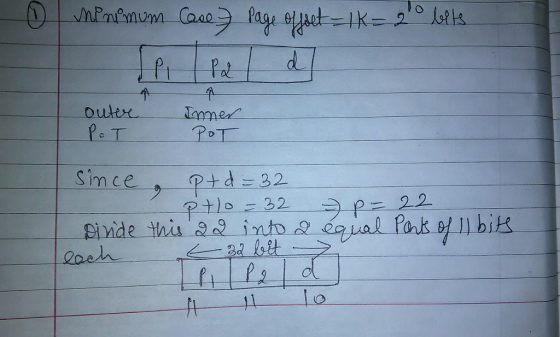
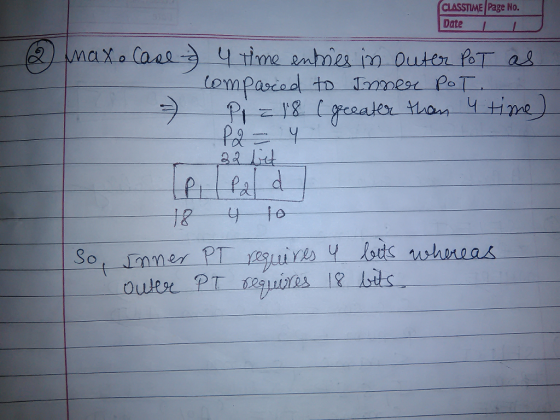
A) How much space needs to be allocated in the minimum and maximum cases for a two-level page table for a machine with a 32-bit virtual memory address, a 1K page size, and which has four times as many inner pages as outer pages? Assume any stored page table value requires 32 bits.
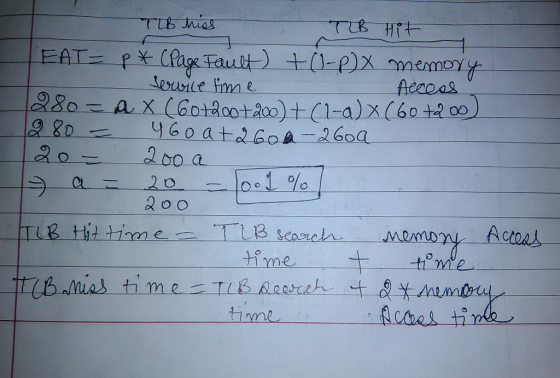
B) For the two-level paging approach above, if a Translation Lookaside Buffer (TLB) is used and can cache both inner and outer page tables, write down the formula for the Effective Access Time (EAT) for a page reference assuming a hit rate of a, a TLB access time of 60 ns and a memory access time of 200 ns. What must a be for EAT=280 ns? Assume that either both page tables are in the TLB or neither are.
Homework Answers
Add Answer to:
Please answer the following questions about paged memory...
A) How much space needs to be allocated...
Number Name 3. Assuming no page fault on a page table access, what is the processor...
 Number Name 3. Assuming no page fault on a page table access, what is the processor memory access time for the system depicted in the above figure, for a physical memory with 50ns read/write times? 4. Now, assume that the memory system has a translation look-aside buffer (TLB). The TLB requires 10 ns to determine a hit or mess. The physical memory system has an access time of 50ns. You may assume that page fault rate for the application is...
Address Translation Question [8 points] Suppose a computing system uses paging with a logical add...
 Address Translation Question
[8 points] Suppose a computing system uses paging with a logical
address of 24 bits and a
physical address of 32 bits. The page size is 4KB. Answer each of
the following. If an answer is a power of 2, you can leave it in
the form of a power of 2. ...
2. [20 points] Memory address translation and TLB performance [8 points] Suppose a computing system uses paging with a logical address of 24 bits...
Address Translation Question
[8 points] Suppose a computing system uses paging with a logical
address of 24 bits and a
physical address of 32 bits. The page size is 4KB. Answer each of
the following. If an answer is a power of 2, you can leave it in
the form of a power of 2. ...
2. [20 points] Memory address translation and TLB performance [8 points] Suppose a computing system uses paging with a logical address of 24 bits...
3. Consider a paging system with the page table in memory. A. If a memory reference takes 100 nanoseconds, how long does...
3. Consider a paging system with the page table in memory. A. If a memory reference takes 100 nanoseconds, how long does a paged memory reference take? B. If we add TLBs, and 75 percent of all page-table references are found in the TLBs, what is the effective memory reference time? (Assume that finding a page-table entry for the TLBs takes 20 nanoseconds.) C. It takes 750 milliseconds to service a page fault. The page fault rate is .001. What...
Consider the following system: Byte addressable 16-bit addresses 256B pages Single level Page Table System The...
 Consider the following system: Byte addressable 16-bit addresses 256B pages Single level Page Table System The system utilizes a fully-associative TLB with 4 entries and an LRU replacement policy. Given the access pattern and timings below, complete the following table. Assume the TLB begins initially empty and the cache is physically addressed NOTE: Access times are not inclusive and components are accessed sequentially. Time to update the TLB is negligible, everything else that needs to be updated will require a...
Exercise l: Suppose that we have a virtual memory space of 28 bytes for a given process and physical memory of 4 page frames. There is no cache. Suppose that pages are 32 bytes in length. 1) How...
 Exercise l: Suppose that we have a virtual memory space of 28 bytes for a given process and physical memory of 4 page frames. There is no cache. Suppose that pages are 32 bytes in length. 1) How many bits the virtual address contain? How many bits the physical address contain? bs Suppose now that some pages from the process have been brought into main memory as shown in the following figure: Virtual memory Physical memory Page table Frame #...
please answer $5 UXIF map in the computer uses direct mapping Question 18 5 pts Suppose...
 please answer
$5 UXIF map in the computer uses direct mapping Question 18 5 pts Suppose we have a byte-addressable computer using 2-way set associative mapping with 16-bit main memory addresses and 32 blocks of cache. Suppose also that each block contains 8 bytes. The size of the block offset field is bits, the bits. size of the set field is bits, and the size of the tag field is 5 pts Question 19 Suppose we have a byte-addressable computer...
please answer
$5 UXIF map in the computer uses direct mapping Question 18 5 pts Suppose we have a byte-addressable computer using 2-way set associative mapping with 16-bit main memory addresses and 32 blocks of cache. Suppose also that each block contains 8 bytes. The size of the block offset field is bits, the bits. size of the set field is bits, and the size of the tag field is 5 pts Question 19 Suppose we have a byte-addressable computer...
3. Virtual Memory (20 points) An ISA supports an 8 bit, byte-addressable virtual address space. The...
 3. Virtual Memory (20 points) An ISA supports an 8 bit, byte-addressable virtual address space. The corresponding physical memory has only 256 bytes. Each page contains 32 bytes. A simple, one-level translation scheme is used and the page table resides in physical memory. The initial contents of the frames of physical memory are shown below. VALUE address size 8 bit byte addressable each byte of addressing type memory has its own address 32 B page size physical memory size 256...
Main memory has 1,024 bytes, and frames are 32 bits. Assume a portion of main memory,...
 Main memory has 1,024 bytes, and frames are 32
bits. Assume a portion of main memory, and the page table,
shown below. The frame numbers in the Page Table are shown as base
10, but all other data in the tables is either binary or hex. A TLB
is not used. The virtual address space for each process is 8 pages.
The first frame in memory is frame 0, but only a portion of memory
is shown (not necessarily that...
Main memory has 1,024 bytes, and frames are 32
bits. Assume a portion of main memory, and the page table,
shown below. The frame numbers in the Page Table are shown as base
10, but all other data in the tables is either binary or hex. A TLB
is not used. The virtual address space for each process is 8 pages.
The first frame in memory is frame 0, but only a portion of memory
is shown (not necessarily that...
36.-Assume a 32 bit memory space with 16[KB] pages/frames and a two-level page table. Answer the...
36.-Assume a 32 bit memory space with 16[KB] pages/frames and a two-level page table. Answer the following questions: a).-what is the size of the page table in bytes needed for a process that has only 64[MB] of code at the start of its virtual address range? b).-how many bits are used for address (frame) offset, and how many for page table indexing (total). Assume each page table entry has 32 bits. a).-Size of page table b).-Offset bits b).-Page table indexing...
answer for all questions.... How do modern operating systems solve this? [3 marks] i) This is...
 answer for all questions....
How do modern operating systems solve this? [3 marks] i) This is a snapshot of a page table and a translation look aside buffer (TLB) of an operating system (Assume that these are the only populated entries). Toble 1: Page Table Entry Virtual Page Page Frame Time Loaded Time R bit M bit number Referenced 2 0 60 161 0 1 1 1 130 0 160 1 2 26 162 0 1 30 3 20 163...
answer for all questions....
How do modern operating systems solve this? [3 marks] i) This is a snapshot of a page table and a translation look aside buffer (TLB) of an operating system (Assume that these are the only populated entries). Toble 1: Page Table Entry Virtual Page Page Frame Time Loaded Time R bit M bit number Referenced 2 0 60 161 0 1 1 1 130 0 160 1 2 26 162 0 1 30 3 20 163...
 Number Name 3. Assuming no page fault on a page table access, what is the processor memory access time for the system depicted in the above figure, for a physical memory with 50ns read/write times? 4. Now, assume that the memory system has a translation look-aside buffer (TLB). The TLB requires 10 ns to determine a hit or mess. The physical memory system has an access time of 50ns. You may assume that page fault rate for the application is...
 Address Translation Question
[8 points] Suppose a computing system uses paging with a logical
address of 24 bits and a
physical address of 32 bits. The page size is 4KB. Answer each of
the following. If an answer is a power of 2, you can leave it in
the form of a power of 2. ...
2. [20 points] Memory address translation and TLB performance [8 points] Suppose a computing system uses paging with a logical address of 24 bits...
Address Translation Question
[8 points] Suppose a computing system uses paging with a logical
address of 24 bits and a
physical address of 32 bits. The page size is 4KB. Answer each of
the following. If an answer is a power of 2, you can leave it in
the form of a power of 2. ...
2. [20 points] Memory address translation and TLB performance [8 points] Suppose a computing system uses paging with a logical address of 24 bits...
 Consider the following system: Byte addressable 16-bit addresses 256B pages Single level Page Table System The system utilizes a fully-associative TLB with 4 entries and an LRU replacement policy. Given the access pattern and timings below, complete the following table. Assume the TLB begins initially empty and the cache is physically addressed NOTE: Access times are not inclusive and components are accessed sequentially. Time to update the TLB is negligible, everything else that needs to be updated will require a...
 Exercise l: Suppose that we have a virtual memory space of 28 bytes for a given process and physical memory of 4 page frames. There is no cache. Suppose that pages are 32 bytes in length. 1) How many bits the virtual address contain? How many bits the physical address contain? bs Suppose now that some pages from the process have been brought into main memory as shown in the following figure: Virtual memory Physical memory Page table Frame #...
 please answer
$5 UXIF map in the computer uses direct mapping Question 18 5 pts Suppose we have a byte-addressable computer using 2-way set associative mapping with 16-bit main memory addresses and 32 blocks of cache. Suppose also that each block contains 8 bytes. The size of the block offset field is bits, the bits. size of the set field is bits, and the size of the tag field is 5 pts Question 19 Suppose we have a byte-addressable computer...
please answer
$5 UXIF map in the computer uses direct mapping Question 18 5 pts Suppose we have a byte-addressable computer using 2-way set associative mapping with 16-bit main memory addresses and 32 blocks of cache. Suppose also that each block contains 8 bytes. The size of the block offset field is bits, the bits. size of the set field is bits, and the size of the tag field is 5 pts Question 19 Suppose we have a byte-addressable computer...
 3. Virtual Memory (20 points) An ISA supports an 8 bit, byte-addressable virtual address space. The corresponding physical memory has only 256 bytes. Each page contains 32 bytes. A simple, one-level translation scheme is used and the page table resides in physical memory. The initial contents of the frames of physical memory are shown below. VALUE address size 8 bit byte addressable each byte of addressing type memory has its own address 32 B page size physical memory size 256...
 Main memory has 1,024 bytes, and frames are 32
bits. Assume a portion of main memory, and the page table,
shown below. The frame numbers in the Page Table are shown as base
10, but all other data in the tables is either binary or hex. A TLB
is not used. The virtual address space for each process is 8 pages.
The first frame in memory is frame 0, but only a portion of memory
is shown (not necessarily that...
Main memory has 1,024 bytes, and frames are 32
bits. Assume a portion of main memory, and the page table,
shown below. The frame numbers in the Page Table are shown as base
10, but all other data in the tables is either binary or hex. A TLB
is not used. The virtual address space for each process is 8 pages.
The first frame in memory is frame 0, but only a portion of memory
is shown (not necessarily that...
 answer for all questions....
How do modern operating systems solve this? [3 marks] i) This is a snapshot of a page table and a translation look aside buffer (TLB) of an operating system (Assume that these are the only populated entries). Toble 1: Page Table Entry Virtual Page Page Frame Time Loaded Time R bit M bit number Referenced 2 0 60 161 0 1 1 1 130 0 160 1 2 26 162 0 1 30 3 20 163...
answer for all questions....
How do modern operating systems solve this? [3 marks] i) This is a snapshot of a page table and a translation look aside buffer (TLB) of an operating system (Assume that these are the only populated entries). Toble 1: Page Table Entry Virtual Page Page Frame Time Loaded Time R bit M bit number Referenced 2 0 60 161 0 1 1 1 130 0 160 1 2 26 162 0 1 30 3 20 163...
Most questions answered within 3 hours.
-
Where is the error in this code sequence?
String s1 = "Hello";
String s2 = "ello";...
asked 10 months ago -
Financial data for Joel de Paris, Inc., for last year
follow:
Joel de Paris, Inc.
Balance...
asked 10 months ago -
Consider this reaction:
Al2(SO4)3 (aq)+ BaCl3
(aq) Al2Cl6 (aq)- +
3BaSO4(s) . What is the...
asked 10 months ago -
Suppose that Savneet is considering increasing her
recent random sample from 20 car rentals to 40...
asked 10 months ago -
Trucks arrive at an unloading terminal at an average rate of 120
per hour.
Trucks arrive...
asked 10 months ago -
Why are methanol and ethanol completely soluble in water while
octanol is not very little soluble....
asked 10 months ago -
A facilities manager at a university reads in a research report
that the mean amount of...
asked 10 months ago -
When the CuSO4 is rehydrated by adding water to the anhydrous
compound, is this an endothermic...
asked 10 months ago -
A ray of sunlight is passing from diamond into crown glass; the
angle of incidence is...
asked 10 months ago -
A block of mass 0.249 kg is placed on top of a light, vertical
spring of...
asked 10 months ago -
how do the kidneys compensate in the presences of acidosis
a) trigger hyperventilate
b) reserve acid...
asked 10 months ago -
Question 501 pts
The rental rate of capital to the firm increases. Which of the
following...
asked 10 months ago