
Homework Answers

Add Answer to:
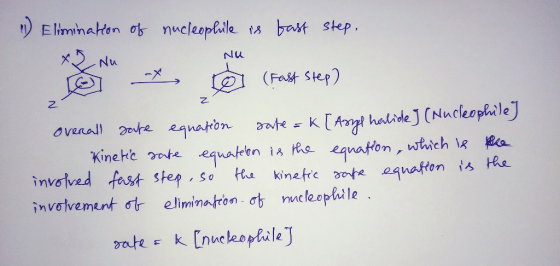
44. Which of the following is the kinetic rate ation for the addition-elmination mechanism of nucleophilc...
Which of the following compounds will not react via the nucleophilic aromatic substitution addition elimination mechanism...
 Which of the following compounds will not react via the nucleophilic aromatic substitution addition elimination mechanism A o-bromonitrobenzene B1-bromo-4-nitrobenzene C1-chloro-2,4-dinitrobenzene D. p-bromonitrobenzene Em-bromonitrobenzene
Question 6 What is the mechanism of the following reaction? o NH H30+ O Electrophilic addition...
 Question 6 What is the mechanism of the following reaction? o NH H30+ O Electrophilic addition Nucleophilic acyl substitution Electrophilic aromatic substitution Nucleophilic addition
1. Draw an electrophilic addition that illustrates 1,2-versus 1,4-addition. Using this reaction, explain Kinetic versus Thermodynamic...
1. Draw an electrophilic addition that illustrates 1,2-versus 1,4-addition. Using this reaction, explain Kinetic versus Thermodynamic products. 2. Explain resonance hybrid and draw an example that has at least 3 reasonance forms. 3. Draw a typical Diel-Alder reaction. Show the mechanism for your reaction 4. Use the inscribed polygon techiques to illustrate why benzene is aromatic and cyclopentadiene is not 5. Draw the general mechanism for electrophilic aromatic substitution 6. Explain how substituents on the aromatic ring activate or slow...
The mechanism by which acylation of an amine with an acid chloride takes place is: a)...
The mechanism by which acylation of an amine with an acid chloride takes place is: a) electrophilic addition b) nucleophilic aromatic substitution c) nucleophilic addition d) nuceophilic acyl substitution
three engines operate 1) Draw the complete mechanism for each of the following: include all arrows,...
 three engines operate
1) Draw the complete mechanism for each of the following: include all arrows, charges, any resonance structures, etc) B) TI Nath A Brodatechs 2) Give the organic substitution product of the following: I NooH. By which mechanism does this reaction occur? Give the rate equation for this reaction: Rate What happens to the rate (for ex increase by 2x, etc) if the concentration of: a) The halide is doubled: b) The hydroxide is doubled c) Both the...
three engines operate
1) Draw the complete mechanism for each of the following: include all arrows, charges, any resonance structures, etc) B) TI Nath A Brodatechs 2) Give the organic substitution product of the following: I NooH. By which mechanism does this reaction occur? Give the rate equation for this reaction: Rate What happens to the rate (for ex increase by 2x, etc) if the concentration of: a) The halide is doubled: b) The hydroxide is doubled c) Both the...
When determining which mechanism (E1 or E2) occurs, the following process is helpful: 1) Determine the...
 When determining which mechanism (E1 or E2) occurs, the following process is helpful: 1) Determine the substitution (methyl, 1º, 2º, or 3“) of the alkyl halide 2) Determine the strength of the nucleophile Please fill out the following table, indicating the category of reaction (E1 or E2) that will occur in each set of alkyl halides and nucleophiles. If no reaction occurs, write 'NR: Alkyl Halide Strong Base Weak Base Methyl 1° 20 3° For each of the following reactions,...
All three please! Which mechanism is represented below? which of the following will NOt undergo Friedel-crafts...
 All three please!
Which mechanism is represented below? which of the following will NOt undergo Friedel-crafts akylation? Which of the following molecules is LEAST reactive toward electrophlic aromatic substitution?
All three please!
Which mechanism is represented below? which of the following will NOt undergo Friedel-crafts akylation? Which of the following molecules is LEAST reactive toward electrophlic aromatic substitution?
Help me pleaseeeee! Identify the mechanism by which each of the reactions above proceeds from among...
 Help me pleaseeeee! Identify the mechanism by which each of the
reactions above proceeds from among the mechanisms listed. Use the
letters a - j for your answers.
Chapter 16: Mastery [Review Topics] [References] 1. Identifying Unknown Aromatic Com... 1 pts M 2. Electrophilic Aromatic Substitution: ... 1 pts M 3. Electrophilic Aromatic Substitution: ... 1 pts M 4. Electrophilic Aromatic Substitution: ... 1 pts M CH3 _CH3 CH3 FeCl3 = 2. I T + Cl2 - + HCI 5....
Help me pleaseeeee! Identify the mechanism by which each of the
reactions above proceeds from among the mechanisms listed. Use the
letters a - j for your answers.
Chapter 16: Mastery [Review Topics] [References] 1. Identifying Unknown Aromatic Com... 1 pts M 2. Electrophilic Aromatic Substitution: ... 1 pts M 3. Electrophilic Aromatic Substitution: ... 1 pts M 4. Electrophilic Aromatic Substitution: ... 1 pts M CH3 _CH3 CH3 FeCl3 = 2. I T + Cl2 - + HCI 5....
11. What is the kinetic product obtained from the addition of 1 mole of bromine to...
 11. What is the kinetic product obtained from the addition of 1 mole of bromine to 1,3- pentadiene? a. (E)-4,5-dibromo-2-pentene b. (E)-1.4-dibromo-2-pentene c. (E)-2,3-dibromo-4-pentene d. (E)-1.2-dibromo-4-pentene e. none of a-d 12. Which of the following is aromatic 13. How many are non-aromatic among the examples of Question 12? a. O b. 1 c. 2 d. 3 e. 4
3:04HS 44%. Indicate which alkyl halide you would expect to react more rapidly by mechanism. ca...
 3:04HS 44%. Indicate which alkyl halide you would expect to react more rapidly by mechanism. ca pts. Explain your answer. 2 pts.) S2
 Which of the following compounds will not react via the nucleophilic aromatic substitution addition elimination mechanism A o-bromonitrobenzene B1-bromo-4-nitrobenzene C1-chloro-2,4-dinitrobenzene D. p-bromonitrobenzene Em-bromonitrobenzene
 Question 6 What is the mechanism of the following reaction? o NH H30+ O Electrophilic addition Nucleophilic acyl substitution Electrophilic aromatic substitution Nucleophilic addition
 three engines operate
1) Draw the complete mechanism for each of the following: include all arrows, charges, any resonance structures, etc) B) TI Nath A Brodatechs 2) Give the organic substitution product of the following: I NooH. By which mechanism does this reaction occur? Give the rate equation for this reaction: Rate What happens to the rate (for ex increase by 2x, etc) if the concentration of: a) The halide is doubled: b) The hydroxide is doubled c) Both the...
three engines operate
1) Draw the complete mechanism for each of the following: include all arrows, charges, any resonance structures, etc) B) TI Nath A Brodatechs 2) Give the organic substitution product of the following: I NooH. By which mechanism does this reaction occur? Give the rate equation for this reaction: Rate What happens to the rate (for ex increase by 2x, etc) if the concentration of: a) The halide is doubled: b) The hydroxide is doubled c) Both the...
 When determining which mechanism (E1 or E2) occurs, the following process is helpful: 1) Determine the substitution (methyl, 1º, 2º, or 3“) of the alkyl halide 2) Determine the strength of the nucleophile Please fill out the following table, indicating the category of reaction (E1 or E2) that will occur in each set of alkyl halides and nucleophiles. If no reaction occurs, write 'NR: Alkyl Halide Strong Base Weak Base Methyl 1° 20 3° For each of the following reactions,...
 All three please!
Which mechanism is represented below? which of the following will NOt undergo Friedel-crafts akylation? Which of the following molecules is LEAST reactive toward electrophlic aromatic substitution?
All three please!
Which mechanism is represented below? which of the following will NOt undergo Friedel-crafts akylation? Which of the following molecules is LEAST reactive toward electrophlic aromatic substitution?
 Help me pleaseeeee! Identify the mechanism by which each of the
reactions above proceeds from among the mechanisms listed. Use the
letters a - j for your answers.
Chapter 16: Mastery [Review Topics] [References] 1. Identifying Unknown Aromatic Com... 1 pts M 2. Electrophilic Aromatic Substitution: ... 1 pts M 3. Electrophilic Aromatic Substitution: ... 1 pts M 4. Electrophilic Aromatic Substitution: ... 1 pts M CH3 _CH3 CH3 FeCl3 = 2. I T + Cl2 - + HCI 5....
Help me pleaseeeee! Identify the mechanism by which each of the
reactions above proceeds from among the mechanisms listed. Use the
letters a - j for your answers.
Chapter 16: Mastery [Review Topics] [References] 1. Identifying Unknown Aromatic Com... 1 pts M 2. Electrophilic Aromatic Substitution: ... 1 pts M 3. Electrophilic Aromatic Substitution: ... 1 pts M 4. Electrophilic Aromatic Substitution: ... 1 pts M CH3 _CH3 CH3 FeCl3 = 2. I T + Cl2 - + HCI 5....
 11. What is the kinetic product obtained from the addition of 1 mole of bromine to 1,3- pentadiene? a. (E)-4,5-dibromo-2-pentene b. (E)-1.4-dibromo-2-pentene c. (E)-2,3-dibromo-4-pentene d. (E)-1.2-dibromo-4-pentene e. none of a-d 12. Which of the following is aromatic 13. How many are non-aromatic among the examples of Question 12? a. O b. 1 c. 2 d. 3 e. 4
 3:04HS 44%. Indicate which alkyl halide you would expect to react more rapidly by mechanism. ca pts. Explain your answer. 2 pts.) S2
Most questions answered within 3 hours.
-
Where is the error in this code sequence?
String s1 = "Hello";
String s2 = "ello";...
asked 11 months ago -
Financial data for Joel de Paris, Inc., for last year
follow:
Joel de Paris, Inc.
Balance...
asked 11 months ago -
Consider this reaction:
Al2(SO4)3 (aq)+ BaCl3
(aq) Al2Cl6 (aq)- +
3BaSO4(s) . What is the...
asked 11 months ago -
Suppose that Savneet is considering increasing her
recent random sample from 20 car rentals to 40...
asked 11 months ago -
Trucks arrive at an unloading terminal at an average rate of 120
per hour.
Trucks arrive...
asked 11 months ago -
Why are methanol and ethanol completely soluble in water while
octanol is not very little soluble....
asked 11 months ago -
A facilities manager at a university reads in a research report
that the mean amount of...
asked 11 months ago -
When the CuSO4 is rehydrated by adding water to the anhydrous
compound, is this an endothermic...
asked 11 months ago -
A ray of sunlight is passing from diamond into crown glass; the
angle of incidence is...
asked 11 months ago -
A block of mass 0.249 kg is placed on top of a light, vertical
spring of...
asked 11 months ago -
how do the kidneys compensate in the presences of acidosis
a) trigger hyperventilate
b) reserve acid...
asked 11 months ago -
Question 501 pts
The rental rate of capital to the firm increases. Which of the
following...
asked 11 months ago