
Homework Answers


 ..........................(1)


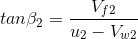



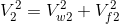


![H_m=\frac{V^2_1}{2g}+\frac{u_2(u_2-V_{f2} \ cot \beta_2)}{g}-\frac{[(u_2-V_{f2} \ cot \beta_2)^2+V^2_{f2}]}{2g}](http://img.homeworklib.com/questions/923cfca0-5533-11eb-9772-eb2524bfc582.png?x-oss-process=image/resize,w_560)



![H_m=\frac{1}{2g}{[V^2_1+u^2_2-V^2_{f2} (1+\ cot^2 \beta_2)]}](http://img.homeworklib.com/questions/93763880-5533-11eb-8109-a1a10a0a728a.png?x-oss-process=image/resize,w_560)

![H_m=\frac{1}{2g}{[V^2_1+u^2_2-V^2_{f2} cosec^2 \beta_2]}](http://img.homeworklib.com/questions/9413e300-5533-11eb-b1da-2126473b1aa5.png?x-oss-process=image/resize,w_560)
If there is no loss of energy in impeller
![\frac{P_2-P_1}{\rho g}=\frac{1}{2g}{[V^2_1+u^2_2-V^2_{f2} cosec^2 \beta_2]}](http://img.homeworklib.com/questions/94a9c200-5533-11eb-8446-29b75a86336f.png?x-oss-process=image/resize,w_560)

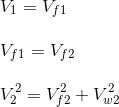






![\frac{P_2-P_1}{\rho g}=\frac{1}{2 \times 9.81}{[1.591^2+30.368^2-1.492^2 cosec^2 35]}](http://img.homeworklib.com/questions/97704310-5533-11eb-9c47-5585696cf3dc.png?x-oss-process=image/resize,w_560)





![H_{m-back}=\frac{1}{2g}{[V^2_1+u^2_2-V^2_{f2} cosec^2 \beta_2]}](http://img.homeworklib.com/questions/9979a3a0-5533-11eb-9579-9f41223e9922.png?x-oss-process=image/resize,w_560)


![H_{m-straight}=\frac{1}{2g}{[V^2_1+u^2_2-V^2_{f2}]}](http://img.homeworklib.com/questions/9a630200-5533-11eb-a1ad-25c1d3786c71.png?x-oss-process=image/resize,w_560)

![\frac{P_2-P_1}{\rho g}=\frac{1}{2 \times 9.81}{[1.591^2+30.368^2-1.492^2 cosec^2 90]}](http://img.homeworklib.com/questions/9afefad0-5533-11eb-8f30-af6d029f916b.png?x-oss-process=image/resize,w_560)




Add Answer to:
Question 3 Show that the pressure head rise in the impeller of a centrifugal pump when...
The centrifugal pump as described in Q5.8 is operating with a pre-whirl of 10° (i.e. Ui is inclin...
 The centrifugal pump as described in Q5.8 is operating with a pre-whirl of 10° (i.e. Ui is inclined by 10° from the radial axis in the rotational direction). The centrifugal pump delivers 0.45 m3/s ofwater when it is running at the angular velocity of ω-1200 rpm Sketch the velocity triangles at inlet and exit of the impeller and hence determine the following items by assuming (a) negligible losses; and (b) Vi enters the impeller with θ| and V2 leaves with...
(b) A centrifugal pump rotates at 750 rpm. Water enters the impeller normal to the blades...
 (b) A centrifugal pump rotates at 750 rpm. Water enters the impeller normal to the blades (GJ 0°) and exits at an angle of 35° from radial (α,- 35°). The inlet radius is r12.0 cm, at which the blade width bi 18.0 cm. The outlet radius is r2 24.0 cm, at which the blade width b 16.2 cm. The volume flow rate is 0.573 m/s. Assuming 100 percent efficiency. Given density of water to be 998 kg/m3 i Calculate the...
n Q6. A backward curved centrifugal compressor is to compress air. The diameter of the impeller...
 n Q6. A backward curved centrifugal compressor is to compress air. The diameter of the impeller is 0.6 m and the outlet blade angle is 60°. The peripheral area is 0.002 m' and the flow coefficient (ratio of normal component i.e flow velocity component to tip speed) is 0.5. If the pressure and temperature of air at the exit of the impeller are found to be (7.702+; -) bar and 40°C, find the 100 specific work (kJ/kg) and power input...
The impeller of a centrifugal pump has an external diameter of 450mm and an internal diameter of 250mm. When running, a constant radial velocity flows through the impeller at 0.5m/s. If the inlet and...
 The impeller of a centrifugal pump has an external diameter of 450mm and an internal diameter of 250mm. When running, a constant radial velocity flows through the impeller at 0.5m/s. If the inlet and outlet vane angle are 15° and 35°, determine: 1. The angular velocity, and (i) [5 marks] ii) The Euler's head. [5 marks] 35° 15° Figure Q2 Name four parts of a centrifugal pump and explain their respective function. 2. 110 maxks 3. Name four parts of...
4. The following table shows data for a commercial centrifugal water pump where the symbols have...
 4. The following table shows data for a commercial centrifugal water pump where the symbols have the usual meanings: Dimension Inlet Outlet Radius (r) 100 mm 180 mm Impeller Width (b) 45 mm 45 mm Impeller Blade Angle (B) 30° 20° Speed = 1440 rpm Determine the following, drawing the relevant velocity triangles where appropriate: (a) The Design-point discharge [13 marks] (b) The water power requirement [10 marks) (c) The head [2 marks]
13. A centrifugal pump whose outer diameter is twice the inner diameter, runs at 600 rpm....
 13. A centrifugal pump whose outer diameter is twice the inner diameter, runs at 600 rpm. The radial gh the pump is constant at 2.5 m/s and the flow is radial at the pump inlet. The rotor vanes are curved back at exit at an angle of 40° to the tangent. If the outer diameter of the rotor is 500 mm and the blade width is 50 mm at exit, the tangential component of absolute velocity at rotor exit (in...
centrifugal pump question
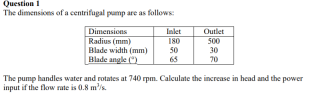 The dimensions of a centrifugal pump are as follows: Dimensions Inlet Outlet Radius (mm) 180 500Blade with (mm) 50 30Blade angle 65 70The pump handles water and rotates at 740 rpm. Calculate the increase in input if the flow rate is 0.8 m3/s
QUESTION 3 n angle of 220 to the tangent as shown in the figure 1. The area of the outer periphery is 0.65 m, the pump...
 QUESTION 3 n angle of 220 to the tangent as shown in the figure 1. The area of the outer periphery is 0.65 m, the pump discharges Centrifugal pump impeller has an outer diameter of 15 m and rotating at 210 RPM The outlet vane angle 1550 L/s and the flow at inlet is radial. The exit velocity triangle of this question is shown in Figure 2. set back at Centrifugal impeller with backward facing vane Figure (ы 2 W....
The flow in the impeller of a centrifugal pump is modeled by the superposition of a...
 The flow in the impeller of a centrifugal pump is modeled by the superposition of a source flow and a free vortex flow. The impeller has an outer diameter of 0.5 m and an inner diameter of 0.3 m. At the outlet from the impeller, the flowing water has the following velocity components, relative to the impeller: radial component 1 m/s and tangential component 6 m/s. Determine! 1) the velocity potential and stream function for the superposition, the strength of...
Problem 1: For the following centrifugal pump parameters determine (a) the manometric efficiency 5 points] and...
 Problem 1: For the following centrifugal pump parameters determine (a) the manometric efficiency 5 points] and (b) the fraction of total energy converted into pressure energy by the impeller of a centrifugal pump [5 points]. Impeller diameter: 0.1 m Impeller rotational speed: 1000 rpm The differential pressure across the suction and delivery heads: 100 m Speed of fluid flow: 2.5 m/s Impeller blades are curved back at an angle of 30° Frictional losses in the pump amounts to 2 m
 The centrifugal pump as described in Q5.8 is operating with a pre-whirl of 10° (i.e. Ui is inclined by 10° from the radial axis in the rotational direction). The centrifugal pump delivers 0.45 m3/s ofwater when it is running at the angular velocity of ω-1200 rpm Sketch the velocity triangles at inlet and exit of the impeller and hence determine the following items by assuming (a) negligible losses; and (b) Vi enters the impeller with θ| and V2 leaves with...
 (b) A centrifugal pump rotates at 750 rpm. Water enters the impeller normal to the blades (GJ 0°) and exits at an angle of 35° from radial (α,- 35°). The inlet radius is r12.0 cm, at which the blade width bi 18.0 cm. The outlet radius is r2 24.0 cm, at which the blade width b 16.2 cm. The volume flow rate is 0.573 m/s. Assuming 100 percent efficiency. Given density of water to be 998 kg/m3 i Calculate the...
 n Q6. A backward curved centrifugal compressor is to compress air. The diameter of the impeller is 0.6 m and the outlet blade angle is 60°. The peripheral area is 0.002 m' and the flow coefficient (ratio of normal component i.e flow velocity component to tip speed) is 0.5. If the pressure and temperature of air at the exit of the impeller are found to be (7.702+; -) bar and 40°C, find the 100 specific work (kJ/kg) and power input...
 The impeller of a centrifugal pump has an external diameter of 450mm and an internal diameter of 250mm. When running, a constant radial velocity flows through the impeller at 0.5m/s. If the inlet and outlet vane angle are 15° and 35°, determine: 1. The angular velocity, and (i) [5 marks] ii) The Euler's head. [5 marks] 35° 15° Figure Q2 Name four parts of a centrifugal pump and explain their respective function. 2. 110 maxks 3. Name four parts of...
 4. The following table shows data for a commercial centrifugal water pump where the symbols have the usual meanings: Dimension Inlet Outlet Radius (r) 100 mm 180 mm Impeller Width (b) 45 mm 45 mm Impeller Blade Angle (B) 30° 20° Speed = 1440 rpm Determine the following, drawing the relevant velocity triangles where appropriate: (a) The Design-point discharge [13 marks] (b) The water power requirement [10 marks) (c) The head [2 marks]
 13. A centrifugal pump whose outer diameter is twice the inner diameter, runs at 600 rpm. The radial gh the pump is constant at 2.5 m/s and the flow is radial at the pump inlet. The rotor vanes are curved back at exit at an angle of 40° to the tangent. If the outer diameter of the rotor is 500 mm and the blade width is 50 mm at exit, the tangential component of absolute velocity at rotor exit (in...
 QUESTION 3 n angle of 220 to the tangent as shown in the figure 1. The area of the outer periphery is 0.65 m, the pump discharges Centrifugal pump impeller has an outer diameter of 15 m and rotating at 210 RPM The outlet vane angle 1550 L/s and the flow at inlet is radial. The exit velocity triangle of this question is shown in Figure 2. set back at Centrifugal impeller with backward facing vane Figure (ы 2 W....
 The flow in the impeller of a centrifugal pump is modeled by the superposition of a source flow and a free vortex flow. The impeller has an outer diameter of 0.5 m and an inner diameter of 0.3 m. At the outlet from the impeller, the flowing water has the following velocity components, relative to the impeller: radial component 1 m/s and tangential component 6 m/s. Determine! 1) the velocity potential and stream function for the superposition, the strength of...
 Problem 1: For the following centrifugal pump parameters determine (a) the manometric efficiency 5 points] and (b) the fraction of total energy converted into pressure energy by the impeller of a centrifugal pump [5 points]. Impeller diameter: 0.1 m Impeller rotational speed: 1000 rpm The differential pressure across the suction and delivery heads: 100 m Speed of fluid flow: 2.5 m/s Impeller blades are curved back at an angle of 30° Frictional losses in the pump amounts to 2 m
Most questions answered within 3 hours.
-
Where is the error in this code sequence?
String s1 = "Hello";
String s2 = "ello";...
asked 11 months ago -
Financial data for Joel de Paris, Inc., for last year
follow:
Joel de Paris, Inc.
Balance...
asked 11 months ago -
Consider this reaction:
Al2(SO4)3 (aq)+ BaCl3
(aq) Al2Cl6 (aq)- +
3BaSO4(s) . What is the...
asked 11 months ago -
Suppose that Savneet is considering increasing her
recent random sample from 20 car rentals to 40...
asked 11 months ago -
Trucks arrive at an unloading terminal at an average rate of 120
per hour.
Trucks arrive...
asked 11 months ago -
Why are methanol and ethanol completely soluble in water while
octanol is not very little soluble....
asked 11 months ago -
A facilities manager at a university reads in a research report
that the mean amount of...
asked 11 months ago -
When the CuSO4 is rehydrated by adding water to the anhydrous
compound, is this an endothermic...
asked 11 months ago -
A ray of sunlight is passing from diamond into crown glass; the
angle of incidence is...
asked 11 months ago -
A block of mass 0.249 kg is placed on top of a light, vertical
spring of...
asked 11 months ago -
how do the kidneys compensate in the presences of acidosis
a) trigger hyperventilate
b) reserve acid...
asked 11 months ago -
Question 501 pts
The rental rate of capital to the firm increases. Which of the
following...
asked 11 months ago