Please comment the MIPS code to help me understand.
Here is what the code accomplishes.
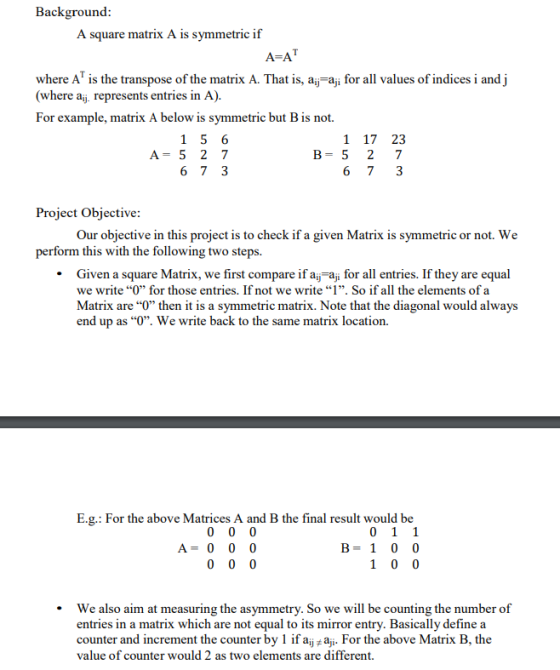
Here is the code, partially commented.
.data
Matrix: .word 41,45,5, 34,8, 15,16,23,44,48,12,32,18,47,22,8,22
.word 46,40,42,33,13,38,27,6, 29,25,18,40,47,22,26,14,3
.word 7, 48,35,9, 43,38,9, 49,28,25,42,5, 44,10,5, 38,14
.word 46,33,16,6, 13,20,31,1, 8, 17,1, 47,28,46,14,28,7
.word 32,2, 48,25,41,29,14,39,43,46,3, 39,32,49,41,28,46
.word 5, 43,2, 48,13,4, 33,41,32,19,9, 25,30,22,2, 9, 40
.word 14,47,22,18,47,3, 35,44,18,6, 33,22,11,6, 47,50,4
.word 28,34,20,30,18,27,38,5, 26,40,37,23,16,13,37,8,7
.word 48,38,39,12,10,39,23,20,21,20,33,16,24,21,25,3,46
.word 49,38,40,38,13,47,5, 13,4, 13,23,26,12,30,29,29, 3
.word 8, 20,10,13,31,7, 12,41,12,21,28,26,43,14,35,10,19
.word 49,33,25,26,24,29,46,22,7, 5, 15,41,10,31,19,41,27
.word 48,9, 23,35,18,24,8, 46,10,7, 38,40,12,36,12,22,16
.word 25,36,33,45,42,1, 42,10,12,48,10,33,9, 12,6,15, 16
.word 41,2, 36,48,30,17,27,14,21,48,35,19,12,6, 27,12,25
.word 8, 14,38,28,28,9, 50,8, 3, 29,10,41,22,15,12,6, 33
.word 22,3, 14,7, 46,40,4, 7, 46,3, 19,27,16,16,25,33,41
.text
.globl __start # main program starts in the next line
__start: addi $s0,$zero,0 # outer loop counter
addi $s1,$zero,0 # inner loop counter
la $t0,Matrix #load the matrix address
addi $t6,$zero,17 # number of columns
addi $t7,$zero,17 # number of rows
addi $s6,$zero,0
sll $t1,$t6,2
ext_loop: addi $s1,$s0,0 # reset the inner loop counter
inn_loop: mult $s0,$t1
mflo $t2 # calculate the low byte offset
sll $t3,$s1,2
add $t4,$t0,$t2 # add row offset
add $s2,$t4,$t3 # add column offset
lw $s3,0($s2) # load this element
mult $s1,$t1 # Repeat the offset calcluation for mirror element
mflo $t2
sll $t3,$s0,2
add $t4,$t0,$t2
add $s4,$t4,$t3
lw $s5,0($s4)
beq $s3,$s5,jump_equal
addi $s7,$zero,1 # write ones if different
sw $s7,0($s2)
sw $s7,0($s4)
add $s6,$s6,1 # increment the counter
j jump_unequal
jump_equal: addi $s7,$zero,0
sw $s7,0($s2)
sw $s7,0($s4)
jump_unequal:
addi $s1,$s1,1 # increment the inner loop
blt $s1,$t7,inn_loop # next inner loop
addi $s0,$s0,1 # increment the outer loop
blt $s0,$t6,ext_loop # next outer loop
.end
Homework Answers
.data
Matrix: .word 41,45,5, 34,8, 15,16,23,44,48,12,32,18,47,22,8,22
#row1 element
.word 46,40,42,33,13,38,27,6, 29,25,18,40,47,22,26,14,3#row2
element
.word 7, 48,35,9, 43,38,9, 49,28,25,42,5, 44,10,5, 38,14# so
on
.word 46,33,16,6, 13,20,31,1, 8, 17,1, 47,28,46,14,28,7
.word 32,2, 48,25,41,29,14,39,43,46,3, 39,32,49,41,28,46
.word 5, 43,2, 48,13,4, 33,41,32,19,9, 25,30,22,2, 9, 40
.word 14,47,22,18,47,3, 35,44,18,6, 33,22,11,6, 47,50,4
.word 28,34,20,30,18,27,38,5, 26,40,37,23,16,13,37,8,7
.word 48,38,39,12,10,39,23,20,21,20,33,16,24,21,25,3,46
.word 49,38,40,38,13,47,5, 13,4, 13,23,26,12,30,29,29, 3
.word 8, 20,10,13,31,7, 12,41,12,21,28,26,43,14,35,10,19
.word 49,33,25,26,24,29,46,22,7, 5, 15,41,10,31,19,41,27
.word 48,9, 23,35,18,24,8, 46,10,7, 38,40,12,36,12,22,16
.word 25,36,33,45,42,1, 42,10,12,48,10,33,9, 12,6,15, 16
.word 41,2, 36,48,30,17,27,14,21,48,35,19,12,6, 27,12,25
.word 8, 14,38,28,28,9, 50,8, 3, 29,10,41,22,15,12,6, 33
.word 22,3, 14,7, 46,40,4, 7, 46,3, 19,27,16,16,25,33,41
.text
.globl __start # main program starts in the next line
__start: addi $s0,$zero,0 # outer loop counter
addi $s1,$zero,0 # inner loop counter
la $t0,Matrix #load the matrix address
addi $t6,$zero,17 # number of columns (i)
addi $t7,$zero,17 # number of rows (j)
addi $s6,$zero,0 #initializing the counter to count A(ij) !=
A(ji)
sll $t1,$t6,2 # to address the word we multiply by 4 or shift it by
2 to get actual size of row
ext_loop: addi $s1,$s0,0 # reset the inner loop counter (j =
0)
inn_loop: mult $s0,$t1 # to calculate the row offset we mult by
$s0(counter of row number)
mflo $t2 # calculate the low byte offset
sll $t3,$s1,2 # to address the word we mult by 4 or shift it by 2
to get actual col offset
add $t4,$t0,$t2 # add row offset
add $s2,$t4,$t3 # add column offset
lw $s3,0($s2) # load this element A(ij)
mult $s1,$t1 # Repeat the offset calcluation for mirror
element
mflo $t2 # get the row offset from multiply of $s1(col number
counter)
sll $t3,$s0,2 # to get the actual col offset
add $t4,$t0,$t2 # adding row offset
add $s4,$t4,$t3 # adding col offset
lw $s5,0($s4) # load this element A(ji)
beq $s3,$s5,jump_equal # if A(ij) == A(ji) jumps to jump_equal
label
addi $s7,$zero,1 # write ones if different
sw $s7,0($s2) # store the 1 to A(ij)
sw $s7,0($s4) # store the 1 to A(ji)
add $s6,$s6,1 # increment the counter of A(ij) != A(ji)
j jump_unequal # jump to jump_unequal
jump_equal: addi $s7,$zero,0 # write 0 if equal
sw $s7,0($s2) # writes 0 to A(ij)
sw $s7,0($s4) # writes 0 to A(ji)
jump_unequal:
addi $s1,$s1,1 # increment the inner loop
blt $s1,$t7,inn_loop # next inner loop
addi $s0,$s0,1 # increment the outer loop
blt $s0,$t6,ext_loop # next outer loop
.end
# calculating the row offset and column offset is bit
tricky
# first you have to multiply the row num couter to 17(num rows)*4
and then add the (4*col num counter)(col offset)
# which is done in above code two times first by $s1 * 17 * 4 for
A[j][i] and $s0 * 17 * 4 for A[i][j]
Add Answer to:
Please comment the MIPS code to help me understand.
Here is what the code accomplishes.
Here...
MIPS Insertion program.........I could really use some help ASAP
I have this MIPS program and I'm having trouble with it. This program is user inputs numbers until zero and sorts and print the numbers in order. Please soove this issue. You can use any sorting algorithm except bubble sort. Need it as soon as possible. Here is the code:.datanum: .word 0space: .byte ' ' .text main: # la $t0, val # loads val into a register # li $t1, 0 #keeps track of how many numbers entered la $a0,...
im trying to complete mips program code about a calculator program that can calculate integer addition...
im trying to complete mips program code about a calculator program that can calculate integer addition / subtraction written using the MIPS assembler. im having hard times to debug this. The input is given to the array of Formula char (base address $ s0) in the form of a formula. The null character (\ 0, ASCII code 0) is placed at the end. The calculation result is given to the register $ s1 and the overflow is ignored. For example,...
2.4 For the MIPS assembly instructions below, what is the corresponding C statement? Assume that the...
2.4 For the MIPS assembly instructions below, what is the corresponding C statement? Assume that the variables f, g, h, i, and j are assigned to registers $s0, $s1, $s2, $s3, and $s4, respectively. Assume that the base address of the arrays A and B are in registers $s6 and $s7, respectively. sll $t0, $s0, 2 # $t0 = f * 4 add $t0, $s6, $t0 # $t0 = &A[f] sll $t1, $s1, 2 # $t1 =...
what is the output of the following assembly code ? .data A: .word 84 111 116 97 108 32 105 115 32 . text main:li $v0, 1l li $s0,0 la $s1, A li $t3, 0 loop: slti $t0, $s0, 17 be...
what is the output of the following assembly code ? .data A: .word 84 111 116 97 108 32 105 115 32 . text main:li $v0, 1l li $s0,0 la $s1, A li $t3, 0 loop: slti $t0, $s0, 17 beq: $t0, $zero, end sll $t1, $s0 2 add $t2 $s1 $t1 syscall addi $s0, $s0, 1 j loop end: li $v0, 1 add $a0, $zero, $t3 syscall
1. For the MIPS assembly instructions below, what is the corresponding C statement? max: lw &
1. For the MIPS assembly instructions below, what is the corresponding C statement? max: lw $t0, 0($a0) #load the first array value into $t0 addi $t1, $0, 1 #intialize the counter to one loop: beq $t1, $a1, exit #exit if we reach the end of the array addi $a0, $a0, 4 #increment the pointer by one word addi $t1, $t1, 1 #increment the loop counter lw $t2, 0($a0) #store the next array value into $t2 slt $t3, $t0, $t2 beq ...
Question 4) (12 Marks) This question is based on the MIPS assembly code shown below. data...
 Question 4) (12 Marks) This question is based on the MIPS assembly code shown below. data the Array: space 160 main: li $t6, 1 li $17, 4. sw $17, the Array($0) sw $17, theArray($17) li $t0, 8 loop: addi $t3, $t0, -8 addi $t4, $t0, -4 lw 1, the Array($t3) lw $12, the Array(St4) add $15, $t1, $t2 sw $15, theArray($to) addi $t0, $t0, 4 blt $t0, 160, loop jr Sra. Question 4 Assembly code a) what is the contents...
.data A: .word 84 111 116 97 108 32 105 115 32 . text main:li $v0,...
.data A: .word 84 111 116 97 108 32 105 115 32 . text main:li $v0, 1l li $s0,0 la $s1, A li $t3, 0 loop: slti $t0, $s0, 17 beq: $t0, $zero, end sll $t1, $s0 2 add $t2 $s1 $t1 syscall addi $s0, $s0, 1 j loop end: li $v0, 1 add $a0, $zero, $t3 syscall /// whats the output of above assembly program
please trace this is sort program and base address s0, number of element s1 please also complete the program(..) explai...
 please trace this is sort program and base address s0, number
of element s1
please also complete the program(..)
explain the program too thanks
sit $t4, $t1, $to beq $t4, $zero, Skip sll $s1, $s1, 2 add $s2, $s0, $s1 addi $t2, $so, 0 Skip: oopl: addi $t3, $t2, 0 oopJ: addi $t3, $t3, 4 beq $t3, $s2, NextI Iw $to, 0($t2) lw NextI: addi $t2, $t2, 4 End: 配列の昇順ソートベースアドレス$50, 空欄を埋めてプログラムを完成させよ。 要素数$51
sit $t4, $t1, $to beq $t4, $zero, Skip...
please trace this is sort program and base address s0, number
of element s1
please also complete the program(..)
explain the program too thanks
sit $t4, $t1, $to beq $t4, $zero, Skip sll $s1, $s1, 2 add $s2, $s0, $s1 addi $t2, $so, 0 Skip: oopl: addi $t3, $t2, 0 oopJ: addi $t3, $t3, 4 beq $t3, $s2, NextI Iw $to, 0($t2) lw NextI: addi $t2, $t2, 4 End: 配列の昇順ソートベースアドレス$50, 空欄を埋めてプログラムを完成させよ。 要素数$51
sit $t4, $t1, $to beq $t4, $zero, Skip...
MIPS MIPS MIPS PLEASE INCLUDE COMMENTS AND OUTPUT Sort array using Bubble sort algorithm. 1) First...
MIPS MIPS MIPS PLEASE INCLUDE COMMENTS AND OUTPUT Sort array using Bubble sort algorithm. 1) First ask the user how many elements of his/her array. 2) Then, read the integer array elements as input from the User. 3) Then, print out the array before the sorting 4) Apply Bubble sort algorithm on your array 5) Print out the array after the sorting 6) Print some welcome text to th user 7) Add comments to your code to describe how is...
I AM POSTING MY QUESTION 3RD TIME . FIRST TWO TIMES I DIDNOT GET THE PROPER...
I AM POSTING MY QUESTION 3RD TIME . FIRST TWO TIMES I DIDNOT GET THE PROPER ANSWER. PLEASE DO ALL STEPS BY LABELING THE EACH STEP. THIS IS THE ASSIGNMENT IN WHICH THE EACH STEP SHOULD BE LABEL . I MEAN EVERY THING SHOULD BE WRITTEN WHAT WE HAVE DONE IN OUR PROGRAM THIS IS THE REQUIREMENT OF TEACHER , PLEASE DO IT PROPERLY 1) MIPS to C. Assume that the variables f, g, h, i, and j are assigned...
 Question 4) (12 Marks) This question is based on the MIPS assembly code shown below. data the Array: space 160 main: li $t6, 1 li $17, 4. sw $17, the Array($0) sw $17, theArray($17) li $t0, 8 loop: addi $t3, $t0, -8 addi $t4, $t0, -4 lw 1, the Array($t3) lw $12, the Array(St4) add $15, $t1, $t2 sw $15, theArray($to) addi $t0, $t0, 4 blt $t0, 160, loop jr Sra. Question 4 Assembly code a) what is the contents...
 please trace this is sort program and base address s0, number
of element s1
please also complete the program(..)
explain the program too thanks
sit $t4, $t1, $to beq $t4, $zero, Skip sll $s1, $s1, 2 add $s2, $s0, $s1 addi $t2, $so, 0 Skip: oopl: addi $t3, $t2, 0 oopJ: addi $t3, $t3, 4 beq $t3, $s2, NextI Iw $to, 0($t2) lw NextI: addi $t2, $t2, 4 End: 配列の昇順ソートベースアドレス$50, 空欄を埋めてプログラムを完成させよ。 要素数$51
sit $t4, $t1, $to beq $t4, $zero, Skip...
please trace this is sort program and base address s0, number
of element s1
please also complete the program(..)
explain the program too thanks
sit $t4, $t1, $to beq $t4, $zero, Skip sll $s1, $s1, 2 add $s2, $s0, $s1 addi $t2, $so, 0 Skip: oopl: addi $t3, $t2, 0 oopJ: addi $t3, $t3, 4 beq $t3, $s2, NextI Iw $to, 0($t2) lw NextI: addi $t2, $t2, 4 End: 配列の昇順ソートベースアドレス$50, 空欄を埋めてプログラムを完成させよ。 要素数$51
sit $t4, $t1, $to beq $t4, $zero, Skip...
Most questions answered within 3 hours.
-
Where is the error in this code sequence?
String s1 = "Hello";
String s2 = "ello";...
asked 11 months ago -
Financial data for Joel de Paris, Inc., for last year
follow:
Joel de Paris, Inc.
Balance...
asked 11 months ago -
Consider this reaction:
Al2(SO4)3 (aq)+ BaCl3
(aq) Al2Cl6 (aq)- +
3BaSO4(s) . What is the...
asked 11 months ago -
Suppose that Savneet is considering increasing her
recent random sample from 20 car rentals to 40...
asked 11 months ago -
Trucks arrive at an unloading terminal at an average rate of 120
per hour.
Trucks arrive...
asked 11 months ago -
Why are methanol and ethanol completely soluble in water while
octanol is not very little soluble....
asked 11 months ago -
A facilities manager at a university reads in a research report
that the mean amount of...
asked 11 months ago -
When the CuSO4 is rehydrated by adding water to the anhydrous
compound, is this an endothermic...
asked 11 months ago -
A ray of sunlight is passing from diamond into crown glass; the
angle of incidence is...
asked 11 months ago -
A block of mass 0.249 kg is placed on top of a light, vertical
spring of...
asked 11 months ago -
how do the kidneys compensate in the presences of acidosis
a) trigger hyperventilate
b) reserve acid...
asked 11 months ago -
Question 501 pts
The rental rate of capital to the firm increases. Which of the
following...
asked 11 months ago