![(b) Describe the corrosion problem encountered in Figure Q3(b) and discuss its impact on the economy. [20 marks] Figure Q3(b)](http://img.homeworklib.com/questions/6f2723b0-640d-11eb-a77f-07be29d17cbd.png?x-oss-process=image/resize,w_560)
Homework Answers
Solution:
Corrosion on a bridge foot mainly due to the atmospheric conditions, dust and water. When the steel is reacted with the moisture or water or any dust particles it undergoes chemical reactions. In steels the iron content is more therefore, this iron will reacts with the atmospheric gases or water molecules then the Iron oxides are formed. These oxides are known as rust. Due to the gradual increase in the rust throughout the foot of the bridge, it leads to failure. During corrosion of bridge foot, some pits may formed due to the chemical reaction in a particluar place. These pits lead to form as a crack on the bridge. The effects of corrosion on bridge foot are the reduction of the strength of structural elements, increase in fatigue, decrease in the bond strength between the particles and diminished in ductility. The corrosion preventive measures are by applying epoxy coatings, alternating the steel composition to increase the corrosion resistance, frequent inspection methods, by repairing cracks and pits as soon as they appear and by using permeable concrete for the construction.
Generally, to construct a bridge it takes a huge investment for all the construction elements, equipment and engineers etc. After the construction, more expensive inspection techniques are required. If the bridge is failing due to corrosion then it become a huge loss for all the investment. By this away the corrosion on bridge foot impact on the economy.
Add Answer to:
(b) Describe the corrosion problem encountered in Figure Q3(b) and discuss its impact on the economy....
Q3. Briefly discuss the impact of the second moment of area (or moment of inertia) on:...
 Q3. Briefly discuss the impact of the second moment of area (or moment of inertia) on: (0) The axial stress generated by bending moment (ii) The deformability of a beam subjected to bending moment (iii) The shear stress generated by a shear force (iv) The axial stress generated by a normal force Page limit to answer Q3: Two sides of A4. Using equations to support your answers will give you more marks. [20 marks] END OF PAPER
Discuss a facility layout problem you encountered in real life, and describe: • How the different...
 Discuss a facility layout problem you encountered in real life, and describe: • How the different techniques (alternatives) you learned in this class can help solve the problem, and • How you would evaluate and compare the different alternatives.
QUESTION3 szate all components and discuss the operation of the basic hydraulic circuits gi State Figure Q3 (5 marks) Figure Q3 QUESTION3 szate all components and discuss the operation of th...
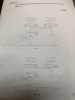 QUESTION3 szate all components and discuss the operation of the basic hydraulic circuits gi State Figure Q3 (5 marks) Figure Q3
QUESTION3 szate all components and discuss the operation of the basic hydraulic circuits gi State Figure Q3 (5 marks) Figure Q3
QUESTION3 szate all components and discuss the operation of the basic hydraulic circuits gi State Figure Q3 (5 marks) Figure Q3
Could you please type your answer or else write as neat as possible thanks you very much. Q3 (a) Why does excluding oxy...
 Could you please type your answer or else write as neat as
possible thanks you very much.
Q3 (a) Why does excluding oxygen inhibit/prevent corrosion? In your detailed answer include illustrated sketches, (8 marks) three applications, equations and how measured (b) Nitinol is a super-elastic nickel-titanium alloy material used in stents, guidewires and other medical devices One Nitinol device, as shown in Figure Q3, underperformed when compared to the specifications. Its (i) Explain with respect to this material device how...
Could you please type your answer or else write as neat as
possible thanks you very much.
Q3 (a) Why does excluding oxygen inhibit/prevent corrosion? In your detailed answer include illustrated sketches, (8 marks) three applications, equations and how measured (b) Nitinol is a super-elastic nickel-titanium alloy material used in stents, guidewires and other medical devices One Nitinol device, as shown in Figure Q3, underperformed when compared to the specifications. Its (i) Explain with respect to this material device how...
Circuit Analysis Zo Is Zi ALi If FIGURE Q3(b) negative feedback network (b) Figure Q3(b) shows...
 Circuit Analysis
Zo Is Zi ALi If FIGURE Q3(b) negative feedback network (b) Figure Q3(b) shows an amplifier with a Given Zof 100 kQ, Zo = 10 kQ and A 50 State the feedback topology and the amplifier type (i) (2 marks) (ii) Calculate the gain without feedback, A and the feedback factor, B. (6 marks) (iii) If the low cutoff frequency of the amplifier with feedback network (fL) is 300 Hz, calculate the low cutoff frequency (fi) if the...
Circuit Analysis
Zo Is Zi ALi If FIGURE Q3(b) negative feedback network (b) Figure Q3(b) shows an amplifier with a Given Zof 100 kQ, Zo = 10 kQ and A 50 State the feedback topology and the amplifier type (i) (2 marks) (ii) Calculate the gain without feedback, A and the feedback factor, B. (6 marks) (iii) If the low cutoff frequency of the amplifier with feedback network (fL) is 300 Hz, calculate the low cutoff frequency (fi) if the...
[10 marks] QUESTION 3 Figure Q3 shows the current trend of manufacturing today. Discuss and analyse...
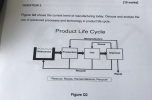 [10 marks] QUESTION 3 Figure Q3 shows the current trend of manufacturing today. Discuss and analyse the use of advanced processes and technology in product life cycle Product Life Cycle Remanufacture Reuse Production Disposal Use Resources Recycle Waste "Reduce, Reuse, Remanufacture, Recycle Figure Q3
(b) In the network in Figure Q3(b), find the capacitance Crif (i) the switch is open...
 (b) In the network in Figure Q3(b), find the capacitance Crif (i) the switch is open and (ii) the switch is closed. (6 marks) (6 marks) 6,1 F 6? F 3? F 12? F Figure Q3(b)
4. a) Discuss on RNA editing and its impact in cephalopods. (10 Marks) b) Following 5...
4. a) Discuss on RNA editing and its impact in cephalopods. (10 Marks) b) Following 5 sequences are needed to be aligned using ClustalW method. (15 Marks) S1: AGGCTATG S2: TGCCTTAG S3: GTTGCTTA S4: ATGCTTAG S5: CTGCTCAG i. Build the distance matrix D for the sequences. ii. Step by step build the rooted guide-tree using UPGMA approach.
(b) Figure Q3(b) show the unit step responscs of a system A and system B, respectively For each system Find the percent...
 (b) Figure Q3(b) show the unit step responscs of a system A and system B, respectively For each system Find the percentage overshoot, % OS and the Peak time, T 6 marks Find the transfer function of both systems (i) [8 marks iii) You have to design a system which operate with settling time less than 5second, overshoot percentage less than 30% and which system will you choose, system A or system B, justified your answer. [3 marks |(ii) 1,5-...
Discuss business intelligence and describe its impact on one of the businesses you found in your research. How is it use...
Discuss business intelligence and describe its impact on one of the businesses you found in your research. How is it used? What makes your finding unique?
 Q3. Briefly discuss the impact of the second moment of area (or moment of inertia) on: (0) The axial stress generated by bending moment (ii) The deformability of a beam subjected to bending moment (iii) The shear stress generated by a shear force (iv) The axial stress generated by a normal force Page limit to answer Q3: Two sides of A4. Using equations to support your answers will give you more marks. [20 marks] END OF PAPER
 Discuss a facility layout problem you encountered in real life, and describe: • How the different techniques (alternatives) you learned in this class can help solve the problem, and • How you would evaluate and compare the different alternatives.
 QUESTION3 szate all components and discuss the operation of the basic hydraulic circuits gi State Figure Q3 (5 marks) Figure Q3
QUESTION3 szate all components and discuss the operation of the basic hydraulic circuits gi State Figure Q3 (5 marks) Figure Q3
QUESTION3 szate all components and discuss the operation of the basic hydraulic circuits gi State Figure Q3 (5 marks) Figure Q3
 Could you please type your answer or else write as neat as
possible thanks you very much.
Q3 (a) Why does excluding oxygen inhibit/prevent corrosion? In your detailed answer include illustrated sketches, (8 marks) three applications, equations and how measured (b) Nitinol is a super-elastic nickel-titanium alloy material used in stents, guidewires and other medical devices One Nitinol device, as shown in Figure Q3, underperformed when compared to the specifications. Its (i) Explain with respect to this material device how...
Could you please type your answer or else write as neat as
possible thanks you very much.
Q3 (a) Why does excluding oxygen inhibit/prevent corrosion? In your detailed answer include illustrated sketches, (8 marks) three applications, equations and how measured (b) Nitinol is a super-elastic nickel-titanium alloy material used in stents, guidewires and other medical devices One Nitinol device, as shown in Figure Q3, underperformed when compared to the specifications. Its (i) Explain with respect to this material device how...
 Circuit Analysis
Zo Is Zi ALi If FIGURE Q3(b) negative feedback network (b) Figure Q3(b) shows an amplifier with a Given Zof 100 kQ, Zo = 10 kQ and A 50 State the feedback topology and the amplifier type (i) (2 marks) (ii) Calculate the gain without feedback, A and the feedback factor, B. (6 marks) (iii) If the low cutoff frequency of the amplifier with feedback network (fL) is 300 Hz, calculate the low cutoff frequency (fi) if the...
Circuit Analysis
Zo Is Zi ALi If FIGURE Q3(b) negative feedback network (b) Figure Q3(b) shows an amplifier with a Given Zof 100 kQ, Zo = 10 kQ and A 50 State the feedback topology and the amplifier type (i) (2 marks) (ii) Calculate the gain without feedback, A and the feedback factor, B. (6 marks) (iii) If the low cutoff frequency of the amplifier with feedback network (fL) is 300 Hz, calculate the low cutoff frequency (fi) if the...
 [10 marks] QUESTION 3 Figure Q3 shows the current trend of manufacturing today. Discuss and analyse the use of advanced processes and technology in product life cycle Product Life Cycle Remanufacture Reuse Production Disposal Use Resources Recycle Waste "Reduce, Reuse, Remanufacture, Recycle Figure Q3
 (b) In the network in Figure Q3(b), find the capacitance Crif (i) the switch is open and (ii) the switch is closed. (6 marks) (6 marks) 6,1 F 6? F 3? F 12? F Figure Q3(b)
 (b) Figure Q3(b) show the unit step responscs of a system A and system B, respectively For each system Find the percentage overshoot, % OS and the Peak time, T 6 marks Find the transfer function of both systems (i) [8 marks iii) You have to design a system which operate with settling time less than 5second, overshoot percentage less than 30% and which system will you choose, system A or system B, justified your answer. [3 marks |(ii) 1,5-...
Most questions answered within 3 hours.
-
Where is the error in this code sequence?
String s1 = "Hello";
String s2 = "ello";...
asked 10 months ago -
Financial data for Joel de Paris, Inc., for last year
follow:
Joel de Paris, Inc.
Balance...
asked 10 months ago -
Consider this reaction:
Al2(SO4)3 (aq)+ BaCl3
(aq) Al2Cl6 (aq)- +
3BaSO4(s) . What is the...
asked 10 months ago -
Suppose that Savneet is considering increasing her
recent random sample from 20 car rentals to 40...
asked 10 months ago -
Trucks arrive at an unloading terminal at an average rate of 120
per hour.
Trucks arrive...
asked 10 months ago -
Why are methanol and ethanol completely soluble in water while
octanol is not very little soluble....
asked 10 months ago -
A facilities manager at a university reads in a research report
that the mean amount of...
asked 10 months ago -
When the CuSO4 is rehydrated by adding water to the anhydrous
compound, is this an endothermic...
asked 10 months ago -
A ray of sunlight is passing from diamond into crown glass; the
angle of incidence is...
asked 10 months ago -
A block of mass 0.249 kg is placed on top of a light, vertical
spring of...
asked 10 months ago -
how do the kidneys compensate in the presences of acidosis
a) trigger hyperventilate
b) reserve acid...
asked 10 months ago -
Question 501 pts
The rental rate of capital to the firm increases. Which of the
following...
asked 10 months ago