
Homework Answers
For a molecule to be chiral molecule
It should contain chiral carbon and shouldn't have internal plane of symmetry
Let's first define what is a chiral Carbon
A chiral carbon is a carbon that is attached with four different groups
Now
Internal plane of symmetry :It is a plane that divides the molecule which are mirror images to each other
So
In the first one
A)
There are two chiral carbons
Both the carbons are attached with four different groups
But it has a internal plane of symmetry horizontally
Despite containing chiral carbon it is not a chiral molecule as it has internal plane of symmetry
B)
There are two chiral carbons
Both the carbons are attached with four different groups
It doesn't have an internal plane of symmetry
So it is a chiral molecule
Add Answer to:
which of these structures represents a chival eta molecule? B) tot 3 - CH₂ EXPLAIN.
B of 25 > Two posssible Lewis structures for the molecule CH, S are given. Determine...
 B of 25 > Two posssible Lewis structures for the molecule CH, S are given. Determine the formal charge on each atom in both structures. Answer Bank :C - HH HH Which structure is the best Lewis structure for CH,S? The structure with sulfur as the central atom. The structure with carbon as the central atom.
Two posssible Lewis structures for the molecule CH, S are given. Determine the formal charge on...
 Two posssible Lewis structures for the molecule CH, S are given. Determine the formal charge on each atom in both structures. Answer Bank Which structure is the best Lewis structure for CH S? The structure with carbon as the central atom. The structure with sulfur as the central atom.
3. 14 points: Consider the two molecules below: Molecule A Molecule B CH(CH3)2 CH(CH3)2 1 CH...
 3. 14 points: Consider the two molecules below: Molecule A Molecule B CH(CH3)2 CH(CH3)2 1 CH I ICH₃ 27 [ 2 CH3 a. Molecules A and B both have three chiral carbons (labeled 1, 2, and 3). How many unique stereoisomers does 1-isopropyl-2,3-dimethylcyclohexane have? b. Molecules A and B are pairs. C. Determine the configuration (R or S) of chiral carbons 1, 2, and 3 for both molecules. Chiral Carbon Molecule A Molecule B d. Draw the two 'chair' conformers...
narizontal elie Same 22 Which molecule represents the chair-flipped conformer of the given compound? CH CHs CHsCH r...
 narizontal elie Same 22 Which molecule represents the chair-flipped conformer of the given compound? CH CHs CHsCH ring flip Нс" CH,CH CH CH CH снсH CH,CH CH-сн, CHyCH сHнсH нсн,с. CH CH) сH,сH сн, CHCH CHyCH CH IV ш V d. III IV a. e. II b. I c. V
Which is a stronger acid? Must explain with both, words and structures. Which is a stronger...
 Which is a stronger acid? Must explain with both, words and
structures.
Which is a stronger base? Must explain with both, words and
structures.
. Propose a mechanism for the following reaction:
2. a) Which is a stronger acid? Must explain with both, words and structures.10 pts. LOH OH 8 or b) Which is a stronger base? Must explain with both, words and structures. 5 pts. 3. Propose a mechanism for the following reaction: 15 pts. OH CH, CH H2SO4...
Which is a stronger acid? Must explain with both, words and
structures.
Which is a stronger base? Must explain with both, words and
structures.
. Propose a mechanism for the following reaction:
2. a) Which is a stronger acid? Must explain with both, words and structures.10 pts. LOH OH 8 or b) Which is a stronger base? Must explain with both, words and structures. 5 pts. 3. Propose a mechanism for the following reaction: 15 pts. OH CH, CH H2SO4...
22. Which molecule represents the chair-tripper plecule represents the chair-flipped conformer of the given compound CHOH...
 22. Which molecule represents the chair-tripper plecule represents the chair-flipped conformer of the given compound CHOH Н . CHCH CHON снен, CH.CH Hone CHÚC CH.CH CH, CH.CH IV d. IV a. b. II V e.
Which of the following structures represent the same molecule? CH3 1 CH2CH2CH2CH2CH2CH3 4 CH3CH2CH2CH3 CH3 2...
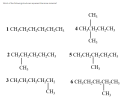 Which of the following structures represent the same molecule? CH3 1 CH2CH2CH2CH2CH2CH3 4 CH3CH2CH2CH3 CH3 2 CH CH CH CH.CH 5 CH CH.CH,CH,CH; CH CHZ 3 CH3CH2CH2CH2CH2 6 CH CH CH.CH.CH 1.CH.CH; CH, CH,
Question 69 (1 point) Which is the correct IUPAC name for this molecule? CH, CH, CH?...
 Question 69 (1 point) Which is the correct IUPAC name for this molecule? CH, CH, CH? CH2 CH; C-CH2-CH2-CH-CH2 CH2 CH2 CH 4,7-diethyl-7-methylnonane 2,2,5,6-tetraethylhexane 1,2,5,5-tetraethylhexane O 3,6-diethyl-3-methylnonane 2,2,5-triethyloctane Question 70 (1 point) What is the geometry and hybridization state of carbon #2 in the compound 1,4- dibromo-1-pentyne? trigonal planar, sp tetrahedral, sp O trigonal planar, sp2 O linear, sp2 linear, sp O linear, sp3 O tetrahedral, sp2 O trigonal planar, sp tetrahedral, sp Question 71 (1 point) Which of these...
Which is not a stable molecule ? If you can explain me how to understand if...
 Which is not a stable molecule ? If you can explain me how to
understand if it is stable molecule or not , it will be
appreciated
50. The nitrite ion, NO can be represented as a resonance hybrid of two significant Lewis structures. Which statements about this are correct? I. The two resonance structures contribute equally to the Structure. II. The formal charge of nitrogen is zero in both resonance structures. (A) I only (B) II only (C) oth...
Which is not a stable molecule ? If you can explain me how to
understand if it is stable molecule or not , it will be
appreciated
50. The nitrite ion, NO can be represented as a resonance hybrid of two significant Lewis structures. Which statements about this are correct? I. The two resonance structures contribute equally to the Structure. II. The formal charge of nitrogen is zero in both resonance structures. (A) I only (B) II only (C) oth...
4.40 Convert the condensed structures shown to skeletal structures. a. CH3CH2CH=CH2 b. CH CH CH CH...
 4.40 Convert the condensed structures shown to skeletal structures. a. CH3CH2CH=CH2 b. CH CH CH CH OH c. CH3CHCH CH3CH2CHCH2CH2CH3
 B of 25 > Two posssible Lewis structures for the molecule CH, S are given. Determine the formal charge on each atom in both structures. Answer Bank :C - HH HH Which structure is the best Lewis structure for CH,S? The structure with sulfur as the central atom. The structure with carbon as the central atom.
 Two posssible Lewis structures for the molecule CH, S are given. Determine the formal charge on each atom in both structures. Answer Bank Which structure is the best Lewis structure for CH S? The structure with carbon as the central atom. The structure with sulfur as the central atom.
 3. 14 points: Consider the two molecules below: Molecule A Molecule B CH(CH3)2 CH(CH3)2 1 CH I ICH₃ 27 [ 2 CH3 a. Molecules A and B both have three chiral carbons (labeled 1, 2, and 3). How many unique stereoisomers does 1-isopropyl-2,3-dimethylcyclohexane have? b. Molecules A and B are pairs. C. Determine the configuration (R or S) of chiral carbons 1, 2, and 3 for both molecules. Chiral Carbon Molecule A Molecule B d. Draw the two 'chair' conformers...
 narizontal elie Same 22 Which molecule represents the chair-flipped conformer of the given compound? CH CHs CHsCH ring flip Нс" CH,CH CH CH CH снсH CH,CH CH-сн, CHyCH сHнсH нсн,с. CH CH) сH,сH сн, CHCH CHyCH CH IV ш V d. III IV a. e. II b. I c. V
 Which is a stronger acid? Must explain with both, words and
structures.
Which is a stronger base? Must explain with both, words and
structures.
. Propose a mechanism for the following reaction:
2. a) Which is a stronger acid? Must explain with both, words and structures.10 pts. LOH OH 8 or b) Which is a stronger base? Must explain with both, words and structures. 5 pts. 3. Propose a mechanism for the following reaction: 15 pts. OH CH, CH H2SO4...
Which is a stronger acid? Must explain with both, words and
structures.
Which is a stronger base? Must explain with both, words and
structures.
. Propose a mechanism for the following reaction:
2. a) Which is a stronger acid? Must explain with both, words and structures.10 pts. LOH OH 8 or b) Which is a stronger base? Must explain with both, words and structures. 5 pts. 3. Propose a mechanism for the following reaction: 15 pts. OH CH, CH H2SO4...
 22. Which molecule represents the chair-tripper plecule represents the chair-flipped conformer of the given compound CHOH Н . CHCH CHON снен, CH.CH Hone CHÚC CH.CH CH, CH.CH IV d. IV a. b. II V e.
 Which of the following structures represent the same molecule? CH3 1 CH2CH2CH2CH2CH2CH3 4 CH3CH2CH2CH3 CH3 2 CH CH CH CH.CH 5 CH CH.CH,CH,CH; CH CHZ 3 CH3CH2CH2CH2CH2 6 CH CH CH.CH.CH 1.CH.CH; CH, CH,
 Question 69 (1 point) Which is the correct IUPAC name for this molecule? CH, CH, CH? CH2 CH; C-CH2-CH2-CH-CH2 CH2 CH2 CH 4,7-diethyl-7-methylnonane 2,2,5,6-tetraethylhexane 1,2,5,5-tetraethylhexane O 3,6-diethyl-3-methylnonane 2,2,5-triethyloctane Question 70 (1 point) What is the geometry and hybridization state of carbon #2 in the compound 1,4- dibromo-1-pentyne? trigonal planar, sp tetrahedral, sp O trigonal planar, sp2 O linear, sp2 linear, sp O linear, sp3 O tetrahedral, sp2 O trigonal planar, sp tetrahedral, sp Question 71 (1 point) Which of these...
 Which is not a stable molecule ? If you can explain me how to
understand if it is stable molecule or not , it will be
appreciated
50. The nitrite ion, NO can be represented as a resonance hybrid of two significant Lewis structures. Which statements about this are correct? I. The two resonance structures contribute equally to the Structure. II. The formal charge of nitrogen is zero in both resonance structures. (A) I only (B) II only (C) oth...
Which is not a stable molecule ? If you can explain me how to
understand if it is stable molecule or not , it will be
appreciated
50. The nitrite ion, NO can be represented as a resonance hybrid of two significant Lewis structures. Which statements about this are correct? I. The two resonance structures contribute equally to the Structure. II. The formal charge of nitrogen is zero in both resonance structures. (A) I only (B) II only (C) oth...
 4.40 Convert the condensed structures shown to skeletal structures. a. CH3CH2CH=CH2 b. CH CH CH CH OH c. CH3CHCH CH3CH2CHCH2CH2CH3
Most questions answered within 3 hours.
-
Where is the error in this code sequence?
String s1 = "Hello";
String s2 = "ello";...
asked 10 months ago -
Financial data for Joel de Paris, Inc., for last year
follow:
Joel de Paris, Inc.
Balance...
asked 10 months ago -
Consider this reaction:
Al2(SO4)3 (aq)+ BaCl3
(aq) Al2Cl6 (aq)- +
3BaSO4(s) . What is the...
asked 10 months ago -
Suppose that Savneet is considering increasing her
recent random sample from 20 car rentals to 40...
asked 10 months ago -
Trucks arrive at an unloading terminal at an average rate of 120
per hour.
Trucks arrive...
asked 10 months ago -
Why are methanol and ethanol completely soluble in water while
octanol is not very little soluble....
asked 10 months ago -
A facilities manager at a university reads in a research report
that the mean amount of...
asked 10 months ago -
When the CuSO4 is rehydrated by adding water to the anhydrous
compound, is this an endothermic...
asked 10 months ago -
A ray of sunlight is passing from diamond into crown glass; the
angle of incidence is...
asked 10 months ago -
A block of mass 0.249 kg is placed on top of a light, vertical
spring of...
asked 10 months ago -
how do the kidneys compensate in the presences of acidosis
a) trigger hyperventilate
b) reserve acid...
asked 10 months ago -
Question 501 pts
The rental rate of capital to the firm increases. Which of the
following...
asked 10 months ago