Why are combined metlas such as FeO always extracted from their ores by reduction? How do...
Why are combined metlas such as FeO always extracted from their ores by reduction? How do you know it is not oxidation?
Homework Answers
Because they are metals and they form ions or compounds by losing electron. This process is called oxidation.
So, when we want to extract pure metal from their ions in compounds, we need to do reduction to get pure metal.
Generally, a high reactive metal displace a low reactive metal. Though carbon is not a metal, it is more reactive than zinc, iron, copper etc.
So, carbon is used to reduce FeO to get pure Fe by the following reaction.
FeO + C= Fe + CO
Here Fe2+ in FeO is converted to Fe(0) by gaining two electrons, such gain of electrons is called reduction, not oxidation. This process became possible by the reducing agent C.
Add Answer to:
Why are combined metlas such as FeO always extracted from their
ores by reduction? How do...
Three common ores of iron are FeO, Fe2O3, and Fe3O4. Iron ores are often reduced to...
Three common ores of iron are FeO, Fe2O3, and Fe3O4. Iron ores are often reduced to elemental iron by heating in the presence of carbon monoxide. These iron ores are all brittle and do not conduct electricity in their solid form. a. Identify the oxidation number of the iron atoms in each of the three ores. b. Choose one of the iron ores and write a balanced chemical equation to show its reduction reaction with carbon monoxide. c. Considering the...
help solving problem 49 49. Silver is often extracted from ores such as K[Ag(CN),] and...
 help solving problem 49
49. Silver is often extracted from ores such as K[Ag(CN),] and then recovered by the reaction 2K[Ag(CN)2Kaq) + Zn(s) 2Ag(s)+Zn(CN)2(aq) + 2KCN(aq) (a) How many molecules of Zn(CN)2 are produced by the reaction of 35.27 g of K[Ag(CN)? (b) What mass of Zn(CN)2 is produced?
help solving problem 49
49. Silver is often extracted from ores such as K[Ag(CN),] and then recovered by the reaction 2K[Ag(CN)2Kaq) + Zn(s) 2Ag(s)+Zn(CN)2(aq) + 2KCN(aq) (a) How many molecules of Zn(CN)2 are produced by the reaction of 35.27 g of K[Ag(CN)? (b) What mass of Zn(CN)2 is produced?
not sure how to do this 20.19 Indicate whether the following balanced equations involve oxidation-reduction. If...
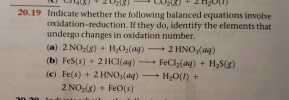 not sure how to do this
20.19 Indicate whether the following balanced equations involve oxidation-reduction. If they do, identify the elements that undergo changes in oxidation number. (a) 2 NO2(8) + H2O2(ag) 2 HNOs(ag) (b) Fes(s) + 2HCl(aq)-→ FeCl2(aq) + H2S(g) (c) Fe(s) + 2 HNO3(aq) H2O(1),+ 2 NO2(g) + FeO(s)
not sure how to do this
20.19 Indicate whether the following balanced equations involve oxidation-reduction. If they do, identify the elements that undergo changes in oxidation number. (a) 2 NO2(8) + H2O2(ag) 2 HNOs(ag) (b) Fes(s) + 2HCl(aq)-→ FeCl2(aq) + H2S(g) (c) Fe(s) + 2 HNO3(aq) H2O(1),+ 2 NO2(g) + FeO(s)
urgent 10) Which of the following is always true for the oxidation numbers in an oxidation-reduction...
 urgent
10) Which of the following is always true for the oxidation numbers in an oxidation-reduction reaction? a) The final value for the oxidation number for atoms of the element being oxidized must be positive b) The initial value for the oxidation number for atoms of the element being oxidized must be positive c) The value for the oxidation number for atoms of the element being oxidized must increase as we go from reactants to products d) Both a and...
urgent
10) Which of the following is always true for the oxidation numbers in an oxidation-reduction reaction? a) The final value for the oxidation number for atoms of the element being oxidized must be positive b) The initial value for the oxidation number for atoms of the element being oxidized must be positive c) The value for the oxidation number for atoms of the element being oxidized must increase as we go from reactants to products d) Both a and...
10) Which of the following is always true for the oxidation numbers in an oxidation-reduction reaction?...
 10) Which of the following is always true for the oxidation numbers in an oxidation-reduction reaction? a) The value for the oxidation number for atoms of the element being oxidized must increase as we go from reactants to products b) The initial value for the oxidation number for atoms of the element being oxidized must be positive c) The final value for the oxidation number for atoms of the element being oxidized must be positive d) Both b and c...
10) Which of the following is always true for the oxidation numbers in an oxidation-reduction reaction?...
 10) Which of the following is always true for the oxidation numbers in an oxidation-reduction reaction? a) The value for the oxidation number for atoms of the element being oxidized must increase as we go from reactants to products b) The initial value for the oxidation number for atoms of the element being oxidized must be positive c) The final value for the oxidation number for atoms of the element being oxidized must be positive d) Both b and c...
e) Would this reaction be considered an oxidation-reduction reaction? How do you know? 2. Enter the...
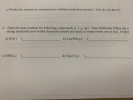 e) Would this reaction be considered an oxidation-reduction reaction? How do you know? 2. Enter the state symbols for following compounds (s, 1, g, aq). Then determine if they are a strong electrolyte and would dissociate (break into ions) in water (write yes or no). (4 pts) b) Ca3(PO4)2). ). a) Н2О ( c) HNO3 ΗΝO, ( ) d) Na2CO3)
Describe in a paragraph how you would tell the different iron ores apart from each other
Describe in a paragraph how you would tell the different iron ores apart from each other
hi, i understand how to solve this problem but how do we get 5 electrons in...
 hi, i understand how to solve this problem but how do we get 5
electrons in the reduction part. All the oxidation number make
sense. I'm confused on where the 5 electrons came from.
o0 EXPLANATION As always, when you need to analyze a redox reaction, it's a good idea to start by identifying what's reduced and what's oxidized: +7-2 +1 2+ 2+ MnO (aq) 8H (aq) + 5 Fe (aq) Mn (aq) 4H,O)5 Fe(ag) Assigning oxidation states tells you...
hi, i understand how to solve this problem but how do we get 5
electrons in the reduction part. All the oxidation number make
sense. I'm confused on where the 5 electrons came from.
o0 EXPLANATION As always, when you need to analyze a redox reaction, it's a good idea to start by identifying what's reduced and what's oxidized: +7-2 +1 2+ 2+ MnO (aq) 8H (aq) + 5 Fe (aq) Mn (aq) 4H,O)5 Fe(ag) Assigning oxidation states tells you...
The coordination number of platinum in complexes is always _____. How do you know this?
The coordination number of platinum in complexes is always _____. How do you know this?
 help solving problem 49
49. Silver is often extracted from ores such as K[Ag(CN),] and then recovered by the reaction 2K[Ag(CN)2Kaq) + Zn(s) 2Ag(s)+Zn(CN)2(aq) + 2KCN(aq) (a) How many molecules of Zn(CN)2 are produced by the reaction of 35.27 g of K[Ag(CN)? (b) What mass of Zn(CN)2 is produced?
help solving problem 49
49. Silver is often extracted from ores such as K[Ag(CN),] and then recovered by the reaction 2K[Ag(CN)2Kaq) + Zn(s) 2Ag(s)+Zn(CN)2(aq) + 2KCN(aq) (a) How many molecules of Zn(CN)2 are produced by the reaction of 35.27 g of K[Ag(CN)? (b) What mass of Zn(CN)2 is produced?
 not sure how to do this
20.19 Indicate whether the following balanced equations involve oxidation-reduction. If they do, identify the elements that undergo changes in oxidation number. (a) 2 NO2(8) + H2O2(ag) 2 HNOs(ag) (b) Fes(s) + 2HCl(aq)-→ FeCl2(aq) + H2S(g) (c) Fe(s) + 2 HNO3(aq) H2O(1),+ 2 NO2(g) + FeO(s)
not sure how to do this
20.19 Indicate whether the following balanced equations involve oxidation-reduction. If they do, identify the elements that undergo changes in oxidation number. (a) 2 NO2(8) + H2O2(ag) 2 HNOs(ag) (b) Fes(s) + 2HCl(aq)-→ FeCl2(aq) + H2S(g) (c) Fe(s) + 2 HNO3(aq) H2O(1),+ 2 NO2(g) + FeO(s)
 urgent
10) Which of the following is always true for the oxidation numbers in an oxidation-reduction reaction? a) The final value for the oxidation number for atoms of the element being oxidized must be positive b) The initial value for the oxidation number for atoms of the element being oxidized must be positive c) The value for the oxidation number for atoms of the element being oxidized must increase as we go from reactants to products d) Both a and...
urgent
10) Which of the following is always true for the oxidation numbers in an oxidation-reduction reaction? a) The final value for the oxidation number for atoms of the element being oxidized must be positive b) The initial value for the oxidation number for atoms of the element being oxidized must be positive c) The value for the oxidation number for atoms of the element being oxidized must increase as we go from reactants to products d) Both a and...
 10) Which of the following is always true for the oxidation numbers in an oxidation-reduction reaction? a) The value for the oxidation number for atoms of the element being oxidized must increase as we go from reactants to products b) The initial value for the oxidation number for atoms of the element being oxidized must be positive c) The final value for the oxidation number for atoms of the element being oxidized must be positive d) Both b and c...
 10) Which of the following is always true for the oxidation numbers in an oxidation-reduction reaction? a) The value for the oxidation number for atoms of the element being oxidized must increase as we go from reactants to products b) The initial value for the oxidation number for atoms of the element being oxidized must be positive c) The final value for the oxidation number for atoms of the element being oxidized must be positive d) Both b and c...
 e) Would this reaction be considered an oxidation-reduction reaction? How do you know? 2. Enter the state symbols for following compounds (s, 1, g, aq). Then determine if they are a strong electrolyte and would dissociate (break into ions) in water (write yes or no). (4 pts) b) Ca3(PO4)2). ). a) Н2О ( c) HNO3 ΗΝO, ( ) d) Na2CO3)
 hi, i understand how to solve this problem but how do we get 5
electrons in the reduction part. All the oxidation number make
sense. I'm confused on where the 5 electrons came from.
o0 EXPLANATION As always, when you need to analyze a redox reaction, it's a good idea to start by identifying what's reduced and what's oxidized: +7-2 +1 2+ 2+ MnO (aq) 8H (aq) + 5 Fe (aq) Mn (aq) 4H,O)5 Fe(ag) Assigning oxidation states tells you...
hi, i understand how to solve this problem but how do we get 5
electrons in the reduction part. All the oxidation number make
sense. I'm confused on where the 5 electrons came from.
o0 EXPLANATION As always, when you need to analyze a redox reaction, it's a good idea to start by identifying what's reduced and what's oxidized: +7-2 +1 2+ 2+ MnO (aq) 8H (aq) + 5 Fe (aq) Mn (aq) 4H,O)5 Fe(ag) Assigning oxidation states tells you...
Most questions answered within 3 hours.
-
Where is the error in this code sequence?
String s1 = "Hello";
String s2 = "ello";...
asked 10 months ago -
Financial data for Joel de Paris, Inc., for last year
follow:
Joel de Paris, Inc.
Balance...
asked 10 months ago -
Consider this reaction:
Al2(SO4)3 (aq)+ BaCl3
(aq) Al2Cl6 (aq)- +
3BaSO4(s) . What is the...
asked 10 months ago -
Suppose that Savneet is considering increasing her
recent random sample from 20 car rentals to 40...
asked 10 months ago -
Trucks arrive at an unloading terminal at an average rate of 120
per hour.
Trucks arrive...
asked 10 months ago -
Why are methanol and ethanol completely soluble in water while
octanol is not very little soluble....
asked 10 months ago -
A facilities manager at a university reads in a research report
that the mean amount of...
asked 10 months ago -
When the CuSO4 is rehydrated by adding water to the anhydrous
compound, is this an endothermic...
asked 10 months ago -
A ray of sunlight is passing from diamond into crown glass; the
angle of incidence is...
asked 10 months ago -
A block of mass 0.249 kg is placed on top of a light, vertical
spring of...
asked 10 months ago -
how do the kidneys compensate in the presences of acidosis
a) trigger hyperventilate
b) reserve acid...
asked 10 months ago -
Question 501 pts
The rental rate of capital to the firm increases. Which of the
following...
asked 10 months ago