 for more information google
it
for more information google
itHomework Answers


Add Answer to:
for more information google
it
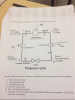
1 Draw Ph diagram and Ts diagram ( general) with following...
120; = ? 2 (P2 = 1000 kPa; T2 = 65 °C) Problem 5. A compression...
 120; = ? 2 (P2 = 1000 kPa; T2 = 65 °C) Problem 5. A compression refrigeration cycle (see Figure) has R-134a as the refrigerant. The mass flow rate is 3 kg/min. The refrigerant goes through isothermal evaporation in the evaporator and leaves the evaporator at -20 °C as saturated vapor. It enters the condenser with a pressure of 1 MPa and a temperature of 65 °C. Assume no losses in the pipelines connecting different components. Also assume steady state...
A two-stage compression refrigeration system with an adiabatic liquid-vapor separation unit uses refrigerant-134a as working fluid....
 A two-stage compression refrigeration system with an adiabatic liquid-vapor separation unit uses refrigerant-134a as working fluid. The system operates the evaporator at 0.4 MPa, the condenser at 1.6 MPa, and the separator at 0.8 MPa. The compressors use 25 kW of power. Given that the refrigerant is saturated liquid at the inlet of each expansion valve and saturated vapor at the inlet of each compressor, and the compressors are isentropic: (0) show the process on a T-s diagram; ) calculate...
Find a) compressor power, b) heat transfer Refrigeration/Heat Pump Cycle rate to the condenser and c)...
 Find a) compressor power, b) heat transfer Refrigeration/Heat Pump Cycle rate to the condenser and c) heat transfer arte to the evaporator P2 800 kPa 2 3 P 800 kPa T2= 80°C Condenser Saturated Assumptions: SSSF, throttle valve and vapour compressor, c) negligible change in kinetic energy and negligible change in potential a COND Expansion/ Throttle W COMP R-134a m 1.5 kg/s Compressor energy valve Evaporator T1=-26.3 °C 1 4-26.3 C Saturated vapour EVAP
Please help with HW 37 Qoutl condenser Condenser A standard 4-component vapor-compression cycle using R-134a is...
 Please help with HW 37
Qoutl condenser Condenser A standard 4-component vapor-compression cycle using R-134a is shown in the figure to the right. The cycle is used as a refrigeration cycle to cool a refrigerator at 5 °C with a cooling capacity of 200 W, with a heat transfer to a kitchen at 20 °C. Assume that the pressure drops in the evaporator and condenser are negligible, and that the compressor and expansion valve are adiabatic. Take the boundary temperature...
Please help with HW 37
Qoutl condenser Condenser A standard 4-component vapor-compression cycle using R-134a is shown in the figure to the right. The cycle is used as a refrigeration cycle to cool a refrigerator at 5 °C with a cooling capacity of 200 W, with a heat transfer to a kitchen at 20 °C. Assume that the pressure drops in the evaporator and condenser are negligible, and that the compressor and expansion valve are adiabatic. Take the boundary temperature...
5-6 Figure 5-6 shows the schematic diagram for a two-stage cascade refrigeration system. Each stage operates...
 5-6 Figure 5-6 shows the schematic diagram for a two-stage cascade refrigeration system. Each stage operates on an ideal vapor-compression refrigeration cycle with refrigerant- 134a as the working fluid. All the important data and refrigerant phases are given in the schematic diagrams. By referring to the diagrams, determine: (a) The ratio of mass flow rate of the system and draw a T-s diagram complete with the data given. Enthalpy values for each states. Compressor power input for Cycle A and...
2. Convert the P-H diagram shown (for all steps 1 to 4) that represents an ideal...
 2. Convert the P-H diagram shown (for all steps 1 to 4) that represents an ideal cycle of compression refrigeration onto a T-S diagram (equivalently for all steps 1 to 4). Hint: Compression and expansion process (2-3 and 4 -1 respectively) are constant enthalpy (S) processes. Also during desuperheating T and S lineary decreases. LNG: Liquefaction Process Fundamentals Condenser 4 Condenser Pesuperheating Ideal Cycle (Constants) Ideal compression (constant si Expander Compressor P 1 Evaporator Evaporator Compression Refrigeration Cycle Step 1-2...
R134a refrigerant In a vapor compression refrigeration system the following observations were noted. Condenser pressure 2...
 R134a refrigerant
In a vapor compression refrigeration system the following observations were noted. Condenser pressure 2 bar. Evaporator pressure 0.02 MPa. Sub-cooling 10°C. Super heating 20°C. Estimate the power consumed by compressor, heat absorbed in evaporator, heat rejected in condenser and coefficient of performance. Mark all given data in PH and TS diagram.
R134a refrigerant
In a vapor compression refrigeration system the following observations were noted. Condenser pressure 2 bar. Evaporator pressure 0.02 MPa. Sub-cooling 10°C. Super heating 20°C. Estimate the power consumed by compressor, heat absorbed in evaporator, heat rejected in condenser and coefficient of performance. Mark all given data in PH and TS diagram.
In natural gas liquefaction plant the propane is following the cycle below ws Point 2: 2...
 In natural gas liquefaction plant the propane is following the cycle below ws Point 2: 2 T2-70 C P 2 MPs Point 1: high P 1 low P P 0.25 MPa Saturated Vapor compressor (sentropic compression) Cooling water 30 C condensor evaporator Point 3: Point 4 Saturated liquid P0.25MPa 4 at 2 MPa Xvapor fraction valve Propane cycle Use the information given in the figure to answer the following questions when m =150Kg 1 The compressor dudy 2. The evaporator...
Problem 15. A heat pump is used to maintain a warm area at 30 degC by...
 Problem 15. A heat pump is used to maintain a warm area at 30 degC by transferring heat from surroundings at-20 degC. The heat pump is assumed to operate as an Ideal Vapor Compression Cycle Cycle Conditions TH= 30-degC TL--20-degC T1 30-degC h- 241.8 kJ-kg T2 T3-20degC h 386.8 kJ-kg S 1.7422 kJ.kg K h 423.1.kJ.kg T,-37.8-degC A. Determine that heat rejected (in kJ/kg) by the refrigerant in the condenser Condenser Compressor Expansion Valve Evaporator COMP Assume p4 - p1...
A Refrigeration System Using R-134A In a refrigeration system, the refrigerant R-134A begins as s...
 A Refrigeration System Using R-134A In a refrigeration system, the refrigerant R-134A begins as saturated vapor at -15°(State 1). It then goes through a reversible adiabatic compressor to reach State 2. After flowing through the condenser (a heat exchanger), the refrigerant exits as saturated liquid at 70°C (State 3). It is then throttled by going through an expansion valve, to reach State 4. It finishes the cycle by going through another heat exchanger (the evaporator), to return to State 1....
 120; = ? 2 (P2 = 1000 kPa; T2 = 65 °C) Problem 5. A compression refrigeration cycle (see Figure) has R-134a as the refrigerant. The mass flow rate is 3 kg/min. The refrigerant goes through isothermal evaporation in the evaporator and leaves the evaporator at -20 °C as saturated vapor. It enters the condenser with a pressure of 1 MPa and a temperature of 65 °C. Assume no losses in the pipelines connecting different components. Also assume steady state...
 A two-stage compression refrigeration system with an adiabatic liquid-vapor separation unit uses refrigerant-134a as working fluid. The system operates the evaporator at 0.4 MPa, the condenser at 1.6 MPa, and the separator at 0.8 MPa. The compressors use 25 kW of power. Given that the refrigerant is saturated liquid at the inlet of each expansion valve and saturated vapor at the inlet of each compressor, and the compressors are isentropic: (0) show the process on a T-s diagram; ) calculate...
 Find a) compressor power, b) heat transfer Refrigeration/Heat Pump Cycle rate to the condenser and c) heat transfer arte to the evaporator P2 800 kPa 2 3 P 800 kPa T2= 80°C Condenser Saturated Assumptions: SSSF, throttle valve and vapour compressor, c) negligible change in kinetic energy and negligible change in potential a COND Expansion/ Throttle W COMP R-134a m 1.5 kg/s Compressor energy valve Evaporator T1=-26.3 °C 1 4-26.3 C Saturated vapour EVAP
 Please help with HW 37
Qoutl condenser Condenser A standard 4-component vapor-compression cycle using R-134a is shown in the figure to the right. The cycle is used as a refrigeration cycle to cool a refrigerator at 5 °C with a cooling capacity of 200 W, with a heat transfer to a kitchen at 20 °C. Assume that the pressure drops in the evaporator and condenser are negligible, and that the compressor and expansion valve are adiabatic. Take the boundary temperature...
Please help with HW 37
Qoutl condenser Condenser A standard 4-component vapor-compression cycle using R-134a is shown in the figure to the right. The cycle is used as a refrigeration cycle to cool a refrigerator at 5 °C with a cooling capacity of 200 W, with a heat transfer to a kitchen at 20 °C. Assume that the pressure drops in the evaporator and condenser are negligible, and that the compressor and expansion valve are adiabatic. Take the boundary temperature...
 5-6 Figure 5-6 shows the schematic diagram for a two-stage cascade refrigeration system. Each stage operates on an ideal vapor-compression refrigeration cycle with refrigerant- 134a as the working fluid. All the important data and refrigerant phases are given in the schematic diagrams. By referring to the diagrams, determine: (a) The ratio of mass flow rate of the system and draw a T-s diagram complete with the data given. Enthalpy values for each states. Compressor power input for Cycle A and...
 2. Convert the P-H diagram shown (for all steps 1 to 4) that represents an ideal cycle of compression refrigeration onto a T-S diagram (equivalently for all steps 1 to 4). Hint: Compression and expansion process (2-3 and 4 -1 respectively) are constant enthalpy (S) processes. Also during desuperheating T and S lineary decreases. LNG: Liquefaction Process Fundamentals Condenser 4 Condenser Pesuperheating Ideal Cycle (Constants) Ideal compression (constant si Expander Compressor P 1 Evaporator Evaporator Compression Refrigeration Cycle Step 1-2...
 R134a refrigerant
In a vapor compression refrigeration system the following observations were noted. Condenser pressure 2 bar. Evaporator pressure 0.02 MPa. Sub-cooling 10°C. Super heating 20°C. Estimate the power consumed by compressor, heat absorbed in evaporator, heat rejected in condenser and coefficient of performance. Mark all given data in PH and TS diagram.
R134a refrigerant
In a vapor compression refrigeration system the following observations were noted. Condenser pressure 2 bar. Evaporator pressure 0.02 MPa. Sub-cooling 10°C. Super heating 20°C. Estimate the power consumed by compressor, heat absorbed in evaporator, heat rejected in condenser and coefficient of performance. Mark all given data in PH and TS diagram.
 In natural gas liquefaction plant the propane is following the cycle below ws Point 2: 2 T2-70 C P 2 MPs Point 1: high P 1 low P P 0.25 MPa Saturated Vapor compressor (sentropic compression) Cooling water 30 C condensor evaporator Point 3: Point 4 Saturated liquid P0.25MPa 4 at 2 MPa Xvapor fraction valve Propane cycle Use the information given in the figure to answer the following questions when m =150Kg 1 The compressor dudy 2. The evaporator...
 Problem 15. A heat pump is used to maintain a warm area at 30 degC by transferring heat from surroundings at-20 degC. The heat pump is assumed to operate as an Ideal Vapor Compression Cycle Cycle Conditions TH= 30-degC TL--20-degC T1 30-degC h- 241.8 kJ-kg T2 T3-20degC h 386.8 kJ-kg S 1.7422 kJ.kg K h 423.1.kJ.kg T,-37.8-degC A. Determine that heat rejected (in kJ/kg) by the refrigerant in the condenser Condenser Compressor Expansion Valve Evaporator COMP Assume p4 - p1...
 A Refrigeration System Using R-134A In a refrigeration system, the refrigerant R-134A begins as saturated vapor at -15°(State 1). It then goes through a reversible adiabatic compressor to reach State 2. After flowing through the condenser (a heat exchanger), the refrigerant exits as saturated liquid at 70°C (State 3). It is then throttled by going through an expansion valve, to reach State 4. It finishes the cycle by going through another heat exchanger (the evaporator), to return to State 1....
Most questions answered within 3 hours.
-
Where is the error in this code sequence?
String s1 = "Hello";
String s2 = "ello";...
asked 10 months ago -
Financial data for Joel de Paris, Inc., for last year
follow:
Joel de Paris, Inc.
Balance...
asked 10 months ago -
Consider this reaction:
Al2(SO4)3 (aq)+ BaCl3
(aq) Al2Cl6 (aq)- +
3BaSO4(s) . What is the...
asked 10 months ago -
Suppose that Savneet is considering increasing her
recent random sample from 20 car rentals to 40...
asked 10 months ago -
Trucks arrive at an unloading terminal at an average rate of 120
per hour.
Trucks arrive...
asked 10 months ago -
Why are methanol and ethanol completely soluble in water while
octanol is not very little soluble....
asked 10 months ago -
A facilities manager at a university reads in a research report
that the mean amount of...
asked 10 months ago -
When the CuSO4 is rehydrated by adding water to the anhydrous
compound, is this an endothermic...
asked 10 months ago -
A ray of sunlight is passing from diamond into crown glass; the
angle of incidence is...
asked 10 months ago -
A block of mass 0.249 kg is placed on top of a light, vertical
spring of...
asked 10 months ago -
how do the kidneys compensate in the presences of acidosis
a) trigger hyperventilate
b) reserve acid...
asked 10 months ago -
Question 501 pts
The rental rate of capital to the firm increases. Which of the
following...
asked 10 months ago