
Homework Answers
Add Answer to:
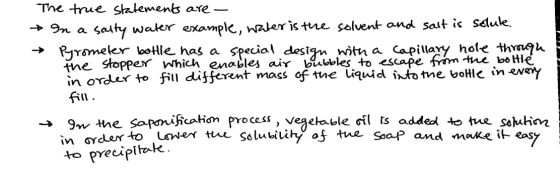
Which of the following statements is true You can select multiple answers if you think so)...
What would be my percent yield if i retrieved 3.1020 grams of soap? thank you, please show all work.
 what would be my percent yield if i retrieved 3.1020 grams of
soap? thank you, please show all work.
SAPONIFICATION (HYDROLYSIS OF A FAD Fats and edible oils consitute a special class of esters called riglycerides in which alcohol part of the molecule, the trihydroxy compound glycerol, forms with three molecules of various long-chain carboxylic acids (called fatty acids). Ty reactions of simple esters can also be carried out on fats and oils,i acid-or-base-catalyzed hydrolysis. three ester linkages carboxylic acids...
what would be my percent yield if i retrieved 3.1020 grams of
soap? thank you, please show all work.
SAPONIFICATION (HYDROLYSIS OF A FAD Fats and edible oils consitute a special class of esters called riglycerides in which alcohol part of the molecule, the trihydroxy compound glycerol, forms with three molecules of various long-chain carboxylic acids (called fatty acids). Ty reactions of simple esters can also be carried out on fats and oils,i acid-or-base-catalyzed hydrolysis. three ester linkages carboxylic acids...
Lab 12: Saponification – Making Soap Objective: To make soap using the process call saponification, an...
Lab 12: Saponification – Making Soap Objective: To make soap using the process call saponification, an organic form of the neutralization reaction that an acid reacts with a base to form a salt. Introduction: A soap is the sodium or potassium salt of a long chained carbohydrate called a fatty acid. A fatty acid usually contains between 12 – 18 carbon atoms. Fatty acids are esters of either animal or vegetable fats. They are called triglycerides if they are solids at room...
please help me with 3,4,5 Thank you! 3. Which sample had more moles of HA in...
 please help me with 3,4,5
Thank you!
3. Which sample had more moles of HA in it initially? Give reas on ! 4. Do the prelab calculation found in part IIIA below 5. Calculate the (expected) initial concentration of your acid solution (see Part IIIB below to get the initial volume of your acid solution) Acid 2 0 50 40 30 0 10 20 Volume of titrant (base) added (mL) III. Experimental Information and Procedures A.Background and preliminary calculation. You...
please help me with 3,4,5
Thank you!
3. Which sample had more moles of HA in it initially? Give reas on ! 4. Do the prelab calculation found in part IIIA below 5. Calculate the (expected) initial concentration of your acid solution (see Part IIIB below to get the initial volume of your acid solution) Acid 2 0 50 40 30 0 10 20 Volume of titrant (base) added (mL) III. Experimental Information and Procedures A.Background and preliminary calculation. You...
The table filled is the lab run. Please can you use the three informations provided above...
 The table filled is the lab run.
Please can you use the three informations provided above to answer
the empty table
Take Density of vinegar = 1.005g/mol
concentration of NaOH = 0.1205M
Experiment #7. Titration of Vinegar Goals 1. To determine the mass percent of acetic acid in a solution via titration. 2. To master the technique of titration. Introduction Vinegar is a common household item that is found in a number of products from salad dressing to cleaners. Vinegar...
The table filled is the lab run.
Please can you use the three informations provided above to answer
the empty table
Take Density of vinegar = 1.005g/mol
concentration of NaOH = 0.1205M
Experiment #7. Titration of Vinegar Goals 1. To determine the mass percent of acetic acid in a solution via titration. 2. To master the technique of titration. Introduction Vinegar is a common household item that is found in a number of products from salad dressing to cleaners. Vinegar...
3. If 15.0 mL of 0.125 M phosphoric acid is titrated with 0.100 M NaOH, what...
 3. If 15.0 mL of 0.125 M phosphoric acid is titrated with 0.100 M NaOH, what volume of the titrant (in mL) must be added to completely neutralize the acid? Show all of your work (including the chemical equation). (1 point) Post-lab Questions: Experiment #9: Acid-Base Titrations Student Learning Objectives : Students will gain practice with the accurate preparation of solutions. Students will perform acid-base titrations and prepare titration curves. Students will identify strong and weak acids by the shapes...
massa volum volum mo olu 5. In which of the following solvents would you expect KBr...
 massa volum volum mo olu 5. In which of the following solvents would you expect KBr to be most soluble? a) CH4 (hexane) d) CCM (carbon tetrachloride) b) CH CH OH (ethanol) e) C.Hz (cyclohexane) c) CH. (benzene) ___6. A 9.50 % by mass solution of acetone (C,H,O) in water has a density of 0.9849 g/mL at 20°C. What is the molarity of this solution? a) 0.621 M b) 1.61 Me) 1.66 Md ) 1.71 M e ) 16.9 M...
Titration: Acids and Bases 2. How can you determine which acid is diprotic? 3. using the...
 Titration: Acids and Bases
2. How can you determine which acid is diprotic?
3. using the answers to questions one and two, which acid is
diprotic?
4. Which base has more hydroxide ions per molecule?
Acid Volume Base Base Initial Volume (mL) Base Final Volume (mL) Volume of Base Used (mL) Acid: Base Ratio Acid 1 20 mL Base 1 50 mL 34.5 15.5 4:3 Acid 2 20 mL Base 1 Acid 1 20 mL Base 2 Acid 2 20...
Titration: Acids and Bases
2. How can you determine which acid is diprotic?
3. using the answers to questions one and two, which acid is
diprotic?
4. Which base has more hydroxide ions per molecule?
Acid Volume Base Base Initial Volume (mL) Base Final Volume (mL) Volume of Base Used (mL) Acid: Base Ratio Acid 1 20 mL Base 1 50 mL 34.5 15.5 4:3 Acid 2 20 mL Base 1 Acid 1 20 mL Base 2 Acid 2 20...
Question 1 (1 point) Which of the following statements about acids is NOT true? a) An...
 Question 1 (1 point) Which of the following statements about acids is NOT true? a) An acid increases the concentration of hydronium in solution. b) An acid is a proton donor. c) An example of an acid is HBr. d) An acid increases the concentration of protons in solution. e) An acid increases the concentration of hydroxide in solution. Question 2 (1 point) Which of the following changes in blood pH would you expect to observe in a hyperventilating patient,...
can someone please answer number one? im so lost DYES AND DYEING CHAPTER 1. Calculate the...
 can someone please answer number one? im so lost
DYES AND DYEING CHAPTER 1. Calculate the amounts of salicylic acid, 1-naphthol, 2-naphthol, 8-anilino-1-naph- thalenesulfonic acid ammonium salt, or N,N-dimethylaniline needed for Part 1B of this experiment (use molecules as assigned by your TA). 190mg 3-aminobenzene 2.5mL Sulfonic acid 2.5% sodium carbonate solution 81mg Sodium nitrate 2. What is the purpose of the sodium carbonate in Part 1A? Why do we add glacial acetic acid in Part 13 when we react...
can someone please answer number one? im so lost
DYES AND DYEING CHAPTER 1. Calculate the amounts of salicylic acid, 1-naphthol, 2-naphthol, 8-anilino-1-naph- thalenesulfonic acid ammonium salt, or N,N-dimethylaniline needed for Part 1B of this experiment (use molecules as assigned by your TA). 190mg 3-aminobenzene 2.5mL Sulfonic acid 2.5% sodium carbonate solution 81mg Sodium nitrate 2. What is the purpose of the sodium carbonate in Part 1A? Why do we add glacial acetic acid in Part 13 when we react...
Separating a Mixture, Recrystallization, pre-lab assignment could you also explain why you chose that substance for...
 Separating a Mixture, Recrystallization, pre-lab
assignment
could you also explain why you chose that substance for the empty
spaces and question marks
EXPERIMENT 4 Pre-Lab Assignment Separating a Mixture, Recrystalliration Name Date 1. Complete the following flowchart which shows how to separate a mixture of sand, sodium chloride and acetanilide. Notice that after a separation process (a down arrow) the filtered solids are shown on the left and the filtrate (the liquid) is shown on the right. The terminal step...
Separating a Mixture, Recrystallization, pre-lab
assignment
could you also explain why you chose that substance for the empty
spaces and question marks
EXPERIMENT 4 Pre-Lab Assignment Separating a Mixture, Recrystalliration Name Date 1. Complete the following flowchart which shows how to separate a mixture of sand, sodium chloride and acetanilide. Notice that after a separation process (a down arrow) the filtered solids are shown on the left and the filtrate (the liquid) is shown on the right. The terminal step...
 what would be my percent yield if i retrieved 3.1020 grams of
soap? thank you, please show all work.
SAPONIFICATION (HYDROLYSIS OF A FAD Fats and edible oils consitute a special class of esters called riglycerides in which alcohol part of the molecule, the trihydroxy compound glycerol, forms with three molecules of various long-chain carboxylic acids (called fatty acids). Ty reactions of simple esters can also be carried out on fats and oils,i acid-or-base-catalyzed hydrolysis. three ester linkages carboxylic acids...
what would be my percent yield if i retrieved 3.1020 grams of
soap? thank you, please show all work.
SAPONIFICATION (HYDROLYSIS OF A FAD Fats and edible oils consitute a special class of esters called riglycerides in which alcohol part of the molecule, the trihydroxy compound glycerol, forms with three molecules of various long-chain carboxylic acids (called fatty acids). Ty reactions of simple esters can also be carried out on fats and oils,i acid-or-base-catalyzed hydrolysis. three ester linkages carboxylic acids...
 please help me with 3,4,5
Thank you!
3. Which sample had more moles of HA in it initially? Give reas on ! 4. Do the prelab calculation found in part IIIA below 5. Calculate the (expected) initial concentration of your acid solution (see Part IIIB below to get the initial volume of your acid solution) Acid 2 0 50 40 30 0 10 20 Volume of titrant (base) added (mL) III. Experimental Information and Procedures A.Background and preliminary calculation. You...
please help me with 3,4,5
Thank you!
3. Which sample had more moles of HA in it initially? Give reas on ! 4. Do the prelab calculation found in part IIIA below 5. Calculate the (expected) initial concentration of your acid solution (see Part IIIB below to get the initial volume of your acid solution) Acid 2 0 50 40 30 0 10 20 Volume of titrant (base) added (mL) III. Experimental Information and Procedures A.Background and preliminary calculation. You...
 The table filled is the lab run.
Please can you use the three informations provided above to answer
the empty table
Take Density of vinegar = 1.005g/mol
concentration of NaOH = 0.1205M
Experiment #7. Titration of Vinegar Goals 1. To determine the mass percent of acetic acid in a solution via titration. 2. To master the technique of titration. Introduction Vinegar is a common household item that is found in a number of products from salad dressing to cleaners. Vinegar...
The table filled is the lab run.
Please can you use the three informations provided above to answer
the empty table
Take Density of vinegar = 1.005g/mol
concentration of NaOH = 0.1205M
Experiment #7. Titration of Vinegar Goals 1. To determine the mass percent of acetic acid in a solution via titration. 2. To master the technique of titration. Introduction Vinegar is a common household item that is found in a number of products from salad dressing to cleaners. Vinegar...
 3. If 15.0 mL of 0.125 M phosphoric acid is titrated with 0.100 M NaOH, what volume of the titrant (in mL) must be added to completely neutralize the acid? Show all of your work (including the chemical equation). (1 point) Post-lab Questions: Experiment #9: Acid-Base Titrations Student Learning Objectives : Students will gain practice with the accurate preparation of solutions. Students will perform acid-base titrations and prepare titration curves. Students will identify strong and weak acids by the shapes...
 massa volum volum mo olu 5. In which of the following solvents would you expect KBr to be most soluble? a) CH4 (hexane) d) CCM (carbon tetrachloride) b) CH CH OH (ethanol) e) C.Hz (cyclohexane) c) CH. (benzene) ___6. A 9.50 % by mass solution of acetone (C,H,O) in water has a density of 0.9849 g/mL at 20°C. What is the molarity of this solution? a) 0.621 M b) 1.61 Me) 1.66 Md ) 1.71 M e ) 16.9 M...
 Titration: Acids and Bases
2. How can you determine which acid is diprotic?
3. using the answers to questions one and two, which acid is
diprotic?
4. Which base has more hydroxide ions per molecule?
Acid Volume Base Base Initial Volume (mL) Base Final Volume (mL) Volume of Base Used (mL) Acid: Base Ratio Acid 1 20 mL Base 1 50 mL 34.5 15.5 4:3 Acid 2 20 mL Base 1 Acid 1 20 mL Base 2 Acid 2 20...
Titration: Acids and Bases
2. How can you determine which acid is diprotic?
3. using the answers to questions one and two, which acid is
diprotic?
4. Which base has more hydroxide ions per molecule?
Acid Volume Base Base Initial Volume (mL) Base Final Volume (mL) Volume of Base Used (mL) Acid: Base Ratio Acid 1 20 mL Base 1 50 mL 34.5 15.5 4:3 Acid 2 20 mL Base 1 Acid 1 20 mL Base 2 Acid 2 20...
 Question 1 (1 point) Which of the following statements about acids is NOT true? a) An acid increases the concentration of hydronium in solution. b) An acid is a proton donor. c) An example of an acid is HBr. d) An acid increases the concentration of protons in solution. e) An acid increases the concentration of hydroxide in solution. Question 2 (1 point) Which of the following changes in blood pH would you expect to observe in a hyperventilating patient,...
 can someone please answer number one? im so lost
DYES AND DYEING CHAPTER 1. Calculate the amounts of salicylic acid, 1-naphthol, 2-naphthol, 8-anilino-1-naph- thalenesulfonic acid ammonium salt, or N,N-dimethylaniline needed for Part 1B of this experiment (use molecules as assigned by your TA). 190mg 3-aminobenzene 2.5mL Sulfonic acid 2.5% sodium carbonate solution 81mg Sodium nitrate 2. What is the purpose of the sodium carbonate in Part 1A? Why do we add glacial acetic acid in Part 13 when we react...
can someone please answer number one? im so lost
DYES AND DYEING CHAPTER 1. Calculate the amounts of salicylic acid, 1-naphthol, 2-naphthol, 8-anilino-1-naph- thalenesulfonic acid ammonium salt, or N,N-dimethylaniline needed for Part 1B of this experiment (use molecules as assigned by your TA). 190mg 3-aminobenzene 2.5mL Sulfonic acid 2.5% sodium carbonate solution 81mg Sodium nitrate 2. What is the purpose of the sodium carbonate in Part 1A? Why do we add glacial acetic acid in Part 13 when we react...
 Separating a Mixture, Recrystallization, pre-lab
assignment
could you also explain why you chose that substance for the empty
spaces and question marks
EXPERIMENT 4 Pre-Lab Assignment Separating a Mixture, Recrystalliration Name Date 1. Complete the following flowchart which shows how to separate a mixture of sand, sodium chloride and acetanilide. Notice that after a separation process (a down arrow) the filtered solids are shown on the left and the filtrate (the liquid) is shown on the right. The terminal step...
Separating a Mixture, Recrystallization, pre-lab
assignment
could you also explain why you chose that substance for the empty
spaces and question marks
EXPERIMENT 4 Pre-Lab Assignment Separating a Mixture, Recrystalliration Name Date 1. Complete the following flowchart which shows how to separate a mixture of sand, sodium chloride and acetanilide. Notice that after a separation process (a down arrow) the filtered solids are shown on the left and the filtrate (the liquid) is shown on the right. The terminal step...
Most questions answered within 3 hours.
-
Where is the error in this code sequence?
String s1 = "Hello";
String s2 = "ello";...
asked 11 months ago -
Financial data for Joel de Paris, Inc., for last year
follow:
Joel de Paris, Inc.
Balance...
asked 11 months ago -
Consider this reaction:
Al2(SO4)3 (aq)+ BaCl3
(aq) Al2Cl6 (aq)- +
3BaSO4(s) . What is the...
asked 11 months ago -
Suppose that Savneet is considering increasing her
recent random sample from 20 car rentals to 40...
asked 11 months ago -
Trucks arrive at an unloading terminal at an average rate of 120
per hour.
Trucks arrive...
asked 11 months ago -
Why are methanol and ethanol completely soluble in water while
octanol is not very little soluble....
asked 11 months ago -
A facilities manager at a university reads in a research report
that the mean amount of...
asked 11 months ago -
When the CuSO4 is rehydrated by adding water to the anhydrous
compound, is this an endothermic...
asked 11 months ago -
A ray of sunlight is passing from diamond into crown glass; the
angle of incidence is...
asked 11 months ago -
A block of mass 0.249 kg is placed on top of a light, vertical
spring of...
asked 11 months ago -
how do the kidneys compensate in the presences of acidosis
a) trigger hyperventilate
b) reserve acid...
asked 11 months ago -
Question 501 pts
The rental rate of capital to the firm increases. Which of the
following...
asked 11 months ago