
Homework Answers


Add Answer to:
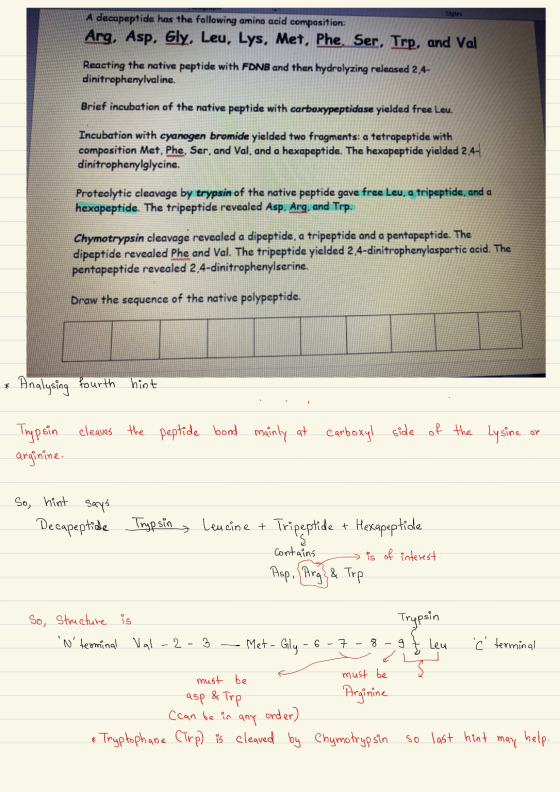
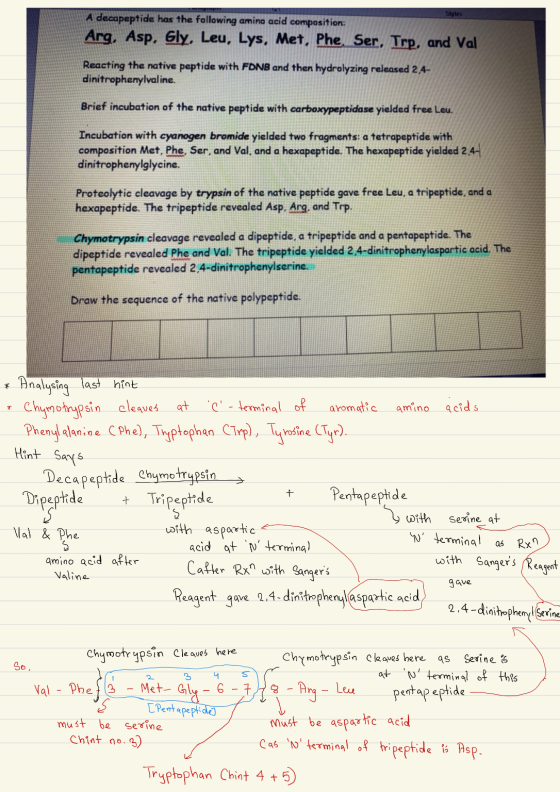
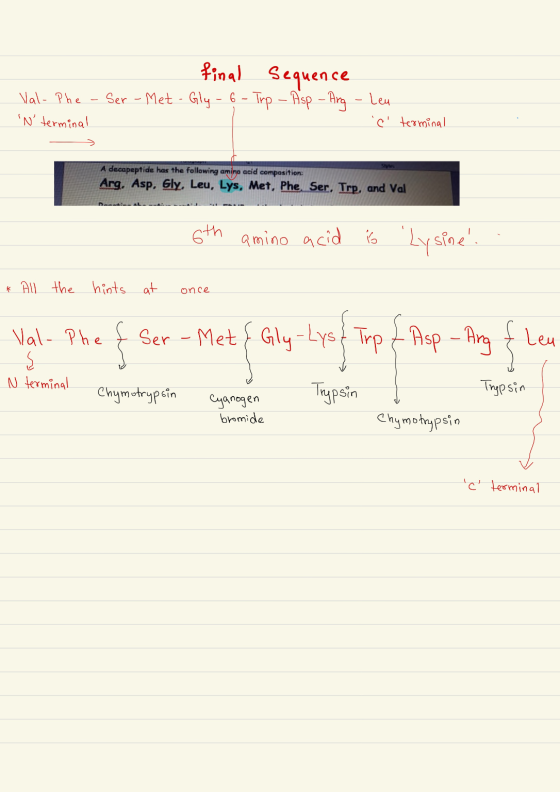
Styles A decapeptide has the following amina acid composition: Arg. Asp, Gly, Leu, Lys, Met, Phe,...
5. Consider the following peptide: His-Ser-Gln-Gly-Thr-Phe-Thr-Ser-Asp-Tyr-Ser-Lys-Tyr-Leu-Asp-Ser-Arg-Arg-Ala-Gin- Asp-Phe-Val-Gln-Trp-Leu-Met-Asn-Thr a. What are the fragments, if it is cleaved...
 5. Consider the following peptide: His-Ser-Gln-Gly-Thr-Phe-Thr-Ser-Asp-Tyr-Ser-Lys-Tyr-Leu-Asp-Ser-Arg-Arg-Ala-Gin- Asp-Phe-Val-Gln-Trp-Leu-Met-Asn-Thr a. What are the fragments, if it is cleaved by trypsin? b. What are the fragments, if it is cleaved by chymotrypsin? c. What are the fragments, if it is cleaved by pepsin?
Which of these protein sequences is most likely to span a cell membrane? Gly-Asp-Val-Ala-Gly-Arg-Gly-Asn-Gly-Lys-Lys-Pro-Ser-Ser-Val-Arg-Ala-Leu-Ser Ile-Val-Leu-Pro-Ile-Val-Leu-Leu-Val-Phe-Leu-Cys-Leu-Gly-Val-Phe-Leu-Leu-Trp Lys-Asn-Trp-Arg-Leu-Lys-Asn-I
 Which of these protein sequences is most likely to span a cell
membrane?
Gly-Asp-Val-Ala-Gly-Arg-Gly-Asn-Gly-Lys-Lys-Pro-Ser-Ser-Val-Arg-Ala-Leu-Ser Ile-Val-Leu-Pro-Ile-Val-Leu-Leu-Val-Phe-Leu-Cys-Leu-Gly-Val-Phe-Leu-Leu-Trp Lys-Asn-Trp-Arg-Leu-Lys-Asn-Ile-Asn-ser-Ile-Asn-Phe-Asp-Asn-Pro-Val-Tyr-Gln A. 773 B. 792 C. 811
Which of these protein sequences is most likely to span a cell
membrane?
Gly-Asp-Val-Ala-Gly-Arg-Gly-Asn-Gly-Lys-Lys-Pro-Ser-Ser-Val-Arg-Ala-Leu-Ser Ile-Val-Leu-Pro-Ile-Val-Leu-Leu-Val-Phe-Leu-Cys-Leu-Gly-Val-Phe-Leu-Leu-Trp Lys-Asn-Trp-Arg-Leu-Lys-Asn-Ile-Asn-ser-Ile-Asn-Phe-Asp-Asn-Pro-Val-Tyr-Gln A. 773 B. 792 C. 811
Complete hydrolysis of an unknown basic decapeptide gives Gly, Ala, Leu, Ile, Phe, Tyr, Glu, Arg,...
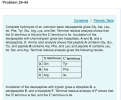 Complete hydrolysis of an unknown basic decapeptide gives Gly,
Ala, Leu, Ile, Phe, Tyr, Glu, Arg, Lys, and Ser.
Problem 24-44 ConstantsI Periodic Table Complete hydrolysis of an unknown basic decapeptide gives Gly, Ala, Leu, lle, Phe, Tyr, Glu, Arg, Lys, and Ser. Terminal residue analysis shows that the N terminus is Ala and the C terminus is lle. Incubation of the decapeptide with chymotrypsin gives two tripeptides, A and B, and a tetrapeptide, C. Amino acid analysis shows that...
Complete hydrolysis of an unknown basic decapeptide gives Gly,
Ala, Leu, Ile, Phe, Tyr, Glu, Arg, Lys, and Ser.
Problem 24-44 ConstantsI Periodic Table Complete hydrolysis of an unknown basic decapeptide gives Gly, Ala, Leu, lle, Phe, Tyr, Glu, Arg, Lys, and Ser. Terminal residue analysis shows that the N terminus is Ala and the C terminus is lle. Incubation of the decapeptide with chymotrypsin gives two tripeptides, A and B, and a tetrapeptide, C. Amino acid analysis shows that...
What fragments will be obtained by a trypsin hydrolysis of the following octapeptide? Ala-Val-Trp-Lys-Phe-Gly-Arg-Met A) Ala-Val-Trp-Lys-Phe...
 What fragments will be obtained by a trypsin hydrolysis of the following octapeptide? Ala-Val-Trp-Lys-Phe-Gly-Arg-Met A) Ala-Val-Trp-Lys-Phe and Gly-Arg-Met 3) Ala-Val-Trp-Lys-Phe-Gly and Arg-Met - Ala-Val-Trp-Lys and Phe-Gly-Arg and Met ) Ala-Val-Trp-Lys and Phe and Gly-Arg and Met ) Ala-Val-Trp and Lys-Phe-Gly and Arg-Met Bradykinin is a nonapeptide, Arg-Pro-Pro-Gly-Phe-Ser-Pro-Phe-Arg. In addition to one mole of Arg, what peptides are present after hydrolysis of bradykinin with chymotrypsin? A) Arg-Pro-Pro and Gly-Phe and Ser-Pro-Phe B) Pro-Pro-Gly and Phe-Ser-Pro-Phe-Arg C) Arg-Pro-Pro-Gly-Phe and Ser-Pro-Phe ?) Arg-Pro-Pro-Gly-Phe-Ser...
biochemistry please show your work 2. A mutant form of polypeptide hormone angiotensin II has the...
 biochemistry please show your work
2. A mutant form of polypeptide hormone angiotensin II has the amino acid composition: Ile, Arg, Met, Leu, Phe, Asp, Tyr, and Val. The following observations are made: 1) Treatment with trypsin yields a dipeptide containing Asp and Arg, and a hexapeptide with all the rest. 2) Cyanogen bromide yields a dipeptide containing Phe and Leu and a hexapeptide containing all the rest. 3) Chymotrypsin cleaves the hormone into two tetrapeptides of composition: Val, Tyr,...
biochemistry please show your work
2. A mutant form of polypeptide hormone angiotensin II has the amino acid composition: Ile, Arg, Met, Leu, Phe, Asp, Tyr, and Val. The following observations are made: 1) Treatment with trypsin yields a dipeptide containing Asp and Arg, and a hexapeptide with all the rest. 2) Cyanogen bromide yields a dipeptide containing Phe and Leu and a hexapeptide containing all the rest. 3) Chymotrypsin cleaves the hormone into two tetrapeptides of composition: Val, Tyr,...
Deduce the sequence of a heptapeptide that contains the amino acids Met, Gln, Phe, Leu, Cys,...
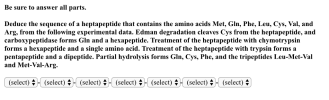 Deduce the sequence of a heptapeptide that contains the amino
acids Met, Gln, Phe, Leu, Cys, Val, and Arg, from the following
experimental data. Edman degradation cleaves Cys from the
heptapeptide, and carboxypeptidase forms Gln and a hexapeptide.
Treatment of the heptapeptide with chymotrypsin forms a hexapeptide
and a single amino acid. Treatment of the heptapeptide with trypsin
forms a pentapeptide and a dipeptide. Partial hydrolysis forms Gln,
Cys, Phe, and the tripeptides Leu-Met-Val and Met-Val-Arg.
Be sure to answer...
Deduce the sequence of a heptapeptide that contains the amino
acids Met, Gln, Phe, Leu, Cys, Val, and Arg, from the following
experimental data. Edman degradation cleaves Cys from the
heptapeptide, and carboxypeptidase forms Gln and a hexapeptide.
Treatment of the heptapeptide with chymotrypsin forms a hexapeptide
and a single amino acid. Treatment of the heptapeptide with trypsin
forms a pentapeptide and a dipeptide. Partial hydrolysis forms Gln,
Cys, Phe, and the tripeptides Leu-Met-Val and Met-Val-Arg.
Be sure to answer...
3. Amino acid analysis of a peptide seven residues long gave: Asp, Leu, Lys,...
3. Amino acid analysis of a peptide seven residues long gave: Asp, Leu, Lys, Met, Phe, Tyr The following facts were observed: a. Trypsin treatment had no apparent effect b. Reaction with phenylisothiocyanate reagent yielded PTH-Phe c. Treatment with chymotrypsin yielded several products, including a dipeptide and a tetrapeptide. The amino acid composition of the tetrapeptide was Leu, Lys and Met. d. Cyanogen bromide treatment yielded a dipeptide, a tetrapeptide, and free lysine. What is the...
. A nonapeptide was treated with 6N HCl at 110 oC for 24 hours and was...
. A nonapeptide was treated with 6N HCl at 110 oC for 24 hours and was determined to have the following amino acid composition: (Lys)2, (Gly)2, Met, Leu, (Phe)2, His. The native peptide was incubated with 1-fluoro-2,4-dinitrobenzene (FDNB) and then, hydrolyzed by a strong acid. 2,4-Dinitrophenylhistidine derivative was identified by the HPLC. When the native peptide was exposed to cyanogen bromide (CNBr), an octapeptide and a free glycine were recovered. Incubation of the native peptide with trypsin gave a pentapeptide,...
How to do this problem? 1.A 14 AA peptide contains: Ala, Arg,, Gly, His, Leu, Lys,...
 How
to do this problem?
1.A 14 AA peptide contains: Ala, Arg,, Gly, His, Leu, Lys, Phez, Serz, Trp, Tyr, Val This peptide yields the following results when broken down into smaller fragments Please note the AA are given in alphabetical order). Show your work, explain your reasoning, give the answer in three letter abbreviation and one letter abbreviation Fragment Content His Treatment Edman Chymotrypsin Gly. His, Phe Ser, Tyr Arg2, Leu, Lys, Ser.Ala, Phe Trp, Val Gly, His, Lys,...
How
to do this problem?
1.A 14 AA peptide contains: Ala, Arg,, Gly, His, Leu, Lys, Phez, Serz, Trp, Tyr, Val This peptide yields the following results when broken down into smaller fragments Please note the AA are given in alphabetical order). Show your work, explain your reasoning, give the answer in three letter abbreviation and one letter abbreviation Fragment Content His Treatment Edman Chymotrypsin Gly. His, Phe Ser, Tyr Arg2, Leu, Lys, Ser.Ala, Phe Trp, Val Gly, His, Lys,...
How to do this problem? 1.A 14 AA peptide contains: Ala, Arg,, Gly, His, Leu, Lys, Phez, Serz, Trp, Tyr, Val This pe...
 How
to do this problem?
1.A 14 AA peptide contains: Ala, Arg,, Gly, His, Leu, Lys, Phez, Serz, Trp, Tyr, Val This peptide yields the following results when broken down into smaller fragments Please note the AA are given in alphabetical order). Show your work, explain your reasoning, give the answer in three letter abbreviation and one letter abbreviation Fragment Content His Treatment Edman Chymotrypsin Gly. His, Phe Ser, Tyr Arg2, Leu, Lys, Ser.Ala, Phe Trp, Val Gly, His, Lys,...
How
to do this problem?
1.A 14 AA peptide contains: Ala, Arg,, Gly, His, Leu, Lys, Phez, Serz, Trp, Tyr, Val This peptide yields the following results when broken down into smaller fragments Please note the AA are given in alphabetical order). Show your work, explain your reasoning, give the answer in three letter abbreviation and one letter abbreviation Fragment Content His Treatment Edman Chymotrypsin Gly. His, Phe Ser, Tyr Arg2, Leu, Lys, Ser.Ala, Phe Trp, Val Gly, His, Lys,...
 5. Consider the following peptide: His-Ser-Gln-Gly-Thr-Phe-Thr-Ser-Asp-Tyr-Ser-Lys-Tyr-Leu-Asp-Ser-Arg-Arg-Ala-Gin- Asp-Phe-Val-Gln-Trp-Leu-Met-Asn-Thr a. What are the fragments, if it is cleaved by trypsin? b. What are the fragments, if it is cleaved by chymotrypsin? c. What are the fragments, if it is cleaved by pepsin?
 Which of these protein sequences is most likely to span a cell
membrane?
Gly-Asp-Val-Ala-Gly-Arg-Gly-Asn-Gly-Lys-Lys-Pro-Ser-Ser-Val-Arg-Ala-Leu-Ser Ile-Val-Leu-Pro-Ile-Val-Leu-Leu-Val-Phe-Leu-Cys-Leu-Gly-Val-Phe-Leu-Leu-Trp Lys-Asn-Trp-Arg-Leu-Lys-Asn-Ile-Asn-ser-Ile-Asn-Phe-Asp-Asn-Pro-Val-Tyr-Gln A. 773 B. 792 C. 811
Which of these protein sequences is most likely to span a cell
membrane?
Gly-Asp-Val-Ala-Gly-Arg-Gly-Asn-Gly-Lys-Lys-Pro-Ser-Ser-Val-Arg-Ala-Leu-Ser Ile-Val-Leu-Pro-Ile-Val-Leu-Leu-Val-Phe-Leu-Cys-Leu-Gly-Val-Phe-Leu-Leu-Trp Lys-Asn-Trp-Arg-Leu-Lys-Asn-Ile-Asn-ser-Ile-Asn-Phe-Asp-Asn-Pro-Val-Tyr-Gln A. 773 B. 792 C. 811
 Complete hydrolysis of an unknown basic decapeptide gives Gly,
Ala, Leu, Ile, Phe, Tyr, Glu, Arg, Lys, and Ser.
Problem 24-44 ConstantsI Periodic Table Complete hydrolysis of an unknown basic decapeptide gives Gly, Ala, Leu, lle, Phe, Tyr, Glu, Arg, Lys, and Ser. Terminal residue analysis shows that the N terminus is Ala and the C terminus is lle. Incubation of the decapeptide with chymotrypsin gives two tripeptides, A and B, and a tetrapeptide, C. Amino acid analysis shows that...
Complete hydrolysis of an unknown basic decapeptide gives Gly,
Ala, Leu, Ile, Phe, Tyr, Glu, Arg, Lys, and Ser.
Problem 24-44 ConstantsI Periodic Table Complete hydrolysis of an unknown basic decapeptide gives Gly, Ala, Leu, lle, Phe, Tyr, Glu, Arg, Lys, and Ser. Terminal residue analysis shows that the N terminus is Ala and the C terminus is lle. Incubation of the decapeptide with chymotrypsin gives two tripeptides, A and B, and a tetrapeptide, C. Amino acid analysis shows that...
 What fragments will be obtained by a trypsin hydrolysis of the following octapeptide? Ala-Val-Trp-Lys-Phe-Gly-Arg-Met A) Ala-Val-Trp-Lys-Phe and Gly-Arg-Met 3) Ala-Val-Trp-Lys-Phe-Gly and Arg-Met - Ala-Val-Trp-Lys and Phe-Gly-Arg and Met ) Ala-Val-Trp-Lys and Phe and Gly-Arg and Met ) Ala-Val-Trp and Lys-Phe-Gly and Arg-Met Bradykinin is a nonapeptide, Arg-Pro-Pro-Gly-Phe-Ser-Pro-Phe-Arg. In addition to one mole of Arg, what peptides are present after hydrolysis of bradykinin with chymotrypsin? A) Arg-Pro-Pro and Gly-Phe and Ser-Pro-Phe B) Pro-Pro-Gly and Phe-Ser-Pro-Phe-Arg C) Arg-Pro-Pro-Gly-Phe and Ser-Pro-Phe ?) Arg-Pro-Pro-Gly-Phe-Ser...
 biochemistry please show your work
2. A mutant form of polypeptide hormone angiotensin II has the amino acid composition: Ile, Arg, Met, Leu, Phe, Asp, Tyr, and Val. The following observations are made: 1) Treatment with trypsin yields a dipeptide containing Asp and Arg, and a hexapeptide with all the rest. 2) Cyanogen bromide yields a dipeptide containing Phe and Leu and a hexapeptide containing all the rest. 3) Chymotrypsin cleaves the hormone into two tetrapeptides of composition: Val, Tyr,...
biochemistry please show your work
2. A mutant form of polypeptide hormone angiotensin II has the amino acid composition: Ile, Arg, Met, Leu, Phe, Asp, Tyr, and Val. The following observations are made: 1) Treatment with trypsin yields a dipeptide containing Asp and Arg, and a hexapeptide with all the rest. 2) Cyanogen bromide yields a dipeptide containing Phe and Leu and a hexapeptide containing all the rest. 3) Chymotrypsin cleaves the hormone into two tetrapeptides of composition: Val, Tyr,...
 Deduce the sequence of a heptapeptide that contains the amino
acids Met, Gln, Phe, Leu, Cys, Val, and Arg, from the following
experimental data. Edman degradation cleaves Cys from the
heptapeptide, and carboxypeptidase forms Gln and a hexapeptide.
Treatment of the heptapeptide with chymotrypsin forms a hexapeptide
and a single amino acid. Treatment of the heptapeptide with trypsin
forms a pentapeptide and a dipeptide. Partial hydrolysis forms Gln,
Cys, Phe, and the tripeptides Leu-Met-Val and Met-Val-Arg.
Be sure to answer...
Deduce the sequence of a heptapeptide that contains the amino
acids Met, Gln, Phe, Leu, Cys, Val, and Arg, from the following
experimental data. Edman degradation cleaves Cys from the
heptapeptide, and carboxypeptidase forms Gln and a hexapeptide.
Treatment of the heptapeptide with chymotrypsin forms a hexapeptide
and a single amino acid. Treatment of the heptapeptide with trypsin
forms a pentapeptide and a dipeptide. Partial hydrolysis forms Gln,
Cys, Phe, and the tripeptides Leu-Met-Val and Met-Val-Arg.
Be sure to answer...
 How
to do this problem?
1.A 14 AA peptide contains: Ala, Arg,, Gly, His, Leu, Lys, Phez, Serz, Trp, Tyr, Val This peptide yields the following results when broken down into smaller fragments Please note the AA are given in alphabetical order). Show your work, explain your reasoning, give the answer in three letter abbreviation and one letter abbreviation Fragment Content His Treatment Edman Chymotrypsin Gly. His, Phe Ser, Tyr Arg2, Leu, Lys, Ser.Ala, Phe Trp, Val Gly, His, Lys,...
How
to do this problem?
1.A 14 AA peptide contains: Ala, Arg,, Gly, His, Leu, Lys, Phez, Serz, Trp, Tyr, Val This peptide yields the following results when broken down into smaller fragments Please note the AA are given in alphabetical order). Show your work, explain your reasoning, give the answer in three letter abbreviation and one letter abbreviation Fragment Content His Treatment Edman Chymotrypsin Gly. His, Phe Ser, Tyr Arg2, Leu, Lys, Ser.Ala, Phe Trp, Val Gly, His, Lys,...
 How
to do this problem?
1.A 14 AA peptide contains: Ala, Arg,, Gly, His, Leu, Lys, Phez, Serz, Trp, Tyr, Val This peptide yields the following results when broken down into smaller fragments Please note the AA are given in alphabetical order). Show your work, explain your reasoning, give the answer in three letter abbreviation and one letter abbreviation Fragment Content His Treatment Edman Chymotrypsin Gly. His, Phe Ser, Tyr Arg2, Leu, Lys, Ser.Ala, Phe Trp, Val Gly, His, Lys,...
How
to do this problem?
1.A 14 AA peptide contains: Ala, Arg,, Gly, His, Leu, Lys, Phez, Serz, Trp, Tyr, Val This peptide yields the following results when broken down into smaller fragments Please note the AA are given in alphabetical order). Show your work, explain your reasoning, give the answer in three letter abbreviation and one letter abbreviation Fragment Content His Treatment Edman Chymotrypsin Gly. His, Phe Ser, Tyr Arg2, Leu, Lys, Ser.Ala, Phe Trp, Val Gly, His, Lys,...
Most questions answered within 3 hours.
-
Where is the error in this code sequence?
String s1 = "Hello";
String s2 = "ello";...
asked 10 months ago -
Financial data for Joel de Paris, Inc., for last year
follow:
Joel de Paris, Inc.
Balance...
asked 10 months ago -
Consider this reaction:
Al2(SO4)3 (aq)+ BaCl3
(aq) Al2Cl6 (aq)- +
3BaSO4(s) . What is the...
asked 10 months ago -
Suppose that Savneet is considering increasing her
recent random sample from 20 car rentals to 40...
asked 10 months ago -
Trucks arrive at an unloading terminal at an average rate of 120
per hour.
Trucks arrive...
asked 10 months ago -
Why are methanol and ethanol completely soluble in water while
octanol is not very little soluble....
asked 10 months ago -
A facilities manager at a university reads in a research report
that the mean amount of...
asked 10 months ago -
When the CuSO4 is rehydrated by adding water to the anhydrous
compound, is this an endothermic...
asked 10 months ago -
A ray of sunlight is passing from diamond into crown glass; the
angle of incidence is...
asked 10 months ago -
A block of mass 0.249 kg is placed on top of a light, vertical
spring of...
asked 10 months ago -
how do the kidneys compensate in the presences of acidosis
a) trigger hyperventilate
b) reserve acid...
asked 10 months ago -
Question 501 pts
The rental rate of capital to the firm increases. Which of the
following...
asked 10 months ago