
Homework Answers
Add Answer to:
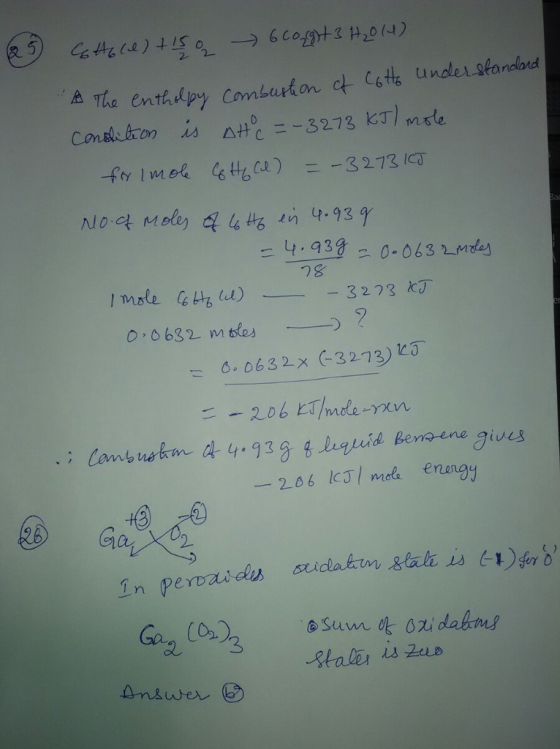
Combustion of 4.93 g of liquid benzene (C_6H_6) causes a temperature rise of 20.9 degree C...
Combustion of 2.14 g of liquid benzene (C 6H 6) causes a temperature rise of 16.2...
Combustion of 2.14 g of liquid benzene (C 6H 6) causes a temperature rise of 16.2 °C in a constant-pressure calorimeter that has a heat capacity of 5.53 kJ/°C. What is Δ H for the following reaction? C6H6(l) + O2(g) → 6 CO2(g) + 3 H2O() a. 89.5 kJ/mol-rxn b. –3.27 × 10³ kJ/mol-rxn c. –41.8 kJ/mol-rxn d. –89.5 kJ/mol-rxn e. 41.8 kJ/mol-rxn
Combustion of 3.65 g of liquid benzene (CH) causes a temperature rise of 21.1°C in a...
 Combustion of 3.65 g of liquid benzene (CH) causes a temperature rise of 21.1°C in a constant-pressure calorimeter that has a heat capacity of 7.23 kJ/°C. What is AH for the following reaction? CH.(l) + O2(e) 6C02(g) + 3H-0(1) Select one: -41.8 kJ/mol b. 152 kJ/mol с. 41.8 kJ/mol d 152 kJ/mol -3.27x 10 kJ/mol
Combustion of 2.14 g of liquid benzene (C6H 6) causes a temperature rise of 16.2 °C...
 Combustion of 2.14 g of liquid benzene (C6H 6) causes a temperature rise of 16.2 °C in a constant pressure calorimeter that has a heat capacity of 5.53 k/°C. What is AH for the following reaction? C6H6()+02(g) - 6CO2(8)+ 3 H200) Given the thermochemical equation 4A1C13(s) + 302(g) → 2Al2O3(s) + 6C12(g); AH = -529 kJ/mol-rxn find ΔΗ. for the following reaction. A1203(S) + Cl2(2) — ŞA1C13() + 402(9)
The combustion of 1.010 g sucrose C12H22O11 in a bomb calorimeter causes the temperature to rise...
The combustion of 1.010 g sucrose C12H22O11 in a bomb calorimeter causes the temperature to rise from 24.92 to 28.33 oC. The heat capacity of the calorimeter assembly is 4.90 kJ/ oC. What is the heat of combustion of sucrose in kJ per mole of sucrose?
Part A When 1.550 g of liquid hexane (C6H14) undergoes combustion in a bomb calorimeter, the...
Part A When 1.550 g of liquid hexane (C6H14) undergoes combustion in a bomb calorimeter, the temperature rises from 25.87∘C to 38.13∘C. Find ΔErxn for the reaction in kJ/mol hexane. The heat capacity of the bomb calorimeter, determined in a separate experiment, is 5.73 kJ/∘C. Express your answer in kilojoules per mole to three significant figures. ΔErxn ΔErxn of hexane = nothing kJ/mol SubmitRequest Answer Part B The combustion of toluene has a ΔErxn of –3.91×10³ kJ/mol. When 1.55 g...
16.(10) When 7.02 g of liquid benzene, C&He was burned in a bomb calorimeter the temperature of the calorimeter...
 16.(10) When 7.02 g of liquid benzene, C&He was burned in a bomb calorimeter the temperature of the calorimeter rose from 25.00 to 49.36°C. If the heat capacity of the solution and the calorimeter is 12.05 kJ/°C, what is the enthalpy change of the following reaction? DH 2 C&He() + 15 O2(g) → 12 CO2(,) + 6H2O(l); AH= ? kg/mol
 Combustion of 3.65 g of liquid benzene (CH) causes a temperature rise of 21.1°C in a constant-pressure calorimeter that has a heat capacity of 7.23 kJ/°C. What is AH for the following reaction? CH.(l) + O2(e) 6C02(g) + 3H-0(1) Select one: -41.8 kJ/mol b. 152 kJ/mol с. 41.8 kJ/mol d 152 kJ/mol -3.27x 10 kJ/mol
 Combustion of 2.14 g of liquid benzene (C6H 6) causes a temperature rise of 16.2 °C in a constant pressure calorimeter that has a heat capacity of 5.53 k/°C. What is AH for the following reaction? C6H6()+02(g) - 6CO2(8)+ 3 H200) Given the thermochemical equation 4A1C13(s) + 302(g) → 2Al2O3(s) + 6C12(g); AH = -529 kJ/mol-rxn find ΔΗ. for the following reaction. A1203(S) + Cl2(2) — ŞA1C13() + 402(9)
 16.(10) When 7.02 g of liquid benzene, C&He was burned in a bomb calorimeter the temperature of the calorimeter rose from 25.00 to 49.36°C. If the heat capacity of the solution and the calorimeter is 12.05 kJ/°C, what is the enthalpy change of the following reaction? DH 2 C&He() + 15 O2(g) → 12 CO2(,) + 6H2O(l); AH= ? kg/mol
Most questions answered within 3 hours.
-
Where is the error in this code sequence?
String s1 = "Hello";
String s2 = "ello";...
asked 11 months ago -
Financial data for Joel de Paris, Inc., for last year
follow:
Joel de Paris, Inc.
Balance...
asked 11 months ago -
Consider this reaction:
Al2(SO4)3 (aq)+ BaCl3
(aq) Al2Cl6 (aq)- +
3BaSO4(s) . What is the...
asked 11 months ago -
Suppose that Savneet is considering increasing her
recent random sample from 20 car rentals to 40...
asked 11 months ago -
Trucks arrive at an unloading terminal at an average rate of 120
per hour.
Trucks arrive...
asked 11 months ago -
Why are methanol and ethanol completely soluble in water while
octanol is not very little soluble....
asked 11 months ago -
A facilities manager at a university reads in a research report
that the mean amount of...
asked 11 months ago -
When the CuSO4 is rehydrated by adding water to the anhydrous
compound, is this an endothermic...
asked 11 months ago -
A ray of sunlight is passing from diamond into crown glass; the
angle of incidence is...
asked 11 months ago -
A block of mass 0.249 kg is placed on top of a light, vertical
spring of...
asked 11 months ago -
how do the kidneys compensate in the presences of acidosis
a) trigger hyperventilate
b) reserve acid...
asked 11 months ago -
Question 501 pts
The rental rate of capital to the firm increases. Which of the
following...
asked 11 months ago