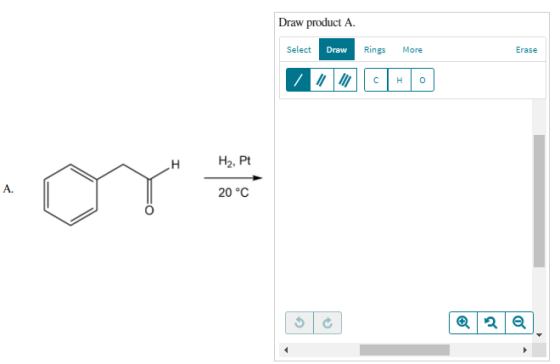
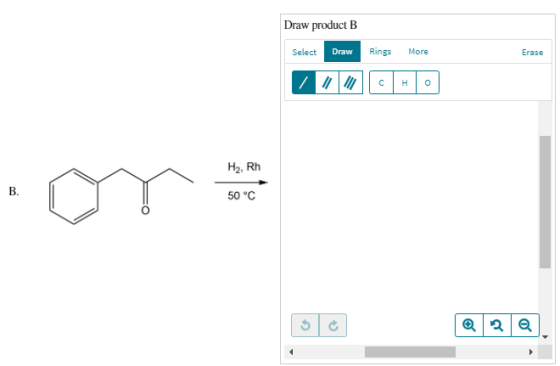
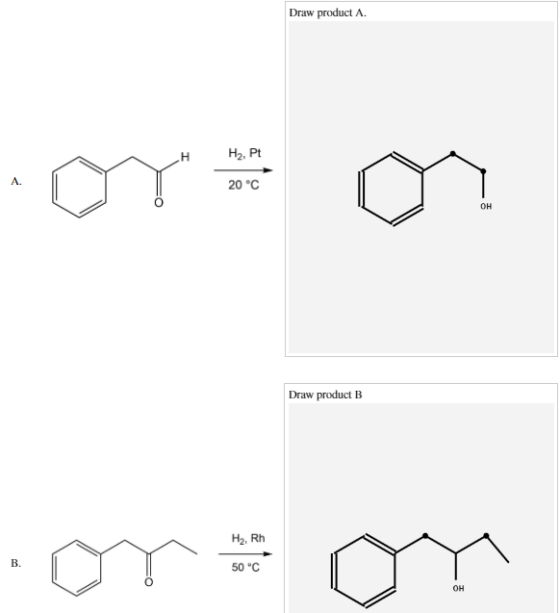
Hydrogen can be added to various functional groups through catalytic hydrogenation. Draw the products for the each of the functional group conversions
Homework Answers
Add Answer to:
Hydrogen can be added to various functional groups through catalytic hydrogenation. Draw the products for the each of the functional group conversions
Catalytic hydrogenation is classified as a 1.2-addition reaction. In this experiment, the hydrogen was added to...
 Catalytic hydrogenation is classified as a 1.2-addition reaction. In this experiment, the hydrogen was added to the double bond of 1-decene in a syn manner, meaning that [Select] both hydrogen atoms are added to the same face of the aliene in 1-pentene both hydrogen atoms are added to the same face of the aliene in 1-decene Syn addition occurs in the type of catalytic hydrogenation because both hydrogen atoms are added by the opposite face of the alkene in 1-decene
WH83 SU 7. Recognizing functional groups: Circle each functional group and then label each group with...
 WH83 SU 7. Recognizing functional groups: Circle each functional group and then label each group with the name of the group. NH OH COOH Alcohols | Chemistry 1113 87
WH83 SU 7. Recognizing functional groups: Circle each functional group and then label each group with the name of the group. NH OH COOH Alcohols | Chemistry 1113 87
WH83 SU 7. Recognizing functional groups: Circle each functional group and then label each group with the name of the group. NH OH COOH Alcohols | Chemistry 1113 87
Show all products of catalytic hydrogenation. Draw complete reactions. Name the product(s). If more than one...
 Show all products of catalytic hydrogenation. Draw complete reactions. Name the product(s). If more than one product is formed, describe their relationship. • 1-methylcyclohexene • cis-4-methyl-2-pentene
1. Identify all the functional groups in the following compounds. Circle each functional group and label...
 1. Identify all the functional groups in the following
compounds. Circle each functional group and label each group.
Thank you!
1. Identify all the functional groups in the following compounds. Circle each functional group and label each group. Hiç O CH CH CH-C-0-CHCH, -0-CH, CH CH(CH), a. acid group СОН) -CH-CHNHA 0-C-CH Amphetamine (a central nervous system stimulant and abused drug) O Aspirin ( 13 H1802 . . HC=CHCHACHACHCH CHO CHE e. HCCHI (CH OH CHE Citronellal alcohol group ~...
1. Identify all the functional groups in the following
compounds. Circle each functional group and label each group.
Thank you!
1. Identify all the functional groups in the following compounds. Circle each functional group and label each group. Hiç O CH CH CH-C-0-CHCH, -0-CH, CH CH(CH), a. acid group СОН) -CH-CHNHA 0-C-CH Amphetamine (a central nervous system stimulant and abused drug) O Aspirin ( 13 H1802 . . HC=CHCHACHACHCH CHO CHE e. HCCHI (CH OH CHE Citronellal alcohol group ~...
OH Diclofenac Identify all the functional groups. For each functional group must be given an example...
 OH Diclofenac Identify all the functional groups. For each functional group must be given an example of a characteristic reaction.
Draw the structural formulas for and label all of the functional groups in each of these...
Draw the structural formulas for and label all of the functional groups in each of these amino acids... and show all the chemical bonds in the molecules Aspartic Acid Cysteine Threonine
Molecule: Atenolol Question: List hydrolyzable functional groups as well as various products that may be formed...
 Molecule: Atenolol
Question:
List hydrolyzable functional groups as well as various products
that may be formed by treating the substance with diluted aqueous
acid.
olar HN OH
Molecule: Atenolol
Question:
List hydrolyzable functional groups as well as various products
that may be formed by treating the substance with diluted aqueous
acid.
olar HN OH
Which of the functional groups can act as a hydrogen bond donor? Select all that apply...
Which of the functional groups can act as a hydrogen bond donor? Select all that apply Amide Aromatic ring Carboxylic acid Amine Alcohol Ester Ether Ketone
Can someone please explain this? Characteristic IR Absorptions of Some Functional Groups Functional Group Absorption (cm)...
 Can someone please explain this?
Characteristic IR Absorptions of Some Functional Groups Functional Group Absorption (cm) Functional Group Absorption (cm"!) Alkene Alkane C-H 2850-2960 =C-H 3020-3100 C-C 800-1300 1640-1680 C=C RCH=CH2 Alkyne 910 and 990 =C-H 3300 R2C=CH2 890 2100-2260 C=C Alcohol O-H C-O Alkyl halide C-C1 3400-3650 600-800 1050-1150 C-Br 500-600 Amine Arene C-H N-H 3300-3500 3030 C-N 1030-1230 1660-2000 1450-1600 Aldehyde Ketone 1730 1715 1705 1690 Non-conjugated C-0 Conjugated C=0 Carboxylic acid C=0 Non-conjugated C-0 Conjugated C=0 Amide...
Can someone please explain this?
Characteristic IR Absorptions of Some Functional Groups Functional Group Absorption (cm) Functional Group Absorption (cm"!) Alkene Alkane C-H 2850-2960 =C-H 3020-3100 C-C 800-1300 1640-1680 C=C RCH=CH2 Alkyne 910 and 990 =C-H 3300 R2C=CH2 890 2100-2260 C=C Alcohol O-H C-O Alkyl halide C-C1 3400-3650 600-800 1050-1150 C-Br 500-600 Amine Arene C-H N-H 3300-3500 3030 C-N 1030-1230 1660-2000 1450-1600 Aldehyde Ketone 1730 1715 1705 1690 Non-conjugated C-0 Conjugated C=0 Carboxylic acid C=0 Non-conjugated C-0 Conjugated C=0 Amide...
2. Explain why broad absorbances are expected for compounds c functional groups. Draw the hydrogen bonding...
 2. Explain why broad absorbances are expected for compounds c functional groups. Draw the hydrogen bonding interaction between two ethanol molecules ces are expected for compounds containing alcohol and carboxylic acid
 Catalytic hydrogenation is classified as a 1.2-addition reaction. In this experiment, the hydrogen was added to the double bond of 1-decene in a syn manner, meaning that [Select] both hydrogen atoms are added to the same face of the aliene in 1-pentene both hydrogen atoms are added to the same face of the aliene in 1-decene Syn addition occurs in the type of catalytic hydrogenation because both hydrogen atoms are added by the opposite face of the alkene in 1-decene
 WH83 SU 7. Recognizing functional groups: Circle each functional group and then label each group with the name of the group. NH OH COOH Alcohols | Chemistry 1113 87
WH83 SU 7. Recognizing functional groups: Circle each functional group and then label each group with the name of the group. NH OH COOH Alcohols | Chemistry 1113 87
WH83 SU 7. Recognizing functional groups: Circle each functional group and then label each group with the name of the group. NH OH COOH Alcohols | Chemistry 1113 87
 Show all products of catalytic hydrogenation. Draw complete reactions. Name the product(s). If more than one product is formed, describe their relationship. • 1-methylcyclohexene • cis-4-methyl-2-pentene
 1. Identify all the functional groups in the following
compounds. Circle each functional group and label each group.
Thank you!
1. Identify all the functional groups in the following compounds. Circle each functional group and label each group. Hiç O CH CH CH-C-0-CHCH, -0-CH, CH CH(CH), a. acid group СОН) -CH-CHNHA 0-C-CH Amphetamine (a central nervous system stimulant and abused drug) O Aspirin ( 13 H1802 . . HC=CHCHACHACHCH CHO CHE e. HCCHI (CH OH CHE Citronellal alcohol group ~...
1. Identify all the functional groups in the following
compounds. Circle each functional group and label each group.
Thank you!
1. Identify all the functional groups in the following compounds. Circle each functional group and label each group. Hiç O CH CH CH-C-0-CHCH, -0-CH, CH CH(CH), a. acid group СОН) -CH-CHNHA 0-C-CH Amphetamine (a central nervous system stimulant and abused drug) O Aspirin ( 13 H1802 . . HC=CHCHACHACHCH CHO CHE e. HCCHI (CH OH CHE Citronellal alcohol group ~...
 OH Diclofenac Identify all the functional groups. For each functional group must be given an example of a characteristic reaction.
 Molecule: Atenolol
Question:
List hydrolyzable functional groups as well as various products
that may be formed by treating the substance with diluted aqueous
acid.
olar HN OH
Molecule: Atenolol
Question:
List hydrolyzable functional groups as well as various products
that may be formed by treating the substance with diluted aqueous
acid.
olar HN OH
 Can someone please explain this?
Characteristic IR Absorptions of Some Functional Groups Functional Group Absorption (cm) Functional Group Absorption (cm"!) Alkene Alkane C-H 2850-2960 =C-H 3020-3100 C-C 800-1300 1640-1680 C=C RCH=CH2 Alkyne 910 and 990 =C-H 3300 R2C=CH2 890 2100-2260 C=C Alcohol O-H C-O Alkyl halide C-C1 3400-3650 600-800 1050-1150 C-Br 500-600 Amine Arene C-H N-H 3300-3500 3030 C-N 1030-1230 1660-2000 1450-1600 Aldehyde Ketone 1730 1715 1705 1690 Non-conjugated C-0 Conjugated C=0 Carboxylic acid C=0 Non-conjugated C-0 Conjugated C=0 Amide...
Can someone please explain this?
Characteristic IR Absorptions of Some Functional Groups Functional Group Absorption (cm) Functional Group Absorption (cm"!) Alkene Alkane C-H 2850-2960 =C-H 3020-3100 C-C 800-1300 1640-1680 C=C RCH=CH2 Alkyne 910 and 990 =C-H 3300 R2C=CH2 890 2100-2260 C=C Alcohol O-H C-O Alkyl halide C-C1 3400-3650 600-800 1050-1150 C-Br 500-600 Amine Arene C-H N-H 3300-3500 3030 C-N 1030-1230 1660-2000 1450-1600 Aldehyde Ketone 1730 1715 1705 1690 Non-conjugated C-0 Conjugated C=0 Carboxylic acid C=0 Non-conjugated C-0 Conjugated C=0 Amide...
 2. Explain why broad absorbances are expected for compounds c functional groups. Draw the hydrogen bonding interaction between two ethanol molecules ces are expected for compounds containing alcohol and carboxylic acid
Most questions answered within 3 hours.
-
Where is the error in this code sequence?
String s1 = "Hello";
String s2 = "ello";...
asked 11 months ago -
Financial data for Joel de Paris, Inc., for last year
follow:
Joel de Paris, Inc.
Balance...
asked 11 months ago -
Consider this reaction:
Al2(SO4)3 (aq)+ BaCl3
(aq) Al2Cl6 (aq)- +
3BaSO4(s) . What is the...
asked 11 months ago -
Suppose that Savneet is considering increasing her
recent random sample from 20 car rentals to 40...
asked 11 months ago -
Trucks arrive at an unloading terminal at an average rate of 120
per hour.
Trucks arrive...
asked 11 months ago -
Why are methanol and ethanol completely soluble in water while
octanol is not very little soluble....
asked 11 months ago -
A facilities manager at a university reads in a research report
that the mean amount of...
asked 11 months ago -
When the CuSO4 is rehydrated by adding water to the anhydrous
compound, is this an endothermic...
asked 11 months ago -
A ray of sunlight is passing from diamond into crown glass; the
angle of incidence is...
asked 11 months ago -
A block of mass 0.249 kg is placed on top of a light, vertical
spring of...
asked 11 months ago -
how do the kidneys compensate in the presences of acidosis
a) trigger hyperventilate
b) reserve acid...
asked 11 months ago -
Question 501 pts
The rental rate of capital to the firm increases. Which of the
following...
asked 11 months ago