
Homework Answers
Add Answer to:
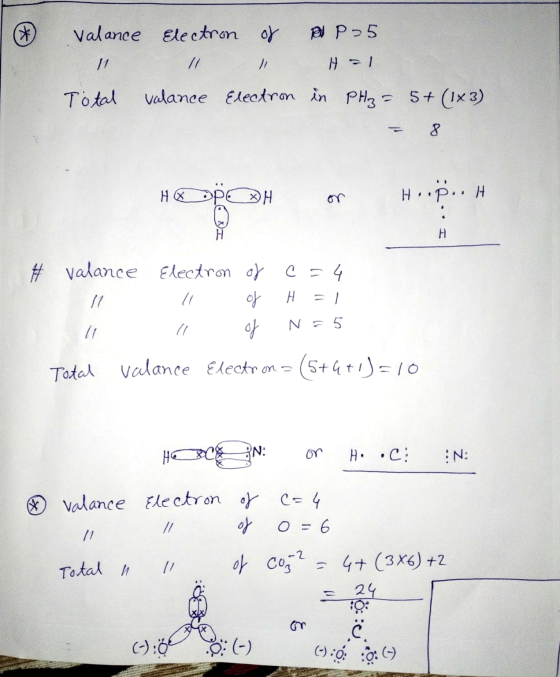
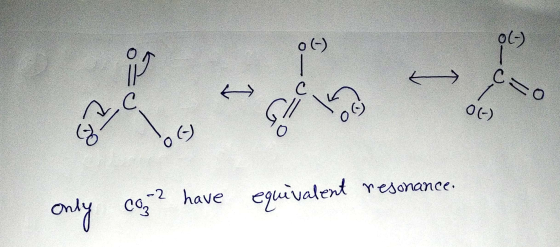
19. Draw the Lewis diagram for each of the compounds. Indicate which have equivalent resonance, but...
Draw Lewis structures to determine which of the following compounds exhibit resonance. Enter the letters corresponding...
 Draw Lewis structures to determine which of the following
compounds exhibit resonance. Enter the letters corresponding to all
those compounds which exhibit resonance. (If you find that choices
A, C, and F all have resonance and the others do not, for example,
you would enter ACF as your answer. Make sure the letters you enter
are in alphabetical order, with no spaces or commas separating
them.)
2. Draw Lewis structures to determine which of the following compounds exhibit resonance. Enter...
Draw Lewis structures to determine which of the following
compounds exhibit resonance. Enter the letters corresponding to all
those compounds which exhibit resonance. (If you find that choices
A, C, and F all have resonance and the others do not, for example,
you would enter ACF as your answer. Make sure the letters you enter
are in alphabetical order, with no spaces or commas separating
them.)
2. Draw Lewis structures to determine which of the following compounds exhibit resonance. Enter...
For each of the compounds listed below you must draw the Lewis dot structure in the...
For each of the compounds listed below you must draw the Lewis dot structure in the chart on page 4. a. H2O, water b. CF4, carbon tetrafluoride c. HCN, hydrogen cyanide (C in middle) d. ONBr, nitrosyl bromide e. (z)-C2H2F2, (z)-1,2-difluoroethylene (N in middle) f. (e)-C2H2F2, (e)-1,2-difluoroethylene g. CH3COCH3, acetone (the O is doubly bonded to middle, but is not bonded to any other C atoms) h. C6H14, hexane i. C6H12 (a ring), cyclohexane
34) For each of the following covalent compounds or polyatomic anions, 1) draw the best Lewis...
 34) For each of the following covalent compounds or polyatomic anions, 1) draw the best Lewis structure. 2) Include any equivalent resonance structures. 3) Name the molecular geometry. 4) Indicate if the molecule/ion is polar or non-polar (4 points each) a) XeF2 b) BrO4 c) SO32- d) SF4
Draw the Lewis structure for NO2? including any valid resonance structures. Which of the following statements...
Draw the Lewis structure for NO2? including any valid resonance structures. Which of the following statements is TRUE? A) The nitrite ion contains one N-O single bond and one N=O double bond. B) The nitrite ion contains two N-O bonds that are equivalent to 1.5 bonds. C) The nitrite ion contains two N=O double bonds. D) The nitrite ion contains two N-O single bonds. E) None of the above are true. the correct answer is B but I dont get...
1. [6.4% ) Write down the electron configuration for Br. 2. [6.4 %) Draw resonance structures...
 1. [6.4% ) Write down the electron configuration for Br. 2. [6.4 %) Draw resonance structures for (a) NO:, (b) NNO (a) N-NEO (b) NN-o 3. [6.4%) In which pair do both compounds exhibit predominantly covalent bonding? A. BaCl and H-O B. NaBr and SO C. K O and NBr D. CCl and Asl 4. [6.4 % ) Rank the following hydrocarbons in order of increasing vapor pressure: CHe, CvoH, CH, CH16, C22H 5. [6.4%) O and N2 in air...
Make sure the reaction table described above is completed in your notebook.
Prelab questions:1. Make sure the reaction table described above is completed in your notebook.2. Two benzaldehyde molecules combine with one acetone molecule in this aldol reaction. If someone uses 5.0 mL of benzaldehyde and 2.5 mL of acetone to try to improve the yield of product, is this the correct ratio of molecules so that there is no excess? Why or why not?The Aldol Reaction: Synthesis of DibenzalacetonePurpose: Introduce the student to the hands-on chemistry of carbonyl condensations.Warning: Dispose of...
The following questions are from an experiment titled Friedel-Crafts Alkylation for Organic Chemistry II Lab. There...
 The following questions are from an experiment titled
Friedel-Crafts Alkylation for Organic Chemistry II Lab. There are
pictures attached of the lab manual.
2) Is this method a good route for the preparation of
p-sec-butyltoulene? Give reasons for your answer.
3) Why do you use a large excess of toulene. What are its
functions?
4) What is the purpose for adding the hydrochloric acid to the
water in the separatory funnel in step 5? Hint: If no acid is
added,...
The following questions are from an experiment titled
Friedel-Crafts Alkylation for Organic Chemistry II Lab. There are
pictures attached of the lab manual.
2) Is this method a good route for the preparation of
p-sec-butyltoulene? Give reasons for your answer.
3) Why do you use a large excess of toulene. What are its
functions?
4) What is the purpose for adding the hydrochloric acid to the
water in the separatory funnel in step 5? Hint: If no acid is
added,...
e. 18 Test Your Knowledge MULTIPLE CHOICE: Choose the one best answer. 1. Each element has...
 e. 18 Test Your Knowledge MULTIPLE CHOICE: Choose the one best answer. 1. Each element has its own characteristic atom in which a. the atomic mass is constant. b. the atomic number is constant. c. the mass number is constant. d. Two of the above are correct. e. All of the above are correct. 2. Which of the following is not a trace element in the human body? a. iodine b. zinc c. iron d. calcium e. fluorine 3. A...
CHEM-C 105 Principles of Chemistry I Summer Semester Practice Midterm Exam. 7? questions Note that questions are...
 CHEM-C 105 Principles of Chemistry I Summer Semester Practice Midterm Exam. 7? questions Note that questions are graded by answer only and work doesn't count HOW do You Aind 1. In which of the following are the masses given in the correct order? A. eg < mg <g< kg the Correct order 2 B. eg < g < kg < mg C. kg <g<eg < mg D. mg< eg<g< kg 2. For each of the diagrams above, determine how accurate...
Please complete for Tuesday, we will go through the questions and mark them in class. pg 156 - 4.23,...
 Please complete for Tuesday, we will go through the questions and mark them in class. pg 156 - 4.23, 4.24, 4.26 pg 170 - 4.29, 4.31, pg 171-4.36 pg 175 - 4.59 pg 176- 4.74, 4.75, 4.80 pg 177-4.81, 4.82 pg 188- 5.1, 5.4, 5.5, 5.6, 5.11 - Using Table 5.1 pg 198-5.22, 5.25 pg 203 - 5.29 pg 206 - 5.37 pg 209 - 5.39 pg 2.14 5.61 pg 235-6.11, 6.14, 6.16 156 CHAPTER 4 Introduction to Organic Compounds...
 Draw Lewis structures to determine which of the following
compounds exhibit resonance. Enter the letters corresponding to all
those compounds which exhibit resonance. (If you find that choices
A, C, and F all have resonance and the others do not, for example,
you would enter ACF as your answer. Make sure the letters you enter
are in alphabetical order, with no spaces or commas separating
them.)
2. Draw Lewis structures to determine which of the following compounds exhibit resonance. Enter...
Draw Lewis structures to determine which of the following
compounds exhibit resonance. Enter the letters corresponding to all
those compounds which exhibit resonance. (If you find that choices
A, C, and F all have resonance and the others do not, for example,
you would enter ACF as your answer. Make sure the letters you enter
are in alphabetical order, with no spaces or commas separating
them.)
2. Draw Lewis structures to determine which of the following compounds exhibit resonance. Enter...
 34) For each of the following covalent compounds or polyatomic anions, 1) draw the best Lewis structure. 2) Include any equivalent resonance structures. 3) Name the molecular geometry. 4) Indicate if the molecule/ion is polar or non-polar (4 points each) a) XeF2 b) BrO4 c) SO32- d) SF4
 1. [6.4% ) Write down the electron configuration for Br. 2. [6.4 %) Draw resonance structures for (a) NO:, (b) NNO (a) N-NEO (b) NN-o 3. [6.4%) In which pair do both compounds exhibit predominantly covalent bonding? A. BaCl and H-O B. NaBr and SO C. K O and NBr D. CCl and Asl 4. [6.4 % ) Rank the following hydrocarbons in order of increasing vapor pressure: CHe, CvoH, CH, CH16, C22H 5. [6.4%) O and N2 in air...
 The following questions are from an experiment titled
Friedel-Crafts Alkylation for Organic Chemistry II Lab. There are
pictures attached of the lab manual.
2) Is this method a good route for the preparation of
p-sec-butyltoulene? Give reasons for your answer.
3) Why do you use a large excess of toulene. What are its
functions?
4) What is the purpose for adding the hydrochloric acid to the
water in the separatory funnel in step 5? Hint: If no acid is
added,...
The following questions are from an experiment titled
Friedel-Crafts Alkylation for Organic Chemistry II Lab. There are
pictures attached of the lab manual.
2) Is this method a good route for the preparation of
p-sec-butyltoulene? Give reasons for your answer.
3) Why do you use a large excess of toulene. What are its
functions?
4) What is the purpose for adding the hydrochloric acid to the
water in the separatory funnel in step 5? Hint: If no acid is
added,...
 e. 18 Test Your Knowledge MULTIPLE CHOICE: Choose the one best answer. 1. Each element has its own characteristic atom in which a. the atomic mass is constant. b. the atomic number is constant. c. the mass number is constant. d. Two of the above are correct. e. All of the above are correct. 2. Which of the following is not a trace element in the human body? a. iodine b. zinc c. iron d. calcium e. fluorine 3. A...
 CHEM-C 105 Principles of Chemistry I Summer Semester Practice Midterm Exam. 7? questions Note that questions are graded by answer only and work doesn't count HOW do You Aind 1. In which of the following are the masses given in the correct order? A. eg < mg <g< kg the Correct order 2 B. eg < g < kg < mg C. kg <g<eg < mg D. mg< eg<g< kg 2. For each of the diagrams above, determine how accurate...
 Please complete for Tuesday, we will go through the questions and mark them in class. pg 156 - 4.23, 4.24, 4.26 pg 170 - 4.29, 4.31, pg 171-4.36 pg 175 - 4.59 pg 176- 4.74, 4.75, 4.80 pg 177-4.81, 4.82 pg 188- 5.1, 5.4, 5.5, 5.6, 5.11 - Using Table 5.1 pg 198-5.22, 5.25 pg 203 - 5.29 pg 206 - 5.37 pg 209 - 5.39 pg 2.14 5.61 pg 235-6.11, 6.14, 6.16 156 CHAPTER 4 Introduction to Organic Compounds...
Most questions answered within 3 hours.
-
Where is the error in this code sequence?
String s1 = "Hello";
String s2 = "ello";...
asked 11 months ago -
Financial data for Joel de Paris, Inc., for last year
follow:
Joel de Paris, Inc.
Balance...
asked 11 months ago -
Consider this reaction:
Al2(SO4)3 (aq)+ BaCl3
(aq) Al2Cl6 (aq)- +
3BaSO4(s) . What is the...
asked 11 months ago -
Suppose that Savneet is considering increasing her
recent random sample from 20 car rentals to 40...
asked 11 months ago -
Trucks arrive at an unloading terminal at an average rate of 120
per hour.
Trucks arrive...
asked 11 months ago -
Why are methanol and ethanol completely soluble in water while
octanol is not very little soluble....
asked 11 months ago -
A facilities manager at a university reads in a research report
that the mean amount of...
asked 11 months ago -
When the CuSO4 is rehydrated by adding water to the anhydrous
compound, is this an endothermic...
asked 11 months ago -
A ray of sunlight is passing from diamond into crown glass; the
angle of incidence is...
asked 11 months ago -
A block of mass 0.249 kg is placed on top of a light, vertical
spring of...
asked 11 months ago -
how do the kidneys compensate in the presences of acidosis
a) trigger hyperventilate
b) reserve acid...
asked 11 months ago -
Question 501 pts
The rental rate of capital to the firm increases. Which of the
following...
asked 11 months ago