

Homework Answers
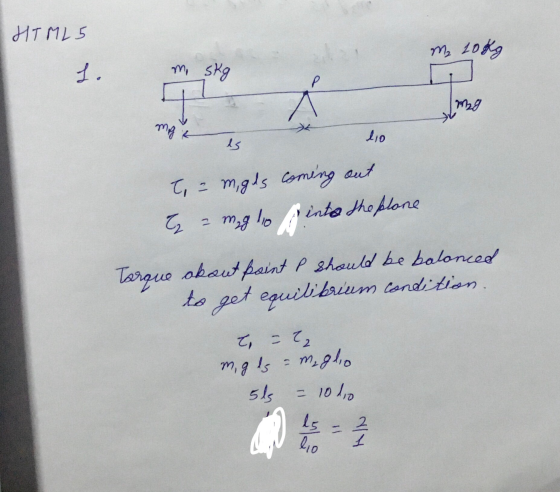
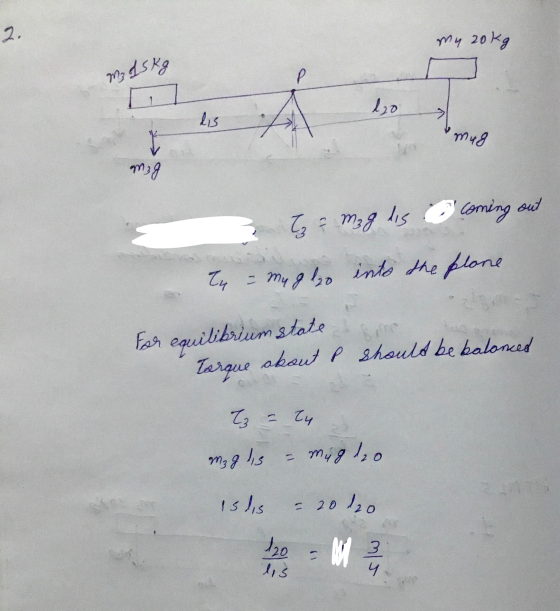
Add Answer to:
Balancing Act (HTML5) Start the “Balancing Act” simulation (opens in a new window). Show Mass Labels...
Show Mass Labels O Forces from Objects O Level Position None O Rulers O Marks Bricks...
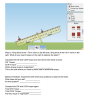 Show Mass Labels O Forces from Objects O Level Position None O Rulers O Marks Bricks 5 kg 10 kg 0.25 0.5 0.75 1 1.25 1.5 1.75 2 Meters 15 kg 20 kg 2 1.75 1.5 1.25 1 0.75 0,5 0.25 Meters Place a 10-kg brick at the 1.75-m mark on the left and a 5-kg brick at the 0.5-m mark on the right. What do you need to place on the right to balance the beam? Calculate the CW...
Balance Lab (Part 1) Explore the "Balance Lab" section of the Balancing Act simulation. 4. Create...
 Balance Lab (Part 1) Explore the "Balance Lab" section of the Balancing Act simulation. 4. Create a situation in which the beam is balanced (without the supports) while there is a single collection of bricks on one side of the pivot and two different collections of bricks on the other side (3 collections of bricks in total in the experiment). Draw the situation on the figure below while making sure to label the masses and the distance to each mass...
Name: Date: Balance Lab (Part 1) Explore the "Balance Lab” section of the Balancing Act simulation....
 Name: Date: Balance Lab (Part 1) Explore the "Balance Lab” section of the Balancing Act simulation. 4. Create a situation in which the beam is balanced (without the supports) while there is a single collection of bricks on one side of the pivot and two different collections of bricks on the other side (3 collections of bricks in total in the experiment). Draw the situation on the figure below while making sure to label the masses and the distance to...
Can you help finish drawing the free body diagram for question #5? Also I need help...
 Can you help finish drawing the free body diagram for question
#5?
Also I need help with #6 for calculating torque and filling in
the table.
I will rate thank you!
Name: Balance Lab (Part 1) Date: Explore the "Balance Lab" section of the Balancing Act simulation. 4. Create a situation in which the beam is balanced (without the supports) while there is a single collection of bricks on one side of the pivot and two different collections of bricks...
Can you help finish drawing the free body diagram for question
#5?
Also I need help with #6 for calculating torque and filling in
the table.
I will rate thank you!
Name: Balance Lab (Part 1) Date: Explore the "Balance Lab" section of the Balancing Act simulation. 4. Create a situation in which the beam is balanced (without the supports) while there is a single collection of bricks on one side of the pivot and two different collections of bricks...
a simulation was used to recreate the lab. Toys for a Torque Weighted Ruler 1. Set...
 a simulation was used to recreate the lab.
Toys for a Torque Weighted Ruler 1. Set up a balanced weighted ruler system with two different known masses suspended in cradles at different positions on the same side of the meter stick, balanced by a third unknown weight, warunk on the other side, keeping the pivot at the center of the ruler. Weigh the hanging scales, clips, and masses. You will use torques to determine the weight of the unknown, Wink....
a simulation was used to recreate the lab.
Toys for a Torque Weighted Ruler 1. Set up a balanced weighted ruler system with two different known masses suspended in cradles at different positions on the same side of the meter stick, balanced by a third unknown weight, warunk on the other side, keeping the pivot at the center of the ruler. Weigh the hanging scales, clips, and masses. You will use torques to determine the weight of the unknown, Wink....
Procedure 1, 2, 3 Mass of a clamp: 21.5 True mass of meter stick: _133.6 g...
 Procedure 1, 2, 3 Mass of a clamp: 21.5 True mass of meter stick: _133.6 g Center of mass of meter stick: _50 cm True weight of unknown mass: _212.99_ Procedure 4 Position of the 100-g mass: 10.0 cm Position of equilibrium: _30.9 cm Mass of the stick from method of torques: Procedure 5 Position of the 100-g mass: 10.0 cm Position of the 200-g mass: _90.0 cm Position of equilibrium of meter stick: Procedure 6 Position of unknown mass...
VSC Open the normal table (opens in a new window) and use it to answer the...
 VSC Open the normal table (opens in a new window) and use it to answer the following questions. 1. As the 2-scores go up in value, from -3.49 to 3.49, what do you notice about the about the areas? The areas get larger • as the Z-scores increase. 2. What is the area to the left of z = 0? Area - 0.50 3. If the total area under the curve is equal to 1, what is the area to...
 Show Mass Labels O Forces from Objects O Level Position None O Rulers O Marks Bricks 5 kg 10 kg 0.25 0.5 0.75 1 1.25 1.5 1.75 2 Meters 15 kg 20 kg 2 1.75 1.5 1.25 1 0.75 0,5 0.25 Meters Place a 10-kg brick at the 1.75-m mark on the left and a 5-kg brick at the 0.5-m mark on the right. What do you need to place on the right to balance the beam? Calculate the CW...
 Balance Lab (Part 1) Explore the "Balance Lab" section of the Balancing Act simulation. 4. Create a situation in which the beam is balanced (without the supports) while there is a single collection of bricks on one side of the pivot and two different collections of bricks on the other side (3 collections of bricks in total in the experiment). Draw the situation on the figure below while making sure to label the masses and the distance to each mass...
 Name: Date: Balance Lab (Part 1) Explore the "Balance Lab” section of the Balancing Act simulation. 4. Create a situation in which the beam is balanced (without the supports) while there is a single collection of bricks on one side of the pivot and two different collections of bricks on the other side (3 collections of bricks in total in the experiment). Draw the situation on the figure below while making sure to label the masses and the distance to...
 Can you help finish drawing the free body diagram for question
#5?
Also I need help with #6 for calculating torque and filling in
the table.
I will rate thank you!
Name: Balance Lab (Part 1) Date: Explore the "Balance Lab" section of the Balancing Act simulation. 4. Create a situation in which the beam is balanced (without the supports) while there is a single collection of bricks on one side of the pivot and two different collections of bricks...
Can you help finish drawing the free body diagram for question
#5?
Also I need help with #6 for calculating torque and filling in
the table.
I will rate thank you!
Name: Balance Lab (Part 1) Date: Explore the "Balance Lab" section of the Balancing Act simulation. 4. Create a situation in which the beam is balanced (without the supports) while there is a single collection of bricks on one side of the pivot and two different collections of bricks...
 a simulation was used to recreate the lab.
Toys for a Torque Weighted Ruler 1. Set up a balanced weighted ruler system with two different known masses suspended in cradles at different positions on the same side of the meter stick, balanced by a third unknown weight, warunk on the other side, keeping the pivot at the center of the ruler. Weigh the hanging scales, clips, and masses. You will use torques to determine the weight of the unknown, Wink....
a simulation was used to recreate the lab.
Toys for a Torque Weighted Ruler 1. Set up a balanced weighted ruler system with two different known masses suspended in cradles at different positions on the same side of the meter stick, balanced by a third unknown weight, warunk on the other side, keeping the pivot at the center of the ruler. Weigh the hanging scales, clips, and masses. You will use torques to determine the weight of the unknown, Wink....
 Procedure 1, 2, 3 Mass of a clamp: 21.5 True mass of meter stick: _133.6 g Center of mass of meter stick: _50 cm True weight of unknown mass: _212.99_ Procedure 4 Position of the 100-g mass: 10.0 cm Position of equilibrium: _30.9 cm Mass of the stick from method of torques: Procedure 5 Position of the 100-g mass: 10.0 cm Position of the 200-g mass: _90.0 cm Position of equilibrium of meter stick: Procedure 6 Position of unknown mass...
 VSC Open the normal table (opens in a new window) and use it to answer the following questions. 1. As the 2-scores go up in value, from -3.49 to 3.49, what do you notice about the about the areas? The areas get larger • as the Z-scores increase. 2. What is the area to the left of z = 0? Area - 0.50 3. If the total area under the curve is equal to 1, what is the area to...
Most questions answered within 3 hours.
-
Where is the error in this code sequence?
String s1 = "Hello";
String s2 = "ello";...
asked 10 months ago -
Financial data for Joel de Paris, Inc., for last year
follow:
Joel de Paris, Inc.
Balance...
asked 10 months ago -
Consider this reaction:
Al2(SO4)3 (aq)+ BaCl3
(aq) Al2Cl6 (aq)- +
3BaSO4(s) . What is the...
asked 10 months ago -
Suppose that Savneet is considering increasing her
recent random sample from 20 car rentals to 40...
asked 10 months ago -
Trucks arrive at an unloading terminal at an average rate of 120
per hour.
Trucks arrive...
asked 10 months ago -
Why are methanol and ethanol completely soluble in water while
octanol is not very little soluble....
asked 10 months ago -
A facilities manager at a university reads in a research report
that the mean amount of...
asked 10 months ago -
When the CuSO4 is rehydrated by adding water to the anhydrous
compound, is this an endothermic...
asked 10 months ago -
A ray of sunlight is passing from diamond into crown glass; the
angle of incidence is...
asked 10 months ago -
A block of mass 0.249 kg is placed on top of a light, vertical
spring of...
asked 10 months ago -
how do the kidneys compensate in the presences of acidosis
a) trigger hyperventilate
b) reserve acid...
asked 10 months ago -
Question 501 pts
The rental rate of capital to the firm increases. Which of the
following...
asked 10 months ago