
Homework Answers

Add Answer to:
Exercise 4.10 Analyze the NAND-NOR network shown in Figure 4.21. Obtain switching expressions for the outputs....
(3) Use LTSPice to obtain the y parameters for the resistive network shown in Figure 11.7 (4) Using the defining expressions for the y parameters, compute the currents I, and I which should flow in t...
 (3) Use LTSPice to obtain the y parameters for the resistive network shown in Figure 11.7 (4) Using the defining expressions for the y parameters, compute the currents I, and I which should flow in the network of Figure 11.7 if port voltages of Vi 5 VDC and V2- 15 VDC are applied. (5) Use LTSPice to confirm your calculations from step (4) VW FIGURE 11.7 Resistive two-port network for Prelab and Procedure
(3) Use LTSPice to obtain the y...
(3) Use LTSPice to obtain the y parameters for the resistive network shown in Figure 11.7 (4) Using the defining expressions for the y parameters, compute the currents I, and I which should flow in the network of Figure 11.7 if port voltages of Vi 5 VDC and V2- 15 VDC are applied. (5) Use LTSPice to confirm your calculations from step (4) VW FIGURE 11.7 Resistive two-port network for Prelab and Procedure
(3) Use LTSPice to obtain the y...
Analyze the network shown in Figure 1 to determine the value of each of the labeled...
 Analyze the network shown in Figure 1 to determine the value of
each of the labeled variables, V1, V3, V6, I2, I4, I5.
R6 I. R, Olut R, Figure 1. Schematic of network under test. The parameter values are Vin-51
Analyze the network shown in Figure 1 to determine the value of
each of the labeled variables, V1, V3, V6, I2, I4, I5.
R6 I. R, Olut R, Figure 1. Schematic of network under test. The parameter values are Vin-51
full coding with answer 3. Application: Telephone Switching Networks In a directly connected telephone network, all...
 full coding with answer
3. Application: Telephone Switching Networks In a directly connected telephone network, all telephones are connected and don't require a central switching station to establish calls between two telephones. For example, financial institutions on Wall Street use this type of network to maintain continuously open phone lines between firms. The number of lines needed to maintain a directly connected network for n telephones is given by this formula: lines n(n-1)/2 For example, connecting four telephones requires six...
full coding with answer
3. Application: Telephone Switching Networks In a directly connected telephone network, all telephones are connected and don't require a central switching station to establish calls between two telephones. For example, financial institutions on Wall Street use this type of network to maintain continuously open phone lines between firms. The number of lines needed to maintain a directly connected network for n telephones is given by this formula: lines n(n-1)/2 For example, connecting four telephones requires six...
3. (a) Find the h-parameters for the 2-port network shown in Figure 3. (b) Obtain the...
 3. (a) Find the h-parameters for the 2-port network shown in Figure 3. (b) Obtain the impedance Z111(s) between the terminal 1-1' when Z1 Z2 = Z3 = 1 and Z4 = 1 and a resistor R= 1N is connected between the terminals 2-2. I I, 1 2 + + V, ZA v 12 "I 2 23 Figure 3.
5. Figure 5 shows an electrical network, i) obtain the differential equations of the network and nofind the tran...
 5. Figure 5 shows an electrical network, i) obtain the differential equations of the network and nofind the transfer function F(s) show that the same transfer function is obtained 12(s)/Vin(s); ii) Analyse the circuit in the s-domain and R. C i2(t) Vin(t) L Figure 5. Electrical Network 4. Find the transfer function X2(s)/F(s) of the spring-mass system shown in Figure 4. The system moves over a frictionless surface. h M2 M1 Figure 4. A 2 DOF spring-mass system over a...
Figure 4. (a) The equivalent resistance of the network shown in figure 4(A) is 2KΩ. (True,...
 Figure 4. (a) The equivalent
resistance of the network shown in figure 4(A) is 2KΩ. (True,
False)
b) The equivalent resistance of the network shown in figure 4(B)
is 27/17Ω [Hint see figure 4(B) and]
(B) 1 ΚΩ 1 ΚΩ 1 ΚΩ - R2 w c 1.00 + 3100 im IR 3.00 7 Figure 4: 4. (a) The equivalent resistance of the network shown in figure 4(A) is 2K12 (True, False) (b) The equivalent resistance of the network shown in...
Figure 4. (a) The equivalent
resistance of the network shown in figure 4(A) is 2KΩ. (True,
False)
b) The equivalent resistance of the network shown in figure 4(B)
is 27/17Ω [Hint see figure 4(B) and]
(B) 1 ΚΩ 1 ΚΩ 1 ΚΩ - R2 w c 1.00 + 3100 im IR 3.00 7 Figure 4: 4. (a) The equivalent resistance of the network shown in figure 4(A) is 2K12 (True, False) (b) The equivalent resistance of the network shown in...
i About Exercise 9.5.8 For the circuit shown in the figure above: Obtain an expression for...
 i About Exercise 9.5.8 For the circuit shown in the figure above: Obtain an expression for H (u) = Ve /V, in standard form. Generate spectral plots for the magnitude and phase of H(w), given that R 1000. L 0.1 mH, and C 1/LF. Determine the cutoff frequency we and the slope of the magnitude (in dB) when w/w, 》 1. Feedback?
3. (E11.7) For the network shown in Figure 2 the initial weights and biases are chosen to be w1(0...
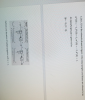 3. (E11.7) For the network shown in Figure 2 the initial weights and biases are chosen to be w1(0)-1, b (0) 1, w (0)2, ba (0) 1 An input/target pair is given to be Inputs Tan-Sigmoid Layer Tan-Sigmoid Layer Perform one iteration of backpropagation with a 1.
3. (E11.7) For the network shown in Figure 2 the initial weights and biases are chosen to be w1(0)-1, b (0) 1, w (0)2, ba (0) 1 An input/target pair is given to...
3. (E11.7) For the network shown in Figure 2 the initial weights and biases are chosen to be w1(0)-1, b (0) 1, w (0)2, ba (0) 1 An input/target pair is given to be Inputs Tan-Sigmoid Layer Tan-Sigmoid Layer Perform one iteration of backpropagation with a 1.
3. (E11.7) For the network shown in Figure 2 the initial weights and biases are chosen to be w1(0)-1, b (0) 1, w (0)2, ba (0) 1 An input/target pair is given to...
Exercise 3 Consider a 2 generator 4 bus power system shown in Figure E3. The impedance data of the network in p.u. are given in Figure E3. A bolted symmetrical three phase fault occurs at bus 4. Assu...
 Exercise 3 Consider a 2 generator 4 bus power system shown in Figure E3. The impedance data of the network in p.u. are given in Figure E3. A bolted symmetrical three phase fault occurs at bus 4. Assuming the prefault bus voltages as I p.u., calculate the fault current and the current delivered by the generators during the fault and the bus voltages during the fault. j0.12 0.05 0.16 j0.18 j0.12 0.15 0.05 j0.12 j0.1 j0.14 4 (2 Figure E3:...
Find Vx in the network shown in the given figure, where P = 8<50° V. Please...
 Find Vx in the network
shown in the given figure, where P = 8<50° V. Please
report your answer so the magnitude is positive and all angles are
in the range of negative 180 degrees to positive 180 degrees.
Find V, in the network shown in the given figure, where P = 8/50° V. Please report your answer so the magnitude is positive and all angles are in the range of negative 180 degrees to positive 180 degrees. j1Ω 2...
Find Vx in the network
shown in the given figure, where P = 8<50° V. Please
report your answer so the magnitude is positive and all angles are
in the range of negative 180 degrees to positive 180 degrees.
Find V, in the network shown in the given figure, where P = 8/50° V. Please report your answer so the magnitude is positive and all angles are in the range of negative 180 degrees to positive 180 degrees. j1Ω 2...
 (3) Use LTSPice to obtain the y parameters for the resistive network shown in Figure 11.7 (4) Using the defining expressions for the y parameters, compute the currents I, and I which should flow in the network of Figure 11.7 if port voltages of Vi 5 VDC and V2- 15 VDC are applied. (5) Use LTSPice to confirm your calculations from step (4) VW FIGURE 11.7 Resistive two-port network for Prelab and Procedure
(3) Use LTSPice to obtain the y...
(3) Use LTSPice to obtain the y parameters for the resistive network shown in Figure 11.7 (4) Using the defining expressions for the y parameters, compute the currents I, and I which should flow in the network of Figure 11.7 if port voltages of Vi 5 VDC and V2- 15 VDC are applied. (5) Use LTSPice to confirm your calculations from step (4) VW FIGURE 11.7 Resistive two-port network for Prelab and Procedure
(3) Use LTSPice to obtain the y...
 Analyze the network shown in Figure 1 to determine the value of
each of the labeled variables, V1, V3, V6, I2, I4, I5.
R6 I. R, Olut R, Figure 1. Schematic of network under test. The parameter values are Vin-51
Analyze the network shown in Figure 1 to determine the value of
each of the labeled variables, V1, V3, V6, I2, I4, I5.
R6 I. R, Olut R, Figure 1. Schematic of network under test. The parameter values are Vin-51
 full coding with answer
3. Application: Telephone Switching Networks In a directly connected telephone network, all telephones are connected and don't require a central switching station to establish calls between two telephones. For example, financial institutions on Wall Street use this type of network to maintain continuously open phone lines between firms. The number of lines needed to maintain a directly connected network for n telephones is given by this formula: lines n(n-1)/2 For example, connecting four telephones requires six...
full coding with answer
3. Application: Telephone Switching Networks In a directly connected telephone network, all telephones are connected and don't require a central switching station to establish calls between two telephones. For example, financial institutions on Wall Street use this type of network to maintain continuously open phone lines between firms. The number of lines needed to maintain a directly connected network for n telephones is given by this formula: lines n(n-1)/2 For example, connecting four telephones requires six...
 3. (a) Find the h-parameters for the 2-port network shown in Figure 3. (b) Obtain the impedance Z111(s) between the terminal 1-1' when Z1 Z2 = Z3 = 1 and Z4 = 1 and a resistor R= 1N is connected between the terminals 2-2. I I, 1 2 + + V, ZA v 12 "I 2 23 Figure 3.
 5. Figure 5 shows an electrical network, i) obtain the differential equations of the network and nofind the transfer function F(s) show that the same transfer function is obtained 12(s)/Vin(s); ii) Analyse the circuit in the s-domain and R. C i2(t) Vin(t) L Figure 5. Electrical Network 4. Find the transfer function X2(s)/F(s) of the spring-mass system shown in Figure 4. The system moves over a frictionless surface. h M2 M1 Figure 4. A 2 DOF spring-mass system over a...
 Figure 4. (a) The equivalent
resistance of the network shown in figure 4(A) is 2KΩ. (True,
False)
b) The equivalent resistance of the network shown in figure 4(B)
is 27/17Ω [Hint see figure 4(B) and]
(B) 1 ΚΩ 1 ΚΩ 1 ΚΩ - R2 w c 1.00 + 3100 im IR 3.00 7 Figure 4: 4. (a) The equivalent resistance of the network shown in figure 4(A) is 2K12 (True, False) (b) The equivalent resistance of the network shown in...
Figure 4. (a) The equivalent
resistance of the network shown in figure 4(A) is 2KΩ. (True,
False)
b) The equivalent resistance of the network shown in figure 4(B)
is 27/17Ω [Hint see figure 4(B) and]
(B) 1 ΚΩ 1 ΚΩ 1 ΚΩ - R2 w c 1.00 + 3100 im IR 3.00 7 Figure 4: 4. (a) The equivalent resistance of the network shown in figure 4(A) is 2K12 (True, False) (b) The equivalent resistance of the network shown in...
 i About Exercise 9.5.8 For the circuit shown in the figure above: Obtain an expression for H (u) = Ve /V, in standard form. Generate spectral plots for the magnitude and phase of H(w), given that R 1000. L 0.1 mH, and C 1/LF. Determine the cutoff frequency we and the slope of the magnitude (in dB) when w/w, 》 1. Feedback?
 3. (E11.7) For the network shown in Figure 2 the initial weights and biases are chosen to be w1(0)-1, b (0) 1, w (0)2, ba (0) 1 An input/target pair is given to be Inputs Tan-Sigmoid Layer Tan-Sigmoid Layer Perform one iteration of backpropagation with a 1.
3. (E11.7) For the network shown in Figure 2 the initial weights and biases are chosen to be w1(0)-1, b (0) 1, w (0)2, ba (0) 1 An input/target pair is given to...
3. (E11.7) For the network shown in Figure 2 the initial weights and biases are chosen to be w1(0)-1, b (0) 1, w (0)2, ba (0) 1 An input/target pair is given to be Inputs Tan-Sigmoid Layer Tan-Sigmoid Layer Perform one iteration of backpropagation with a 1.
3. (E11.7) For the network shown in Figure 2 the initial weights and biases are chosen to be w1(0)-1, b (0) 1, w (0)2, ba (0) 1 An input/target pair is given to...
 Exercise 3 Consider a 2 generator 4 bus power system shown in Figure E3. The impedance data of the network in p.u. are given in Figure E3. A bolted symmetrical three phase fault occurs at bus 4. Assuming the prefault bus voltages as I p.u., calculate the fault current and the current delivered by the generators during the fault and the bus voltages during the fault. j0.12 0.05 0.16 j0.18 j0.12 0.15 0.05 j0.12 j0.1 j0.14 4 (2 Figure E3:...
 Find Vx in the network
shown in the given figure, where P = 8<50° V. Please
report your answer so the magnitude is positive and all angles are
in the range of negative 180 degrees to positive 180 degrees.
Find V, in the network shown in the given figure, where P = 8/50° V. Please report your answer so the magnitude is positive and all angles are in the range of negative 180 degrees to positive 180 degrees. j1Ω 2...
Find Vx in the network
shown in the given figure, where P = 8<50° V. Please
report your answer so the magnitude is positive and all angles are
in the range of negative 180 degrees to positive 180 degrees.
Find V, in the network shown in the given figure, where P = 8/50° V. Please report your answer so the magnitude is positive and all angles are in the range of negative 180 degrees to positive 180 degrees. j1Ω 2...
Most questions answered within 3 hours.
-
Where is the error in this code sequence?
String s1 = "Hello";
String s2 = "ello";...
asked 10 months ago -
Financial data for Joel de Paris, Inc., for last year
follow:
Joel de Paris, Inc.
Balance...
asked 10 months ago -
Consider this reaction:
Al2(SO4)3 (aq)+ BaCl3
(aq) Al2Cl6 (aq)- +
3BaSO4(s) . What is the...
asked 10 months ago -
Suppose that Savneet is considering increasing her
recent random sample from 20 car rentals to 40...
asked 10 months ago -
Trucks arrive at an unloading terminal at an average rate of 120
per hour.
Trucks arrive...
asked 10 months ago -
Why are methanol and ethanol completely soluble in water while
octanol is not very little soluble....
asked 10 months ago -
A facilities manager at a university reads in a research report
that the mean amount of...
asked 10 months ago -
When the CuSO4 is rehydrated by adding water to the anhydrous
compound, is this an endothermic...
asked 10 months ago -
A ray of sunlight is passing from diamond into crown glass; the
angle of incidence is...
asked 10 months ago -
A block of mass 0.249 kg is placed on top of a light, vertical
spring of...
asked 10 months ago -
how do the kidneys compensate in the presences of acidosis
a) trigger hyperventilate
b) reserve acid...
asked 10 months ago -
Question 501 pts
The rental rate of capital to the firm increases. Which of the
following...
asked 10 months ago