

Homework Answers
Add Answer to:
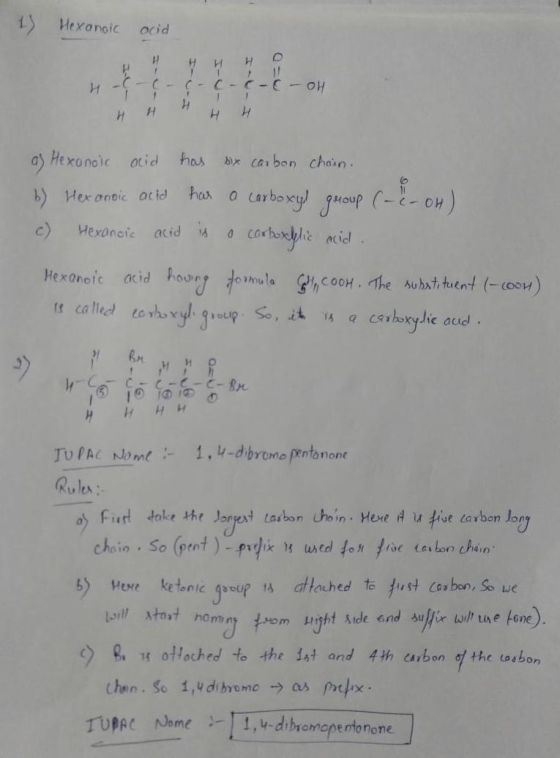
Select all that is true regarding hexanoic acid. Its a primary alcohol It contains the carboxyl...
Which of the following functional groups is present in this molecule (select all that apply): primary...
 Which of the following functional groups is present in this molecule (select all that apply): primary amine secondary alcohol aldehyde tertiary alcohol primary alcohol ester carboxylic acid ketone ether aromatic group amide tertiary amine secondary amine
Ketone alcohol alcohol alkyne aldehyde alkene amide amine Melatonin Bromatic Review Constanta Part A Give the...
 Ketone alcohol alcohol alkyne aldehyde alkene amide amine Melatonin Bromatic Review Constanta Part A Give the IUPAC name of the ester shown. Carboxylic acid derivatives are organic compounds which the hydroxyl group of a carboxylic acid RCO-OH) is replaced with another group, such s an OR group (esters) or an-NH, NHR, + NR2 group (amides) determine the IUPAC name of an ester, follow he steps below 1. Name the R group of the COOR ester group as an alkyl group....
3) (6 pts) Draw a line structure of an organic molecule that contains exactly 12 carbons,...
 3) (6 pts) Draw a line structure of an organic molecule that contains exactly 12 carbons, five-membered ring an nitrogen atom, an ester group and a secondary alcohol group. Number all carbon atoms. Place an asterisk (*) next to any chiral carbons that may exist in the structure and state how many stereoisomers are possible for the molecule. # of chiral carbons: # of possible stereoisomers: 4) (6 pts) Draw a line structure of an organic molecule that contains 12...
Give the name for this molecule: CH₃ O CH2CH2CHCH2CH2-C-0-H pt 1 pt 3-methylhexanoic acid 1 pt...
 Give the name for this molecule: CH₃ O CH2CH2CHCH2CH2-C-0-H pt 1 pt 3-methylhexanoic acid 1 pt 1 pt Recheck 2nd attempt Incorrect Check spelling and punctuation. If these are correct then review the IUPAC rules for carboxylic acid nomenclature. carbon chain and a methyl substituent. The carboxyl carbon is designated as Cl.
21-Ketones are easily reduced to secondary alcohols. b- Primary CH, CCH, a-Secondary alcohol alcohol C- to...
 21-Ketones are easily reduced to secondary alcohols. b- Primary CH, CCH, a-Secondary alcohol alcohol C- to acetaldehyde acid d-to carboxylic 22-Ozonolysis of alkenes yields aa-ketones if one of the unsaturated carbon atoms is disubstituted b-alcohol C-carboxylic acid d-alkane 23-Aldehyde C=0 is more polarized than ketone C-0 because a-As in carbocations, more alkyl groups stabilize + character b-Ketone has more alkyl groups, stabilizing the C=0 carbon inductively cc- due to a and b d- none of the above 24-Aldehydes and unhindered...
Options for #2: Blank 1: [five/six/seven/eight/nine/ten/other] Blank 2: [pentane/hexane/heptane/octane/nonane/decane/other] Blank 3: [-alcohol/-ether/-ane/-ol/-other] Blank 4: - left...
 Options for #2:
Blank 1: [five/six/seven/eight/nine/ten/other]
Blank 2: [pentane/hexane/heptane/octane/nonane/decane/other]
Blank 3: [-alcohol/-ether/-ane/-ol/-other]
Blank 4:
- left to right
- right to left
- clockwise
- counterclockwise
- symmetrical
Blank 5:
- Yes, there is stereochemistry present and must be in the
name
- No, stereochemistry is not present
- No, stereochemistry is present but cannot be assigned
- No, assignable stereochemistry is present but not required in
the name
Question 1 2 pts only HO What functional groups other than...
Options for #2:
Blank 1: [five/six/seven/eight/nine/ten/other]
Blank 2: [pentane/hexane/heptane/octane/nonane/decane/other]
Blank 3: [-alcohol/-ether/-ane/-ol/-other]
Blank 4:
- left to right
- right to left
- clockwise
- counterclockwise
- symmetrical
Blank 5:
- Yes, there is stereochemistry present and must be in the
name
- No, stereochemistry is not present
- No, stereochemistry is present but cannot be assigned
- No, assignable stereochemistry is present but not required in
the name
Question 1 2 pts only HO What functional groups other than...
Options for #2: Options for #2: Blank 1: [five/six/seven/eight/nine/ten/other] Blank 2: [pentane/hexane/heptane/octane/nonane/decane/other] Blank 3: [-alcohol/-ether/-ane/-ol/-other] Blank...
 Options for #2:
Blank 1: [five/six/seven/eight/nine/ten/other]
Blank 2: [pentane/hexane/heptane/octane/nonane/decane/other]
Blank 3: [-alcohol/-ether/-ane/-ol/-other]
Blank 4:
- left to right
- right to left
- clockwise
- counterclockwise
- symmetrical
Blank 5:
- Yes, there is stereochemistry present and must be in the
name
- No, stereochemistry is not present
- No, stereochemistry is present but cannot be assigned
- No, assignable stereochemistry is present but not required in
the name
Question 4 3 pts OCH3 OH What functional...
Options for #2:
Options for #2:
Blank 1: [five/six/seven/eight/nine/ten/other]
Blank 2: [pentane/hexane/heptane/octane/nonane/decane/other]
Blank 3: [-alcohol/-ether/-ane/-ol/-other]
Blank 4:
- left to right
- right to left
- clockwise
- counterclockwise
- symmetrical
Blank 5:
- Yes, there is stereochemistry present and must be in the
name
- No, stereochemistry is not present
- No, stereochemistry is present but cannot be assigned
- No, assignable stereochemistry is present but not required in
the name
Question 4 3 pts OCH3 OH What functional...
select all compounds below that contain the carbonyl group 10. Select all that is true regarding...
 select all compounds below that contain the carbonyl
group
10. Select all that is true regarding the molecule shown: 6CH OH H5OH VA OH HY 34 OH OH its an aldohexose its a ketohexose its an alpha monosaccharide its a beta monosaccharide its its a reducing sugar o its not a reducing sugar
select all compounds below that contain the carbonyl
group
10. Select all that is true regarding the molecule shown: 6CH OH H5OH VA OH HY 34 OH OH its an aldohexose its a ketohexose its an alpha monosaccharide its a beta monosaccharide its its a reducing sugar o its not a reducing sugar
Questions 12-20 are true and false! (12) Hydrolysis of nitriles is a method to synthesize carboxylic...
 Questions 12-20 are true and false!
(12) Hydrolysis of nitriles is a method to synthesize carboxylic acid. (13) The order of reactivity of carboxylic acid derivatives is as follow: Acyl chloride > Acid anhydride > Ester > Amide. (14) SOCI2, PC13 and PCls are three types of special reagents to convert carboxylic acid to acyl chloride (15) Acyl chlorides are the most reactive common acyl derivatives, and can be used to synthesize anhydride, ester, and amide. (16) Acyl chloride is...
Questions 12-20 are true and false!
(12) Hydrolysis of nitriles is a method to synthesize carboxylic acid. (13) The order of reactivity of carboxylic acid derivatives is as follow: Acyl chloride > Acid anhydride > Ester > Amide. (14) SOCI2, PC13 and PCls are three types of special reagents to convert carboxylic acid to acyl chloride (15) Acyl chlorides are the most reactive common acyl derivatives, and can be used to synthesize anhydride, ester, and amide. (16) Acyl chloride is...
NEED HELP CHECKING ANSWERS What functional groups other than alkane/cycloalkane are present in the above molecule:...
 NEED HELP CHECKING ANSWERS
What functional groups other than alkane/cycloalkane are present
in the above molecule: alcohol and ether
Type the name of the functional group(s) in the given blanks, my
answers are bolded please check!
This molecule contains alcohol and
ether groups, the ether group
gets priority in the IUPAC name.
Part 2:
The main chain will contain ["five",
"six", "seven", "eight", "nine", "ten", "other"]
carbons and the base alkane name will be
["pentane", "hexane", "heptane", "octane",
"nonane",...
NEED HELP CHECKING ANSWERS
What functional groups other than alkane/cycloalkane are present
in the above molecule: alcohol and ether
Type the name of the functional group(s) in the given blanks, my
answers are bolded please check!
This molecule contains alcohol and
ether groups, the ether group
gets priority in the IUPAC name.
Part 2:
The main chain will contain ["five",
"six", "seven", "eight", "nine", "ten", "other"]
carbons and the base alkane name will be
["pentane", "hexane", "heptane", "octane",
"nonane",...
 Which of the following functional groups is present in this molecule (select all that apply): primary amine secondary alcohol aldehyde tertiary alcohol primary alcohol ester carboxylic acid ketone ether aromatic group amide tertiary amine secondary amine
 Ketone alcohol alcohol alkyne aldehyde alkene amide amine Melatonin Bromatic Review Constanta Part A Give the IUPAC name of the ester shown. Carboxylic acid derivatives are organic compounds which the hydroxyl group of a carboxylic acid RCO-OH) is replaced with another group, such s an OR group (esters) or an-NH, NHR, + NR2 group (amides) determine the IUPAC name of an ester, follow he steps below 1. Name the R group of the COOR ester group as an alkyl group....
 3) (6 pts) Draw a line structure of an organic molecule that contains exactly 12 carbons, five-membered ring an nitrogen atom, an ester group and a secondary alcohol group. Number all carbon atoms. Place an asterisk (*) next to any chiral carbons that may exist in the structure and state how many stereoisomers are possible for the molecule. # of chiral carbons: # of possible stereoisomers: 4) (6 pts) Draw a line structure of an organic molecule that contains 12...
 Give the name for this molecule: CH₃ O CH2CH2CHCH2CH2-C-0-H pt 1 pt 3-methylhexanoic acid 1 pt 1 pt Recheck 2nd attempt Incorrect Check spelling and punctuation. If these are correct then review the IUPAC rules for carboxylic acid nomenclature. carbon chain and a methyl substituent. The carboxyl carbon is designated as Cl.
 21-Ketones are easily reduced to secondary alcohols. b- Primary CH, CCH, a-Secondary alcohol alcohol C- to acetaldehyde acid d-to carboxylic 22-Ozonolysis of alkenes yields aa-ketones if one of the unsaturated carbon atoms is disubstituted b-alcohol C-carboxylic acid d-alkane 23-Aldehyde C=0 is more polarized than ketone C-0 because a-As in carbocations, more alkyl groups stabilize + character b-Ketone has more alkyl groups, stabilizing the C=0 carbon inductively cc- due to a and b d- none of the above 24-Aldehydes and unhindered...
 Options for #2:
Blank 1: [five/six/seven/eight/nine/ten/other]
Blank 2: [pentane/hexane/heptane/octane/nonane/decane/other]
Blank 3: [-alcohol/-ether/-ane/-ol/-other]
Blank 4:
- left to right
- right to left
- clockwise
- counterclockwise
- symmetrical
Blank 5:
- Yes, there is stereochemistry present and must be in the
name
- No, stereochemistry is not present
- No, stereochemistry is present but cannot be assigned
- No, assignable stereochemistry is present but not required in
the name
Question 1 2 pts only HO What functional groups other than...
Options for #2:
Blank 1: [five/six/seven/eight/nine/ten/other]
Blank 2: [pentane/hexane/heptane/octane/nonane/decane/other]
Blank 3: [-alcohol/-ether/-ane/-ol/-other]
Blank 4:
- left to right
- right to left
- clockwise
- counterclockwise
- symmetrical
Blank 5:
- Yes, there is stereochemistry present and must be in the
name
- No, stereochemistry is not present
- No, stereochemistry is present but cannot be assigned
- No, assignable stereochemistry is present but not required in
the name
Question 1 2 pts only HO What functional groups other than...
 Options for #2:
Blank 1: [five/six/seven/eight/nine/ten/other]
Blank 2: [pentane/hexane/heptane/octane/nonane/decane/other]
Blank 3: [-alcohol/-ether/-ane/-ol/-other]
Blank 4:
- left to right
- right to left
- clockwise
- counterclockwise
- symmetrical
Blank 5:
- Yes, there is stereochemistry present and must be in the
name
- No, stereochemistry is not present
- No, stereochemistry is present but cannot be assigned
- No, assignable stereochemistry is present but not required in
the name
Question 4 3 pts OCH3 OH What functional...
Options for #2:
Options for #2:
Blank 1: [five/six/seven/eight/nine/ten/other]
Blank 2: [pentane/hexane/heptane/octane/nonane/decane/other]
Blank 3: [-alcohol/-ether/-ane/-ol/-other]
Blank 4:
- left to right
- right to left
- clockwise
- counterclockwise
- symmetrical
Blank 5:
- Yes, there is stereochemistry present and must be in the
name
- No, stereochemistry is not present
- No, stereochemistry is present but cannot be assigned
- No, assignable stereochemistry is present but not required in
the name
Question 4 3 pts OCH3 OH What functional...
 select all compounds below that contain the carbonyl
group
10. Select all that is true regarding the molecule shown: 6CH OH H5OH VA OH HY 34 OH OH its an aldohexose its a ketohexose its an alpha monosaccharide its a beta monosaccharide its its a reducing sugar o its not a reducing sugar
select all compounds below that contain the carbonyl
group
10. Select all that is true regarding the molecule shown: 6CH OH H5OH VA OH HY 34 OH OH its an aldohexose its a ketohexose its an alpha monosaccharide its a beta monosaccharide its its a reducing sugar o its not a reducing sugar
 Questions 12-20 are true and false!
(12) Hydrolysis of nitriles is a method to synthesize carboxylic acid. (13) The order of reactivity of carboxylic acid derivatives is as follow: Acyl chloride > Acid anhydride > Ester > Amide. (14) SOCI2, PC13 and PCls are three types of special reagents to convert carboxylic acid to acyl chloride (15) Acyl chlorides are the most reactive common acyl derivatives, and can be used to synthesize anhydride, ester, and amide. (16) Acyl chloride is...
Questions 12-20 are true and false!
(12) Hydrolysis of nitriles is a method to synthesize carboxylic acid. (13) The order of reactivity of carboxylic acid derivatives is as follow: Acyl chloride > Acid anhydride > Ester > Amide. (14) SOCI2, PC13 and PCls are three types of special reagents to convert carboxylic acid to acyl chloride (15) Acyl chlorides are the most reactive common acyl derivatives, and can be used to synthesize anhydride, ester, and amide. (16) Acyl chloride is...
 NEED HELP CHECKING ANSWERS
What functional groups other than alkane/cycloalkane are present
in the above molecule: alcohol and ether
Type the name of the functional group(s) in the given blanks, my
answers are bolded please check!
This molecule contains alcohol and
ether groups, the ether group
gets priority in the IUPAC name.
Part 2:
The main chain will contain ["five",
"six", "seven", "eight", "nine", "ten", "other"]
carbons and the base alkane name will be
["pentane", "hexane", "heptane", "octane",
"nonane",...
NEED HELP CHECKING ANSWERS
What functional groups other than alkane/cycloalkane are present
in the above molecule: alcohol and ether
Type the name of the functional group(s) in the given blanks, my
answers are bolded please check!
This molecule contains alcohol and
ether groups, the ether group
gets priority in the IUPAC name.
Part 2:
The main chain will contain ["five",
"six", "seven", "eight", "nine", "ten", "other"]
carbons and the base alkane name will be
["pentane", "hexane", "heptane", "octane",
"nonane",...
Most questions answered within 3 hours.
-
Where is the error in this code sequence?
String s1 = "Hello";
String s2 = "ello";...
asked 10 months ago -
Financial data for Joel de Paris, Inc., for last year
follow:
Joel de Paris, Inc.
Balance...
asked 10 months ago -
Consider this reaction:
Al2(SO4)3 (aq)+ BaCl3
(aq) Al2Cl6 (aq)- +
3BaSO4(s) . What is the...
asked 10 months ago -
Suppose that Savneet is considering increasing her
recent random sample from 20 car rentals to 40...
asked 10 months ago -
Trucks arrive at an unloading terminal at an average rate of 120
per hour.
Trucks arrive...
asked 10 months ago -
Why are methanol and ethanol completely soluble in water while
octanol is not very little soluble....
asked 10 months ago -
A facilities manager at a university reads in a research report
that the mean amount of...
asked 10 months ago -
When the CuSO4 is rehydrated by adding water to the anhydrous
compound, is this an endothermic...
asked 10 months ago -
A ray of sunlight is passing from diamond into crown glass; the
angle of incidence is...
asked 10 months ago -
A block of mass 0.249 kg is placed on top of a light, vertical
spring of...
asked 10 months ago -
how do the kidneys compensate in the presences of acidosis
a) trigger hyperventilate
b) reserve acid...
asked 10 months ago -
Question 501 pts
The rental rate of capital to the firm increases. Which of the
following...
asked 10 months ago