I could really use help for question 1 and 2! Thank you in
advance :)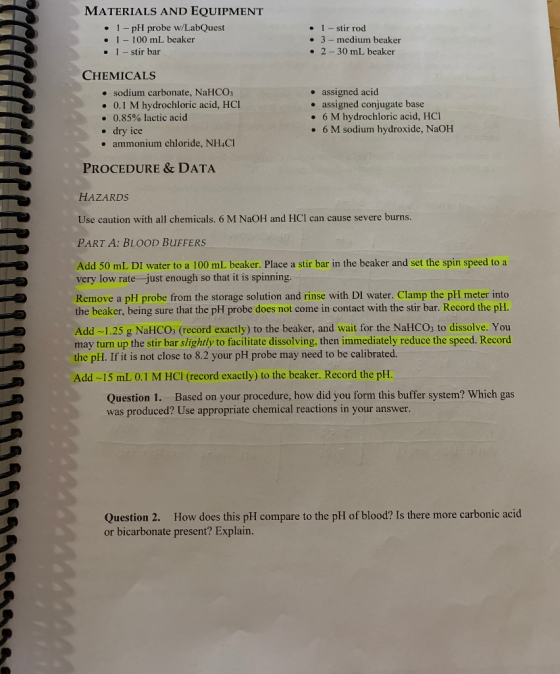
Homework Answers
The answer is attach below
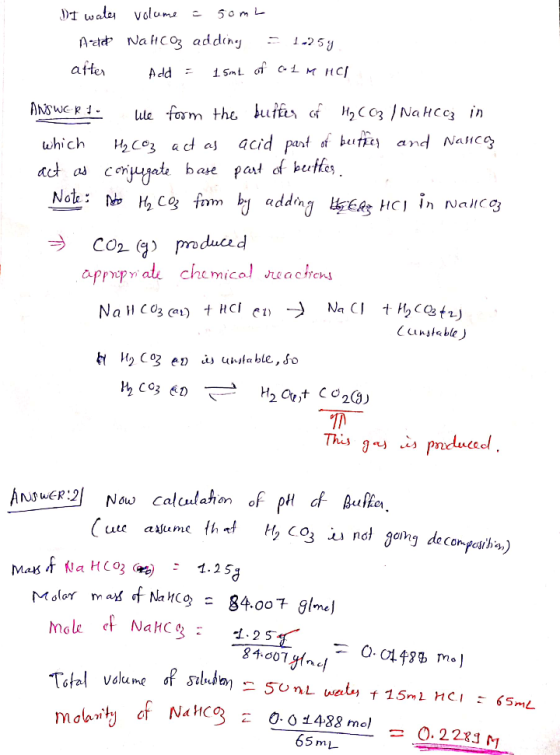
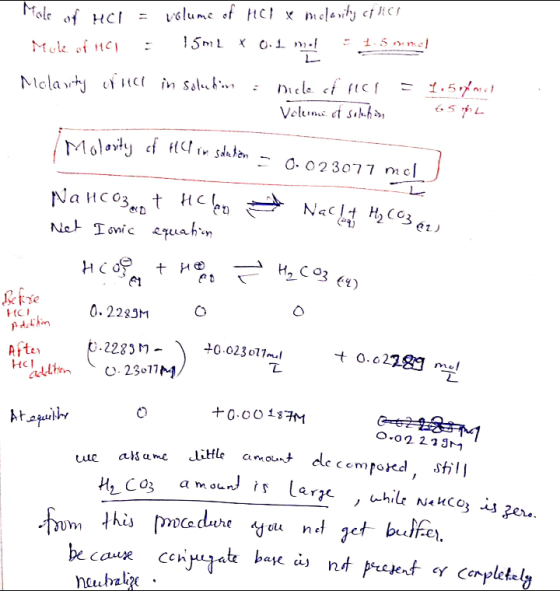
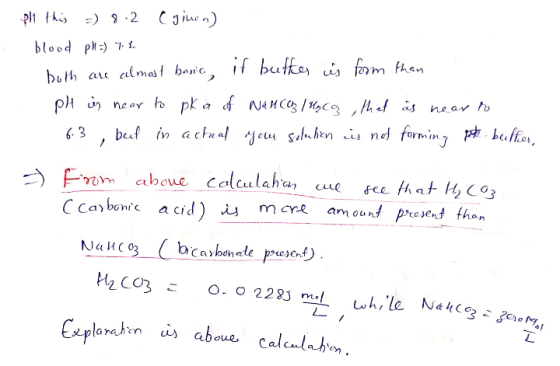
Add Answer to:
I could really use help for question 1 and 2! Thank you in
advance :)
MATERIALS...
Please help with the prelab questions! thank you!!!! Especially 2 and 3! Pre-Lab Questions 1. Calculate...
 Please help with the prelab questions! thank you!!!!
Especially 2 and 3!
Pre-Lab Questions 1. Calculate the theoretical equivalence point (the volume!) in terms of ml NaOH adde each of the titrations. Assume the concentration of acid is 0.81 M and the concentration of base is 0.51 M. 2. Which equation can be used to find the pH of a buffer? Calculate the pH of a buffer containing 0.20 M CH3COOH and 0.20 M CH3COONa. What is the pH after...
Please help with the prelab questions! thank you!!!!
Especially 2 and 3!
Pre-Lab Questions 1. Calculate the theoretical equivalence point (the volume!) in terms of ml NaOH adde each of the titrations. Assume the concentration of acid is 0.81 M and the concentration of base is 0.51 M. 2. Which equation can be used to find the pH of a buffer? Calculate the pH of a buffer containing 0.20 M CH3COOH and 0.20 M CH3COONa. What is the pH after...
Please help, I'm so confused!!!! This is due wednesday night!!! i'm gonna fail :(((( pH of...
 Please help, I'm so confused!!!! This is due wednesday night!!!
i'm gonna fail :((((
pH of Buffer Solutions Procedure: Acetic Acid-Sodium Acetate Buffer (pKa acetic acid = 4.75) Weigh about 3.5 g of Na2C2H302 3H2O, record the exact mass, and add to a 250 ml beaker. Measure exactly 8.8 mL of 3.0 M acetic acid (use 10 mL grad cylinder) and add to the beaker containing the sodium acetate. • Measure exactly 55.6 mL of distilled water and add to...
Please help, I'm so confused!!!! This is due wednesday night!!!
i'm gonna fail :((((
pH of Buffer Solutions Procedure: Acetic Acid-Sodium Acetate Buffer (pKa acetic acid = 4.75) Weigh about 3.5 g of Na2C2H302 3H2O, record the exact mass, and add to a 250 ml beaker. Measure exactly 8.8 mL of 3.0 M acetic acid (use 10 mL grad cylinder) and add to the beaker containing the sodium acetate. • Measure exactly 55.6 mL of distilled water and add to...
I need to know if I calculated the acetate buffer correctly & how to calculate the...
 I need to know if I calculated the acetate buffer correctly
& how to calculate the change in pH when HCl is added...
The following should be attached to this worksheet: 2 plots of volume vs. pH data. Data sheet stapled to back of DRA. 1. Calculate the pH of the acetate buffer. Show the calculation below. Calculation: Ho t t 419 [Cathoz ot pH= pkatlog HGH sos] ΠpH=4.745 + log NAH ** = 4.65 (0.2 m m 2....
I need to know if I calculated the acetate buffer correctly
& how to calculate the change in pH when HCl is added...
The following should be attached to this worksheet: 2 plots of volume vs. pH data. Data sheet stapled to back of DRA. 1. Calculate the pH of the acetate buffer. Show the calculation below. Calculation: Ho t t 419 [Cathoz ot pH= pkatlog HGH sos] ΠpH=4.745 + log NAH ** = 4.65 (0.2 m m 2....
I really need help with filling out the data table for part two. I've completed the...
 I
really need help with filling out the data table for part two. I've
completed the table for part one of the experiment.
I
really need help with filling out the data table for part two. I've
completed the table for part one of the experiment.
Procedure IMPORTANT SAFETY CONSIDERATIONS: Avoid getting NaOH on your skin. Should you come in contact with this chemical, immediately wash with water. Review all MSDS associated with this lab. Any broken or chipped glassware...
I
really need help with filling out the data table for part two. I've
completed the table for part one of the experiment.
I
really need help with filling out the data table for part two. I've
completed the table for part one of the experiment.
Procedure IMPORTANT SAFETY CONSIDERATIONS: Avoid getting NaOH on your skin. Should you come in contact with this chemical, immediately wash with water. Review all MSDS associated with this lab. Any broken or chipped glassware...
based on instructions please help me fill out chart Use appropriate safety precautions for working with...
 based on instructions please help me fill out chart
Use appropriate safety precautions for working with concentrated acids and bases. This includes splash-proof goggles, long pants, and closed-toe shoes. No eating, drinking, or chewing at any time in the laboratory. Part I: Comparing the Behavior of the Buffer with Distilled Water 1. Obtain a pH meter or probe. Make sure beakers are clean and dry. 2. Place 25 mL of distilled, deionized water in a clean dry 100-ml beaker. 3....
based on instructions please help me fill out chart
Use appropriate safety precautions for working with concentrated acids and bases. This includes splash-proof goggles, long pants, and closed-toe shoes. No eating, drinking, or chewing at any time in the laboratory. Part I: Comparing the Behavior of the Buffer with Distilled Water 1. Obtain a pH meter or probe. Make sure beakers are clean and dry. 2. Place 25 mL of distilled, deionized water in a clean dry 100-ml beaker. 3....
Properties of Buffers Lab. I need help with problems 7 & 8. They’re pretty similar, but...
 Properties of Buffers Lab.
I need help with problems 7 & 8. They’re pretty similar,
but I’m confused on whether I’m doing them right.
I need to calculate the moles of HCl and NaOH and then somehow
insert them into the log fraction in the Henderson Hasselbach
formula, is that right?
Procedure (values are needed in procedure):
Measured values during lab that I’ll be comparing #6/7/8
to:
Questions I need help with:
Part B Procedures: 1. Weigh about 3.5g of...
Properties of Buffers Lab.
I need help with problems 7 & 8. They’re pretty similar,
but I’m confused on whether I’m doing them right.
I need to calculate the moles of HCl and NaOH and then somehow
insert them into the log fraction in the Henderson Hasselbach
formula, is that right?
Procedure (values are needed in procedure):
Measured values during lab that I’ll be comparing #6/7/8
to:
Questions I need help with:
Part B Procedures: 1. Weigh about 3.5g of...
please help with my pre lab additional information Pre-Lab Questions: 1. What is the definition of...
 please help with my pre lab
additional information
Pre-Lab Questions: 1. What is the definition of an 'equivalence point' in an acid/base titration? (1 point) 2. In part one of the experiment, you will prepare the acid solutions being titrated from a stock solution. Describe how you will accurately prepare 10.00 mL of 0.100 M HCl solution using a 1.00 M HCI stock solution. In your response to this question, be very specific about the quantities of stock solution and...
please help with my pre lab
additional information
Pre-Lab Questions: 1. What is the definition of an 'equivalence point' in an acid/base titration? (1 point) 2. In part one of the experiment, you will prepare the acid solutions being titrated from a stock solution. Describe how you will accurately prepare 10.00 mL of 0.100 M HCl solution using a 1.00 M HCI stock solution. In your response to this question, be very specific about the quantities of stock solution and...
1. What is the definition of an 'equivalence point' in an acid/base titration? (1 point) 2....
 1. What is the definition of an 'equivalence point' in an acid/base titration? (1 point) 2. In part one of the experiment, you will prepare the acid solutions being titrated from a stock solution. Describe how you will accurately prepare 10.00 mL of 0.100 M HCl solution using a 1.00 M HCl stock solution. In your response to this question, be very specific about the quantities of stock solution and deionized water to be used in the dilution and the...
I really just need all the equations, please and thank you. MATERIALS: cene nitric acid, HNO,...
 I really just need all the equations, please and thank you.
MATERIALS: cene nitric acid, HNO, 3.0M sodium hydroxide, NaOH 6.0 M sulfuric acid, H2SO4 zine metal DI water PROCEDURE: Make sure you record detailed observations after almost every step. You will also need to write the balanced chemical equations for almost every step. Make sure you answer any questions associated with a step 1. Weigh approximately 0.5 g of copper metal and record the weight. Place the copper in...
I really just need all the equations, please and thank you.
MATERIALS: cene nitric acid, HNO, 3.0M sodium hydroxide, NaOH 6.0 M sulfuric acid, H2SO4 zine metal DI water PROCEDURE: Make sure you record detailed observations after almost every step. You will also need to write the balanced chemical equations for almost every step. Make sure you answer any questions associated with a step 1. Weigh approximately 0.5 g of copper metal and record the weight. Place the copper in...
Calculate the amount of heat energy, q, produced in each reaction. Use 1.03 g/mL for thedensity...
 Calculate the amount of heat energy, q, produced in each
reaction. Use 1.03 g/mL for thedensity of all solutions. Use the
specific heat of water, 4.18 J/(g•°C), for all solutions.
The temperature change in part 3 was 15.5 degrees celsius.
Temperature change in part 4 was -1.2 degrees celsius.
Then determine the enthalpy change for each reaction in terms of
kJ/mol of each reactant.
The molarity of NaOH is 2.0 M.
Part III Conduct the Reaction Between Solutions of NaOH...
Calculate the amount of heat energy, q, produced in each
reaction. Use 1.03 g/mL for thedensity of all solutions. Use the
specific heat of water, 4.18 J/(g•°C), for all solutions.
The temperature change in part 3 was 15.5 degrees celsius.
Temperature change in part 4 was -1.2 degrees celsius.
Then determine the enthalpy change for each reaction in terms of
kJ/mol of each reactant.
The molarity of NaOH is 2.0 M.
Part III Conduct the Reaction Between Solutions of NaOH...
 Please help with the prelab questions! thank you!!!!
Especially 2 and 3!
Pre-Lab Questions 1. Calculate the theoretical equivalence point (the volume!) in terms of ml NaOH adde each of the titrations. Assume the concentration of acid is 0.81 M and the concentration of base is 0.51 M. 2. Which equation can be used to find the pH of a buffer? Calculate the pH of a buffer containing 0.20 M CH3COOH and 0.20 M CH3COONa. What is the pH after...
Please help with the prelab questions! thank you!!!!
Especially 2 and 3!
Pre-Lab Questions 1. Calculate the theoretical equivalence point (the volume!) in terms of ml NaOH adde each of the titrations. Assume the concentration of acid is 0.81 M and the concentration of base is 0.51 M. 2. Which equation can be used to find the pH of a buffer? Calculate the pH of a buffer containing 0.20 M CH3COOH and 0.20 M CH3COONa. What is the pH after...
 Please help, I'm so confused!!!! This is due wednesday night!!!
i'm gonna fail :((((
pH of Buffer Solutions Procedure: Acetic Acid-Sodium Acetate Buffer (pKa acetic acid = 4.75) Weigh about 3.5 g of Na2C2H302 3H2O, record the exact mass, and add to a 250 ml beaker. Measure exactly 8.8 mL of 3.0 M acetic acid (use 10 mL grad cylinder) and add to the beaker containing the sodium acetate. • Measure exactly 55.6 mL of distilled water and add to...
Please help, I'm so confused!!!! This is due wednesday night!!!
i'm gonna fail :((((
pH of Buffer Solutions Procedure: Acetic Acid-Sodium Acetate Buffer (pKa acetic acid = 4.75) Weigh about 3.5 g of Na2C2H302 3H2O, record the exact mass, and add to a 250 ml beaker. Measure exactly 8.8 mL of 3.0 M acetic acid (use 10 mL grad cylinder) and add to the beaker containing the sodium acetate. • Measure exactly 55.6 mL of distilled water and add to...
 I need to know if I calculated the acetate buffer correctly
& how to calculate the change in pH when HCl is added...
The following should be attached to this worksheet: 2 plots of volume vs. pH data. Data sheet stapled to back of DRA. 1. Calculate the pH of the acetate buffer. Show the calculation below. Calculation: Ho t t 419 [Cathoz ot pH= pkatlog HGH sos] ΠpH=4.745 + log NAH ** = 4.65 (0.2 m m 2....
I need to know if I calculated the acetate buffer correctly
& how to calculate the change in pH when HCl is added...
The following should be attached to this worksheet: 2 plots of volume vs. pH data. Data sheet stapled to back of DRA. 1. Calculate the pH of the acetate buffer. Show the calculation below. Calculation: Ho t t 419 [Cathoz ot pH= pkatlog HGH sos] ΠpH=4.745 + log NAH ** = 4.65 (0.2 m m 2....
 I
really need help with filling out the data table for part two. I've
completed the table for part one of the experiment.
I
really need help with filling out the data table for part two. I've
completed the table for part one of the experiment.
Procedure IMPORTANT SAFETY CONSIDERATIONS: Avoid getting NaOH on your skin. Should you come in contact with this chemical, immediately wash with water. Review all MSDS associated with this lab. Any broken or chipped glassware...
I
really need help with filling out the data table for part two. I've
completed the table for part one of the experiment.
I
really need help with filling out the data table for part two. I've
completed the table for part one of the experiment.
Procedure IMPORTANT SAFETY CONSIDERATIONS: Avoid getting NaOH on your skin. Should you come in contact with this chemical, immediately wash with water. Review all MSDS associated with this lab. Any broken or chipped glassware...
 based on instructions please help me fill out chart
Use appropriate safety precautions for working with concentrated acids and bases. This includes splash-proof goggles, long pants, and closed-toe shoes. No eating, drinking, or chewing at any time in the laboratory. Part I: Comparing the Behavior of the Buffer with Distilled Water 1. Obtain a pH meter or probe. Make sure beakers are clean and dry. 2. Place 25 mL of distilled, deionized water in a clean dry 100-ml beaker. 3....
based on instructions please help me fill out chart
Use appropriate safety precautions for working with concentrated acids and bases. This includes splash-proof goggles, long pants, and closed-toe shoes. No eating, drinking, or chewing at any time in the laboratory. Part I: Comparing the Behavior of the Buffer with Distilled Water 1. Obtain a pH meter or probe. Make sure beakers are clean and dry. 2. Place 25 mL of distilled, deionized water in a clean dry 100-ml beaker. 3....
 Properties of Buffers Lab.
I need help with problems 7 & 8. They’re pretty similar,
but I’m confused on whether I’m doing them right.
I need to calculate the moles of HCl and NaOH and then somehow
insert them into the log fraction in the Henderson Hasselbach
formula, is that right?
Procedure (values are needed in procedure):
Measured values during lab that I’ll be comparing #6/7/8
to:
Questions I need help with:
Part B Procedures: 1. Weigh about 3.5g of...
Properties of Buffers Lab.
I need help with problems 7 & 8. They’re pretty similar,
but I’m confused on whether I’m doing them right.
I need to calculate the moles of HCl and NaOH and then somehow
insert them into the log fraction in the Henderson Hasselbach
formula, is that right?
Procedure (values are needed in procedure):
Measured values during lab that I’ll be comparing #6/7/8
to:
Questions I need help with:
Part B Procedures: 1. Weigh about 3.5g of...
 please help with my pre lab
additional information
Pre-Lab Questions: 1. What is the definition of an 'equivalence point' in an acid/base titration? (1 point) 2. In part one of the experiment, you will prepare the acid solutions being titrated from a stock solution. Describe how you will accurately prepare 10.00 mL of 0.100 M HCl solution using a 1.00 M HCI stock solution. In your response to this question, be very specific about the quantities of stock solution and...
please help with my pre lab
additional information
Pre-Lab Questions: 1. What is the definition of an 'equivalence point' in an acid/base titration? (1 point) 2. In part one of the experiment, you will prepare the acid solutions being titrated from a stock solution. Describe how you will accurately prepare 10.00 mL of 0.100 M HCl solution using a 1.00 M HCI stock solution. In your response to this question, be very specific about the quantities of stock solution and...
 1. What is the definition of an 'equivalence point' in an acid/base titration? (1 point) 2. In part one of the experiment, you will prepare the acid solutions being titrated from a stock solution. Describe how you will accurately prepare 10.00 mL of 0.100 M HCl solution using a 1.00 M HCl stock solution. In your response to this question, be very specific about the quantities of stock solution and deionized water to be used in the dilution and the...
 I really just need all the equations, please and thank you.
MATERIALS: cene nitric acid, HNO, 3.0M sodium hydroxide, NaOH 6.0 M sulfuric acid, H2SO4 zine metal DI water PROCEDURE: Make sure you record detailed observations after almost every step. You will also need to write the balanced chemical equations for almost every step. Make sure you answer any questions associated with a step 1. Weigh approximately 0.5 g of copper metal and record the weight. Place the copper in...
I really just need all the equations, please and thank you.
MATERIALS: cene nitric acid, HNO, 3.0M sodium hydroxide, NaOH 6.0 M sulfuric acid, H2SO4 zine metal DI water PROCEDURE: Make sure you record detailed observations after almost every step. You will also need to write the balanced chemical equations for almost every step. Make sure you answer any questions associated with a step 1. Weigh approximately 0.5 g of copper metal and record the weight. Place the copper in...
 Calculate the amount of heat energy, q, produced in each
reaction. Use 1.03 g/mL for thedensity of all solutions. Use the
specific heat of water, 4.18 J/(g•°C), for all solutions.
The temperature change in part 3 was 15.5 degrees celsius.
Temperature change in part 4 was -1.2 degrees celsius.
Then determine the enthalpy change for each reaction in terms of
kJ/mol of each reactant.
The molarity of NaOH is 2.0 M.
Part III Conduct the Reaction Between Solutions of NaOH...
Calculate the amount of heat energy, q, produced in each
reaction. Use 1.03 g/mL for thedensity of all solutions. Use the
specific heat of water, 4.18 J/(g•°C), for all solutions.
The temperature change in part 3 was 15.5 degrees celsius.
Temperature change in part 4 was -1.2 degrees celsius.
Then determine the enthalpy change for each reaction in terms of
kJ/mol of each reactant.
The molarity of NaOH is 2.0 M.
Part III Conduct the Reaction Between Solutions of NaOH...
Most questions answered within 3 hours.
-
Where is the error in this code sequence?
String s1 = "Hello";
String s2 = "ello";...
asked 10 months ago -
Financial data for Joel de Paris, Inc., for last year
follow:
Joel de Paris, Inc.
Balance...
asked 10 months ago -
Consider this reaction:
Al2(SO4)3 (aq)+ BaCl3
(aq) Al2Cl6 (aq)- +
3BaSO4(s) . What is the...
asked 10 months ago -
Suppose that Savneet is considering increasing her
recent random sample from 20 car rentals to 40...
asked 10 months ago -
Trucks arrive at an unloading terminal at an average rate of 120
per hour.
Trucks arrive...
asked 10 months ago -
Why are methanol and ethanol completely soluble in water while
octanol is not very little soluble....
asked 10 months ago -
A facilities manager at a university reads in a research report
that the mean amount of...
asked 10 months ago -
When the CuSO4 is rehydrated by adding water to the anhydrous
compound, is this an endothermic...
asked 10 months ago -
A ray of sunlight is passing from diamond into crown glass; the
angle of incidence is...
asked 10 months ago -
A block of mass 0.249 kg is placed on top of a light, vertical
spring of...
asked 10 months ago -
how do the kidneys compensate in the presences of acidosis
a) trigger hyperventilate
b) reserve acid...
asked 10 months ago -
Question 501 pts
The rental rate of capital to the firm increases. Which of the
following...
asked 10 months ago