(a) Depict the SPC/E model for water molecule and describe the structure of H-bonds in liquid...
(a) Depict the SPC/E model for water molecule and describe the structure of H-bonds in liquid water (b) Supercritical water is often considered as a perfect reaction medium for hazardous organic waste extraction and disposal. Explain why?
Homework Answers
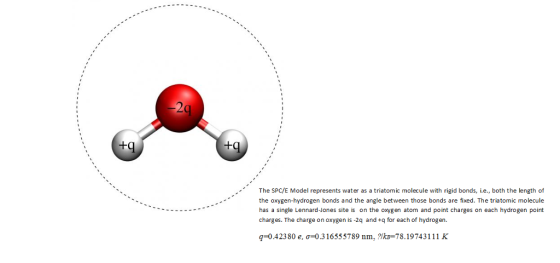
Hazardous organic waste can be treated with methods like adsorption, oxidation by biological means (as well as chemical means and incineration. Each method is having its own demerits and cannot be used for treating wide range of organic waste where are SCW technique handles wide variety of wastes from 1% to 20%. This method uses water above critical point ( Tc= 374 deg.c and Pc= 22.1Mpa). This technique provides increased solubility of organic wastes. The reaction kinetics are faster and there is increased selectivity to complete oxidation products. This technique can take care of stringent environmental regulations that are being implemented. This method destroys waste effectively and can also handle high risk wastes. This method is less expensive. After extraction, separation of super critical water is easier than conventional methods.
Add Answer to:
(a) Depict the SPC/E model for water molecule and describe the
structure of H-bonds in liquid...
Name Gdderall Hydrogen Bonding with Water- Your Drug Directions: Show the structure of your molecule below. Ilustrate all ways that your molecule could form hydrogen bonds with water, either as a...
 Name Gdderall Hydrogen Bonding with Water- Your Drug Directions: Show the structure of your molecule below. Ilustrate all ways that your molecule could form hydrogen bonds with water, either as a hydrogen donor or as a target (receiver) of hydrogen bonds from water. Do this by drawing bent water molecules as necessary and representing hydrogen bonds between water and the drug using dashed RED lines are involved in the hydrogen bonds. If your drug molecule is not capable of forming...
Name Hydrogen Bonding with Water- Your Drug Directions: Show the structure of your molecule below. Ilustrate all ways that your molecule could form hydrogen bonds with water, either as a hydrogen...
 Name Hydrogen Bonding with Water- Your Drug Directions: Show the structure of your molecule below. Ilustrate all ways that your molecule could form hydrogen bonds with water, either as a hydrogen donor or as a target (receiver) of hydrogen bonds from water. Do this by drawing bent water molecules as necessary and representing hydrogen bonds between water and the drug using dashed RED lines (-. Be sure that it is exactly clear which atoms on each molecule are involved in...
II. Addition of a Water Molecule to an Alkene . a) Make a model of ethene...
 II. Addition of a Water Molecule to an Alkene . a) Make a model of ethene and 120 b) c) d) e) Remove the c = c bond and replace it with a single bond (c - c) Break apart the 20 molecule into - and -OH Add - to one of the carbon atom and -ou to the other carbon atom Draw the structure of the resulting compound E) What type of organic compound is formed? What is its...
Step 6: Hydrogen Bonding with Water (3) Hydrocodone Directions: Draw the structure of your molecule on...
 Step 6: Hydrogen Bonding with Water (3) Hydrocodone Directions: Draw the structure of your molecule on a separate page. Illustrate all ways that your molecule could form hydrogen bonds with water. Do this by drawing bent water molecules as necessary and use dashed RED lines (---) to show H-bonding between water and the appropriate atom in the molecule. Be sure that it is very clear which atoms on each molecule are involved in the hydrogen bonds. Keep in mind that...
AJ by oxygen Donas Bjoy nyarogen bonas ionic bonds D) by nonpolar covalent bonds Coy E)...
 AJ by oxygen Donas Bjoy nyarogen bonas ionic bonds D) by nonpolar covalent bonds Coy E) by isotopes 29) Which answer below best describes H,0? A) Water molecule bonds are ionic bonds, in which electrons are gained and lost to create the bond. B) Water molecule bonds are oxygen bonds, in which oxygen atoms form bonds together. C) Water molecule bonds are polar covalent bonds, in which unequal sharing of electrons occurs. D) Water molecule bonds are nonpolar covalent bonds,...
both questions please Describe the fluid- mosaic model of membrane structure. Define all the components and...
 both questions please
Describe the fluid- mosaic model of membrane structure. Define all the components and explain why the liquid crystal consistency is important. TT T Arial - 3(120) T E . . 25 Pathep Words QUESTION 5 Why can't larger polar molecules and ions diffuse through the plasma membrane? Explain. Would it be advantageous to the cell if they could? Explain.
both questions please
Describe the fluid- mosaic model of membrane structure. Define all the components and explain why the liquid crystal consistency is important. TT T Arial - 3(120) T E . . 25 Pathep Words QUESTION 5 Why can't larger polar molecules and ions diffuse through the plasma membrane? Explain. Would it be advantageous to the cell if they could? Explain.
1. Draw the Lewis structure of water showing all valence electrons with lines for covalent bonds...
 1. Draw the Lewis structure of water showing all valence electrons with lines for covalent bonds and dots for unshared electrons. Add a box around each hydrogen- bonding donor site and add a circle around any hydrogen- bonding acceptor sites in your structure. (Hint: there are two of each. The equal number of donors and acceptors is why water hydrogen-bonds so well with other waters.) Draw the Lewis structure of hydrofluoric acid, HF, showing all valence electrons with lines for...
18 41 OsONaHSO) or KMnO/OH A H alkene + ОН Draw the structure of the alkene...
 18 41 OsONaHSO) or KMnO/OH A H alkene + ОН Draw the structure of the alkene There are two answers. Give both. 42. ОН ОН CH CH3 Н The bond between the bold-face Cs is the weakest in this molecule. Explain why in terms of partial charges. CP-CH CP iod w CH) H* KMnO4 CH2-C-C C- CHs ОН Give the three organic products of this reaction. E 1 1 1 OICIH
QUESTION 14 OH . Ons -CH3 Phenyleprine Phenylephrine (structure shown above) is a common over-the-counter nasal...
 QUESTION 14 OH . Ons -CH3 Phenyleprine Phenylephrine (structure shown above) is a common over-the-counter nasal decongestant. However, it is often exploited in the illicit preparation of methamphetamine Talya finds that acid-base extraction works best to extract phenylephrine from the tablets, separating it from other inactive ingredients. Why? OA. The presence of polar functional groups e.. alcohol and amine. OB.Amine is a weak base, addition of an acid will convert it to its water-soluble salt form. C. Extraction is common...
26 a) Describe whether or not the following molecule is aromatic. Explain based on the rules...
 26 a) Describe whether or not the following molecule is aromatic. Explain based on the rules of aromaticity: b) When pyrrole undergoes an SeAr reaction with bromine, substitution takes place at the 2. position. Explain mechanistically why this occurs Relry ) Draw the products of the following reactions: LDA THE 2) CH CH CH Br NOCH.CH.CH 2) CH.CH,Br 3) NaOH, HCO 4)H,0', het b) Write a structural formula for the principal organic product() of each of the following reactions CH,...
 Name Gdderall Hydrogen Bonding with Water- Your Drug Directions: Show the structure of your molecule below. Ilustrate all ways that your molecule could form hydrogen bonds with water, either as a hydrogen donor or as a target (receiver) of hydrogen bonds from water. Do this by drawing bent water molecules as necessary and representing hydrogen bonds between water and the drug using dashed RED lines are involved in the hydrogen bonds. If your drug molecule is not capable of forming...
 Name Hydrogen Bonding with Water- Your Drug Directions: Show the structure of your molecule below. Ilustrate all ways that your molecule could form hydrogen bonds with water, either as a hydrogen donor or as a target (receiver) of hydrogen bonds from water. Do this by drawing bent water molecules as necessary and representing hydrogen bonds between water and the drug using dashed RED lines (-. Be sure that it is exactly clear which atoms on each molecule are involved in...
 II. Addition of a Water Molecule to an Alkene . a) Make a model of ethene and 120 b) c) d) e) Remove the c = c bond and replace it with a single bond (c - c) Break apart the 20 molecule into - and -OH Add - to one of the carbon atom and -ou to the other carbon atom Draw the structure of the resulting compound E) What type of organic compound is formed? What is its...
 Step 6: Hydrogen Bonding with Water (3) Hydrocodone Directions: Draw the structure of your molecule on a separate page. Illustrate all ways that your molecule could form hydrogen bonds with water. Do this by drawing bent water molecules as necessary and use dashed RED lines (---) to show H-bonding between water and the appropriate atom in the molecule. Be sure that it is very clear which atoms on each molecule are involved in the hydrogen bonds. Keep in mind that...
 AJ by oxygen Donas Bjoy nyarogen bonas ionic bonds D) by nonpolar covalent bonds Coy E) by isotopes 29) Which answer below best describes H,0? A) Water molecule bonds are ionic bonds, in which electrons are gained and lost to create the bond. B) Water molecule bonds are oxygen bonds, in which oxygen atoms form bonds together. C) Water molecule bonds are polar covalent bonds, in which unequal sharing of electrons occurs. D) Water molecule bonds are nonpolar covalent bonds,...
 both questions please
Describe the fluid- mosaic model of membrane structure. Define all the components and explain why the liquid crystal consistency is important. TT T Arial - 3(120) T E . . 25 Pathep Words QUESTION 5 Why can't larger polar molecules and ions diffuse through the plasma membrane? Explain. Would it be advantageous to the cell if they could? Explain.
both questions please
Describe the fluid- mosaic model of membrane structure. Define all the components and explain why the liquid crystal consistency is important. TT T Arial - 3(120) T E . . 25 Pathep Words QUESTION 5 Why can't larger polar molecules and ions diffuse through the plasma membrane? Explain. Would it be advantageous to the cell if they could? Explain.
 1. Draw the Lewis structure of water showing all valence electrons with lines for covalent bonds and dots for unshared electrons. Add a box around each hydrogen- bonding donor site and add a circle around any hydrogen- bonding acceptor sites in your structure. (Hint: there are two of each. The equal number of donors and acceptors is why water hydrogen-bonds so well with other waters.) Draw the Lewis structure of hydrofluoric acid, HF, showing all valence electrons with lines for...
 18 41 OsONaHSO) or KMnO/OH A H alkene + ОН Draw the structure of the alkene There are two answers. Give both. 42. ОН ОН CH CH3 Н The bond between the bold-face Cs is the weakest in this molecule. Explain why in terms of partial charges. CP-CH CP iod w CH) H* KMnO4 CH2-C-C C- CHs ОН Give the three organic products of this reaction. E 1 1 1 OICIH
 QUESTION 14 OH . Ons -CH3 Phenyleprine Phenylephrine (structure shown above) is a common over-the-counter nasal decongestant. However, it is often exploited in the illicit preparation of methamphetamine Talya finds that acid-base extraction works best to extract phenylephrine from the tablets, separating it from other inactive ingredients. Why? OA. The presence of polar functional groups e.. alcohol and amine. OB.Amine is a weak base, addition of an acid will convert it to its water-soluble salt form. C. Extraction is common...
 26 a) Describe whether or not the following molecule is aromatic. Explain based on the rules of aromaticity: b) When pyrrole undergoes an SeAr reaction with bromine, substitution takes place at the 2. position. Explain mechanistically why this occurs Relry ) Draw the products of the following reactions: LDA THE 2) CH CH CH Br NOCH.CH.CH 2) CH.CH,Br 3) NaOH, HCO 4)H,0', het b) Write a structural formula for the principal organic product() of each of the following reactions CH,...
Most questions answered within 3 hours.
-
Where is the error in this code sequence?
String s1 = "Hello";
String s2 = "ello";...
asked 10 months ago -
Financial data for Joel de Paris, Inc., for last year
follow:
Joel de Paris, Inc.
Balance...
asked 10 months ago -
Consider this reaction:
Al2(SO4)3 (aq)+ BaCl3
(aq) Al2Cl6 (aq)- +
3BaSO4(s) . What is the...
asked 10 months ago -
Suppose that Savneet is considering increasing her
recent random sample from 20 car rentals to 40...
asked 10 months ago -
Trucks arrive at an unloading terminal at an average rate of 120
per hour.
Trucks arrive...
asked 10 months ago -
Why are methanol and ethanol completely soluble in water while
octanol is not very little soluble....
asked 10 months ago -
A facilities manager at a university reads in a research report
that the mean amount of...
asked 10 months ago -
When the CuSO4 is rehydrated by adding water to the anhydrous
compound, is this an endothermic...
asked 10 months ago -
A ray of sunlight is passing from diamond into crown glass; the
angle of incidence is...
asked 10 months ago -
A block of mass 0.249 kg is placed on top of a light, vertical
spring of...
asked 10 months ago -
how do the kidneys compensate in the presences of acidosis
a) trigger hyperventilate
b) reserve acid...
asked 10 months ago -
Question 501 pts
The rental rate of capital to the firm increases. Which of the
following...
asked 10 months ago