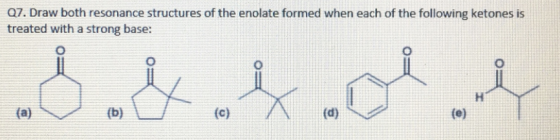
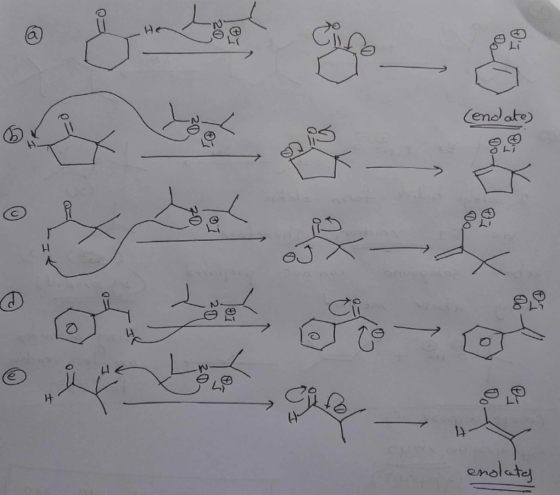
Draw both resonance structures of the enolate formed when each of the following ketones is treated with a strong base:
Homework Answers
Add Answer to:
Draw both resonance structures of the enolate formed when each of the following ketones is treated with a strong base:
Draw both resonance structures of the enolate formed when each of the following ketones is treated with a strong base. Show mechanisms.
 Draw both resonance structures of the enolate formed when each of the following ketones is treated with a strong base. Show mechanisms.
Draw both resonance structures of the product formed when the following starting material is treated with...
 Draw both resonance structures of the product formed when the following starting material is treated with LDA in THF solution at -78°C. draw structure ... draw structure ... (Negative charge on carbon) (Negative charge on nitrogen)
Draw the structures of the aldehydes or ketones and alcohols formed when these acetals are treated...
 Draw the structures of the aldehydes or ketones and alcohols formed when these acetals are treated with aqueous acid and hydrolyzed.
Ketones are converted to enolates on treatment with base. Draw the structures of the carbanion enolate...
 Ketones are converted to enolates on treatment with base. Draw the structures of the carbanion enolate formed when the ketone shown is treated with either LDA or tert-butoxide Include all lone pairs of electrons and nonzero formal charges. Do not include counter ions. Have you considered the difference between the two bases used? Have you remembered to include all lone pairs of electrons and nonzero charges your enolate structures? Are you certain about which carbon (s) in the ketone get...
Draw the enolate ion that is formed when the following molecule is treated with NaOH. Draw...
 Draw the enolate ion that is formed when the following molecule is treated with NaOH. Draw the resonance structures of the enolate. Draw the products formed in the following reactions
) (6 pts) Carefully draw three resonance structures for the enolate ion formed when NaOEt is...
 ) (6 pts) Carefully draw three resonance structures for the enolate ion formed when NaOEt is added to ethyl acetoacetate. NaOEt Page 2/7
Draw the alkyne formed when 3,4-dichloroheptane is treated with an excess of strong base such as...
 Draw the alkyne formed when 3,4-dichloroheptane is treated with
an excess of strong base such as sodium amide.
Draw the alkyne formed when 3,4-dichloroheptane is treated with
an excess of strong base such as sodium amide.
Draw the alkyne formed when 2,3-dichloropentane is treated with an excess of strong base such as...
 Draw the alkyne formed when 2,3-dichloropentane is treated with
an excess of strong base such as sodium amide.
Draw the alkyne formed when 2,3-dichloropentane is treated with an excess of strong base such as sodium amide.
Draw the alkyne formed when 2,3-dichloropentane is treated with
an excess of strong base such as sodium amide.
Draw the alkyne formed when 2,3-dichloropentane is treated with an excess of strong base such as sodium amide.
Draw a major resonance structure for the following enolate. Use curved arrows in both structures to...
 Draw a major resonance structure for the following enolate. Use
curved arrows in both structures to show the delocalization of
electron pairs. Include lone pairs of electrons, formal charges,
and hydrogen atoms.
Draw a major resonance structure for the following enolate. Use curved arrows in both structures to show the delocalization of electron pairs. Include lone pairs of electrons, formal charges, and hydrogen atoms.
Draw a major resonance structure for the following enolate. Use
curved arrows in both structures to show the delocalization of
electron pairs. Include lone pairs of electrons, formal charges,
and hydrogen atoms.
Draw a major resonance structure for the following enolate. Use curved arrows in both structures to show the delocalization of electron pairs. Include lone pairs of electrons, formal charges, and hydrogen atoms.
Draw the enolate formed by each of the following and one resonance form after treatment of...
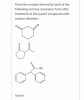 Draw the enolate formed by each of the following and one resonance form after treatment of the parent compound with sodium ethoxide: Upload
 Draw both resonance structures of the product formed when the following starting material is treated with LDA in THF solution at -78°C. draw structure ... draw structure ... (Negative charge on carbon) (Negative charge on nitrogen)
 Draw the structures of the aldehydes or ketones and alcohols formed when these acetals are treated with aqueous acid and hydrolyzed.
 Ketones are converted to enolates on treatment with base. Draw the structures of the carbanion enolate formed when the ketone shown is treated with either LDA or tert-butoxide Include all lone pairs of electrons and nonzero formal charges. Do not include counter ions. Have you considered the difference between the two bases used? Have you remembered to include all lone pairs of electrons and nonzero charges your enolate structures? Are you certain about which carbon (s) in the ketone get...
 Draw the enolate ion that is formed when the following molecule is treated with NaOH. Draw the resonance structures of the enolate. Draw the products formed in the following reactions
 ) (6 pts) Carefully draw three resonance structures for the enolate ion formed when NaOEt is added to ethyl acetoacetate. NaOEt Page 2/7
 Draw the alkyne formed when 3,4-dichloroheptane is treated with
an excess of strong base such as sodium amide.
Draw the alkyne formed when 3,4-dichloroheptane is treated with
an excess of strong base such as sodium amide.
 Draw the alkyne formed when 2,3-dichloropentane is treated with
an excess of strong base such as sodium amide.
Draw the alkyne formed when 2,3-dichloropentane is treated with an excess of strong base such as sodium amide.
Draw the alkyne formed when 2,3-dichloropentane is treated with
an excess of strong base such as sodium amide.
Draw the alkyne formed when 2,3-dichloropentane is treated with an excess of strong base such as sodium amide.
 Draw a major resonance structure for the following enolate. Use
curved arrows in both structures to show the delocalization of
electron pairs. Include lone pairs of electrons, formal charges,
and hydrogen atoms.
Draw a major resonance structure for the following enolate. Use curved arrows in both structures to show the delocalization of electron pairs. Include lone pairs of electrons, formal charges, and hydrogen atoms.
Draw a major resonance structure for the following enolate. Use
curved arrows in both structures to show the delocalization of
electron pairs. Include lone pairs of electrons, formal charges,
and hydrogen atoms.
Draw a major resonance structure for the following enolate. Use curved arrows in both structures to show the delocalization of electron pairs. Include lone pairs of electrons, formal charges, and hydrogen atoms.
 Draw the enolate formed by each of the following and one resonance form after treatment of the parent compound with sodium ethoxide: Upload
Most questions answered within 3 hours.
-
Where is the error in this code sequence?
String s1 = "Hello";
String s2 = "ello";...
asked 11 months ago -
Financial data for Joel de Paris, Inc., for last year
follow:
Joel de Paris, Inc.
Balance...
asked 11 months ago -
Consider this reaction:
Al2(SO4)3 (aq)+ BaCl3
(aq) Al2Cl6 (aq)- +
3BaSO4(s) . What is the...
asked 11 months ago -
Suppose that Savneet is considering increasing her
recent random sample from 20 car rentals to 40...
asked 11 months ago -
Trucks arrive at an unloading terminal at an average rate of 120
per hour.
Trucks arrive...
asked 11 months ago -
Why are methanol and ethanol completely soluble in water while
octanol is not very little soluble....
asked 11 months ago -
A facilities manager at a university reads in a research report
that the mean amount of...
asked 11 months ago -
When the CuSO4 is rehydrated by adding water to the anhydrous
compound, is this an endothermic...
asked 11 months ago -
A ray of sunlight is passing from diamond into crown glass; the
angle of incidence is...
asked 11 months ago -
A block of mass 0.249 kg is placed on top of a light, vertical
spring of...
asked 11 months ago -
how do the kidneys compensate in the presences of acidosis
a) trigger hyperventilate
b) reserve acid...
asked 11 months ago -
Question 501 pts
The rental rate of capital to the firm increases. Which of the
following...
asked 11 months ago