
Homework Answers


Add Answer to:
An SDOF system is subjected to a step load. The minimum set of parameters required to...
Consider a single degree of freedom (SDOF) with mass-spring-damper system
 Consider a single degree of freedom (SDOF) with mass-spring-damper system subjected to harmonic excitation having the following characteristics: Mass, m = 850 kg; stiffness, k = 80 kN/m; damping constant, c = 2000 N.s/m, forcing function amplitude, f0 = 5 N; forcing frequency, ωt = 30 rad/s. (a) Calculate the steady-state response of the system and state whether the system is underdamped, critically damped, or overdamped. (b) What happen to the steady-state response when the damping is increased to 18000 N.s/m? (Hint: Determine...
The system parameters of a freely-vibrating damped SDOF system are as follows: Mass, m= 100 kg...
 The system parameters of a freely-vibrating damped SDOF system are as follows: Mass, m= 100 kg Damping Factor, c = 200 kg/s Spring Stiffness, k = 3000 N/m Initial Position, x, = 1 m Initial Velocity, v,= 0 m/s a) Create a MATLAB code and using the specified system parameters compute (using the correct units) the system characteristics: 1) natural (circular) frequency on; 2) cyclic frequency fn; 3) cyclic period p; 4) damped natural (circular) frequency 0g, and 5) damping...
1. A SDOF system with an equivalent mass of 20 kg, an equivalent stiffness of 3x10'...
 1. A SDOF system with an equivalent mass of 20 kg, an equivalent stiffness of 3x10' N/m and an equivalent viscous damping coefficient of 2500 Ns/m. The system is subject to a sinusoidal pulse of pulse of magnitude 20000 N and total duration of 0.05 sec. Use the response spectrum for a sinusoidal pulse to determine the maximum displacement of the system.
Question 5 (1 point) An SDoF with a mass of {m} kg and a stiffness of...
 Question 5 (1 point) An SDoF with a mass of {m} kg and a stiffness of {k} kN/m is subjected to an initial displacement. What would the damping coefficient need to be to make the damping ratio {z}. Your Answer: Answer Question 6 (1 point) If the frequency resolution of a vibration spectrum in the was set at 1.90 Hz, what would be the duration of the signal in seconds produced by the Inverse Fourier Transform? Your Answer: Answer Question...
F Fosin t m k 2 Figure Qla: System is subjected to a periodic force excitation (a) Derive the equation of motion of the...
 F Fosin t m k 2 Figure Qla: System is subjected to a periodic force excitation (a) Derive the equation of motion of the system (state the concepts you use) (b) Write the characteristic equation of the system [4 marks 12 marks (c) What is the category of differential equations does the characteristic equation [2 marks fall into? (d) Prove that the steady state amplitude of vibration of the system is Xk Fo 25 + 0 marks (e) Prove that...
3 dismo plesis The spring mass damper system shown is subjected to a force f(t), which...
 3
dismo plesis
The spring mass damper system shown is subjected to a force f(t), which is a step function. b m f(t) At time t=0, with zero initial conditions, the system is subjected to the force. The magnitude of the force is 4 newton, while the spring rate is 8.2 newton/meter, and the damping coefficient is 10 newton-sec/meter. Calculate the energy stored in the spring, in Joules, in steady state.
3
dismo plesis
The spring mass damper system shown is subjected to a force f(t), which is a step function. b m f(t) At time t=0, with zero initial conditions, the system is subjected to the force. The magnitude of the force is 4 newton, while the spring rate is 8.2 newton/meter, and the damping coefficient is 10 newton-sec/meter. Calculate the energy stored in the spring, in Joules, in steady state.
A second order mechanical system of a mass connected to a spring and a damper is subjected to a s...
 A second order mechanical system of a mass connected to a spring and a damper is subjected to a sinusoidal input force mx+cx + kx = A sin(at) The mass is m-5 kg, the damping constant is c = 1 N-sec/m, the spring stiffness is 2 N/m, and the amplitude of the input force is A- 3 N. For this system give explicit numerical values for the damping factor 5 and the un-damped natural frequency Using the given formulas for...
A second order mechanical system of a mass connected to a spring and a damper is subjected to a s...
 A second order mechanical system of a mass connected to a spring and a damper is subjected to a sinusoidal input force mi+ci +kx- Asin(ot) The mass is m-5 kg, the damping constant is c = 1 N-sec/m, the spring stiffness is 2 N/m, and the amplitude of the input force is A- 3 N. For this system give explicit numerical values for the damping factor un-damped natural frequency on a. and the
A second order mechanical system of a...
A second order mechanical system of a mass connected to a spring and a damper is subjected to a sinusoidal input force mi+ci +kx- Asin(ot) The mass is m-5 kg, the damping constant is c = 1 N-sec/m, the spring stiffness is 2 N/m, and the amplitude of the input force is A- 3 N. For this system give explicit numerical values for the damping factor un-damped natural frequency on a. and the
A second order mechanical system of a...
The following system is composed by two masses . The first mass my - 20 kg,...
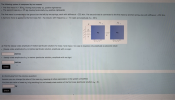 The following system is composed by two masses . The first mass my - 20 kg, moving horizontally on positive rightwards) . The second mass m2 - 2.5 kg, moving horizontally xx. positive rightwards) The first mass is connected to the ground on the left) by two springs, each with stiffness k-232 Nm. The second mass is connected to the first mass by another spring, also with stiffness -232 N/m. A harmonic force is applied to the first mass FIO)Foconut),...
Design dala Observalion deck mass m-25,000 k Danong ratio 0.5% Figure 91. Determine the equation of motion ofthe ๒wer teevibraorntheform (15 marks) mitt) + car)+xt)- where xt) is the horizontal displ...
 Design dala Observalion deck mass m-25,000 k Danong ratio 0.5% Figure 91. Determine the equation of motion ofthe ๒wer teevibraorntheform (15 marks) mitt) + car)+xt)- where xt) is the horizontal displacement of the top of the tower b) Determine the damped natural frequency, fa (in Hz) of the tower (10 marks) ) A radar device, which inckdes a large rotaling eccentic mass, has been (30 marks) nstalled at the top of the tower Unfortunately, it has a trequency of rotation...
 The system parameters of a freely-vibrating damped SDOF system are as follows: Mass, m= 100 kg Damping Factor, c = 200 kg/s Spring Stiffness, k = 3000 N/m Initial Position, x, = 1 m Initial Velocity, v,= 0 m/s a) Create a MATLAB code and using the specified system parameters compute (using the correct units) the system characteristics: 1) natural (circular) frequency on; 2) cyclic frequency fn; 3) cyclic period p; 4) damped natural (circular) frequency 0g, and 5) damping...
 1. A SDOF system with an equivalent mass of 20 kg, an equivalent stiffness of 3x10' N/m and an equivalent viscous damping coefficient of 2500 Ns/m. The system is subject to a sinusoidal pulse of pulse of magnitude 20000 N and total duration of 0.05 sec. Use the response spectrum for a sinusoidal pulse to determine the maximum displacement of the system.
 Question 5 (1 point) An SDoF with a mass of {m} kg and a stiffness of {k} kN/m is subjected to an initial displacement. What would the damping coefficient need to be to make the damping ratio {z}. Your Answer: Answer Question 6 (1 point) If the frequency resolution of a vibration spectrum in the was set at 1.90 Hz, what would be the duration of the signal in seconds produced by the Inverse Fourier Transform? Your Answer: Answer Question...
 F Fosin t m k 2 Figure Qla: System is subjected to a periodic force excitation (a) Derive the equation of motion of the system (state the concepts you use) (b) Write the characteristic equation of the system [4 marks 12 marks (c) What is the category of differential equations does the characteristic equation [2 marks fall into? (d) Prove that the steady state amplitude of vibration of the system is Xk Fo 25 + 0 marks (e) Prove that...
 3
dismo plesis
The spring mass damper system shown is subjected to a force f(t), which is a step function. b m f(t) At time t=0, with zero initial conditions, the system is subjected to the force. The magnitude of the force is 4 newton, while the spring rate is 8.2 newton/meter, and the damping coefficient is 10 newton-sec/meter. Calculate the energy stored in the spring, in Joules, in steady state.
3
dismo plesis
The spring mass damper system shown is subjected to a force f(t), which is a step function. b m f(t) At time t=0, with zero initial conditions, the system is subjected to the force. The magnitude of the force is 4 newton, while the spring rate is 8.2 newton/meter, and the damping coefficient is 10 newton-sec/meter. Calculate the energy stored in the spring, in Joules, in steady state.
 A second order mechanical system of a mass connected to a spring and a damper is subjected to a sinusoidal input force mx+cx + kx = A sin(at) The mass is m-5 kg, the damping constant is c = 1 N-sec/m, the spring stiffness is 2 N/m, and the amplitude of the input force is A- 3 N. For this system give explicit numerical values for the damping factor 5 and the un-damped natural frequency Using the given formulas for...
 A second order mechanical system of a mass connected to a spring and a damper is subjected to a sinusoidal input force mi+ci +kx- Asin(ot) The mass is m-5 kg, the damping constant is c = 1 N-sec/m, the spring stiffness is 2 N/m, and the amplitude of the input force is A- 3 N. For this system give explicit numerical values for the damping factor un-damped natural frequency on a. and the
A second order mechanical system of a...
A second order mechanical system of a mass connected to a spring and a damper is subjected to a sinusoidal input force mi+ci +kx- Asin(ot) The mass is m-5 kg, the damping constant is c = 1 N-sec/m, the spring stiffness is 2 N/m, and the amplitude of the input force is A- 3 N. For this system give explicit numerical values for the damping factor un-damped natural frequency on a. and the
A second order mechanical system of a...
 The following system is composed by two masses . The first mass my - 20 kg, moving horizontally on positive rightwards) . The second mass m2 - 2.5 kg, moving horizontally xx. positive rightwards) The first mass is connected to the ground on the left) by two springs, each with stiffness k-232 Nm. The second mass is connected to the first mass by another spring, also with stiffness -232 N/m. A harmonic force is applied to the first mass FIO)Foconut),...
 Design dala Observalion deck mass m-25,000 k Danong ratio 0.5% Figure 91. Determine the equation of motion ofthe ๒wer teevibraorntheform (15 marks) mitt) + car)+xt)- where xt) is the horizontal displacement of the top of the tower b) Determine the damped natural frequency, fa (in Hz) of the tower (10 marks) ) A radar device, which inckdes a large rotaling eccentic mass, has been (30 marks) nstalled at the top of the tower Unfortunately, it has a trequency of rotation...
Most questions answered within 3 hours.
-
Where is the error in this code sequence?
String s1 = "Hello";
String s2 = "ello";...
asked 10 months ago -
Financial data for Joel de Paris, Inc., for last year
follow:
Joel de Paris, Inc.
Balance...
asked 10 months ago -
Consider this reaction:
Al2(SO4)3 (aq)+ BaCl3
(aq) Al2Cl6 (aq)- +
3BaSO4(s) . What is the...
asked 10 months ago -
Suppose that Savneet is considering increasing her
recent random sample from 20 car rentals to 40...
asked 10 months ago -
Trucks arrive at an unloading terminal at an average rate of 120
per hour.
Trucks arrive...
asked 10 months ago -
Why are methanol and ethanol completely soluble in water while
octanol is not very little soluble....
asked 10 months ago -
A facilities manager at a university reads in a research report
that the mean amount of...
asked 10 months ago -
When the CuSO4 is rehydrated by adding water to the anhydrous
compound, is this an endothermic...
asked 10 months ago -
A ray of sunlight is passing from diamond into crown glass; the
angle of incidence is...
asked 10 months ago -
A block of mass 0.249 kg is placed on top of a light, vertical
spring of...
asked 10 months ago -
how do the kidneys compensate in the presences of acidosis
a) trigger hyperventilate
b) reserve acid...
asked 10 months ago -
Question 501 pts
The rental rate of capital to the firm increases. Which of the
following...
asked 10 months ago