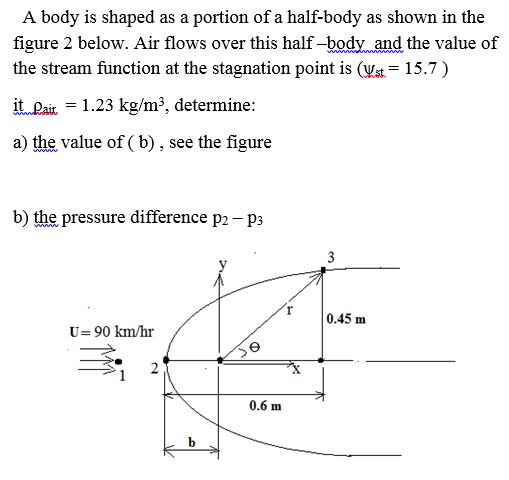
A body is shaped as a portion of a half-body as shown in the figure 2 below. Air flows over this half –body and the value of the stream function at the stagnation point is (ψst = 15.7 )
it ρair = 1.23 kg/m3, determine:
a) the value of ( b) , see the figure
b) the pressure difference p2 – p3
Homework Answers
SOLUTION: -
Given- U = 90 km/hr = 90 x 103/3600 = 25 m/s
 = 15.7
 = 1.23 kg/m3
-------------------------------------------------------------------------------------------
a) Calculation:- for the value of b, we can find this value by-
let us consider,

at this position,
= m/2
so that, m = 15.7 x 2 = 31.4 Kg
Now we can find the value of b, by the formula-
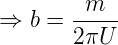
now substitute all the values and we get -
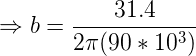
b = 0.06 m
So form the calculation we have the value of b is "0.06m".
----------------------------------------------------------------------
b) Calculation:- now we have to calculate the pressure difference P2 - P3 by -
now we can find the value of r by-

 r = 0.702 m
and we can find the angle as-
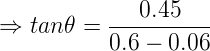
so that, tan  = 0.833
  = 39.8
now we can find the value of V as -
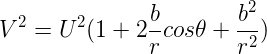
Substituting all the values and we get -
V = 26.6 m/s = 96 km/hr
so we can find the pressute difference by-
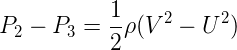
By putting all the values we get-
P2-P3 = 50,774. 4 N/m2 = 50.7 Kpa
therefore the finally preesure difference P2 - P3 = 50.7 KPa .
Add Answer to:
A body is shaped as a portion of a half-body as shown in the
figure 2...
Question 5:A double wedge-shaped body is placed in a M-1.9 flow as shown in the figure...
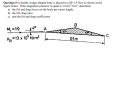 Question 5:A double wedge-shaped body is placed in a M-1.9 flow as shown in the figure below. If the stagnation pressure is equal to 13x10 N/m2, determine a) the lift and drag forces on the body per meter length, b) the lift-drag ratio, c) and the lift and drag coefficients. Po113 x 10° N/m? 0-1m
I can't seem to figure out how they getthis answer. The T-Shaped body rotates about a...
 I can't seem to figure out how they getthis answer.
The T-Shaped body rotates about a horizontal axis through point
O......
Problem 2.The T-shaped body rotates about a horizontal axis through point O. At the instant represented, its angular velocity is ω = 5 rad/sec and its angular acceleration is α = 10 rad/s in the directions indicated. Determine the velocity and acceleration of point B. Express your results in terms of components along the x and y axes shown....
I can't seem to figure out how they getthis answer.
The T-Shaped body rotates about a horizontal axis through point
O......
Problem 2.The T-shaped body rotates about a horizontal axis through point O. At the instant represented, its angular velocity is ω = 5 rad/sec and its angular acceleration is α = 10 rad/s in the directions indicated. Determine the velocity and acceleration of point B. Express your results in terms of components along the x and y axes shown....
A portion of an ammonia (NH) refrigeration cycle is shown in the figure below. Two streams...
 A portion of an ammonia (NH) refrigeration cycle is shown in the figure below. Two streams enter a mixing chamber with one exit stream. One stream with mass flow rate my firsts enters a heat exchanger at Ti= 30 °C (state 1), is cooled to 15 °C (state 2) and then enters the mixer. The rate of heat transfer from the water side of the heat exchanger, Q7, is 100 kJ/s. The second stream with mass flow rate na -2...
8. (10 points extra credit) Consider the figure shown below. It shows a U-shaped mercury manometer...
 8. (10 points extra credit) Consider the figure shown below. It shows a U-shaped mercury manometer (a device for detecting pressure differences) that is attached to a pipe along which water is flowing from left to right. The water pipe has a circular cross-section. At A the diameter of the water pipe is 5.6 cm and the speed of the water is 2.80 m/s. At B the diameter of the pipe is 3 cm. The fluid in the manometer is...
In a steam power cycle shown in the figure, the pressure of the water vapor exiting...
 In a steam power cycle shown in the figure, the
pressure of the water vapor exiting from the boiler with 1 kg mass
at 1 point is P1 = 4 MPa, while the temperature is T1 = 400 oC, the
pressures at the inlet and outlet of the mixing chamber (K.O.) are
P2 = P3 = P4 = 1 MPa. The temperature at the inlet of the low
pressure turbine (A.B.T.) is measured as T4 = 240 oC and the...
In a steam power cycle shown in the figure, the
pressure of the water vapor exiting from the boiler with 1 kg mass
at 1 point is P1 = 4 MPa, while the temperature is T1 = 400 oC, the
pressures at the inlet and outlet of the mixing chamber (K.O.) are
P2 = P3 = P4 = 1 MPa. The temperature at the inlet of the low
pressure turbine (A.B.T.) is measured as T4 = 240 oC and the...
1. Water is flowing in a pipe as shown in the figure. The diameter of the...
 1. Water is flowing in a pipe as shown in the figure. The diameter of the cross section area A1 is twice the diameter of A2. The velocity of flow v1 is 2.00m/s while h and h2 are 5.00 cm and 30.0 cm, respectively. Take the density of water to be 1000. kg/m3 (a) Find v2 (b) Calculate the pressure difference P P2 between the two ends of the pipe 2
The Venturi tube shown in the figure below may be used as a fluid flowmeter. Suppose...
 The Venturi tube shown in the figure below may be used as a fluid flowmeter. Suppose the device is used at a service station to measure the flow rate of gasoline (p 7.00 x 10² kg/m3) through a hose having an outlet radius of 1.47 cm. The difference in pressure is measured to be P1 P2 1.10 kPa and the radius of the inlet tube to the meter is 2.94 cm (a) Find the speed of the gasoline as it...
A refinery uses a Venturi tube like the one shown in the figure to monitor the...
 A refinery uses a Venturi tube like the one shown in the figure to monitor the flow of gasoline (? 7.00 × 10² kg/m3) through a hose. The inlet radius of the Venturi tube is 2.60 cm, the outlet radius is 1.70 cm, and the difference in pressure measured by the two gauges is P1 P21.70 kPa (a) Determine the speed of the gas as it leaves the Venturi tube. X m/s (b) Determine the volume flow rate of the...
Air flows through the venturi constriction as shown in the figure below. A low-pressure region is...
 Air flows through the venturi constriction as shown in the figure below. A low-pressure region is created in the constriction, which causes ethyl alcohol to be drawn into the air stream. The air is then discharged into the atmosphere. Determine the smallest discharge of air required to make this happen. Use ρ-789 kg/m 3 and ρ,-1.225 kg/m3 200 mm 20 mm φ Ethyl aloohol Air
Two types of gasoline are blended together by passing them through a horizontal “wye” as shown in...
 Two types of gasoline are blended together by passing them
through a horizontal “wye” as shown in the figure below. Given:
D3=D1=0.2 m, D2=0.1 m; Flow rate at section (1): Q1=0.03 m3 /s;
Flow rate at section (2): Q2=0.0034 m3 /s; Pressure at section (3):
P3=145 kPa; Density of gasoline: ρ=1000 kg/m3 ; Angles θ1=30°,
θ2=45° a) Ignoring losses due to friction, determine the pressure
at section (1) and section (2), in kPa. Neglect the difference in
elevation between the...
Two types of gasoline are blended together by passing them
through a horizontal “wye” as shown in the figure below. Given:
D3=D1=0.2 m, D2=0.1 m; Flow rate at section (1): Q1=0.03 m3 /s;
Flow rate at section (2): Q2=0.0034 m3 /s; Pressure at section (3):
P3=145 kPa; Density of gasoline: ρ=1000 kg/m3 ; Angles θ1=30°,
θ2=45° a) Ignoring losses due to friction, determine the pressure
at section (1) and section (2), in kPa. Neglect the difference in
elevation between the...
 Question 5:A double wedge-shaped body is placed in a M-1.9 flow as shown in the figure below. If the stagnation pressure is equal to 13x10 N/m2, determine a) the lift and drag forces on the body per meter length, b) the lift-drag ratio, c) and the lift and drag coefficients. Po113 x 10° N/m? 0-1m
 I can't seem to figure out how they getthis answer.
The T-Shaped body rotates about a horizontal axis through point
O......
Problem 2.The T-shaped body rotates about a horizontal axis through point O. At the instant represented, its angular velocity is ω = 5 rad/sec and its angular acceleration is α = 10 rad/s in the directions indicated. Determine the velocity and acceleration of point B. Express your results in terms of components along the x and y axes shown....
I can't seem to figure out how they getthis answer.
The T-Shaped body rotates about a horizontal axis through point
O......
Problem 2.The T-shaped body rotates about a horizontal axis through point O. At the instant represented, its angular velocity is ω = 5 rad/sec and its angular acceleration is α = 10 rad/s in the directions indicated. Determine the velocity and acceleration of point B. Express your results in terms of components along the x and y axes shown....
 A portion of an ammonia (NH) refrigeration cycle is shown in the figure below. Two streams enter a mixing chamber with one exit stream. One stream with mass flow rate my firsts enters a heat exchanger at Ti= 30 °C (state 1), is cooled to 15 °C (state 2) and then enters the mixer. The rate of heat transfer from the water side of the heat exchanger, Q7, is 100 kJ/s. The second stream with mass flow rate na -2...
 8. (10 points extra credit) Consider the figure shown below. It shows a U-shaped mercury manometer (a device for detecting pressure differences) that is attached to a pipe along which water is flowing from left to right. The water pipe has a circular cross-section. At A the diameter of the water pipe is 5.6 cm and the speed of the water is 2.80 m/s. At B the diameter of the pipe is 3 cm. The fluid in the manometer is...
 In a steam power cycle shown in the figure, the
pressure of the water vapor exiting from the boiler with 1 kg mass
at 1 point is P1 = 4 MPa, while the temperature is T1 = 400 oC, the
pressures at the inlet and outlet of the mixing chamber (K.O.) are
P2 = P3 = P4 = 1 MPa. The temperature at the inlet of the low
pressure turbine (A.B.T.) is measured as T4 = 240 oC and the...
In a steam power cycle shown in the figure, the
pressure of the water vapor exiting from the boiler with 1 kg mass
at 1 point is P1 = 4 MPa, while the temperature is T1 = 400 oC, the
pressures at the inlet and outlet of the mixing chamber (K.O.) are
P2 = P3 = P4 = 1 MPa. The temperature at the inlet of the low
pressure turbine (A.B.T.) is measured as T4 = 240 oC and the...
 1. Water is flowing in a pipe as shown in the figure. The diameter of the cross section area A1 is twice the diameter of A2. The velocity of flow v1 is 2.00m/s while h and h2 are 5.00 cm and 30.0 cm, respectively. Take the density of water to be 1000. kg/m3 (a) Find v2 (b) Calculate the pressure difference P P2 between the two ends of the pipe 2
 The Venturi tube shown in the figure below may be used as a fluid flowmeter. Suppose the device is used at a service station to measure the flow rate of gasoline (p 7.00 x 10² kg/m3) through a hose having an outlet radius of 1.47 cm. The difference in pressure is measured to be P1 P2 1.10 kPa and the radius of the inlet tube to the meter is 2.94 cm (a) Find the speed of the gasoline as it...
 A refinery uses a Venturi tube like the one shown in the figure to monitor the flow of gasoline (? 7.00 × 10² kg/m3) through a hose. The inlet radius of the Venturi tube is 2.60 cm, the outlet radius is 1.70 cm, and the difference in pressure measured by the two gauges is P1 P21.70 kPa (a) Determine the speed of the gas as it leaves the Venturi tube. X m/s (b) Determine the volume flow rate of the...
 Air flows through the venturi constriction as shown in the figure below. A low-pressure region is created in the constriction, which causes ethyl alcohol to be drawn into the air stream. The air is then discharged into the atmosphere. Determine the smallest discharge of air required to make this happen. Use ρ-789 kg/m 3 and ρ,-1.225 kg/m3 200 mm 20 mm φ Ethyl aloohol Air
 Two types of gasoline are blended together by passing them
through a horizontal “wye” as shown in the figure below. Given:
D3=D1=0.2 m, D2=0.1 m; Flow rate at section (1): Q1=0.03 m3 /s;
Flow rate at section (2): Q2=0.0034 m3 /s; Pressure at section (3):
P3=145 kPa; Density of gasoline: ρ=1000 kg/m3 ; Angles θ1=30°,
θ2=45° a) Ignoring losses due to friction, determine the pressure
at section (1) and section (2), in kPa. Neglect the difference in
elevation between the...
Two types of gasoline are blended together by passing them
through a horizontal “wye” as shown in the figure below. Given:
D3=D1=0.2 m, D2=0.1 m; Flow rate at section (1): Q1=0.03 m3 /s;
Flow rate at section (2): Q2=0.0034 m3 /s; Pressure at section (3):
P3=145 kPa; Density of gasoline: ρ=1000 kg/m3 ; Angles θ1=30°,
θ2=45° a) Ignoring losses due to friction, determine the pressure
at section (1) and section (2), in kPa. Neglect the difference in
elevation between the...
Most questions answered within 3 hours.
-
Where is the error in this code sequence?
String s1 = "Hello";
String s2 = "ello";...
asked 11 months ago -
Financial data for Joel de Paris, Inc., for last year
follow:
Joel de Paris, Inc.
Balance...
asked 11 months ago -
Consider this reaction:
Al2(SO4)3 (aq)+ BaCl3
(aq) Al2Cl6 (aq)- +
3BaSO4(s) . What is the...
asked 11 months ago -
Suppose that Savneet is considering increasing her
recent random sample from 20 car rentals to 40...
asked 11 months ago -
Trucks arrive at an unloading terminal at an average rate of 120
per hour.
Trucks arrive...
asked 11 months ago -
Why are methanol and ethanol completely soluble in water while
octanol is not very little soluble....
asked 11 months ago -
A facilities manager at a university reads in a research report
that the mean amount of...
asked 11 months ago -
When the CuSO4 is rehydrated by adding water to the anhydrous
compound, is this an endothermic...
asked 11 months ago -
A ray of sunlight is passing from diamond into crown glass; the
angle of incidence is...
asked 11 months ago -
A block of mass 0.249 kg is placed on top of a light, vertical
spring of...
asked 11 months ago -
how do the kidneys compensate in the presences of acidosis
a) trigger hyperventilate
b) reserve acid...
asked 11 months ago -
Question 501 pts
The rental rate of capital to the firm increases. Which of the
following...
asked 11 months ago