Audit Report 5.3
Audit Report 5.3 Operative Report, Carcinoma Lower Lip
LOCATION: Inpatient, Hospital
PATIENT: Lary Montiff
SURGEON: Mark Erickson, MD
PREOPERATIVE DIAGNOSES:
1. Squamous cell carcinoma, left lower lip
2. Submental and submandibular area mass
POSTOPERATIVE DIAGNOSES: Same
PROCEDURE PERFORMED
Excision of squamous cell carcinoma in skin of the left lower lip, 3.25 cm
2. Suprahyoid neck dissection
3. Bilateral advancement tap closure of surgical defect, 16 square cm
ANESTHESIA: Local with IV sedation
ESTIMATED BLOOD LOSS: Less than 25 ccs
INDICATIONS: A 70-year-old male with a mass on the submental and submandibular areas. He has a recurrent squamous cell carcinoma with palpable mass in the submental area and patient is now bare fur definitive review and surgery.
DESCRIPTION OF PROCEDURE: After consent was obtained, the patient was taken to the operating room and placed in the operating room table in the supine position. After an adequate level of IV sedation was obtained, the patients lower face and neck were prepped with Betadine and then draped in a sterile manner. The incision was outlined in the lower lip area down to the mental crease area, An incision was also marked on the upper neck in the medial aspect just above the hyoid bone. The incision was extended also to the left submandibular area. The area was then infiltrated with Ice of Xylocaine with 1:100.000 units of epinephrine.
Ameniton was first focused on the lip. Utilizing sharp dissection full thickness easier was accomplished to include mucosa and skin. Three-mm margins on each side were utilized Frozen section reported squamous cell carcinoma completely excised with negative margins At the time that frozen 15ection was being done, the neck was addressed Sharp dissection was came down to the skin and subcutaneous tissue Superior and inferior suplatysmal flaps were elevated. The lymphoid tissue in the suprahyanid area extending from the submental area to the left proximal submandibular and was then dissected and removed along with the masses. Dissociation was carried down to the digastric muscle fascia. Hemostasis was achieved with silk ties and bipolar cautery. That area was sprayed with HemaSeal and then the wound was closed with the deeper tissue approximated with interrupted 4-0 Vicryl suture and the skin approximated with Bacitracin ointment and a dressing were applied.
Attention was then refocused on the lip. Bilateral advancement flaps developed again by extending the incision along the mental craane The mucosa was left intact The flaps were approximated with interest 4-0 Vicryl suture; 4-0 Vicryl suture was then utilized ie interrupted me clasure fashion to close the mucocutaneous area of the lower lip, as the mucosa. The skin was approximated with interrupted closure of 6-0 nylon. Bacitracin ointment was then applied. The patient toleratedt theprocedure well. There was no break in technique. The patient was awakened and taken to the postanesthesia care unit in good condition.
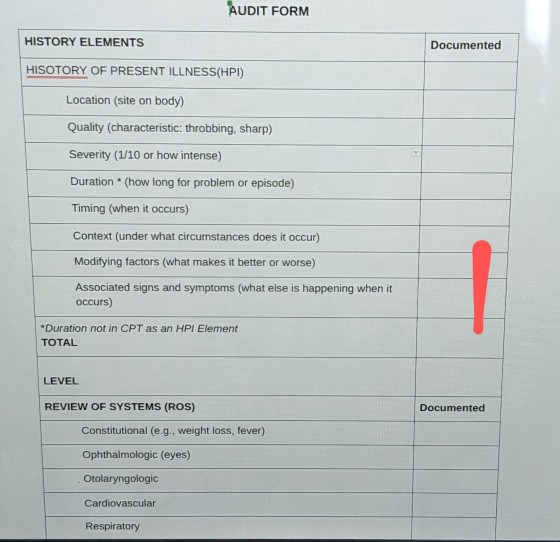
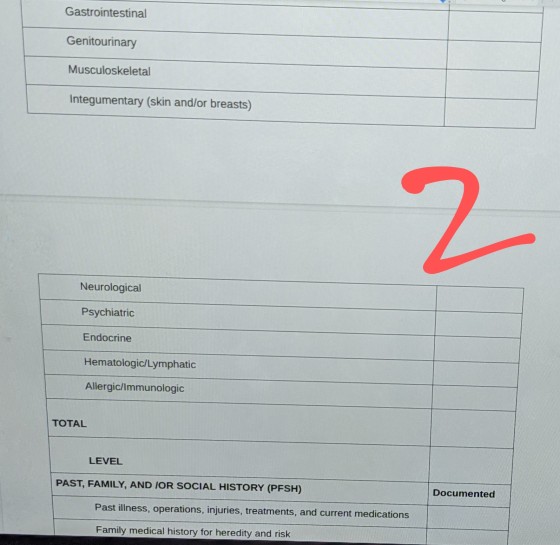
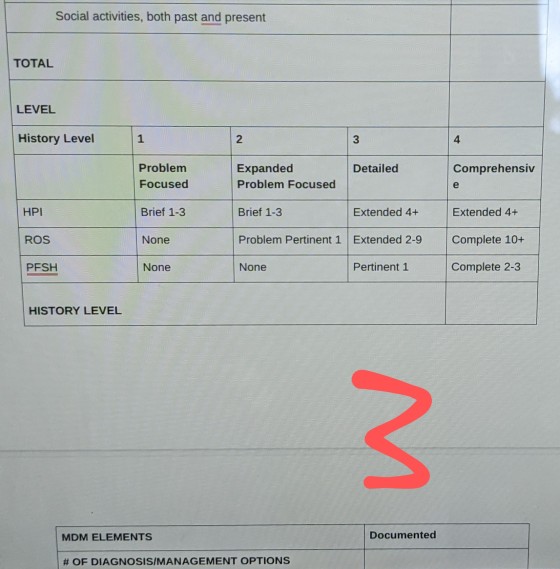
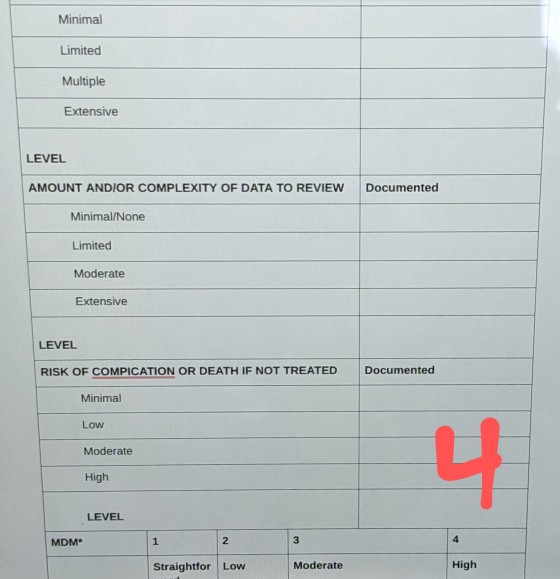
One of the following codes is reported incorrectly for this cate Indicate the incorrect code.
PROFESSIONAL SERVICES: Suprahyoid neck dissection, 38700; Bilateral advancement flaps, 14060-51; Excision of left lower lip lesion, 11644-51
ICD-10-CM DX: Neck mass, R22.1; Squamous cell carcinoma of the skin of the lip, C44.02
INCORRECT CODE:
Homework Answers
Request Answer!
10 have requested this problem solution
The more requests, the faster the answer.
Code in ICD 10 pcs 32. Operative Report PREOPERATIVE DIAGNOSIS: Displaced left femoral neck fracture POSTOPERATIVE...
 Code in ICD 10 pcs
32. Operative Report PREOPERATIVE DIAGNOSIS: Displaced left femoral neck fracture POSTOPERATIVE DIAGNOSIS: Displaced left femoral neck fracture PROCEDURE PERFORMED: Left hip hemiarthroplasty Case Studies INDICATIONS: This 525 had a mechanical fall. He had de TIONS: This 96-year-old male sustained a fall earlier today. He was ical fall. He had demonstrated a fracture and a hemiarthroplast d the expectations, the risk of infection, dislocation, tissue injury. anest atient and family wished to proceed. The potential for...
Code in ICD 10 pcs
32. Operative Report PREOPERATIVE DIAGNOSIS: Displaced left femoral neck fracture POSTOPERATIVE DIAGNOSIS: Displaced left femoral neck fracture PROCEDURE PERFORMED: Left hip hemiarthroplasty Case Studies INDICATIONS: This 525 had a mechanical fall. He had de TIONS: This 96-year-old male sustained a fall earlier today. He was ical fall. He had demonstrated a fracture and a hemiarthroplast d the expectations, the risk of infection, dislocation, tissue injury. anest atient and family wished to proceed. The potential for...
Assign the CPT surgery code(s) and the appropriate HCPCS level II and CPT modifier(s). PREOPERATIVE DIAGNOSIS:...
Assign the CPT surgery code(s) and the appropriate HCPCS level II and CPT modifier(s). PREOPERATIVE DIAGNOSIS: Rule out lymphoma. Enlarged lymph node of axillary area on the left. POSTOPERATIVE DIAGNOSIS: Same. ANESTHESIA: Local, using 0.5% Marcaine without epinephrine The patient was brought to the operating room, and after adequate prepping and draping of the left axillary area, a large several-centimeters-in-diameter lymph node was palpated medially and superiorly. The skin overlying this node was infiltrated with 0.5% Marcaine without epinephrine, and...
Case 4 Preoperative and postoperative diagnosis Painful enlarging right vulvar eyst Operation performed: Excision of right...
 Case 4 Preoperative and postoperative diagnosis Painful enlarging right vulvar eyst Operation performed: Excision of right vulvar cyst Reason for surgery: This 34-year-old female patient has a vulvar cyst that is causing pain and discomfort The patient was taken to the OR and placed in the supine position. IV analgesis was started, and then she has placed in the dorsal lithotomy position. The surgical site was prepared with Lidocaine 1%, and then epinephrine and bicarb was administered. A 20- mm...
Instructions: Assign the CPT code(s) and appropriate modifier(s) to each case. Please be aware that when an answer consi...
Instructions: Assign the CPT code(s) and appropriate modifier(s) to each case. Please be aware that when an answer consists of more than one code, there will be an answer blank for each code. 1. Via transabdominal approach, the physician performs imbrication by overlapping diaphragm tissue to ensure that the diaphragm is in the correct position and the eventration is corrected. 2. A patient is found to have a cystlike lesion per magnetic resonance imaging (MRI) of the mediastinum. This is...
fond service code and icd-10 cm code Buck's The CASE 5-4A Operative Report, Lesions LOCATION: Outpartient,...
 fond service code and icd-10 cm code
Buck's The CASE 5-4A Operative Report, Lesions LOCATION: Outpartient, Hospital PATIENT Tom Boll the superomedial aspect with a silk suture. Dissection was carried down to the deep layer of fascia, and bleeding was electrocoagulated One 2-0 Monocryl suture was used subcuticularly to take tension off the wound, and then the skin was closed with interrupted vertical mattress sutures of 3-0 Prolene. We submimed the specimen for SURGEON Gary Sanchez, MD PREOPERATIVE DIAGNOSIS. Lesions,...
fond service code and icd-10 cm code
Buck's The CASE 5-4A Operative Report, Lesions LOCATION: Outpartient, Hospital PATIENT Tom Boll the superomedial aspect with a silk suture. Dissection was carried down to the deep layer of fascia, and bleeding was electrocoagulated One 2-0 Monocryl suture was used subcuticularly to take tension off the wound, and then the skin was closed with interrupted vertical mattress sutures of 3-0 Prolene. We submimed the specimen for SURGEON Gary Sanchez, MD PREOPERATIVE DIAGNOSIS. Lesions,...
Audit Report 5.5
 Audit Report 5.5 Operative Report Malignant MelanomaLOCATION: Outpatient HospitalPATIENT: Jane LoveSURGEON: Gary Sanchez MDPREOPERATIVE DIAGNOSIS: Large lipoma of the lower abdomen POSTOPERATIVE DIAGNOSIS: Malignant neurona, lower abdomenPROCEDURE PERFORMED: Radical excision of large nest of the abdomen, which measured 9 cm x 12 cmANESTHESIA: General anesthesiaINDICATION: The patient has a mass in the lower back. This is becoming quite bothersome to her. We docussed treatment options of observation versus surgical excision. She wishes to have this excised. We discussed the procedure as...
Assign the ICD-10-CM codes to diagnoses and conditions and assign the CPT surgery codes and the...
Assign the ICD-10-CM codes to diagnoses and conditions and assign the CPT surgery codes and the appropriate HCPCS level II and CPT modifiers. Do not assign ICD-10-CM external cause codes. PREOPERATIVE DIAGNOSIS: left middle trigger finger. POSTOPERATIVE DIAGNOSIS: left middle trigger finger. OPERATION PERFORMED: tenolysis Under satisfactory IV block anesthesia, the patient was prepped and draped in the usual fashion. A traverse incision was made parallel to the distal palmar crease area overlying the middle finger, and the wound was...
Please assign the correct ICD-10-PCS codes to the following operative report: PREOPERATIVE DIAGNOSIS: Degenerative arthritis of...
 Please assign the correct ICD-10-PCS codes to the following operative report: PREOPERATIVE DIAGNOSIS: Degenerative arthritis of the 1st metatarsophalangeal joint, left foot, resulting in a hallux limbus Hammertoe deformity, second toe left foot POSTOPERATIVE DIAGNOSIS: Same OPERATION: Mayo-Keller arthroplasty resection with total joint implant, left foot. Hammertoe correction, second toe left foot. PROCEDURE: The patient was brought to the OR and placed in the dorsal recumbent position. After the induction of general anesthetics, the left foot was prepped and draped...
Audit Report 5.1
 Audit Report 5.1 Operative Report, BiopsyLOCATION: Inpatient, Hospital PATIENT: Arvid ComerSURGEON: Mohamad Almaz, MDATTENDING PHYSICIAN: Mohomad Almaz, MDPREOPERATIVE DIAGNOSIS: Cellulitis of the right hip AISTOPERATIVE DIAGNOSIS: Cellulitisof the right hip OPERATIVE PROCEDURE. Biopsy of the right hip cellulitisANESTHESIA: 1% XylocaineINDICATIONS FOR PROCEDURE: The patient is a 73-year-old Caucasian male who is critically ill. The patient has developed cellulitis of his right tip, and a biopsy was needed for diagnostic purposes for culture.DESCRIPTION OF PROCEDURE The patient was prepped with Betadine volution. One percent...
LOCATION: Inpatient, Hospital PATIENT: SURGEON: PREOPERATIVE.DIAGNOSES: 1. Septal deviation. 2. B...
LOCATION: Inpatient, Hospital PATIENT: SURGEON: PREOPERATIVE.DIAGNOSES: 1. Septal deviation. 2. Bilateral sinonasal polyposis. 3. Pansinusitis, chronic 4. Bilateral inferior turbinate hypertrophy. 5. Nasal obstruction. POSTOPERATIVE DIAGNOSIS: Same. PROCEDURE PERFORMED: 1.Bilateral endoscopic total ethmoidectomy. 2. Bilateral endoscopic maxillary antrostomy with removal of polyps from maxillary sinus. 3. Bilateral endoscopic sphenoidotomy. 4. Septoplasty. 5. Bilateral inferior turbinate overfracture. ANESTHESIA: Endotracheal. INDICATIONS: A 43-year-old male with history of nasal trauma that resulted in a septal deviation. He also has a history of bilateral...
 Code in ICD 10 pcs
32. Operative Report PREOPERATIVE DIAGNOSIS: Displaced left femoral neck fracture POSTOPERATIVE DIAGNOSIS: Displaced left femoral neck fracture PROCEDURE PERFORMED: Left hip hemiarthroplasty Case Studies INDICATIONS: This 525 had a mechanical fall. He had de TIONS: This 96-year-old male sustained a fall earlier today. He was ical fall. He had demonstrated a fracture and a hemiarthroplast d the expectations, the risk of infection, dislocation, tissue injury. anest atient and family wished to proceed. The potential for...
Code in ICD 10 pcs
32. Operative Report PREOPERATIVE DIAGNOSIS: Displaced left femoral neck fracture POSTOPERATIVE DIAGNOSIS: Displaced left femoral neck fracture PROCEDURE PERFORMED: Left hip hemiarthroplasty Case Studies INDICATIONS: This 525 had a mechanical fall. He had de TIONS: This 96-year-old male sustained a fall earlier today. He was ical fall. He had demonstrated a fracture and a hemiarthroplast d the expectations, the risk of infection, dislocation, tissue injury. anest atient and family wished to proceed. The potential for...
 Case 4 Preoperative and postoperative diagnosis Painful enlarging right vulvar eyst Operation performed: Excision of right vulvar cyst Reason for surgery: This 34-year-old female patient has a vulvar cyst that is causing pain and discomfort The patient was taken to the OR and placed in the supine position. IV analgesis was started, and then she has placed in the dorsal lithotomy position. The surgical site was prepared with Lidocaine 1%, and then epinephrine and bicarb was administered. A 20- mm...
 fond service code and icd-10 cm code
Buck's The CASE 5-4A Operative Report, Lesions LOCATION: Outpartient, Hospital PATIENT Tom Boll the superomedial aspect with a silk suture. Dissection was carried down to the deep layer of fascia, and bleeding was electrocoagulated One 2-0 Monocryl suture was used subcuticularly to take tension off the wound, and then the skin was closed with interrupted vertical mattress sutures of 3-0 Prolene. We submimed the specimen for SURGEON Gary Sanchez, MD PREOPERATIVE DIAGNOSIS. Lesions,...
fond service code and icd-10 cm code
Buck's The CASE 5-4A Operative Report, Lesions LOCATION: Outpartient, Hospital PATIENT Tom Boll the superomedial aspect with a silk suture. Dissection was carried down to the deep layer of fascia, and bleeding was electrocoagulated One 2-0 Monocryl suture was used subcuticularly to take tension off the wound, and then the skin was closed with interrupted vertical mattress sutures of 3-0 Prolene. We submimed the specimen for SURGEON Gary Sanchez, MD PREOPERATIVE DIAGNOSIS. Lesions,...
 Please assign the correct ICD-10-PCS codes to the following operative report: PREOPERATIVE DIAGNOSIS: Degenerative arthritis of the 1st metatarsophalangeal joint, left foot, resulting in a hallux limbus Hammertoe deformity, second toe left foot POSTOPERATIVE DIAGNOSIS: Same OPERATION: Mayo-Keller arthroplasty resection with total joint implant, left foot. Hammertoe correction, second toe left foot. PROCEDURE: The patient was brought to the OR and placed in the dorsal recumbent position. After the induction of general anesthetics, the left foot was prepped and draped...
Most questions answered within 3 hours.
-
Where is the error in this code sequence?
String s1 = "Hello";
String s2 = "ello";...
asked 11 months ago -
Financial data for Joel de Paris, Inc., for last year
follow:
Joel de Paris, Inc.
Balance...
asked 11 months ago -
Consider this reaction:
Al2(SO4)3 (aq)+ BaCl3
(aq) Al2Cl6 (aq)- +
3BaSO4(s) . What is the...
asked 11 months ago -
Suppose that Savneet is considering increasing her
recent random sample from 20 car rentals to 40...
asked 11 months ago -
Trucks arrive at an unloading terminal at an average rate of 120
per hour.
Trucks arrive...
asked 11 months ago -
Why are methanol and ethanol completely soluble in water while
octanol is not very little soluble....
asked 11 months ago -
A facilities manager at a university reads in a research report
that the mean amount of...
asked 11 months ago -
When the CuSO4 is rehydrated by adding water to the anhydrous
compound, is this an endothermic...
asked 11 months ago -
A ray of sunlight is passing from diamond into crown glass; the
angle of incidence is...
asked 11 months ago -
A block of mass 0.249 kg is placed on top of a light, vertical
spring of...
asked 11 months ago -
how do the kidneys compensate in the presences of acidosis
a) trigger hyperventilate
b) reserve acid...
asked 11 months ago -
Question 501 pts
The rental rate of capital to the firm increases. Which of the
following...
asked 11 months ago