
Homework Answers


Add Answer to:
Or (B) The following is the electrical equivalent model of a fluid system. Find the state...
. A linear, time invariant system is described as the following state equation and output equation,...
. A linear, time invariant system is described as the following state equation and output equation, dx1/dt= -x1(t)+x2(t)+u(t) dx2/dt=-x1(t)-x2(t)+x3(t) dx3/dt=-2x2(t)+x3(t)-2u(t) y(t)=x1(t)+2x2(t)+2x3(t) re-write the state space equation as following, determine matrices A, B, C and D:dx/dt=Ax+Bu y(t)=Cx+Du(t)
It’s a one question with three parts not three different questions. So answer them all please....
 It’s a one question with three parts not three different questions.
So answer them all please.
Power Electronics.
The state variable description of a linear dynamical system has the form x=Ax+Bu y=Cx + Du Where x is a column vector containing the n state variablesand x, which is also a column vector containing the first derivative of each state variable. The input is ul) and the output is y(). The output may or may not be a state variable, but...
It’s a one question with three parts not three different questions.
So answer them all please.
Power Electronics.
The state variable description of a linear dynamical system has the form x=Ax+Bu y=Cx + Du Where x is a column vector containing the n state variablesand x, which is also a column vector containing the first derivative of each state variable. The input is ul) and the output is y(). The output may or may not be a state variable, but...
1. A state space linear system is shown below. dx1(t)/dt=x1(t)+x2(t)-x3(t)+u1(t) dx2(t)/dt=--x3(t)-u1(t) dx3(t)/dt=-x3(t)-u2(t) y(t)=-x1(t)+x3(t) (1) Re-write the...
1. A state space linear system is shown below. dx1(t)/dt=x1(t)+x2(t)-x3(t)+u1(t) dx2(t)/dt=--x3(t)-u1(t) dx3(t)/dt=-x3(t)-u2(t) y(t)=-x1(t)+x3(t) (1) Re-write the state space equation as following, determine matrices A, B, C and D dx(t)/at=Ax+Bu y(t)=Cx+Du (2) Determine the matrix Q that is Q=[B A*B (A^2)*B (A^3)*B L (A^(n-1)*B] (3) Determine if the rank of Q is n (n=3) and determine if the system is controllable
For a Mechanical Engineering System Dynamics class 2. i) Obtain the state model for the reduced-form...
 For a Mechanical Engineering
System Dynamics class
2. i) Obtain the state model for the reduced-form model 28 +62 + 12x = 10y(t). Use x, and xz as the state variables. Put the equations in standard form and find [A] and [B] matrices. Given the state variable model x = x; – 5x, + f (1) * = -30x, +10f2(1) where f(t) and f (t) are the inputs, and the output equations y = x, - x2 + f,0 Y2...
For a Mechanical Engineering
System Dynamics class
2. i) Obtain the state model for the reduced-form model 28 +62 + 12x = 10y(t). Use x, and xz as the state variables. Put the equations in standard form and find [A] and [B] matrices. Given the state variable model x = x; – 5x, + f (1) * = -30x, +10f2(1) where f(t) and f (t) are the inputs, and the output equations y = x, - x2 + f,0 Y2...
a) [15 marks] Write the differential equations that describe the behavior of the electrical system shown...
 a) [15 marks] Write the differential equations that describe the behavior of the electrical system shown in Figure 1. Assume that all electrical components behave linearly. Note that v(t) is an external input voltage signal, and vi(t) is the output voltage signal, respectively. 0000 1H 1Ω 1Ω M v(t) Figure 1. Electrical network for question 1. Use the currents ij, iz, and iz which flow through the inductors next to the red, green, and blue arrows, respectively, as the key...
70. In each part, find matrices A, x, and b that express the given system of...
 70. In each part, find matrices A, x, and b that express the given system of linear equations as a single matrix equation Ax = b, and write out this matrix equation. (a) 2x1- x2+3x3= xi + 3x2 X2-X3= 1 -X1 (b) 4x1 + 4x2 + 4x3 = 4 4x2-2x3 =-2
4- For the electrical system given in the figure: (a) Derive the equations of motion (b)...
 4- For the electrical system given in the figure: (a) Derive the equations of motion (b) Draw the equivalent Signal Flow Diagram (c) Using the Signal Flow Diagram obtain V./Vout R2 Ri out() Us(1) C)
Consider a system described by the following equations: · 1 = I1 – 2x122 + u,...
 Consider a system described by the following equations: · 1 = I1 – 2x122 + u, º2 = X122 – 22, where x = (x1, x2) is the state and u is an input. (a) Find all equilibrium points for u = 0. (b) For each equilibrium point x = (ū1, 72), find the linearization of the system about the equilibrium. Express your results in state- space form, ż= Az + Bu, where z=x-. Also give the output equation y=...
Answer Q.2,3,4 and 5 9:56 Done 5 of 7 04. a) Obtain the state variable model...
 Answer Q.2,3,4 and 5
9:56 Done 5 of 7 04. a) Obtain the state variable model of the following system. Find A and B matrices in standard form. 3X(t) 6X(t) + 12 X()+3 Y (t) U() 4 Y(t) + 4 X(t)+8 Y(t)-12 U(t) b) Let the Outputs be X and Y + U(you might have renamed those variables. Use names), find C and D metrices in standard form. your new os.a) Draw a block diagram for h folowing model. The...
Answer Q.2,3,4 and 5
9:56 Done 5 of 7 04. a) Obtain the state variable model of the following system. Find A and B matrices in standard form. 3X(t) 6X(t) + 12 X()+3 Y (t) U() 4 Y(t) + 4 X(t)+8 Y(t)-12 U(t) b) Let the Outputs be X and Y + U(you might have renamed those variables. Use names), find C and D metrices in standard form. your new os.a) Draw a block diagram for h folowing model. The...
Figure 3 shows a lumped-parameter representation of a concept for a MEMS "tuning fork gyro- scope"...
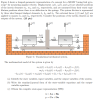 Figure 3 shows a lumped-parameter representation of a concept for a MEMS "tuning fork gyro- scope" for measuring angular velocity. Displacement 21(t), 22(t), and y(t) are absolute positions of the inertia elements m, m2, and m3, respectively, and are measured from their static equi- librium positions where there is no deflection in the springs. The system friction is represented by three ideal lumped dashpot elements bi, by, and by. Two external forces fi(t) and fa(t) are applied to masses m,...
 It’s a one question with three parts not three different questions.
So answer them all please.
Power Electronics.
The state variable description of a linear dynamical system has the form x=Ax+Bu y=Cx + Du Where x is a column vector containing the n state variablesand x, which is also a column vector containing the first derivative of each state variable. The input is ul) and the output is y(). The output may or may not be a state variable, but...
It’s a one question with three parts not three different questions.
So answer them all please.
Power Electronics.
The state variable description of a linear dynamical system has the form x=Ax+Bu y=Cx + Du Where x is a column vector containing the n state variablesand x, which is also a column vector containing the first derivative of each state variable. The input is ul) and the output is y(). The output may or may not be a state variable, but...
 For a Mechanical Engineering
System Dynamics class
2. i) Obtain the state model for the reduced-form model 28 +62 + 12x = 10y(t). Use x, and xz as the state variables. Put the equations in standard form and find [A] and [B] matrices. Given the state variable model x = x; – 5x, + f (1) * = -30x, +10f2(1) where f(t) and f (t) are the inputs, and the output equations y = x, - x2 + f,0 Y2...
For a Mechanical Engineering
System Dynamics class
2. i) Obtain the state model for the reduced-form model 28 +62 + 12x = 10y(t). Use x, and xz as the state variables. Put the equations in standard form and find [A] and [B] matrices. Given the state variable model x = x; – 5x, + f (1) * = -30x, +10f2(1) where f(t) and f (t) are the inputs, and the output equations y = x, - x2 + f,0 Y2...
 a) [15 marks] Write the differential equations that describe the behavior of the electrical system shown in Figure 1. Assume that all electrical components behave linearly. Note that v(t) is an external input voltage signal, and vi(t) is the output voltage signal, respectively. 0000 1H 1Ω 1Ω M v(t) Figure 1. Electrical network for question 1. Use the currents ij, iz, and iz which flow through the inductors next to the red, green, and blue arrows, respectively, as the key...
 70. In each part, find matrices A, x, and b that express the given system of linear equations as a single matrix equation Ax = b, and write out this matrix equation. (a) 2x1- x2+3x3= xi + 3x2 X2-X3= 1 -X1 (b) 4x1 + 4x2 + 4x3 = 4 4x2-2x3 =-2
 4- For the electrical system given in the figure: (a) Derive the equations of motion (b) Draw the equivalent Signal Flow Diagram (c) Using the Signal Flow Diagram obtain V./Vout R2 Ri out() Us(1) C)
 Consider a system described by the following equations: · 1 = I1 – 2x122 + u, º2 = X122 – 22, where x = (x1, x2) is the state and u is an input. (a) Find all equilibrium points for u = 0. (b) For each equilibrium point x = (ū1, 72), find the linearization of the system about the equilibrium. Express your results in state- space form, ż= Az + Bu, where z=x-. Also give the output equation y=...
 Answer Q.2,3,4 and 5
9:56 Done 5 of 7 04. a) Obtain the state variable model of the following system. Find A and B matrices in standard form. 3X(t) 6X(t) + 12 X()+3 Y (t) U() 4 Y(t) + 4 X(t)+8 Y(t)-12 U(t) b) Let the Outputs be X and Y + U(you might have renamed those variables. Use names), find C and D metrices in standard form. your new os.a) Draw a block diagram for h folowing model. The...
Answer Q.2,3,4 and 5
9:56 Done 5 of 7 04. a) Obtain the state variable model of the following system. Find A and B matrices in standard form. 3X(t) 6X(t) + 12 X()+3 Y (t) U() 4 Y(t) + 4 X(t)+8 Y(t)-12 U(t) b) Let the Outputs be X and Y + U(you might have renamed those variables. Use names), find C and D metrices in standard form. your new os.a) Draw a block diagram for h folowing model. The...
 Figure 3 shows a lumped-parameter representation of a concept for a MEMS "tuning fork gyro- scope" for measuring angular velocity. Displacement 21(t), 22(t), and y(t) are absolute positions of the inertia elements m, m2, and m3, respectively, and are measured from their static equi- librium positions where there is no deflection in the springs. The system friction is represented by three ideal lumped dashpot elements bi, by, and by. Two external forces fi(t) and fa(t) are applied to masses m,...
Most questions answered within 3 hours.
-
Where is the error in this code sequence?
String s1 = "Hello";
String s2 = "ello";...
asked 10 months ago -
Financial data for Joel de Paris, Inc., for last year
follow:
Joel de Paris, Inc.
Balance...
asked 10 months ago -
Consider this reaction:
Al2(SO4)3 (aq)+ BaCl3
(aq) Al2Cl6 (aq)- +
3BaSO4(s) . What is the...
asked 10 months ago -
Suppose that Savneet is considering increasing her
recent random sample from 20 car rentals to 40...
asked 10 months ago -
Trucks arrive at an unloading terminal at an average rate of 120
per hour.
Trucks arrive...
asked 10 months ago -
Why are methanol and ethanol completely soluble in water while
octanol is not very little soluble....
asked 10 months ago -
A facilities manager at a university reads in a research report
that the mean amount of...
asked 10 months ago -
When the CuSO4 is rehydrated by adding water to the anhydrous
compound, is this an endothermic...
asked 10 months ago -
A ray of sunlight is passing from diamond into crown glass; the
angle of incidence is...
asked 10 months ago -
A block of mass 0.249 kg is placed on top of a light, vertical
spring of...
asked 10 months ago -
how do the kidneys compensate in the presences of acidosis
a) trigger hyperventilate
b) reserve acid...
asked 10 months ago -
Question 501 pts
The rental rate of capital to the firm increases. Which of the
following...
asked 10 months ago