You are assigned to the account for a new hybrid automobile. Discuss the research that you...
You are assigned to the account for a new hybrid automobile. Discuss the research that you need to conduct for each step in the strategic decision-making process. What do you need to do in order to put together a useful brief for the creative team?
CLASS: ADVERTISING (MK380)
PLEASE USE REFERENCES AND CITE....THANK YOU!!!!
Homework Answers
Hybrid Vehicle Marketing
1.0 Introduction
The role of the marketing planning process is to examine, define, and present how marketing activity will support the achievement of the organization’s strategic business objectives However, the true marketing planning process goes well beyond Kotler’s definition. The organization’s strategic business objectives need to be set taking account of its long-term vision and mission. In addition, the marketing audit forms a fundamental part of the process as it constantly feeds back data about the organization’s changing marketing environment. There are a number of sequential and logical steps that follow the marketing audit.
2.0 Marketing Audit
2.1 The Macro Environment – PESTEL Analysis
Political
Governments are encouraging manufacturers to produce cars with improved fuel economy by imposing high fuel taxes and/or strict limits on vehicle emissions.
Economic
The worldwide economic downturn and rising fuel prices are forcing consumers to reduce their motoring costs.
Social and Cultural
Consumers are now increasingly well informed about the major global environmental issues and actively consider the ‘green credentials’ of the products they buy .
Technological
Technological progress is being made in the production of batteries, which are essential for the efficient powering of hybrids .
Environmental
Fossil fuels are a major contributor to carbon emissions and there is a growing demand to reduce carbon emissions for vehicles using alternative and ‘greener’ energy sources
Legal
Vehicle carbon emissions are monitored and controlled by law in a number of countries including the UK.
2.2.1 The Global Market for PHEVs
The the global market for PHEVs is forecast to be dominated by the USA with approximately 640,000 vehicles expected to be in use there by 2015. The USA will be closely followed by China with 560,000 vehicles. The global sales of hybridss are expected to reach 1.7 million by 2015.
2.2.2 Market Shares
When purchasing a hybrid, many consumers will probably opt for a brand of vehicle that they are already familiar with, and trust. Therefore, manufactures such as Toyota and Honda are likely to benefit from their established positions in the market.
2.3 The Internal Environment - SWOT Analysis
The identification of internal strengths and weaknesses helps identify an organisation’s strategic capabilities and limitations and assist in illustrating how those factors can be managed in terms of minimizing threats and maximizing opportunities.
Strengths
Weaknesses
Core Competencies
Research and development as evidenced by entry into Formula 1.
International engineering expertise.
Brand Reputation
Domestic and international awards for its car models.
Distribution.
Domestic market share
Strong presence in various countries
Human Resources
Financial Resources
Core Competencies
Brand Reputation
Distribution
Financial Resources
Opportunities
Threats
Market trends
Regulatory changes
Global governmental and legal pressures are working in favour of the Hybrid Automobile market.
Economic Situation.
High entry cost for Hybrid Automobile ownership.
Distribution
2.4 Market Segmentation, Targeting, and Positioning
3.1 Market Segmentation
Consumer markets can generally be segmented in three ways based on:
Socio-demographics - including age groupings, gender, location, family size, income levels, and educational standard achieved.
Psychographics - including lifestyle and personality characteristics.
Behavioural factors - including attitudes, perceptions values, beliefs and learning, cultural, social.
Market segmentation, as a discipline, is now widely recognised as being a precondition for the successful global marketing of products and services.
3.2 Targeting
In view of the findings from the Marketing Audit and with reference to the study by Ernst and Young (2010), it is proposed that the target audience for the Hybrid automobiles be defined thus:
Socio- demographics: Existing car owners and those who expect to purchase a car within the next three years; middle to high-income earners; located globally but with a strong bias towards China.
Psychographics: City dwellers who drive less than fifty miles per day on average.
Behavioral factors: Motorists who are primarily interested in saving money on fuel and are not necessarily concerned about environmental factors.
3.3 Positioning
Positioning a brand is an attempt by a business to influence consumer perception and behaviour (Perreault and McCarthy, 1999).
However, brand positioning should go beyond simply reinforcing a brand’s current position in the marketplace by disseminating messages about the emotional position it wants to adopt. In other words, how does the brand’s position make the targeted consumer think and feel and will this influence the way that the target consumer segment behaves?
4.0 Marketing Strategies – Communicating and Delivering Value
4.1 Competitive Advantage
Porter (1980) believes that organisations can use certain generic strategies to exceed the performance of their competitors and thereby establish a competitive advantage - see Figure 2 below.
Whilst Proton is currently able to compete on price in its domestic market, due to government protectionist policies, its position outside Malaysia, means that it has to differentiate its product to compete effectively. Consequently, it is proposed that Proton adopts a narrow scope, differentiation focus for its global generic strategy.
4.2 Customer Value
Customer value is the cornerstone of developing and maintaining customer relationships, which leads to customer satisfaction and ultimately, customer loyalty. Customer value is created through ‘value propositions’, which are the benefits that an organisation undertakes to deliver to its customers. Value propositions are an integral part of building differentiation and competitive advantage (Armstrong and Kotler, 2008).
For example, subject to research, it may promise to deliver ‘the lowest running costs of any hybrid vehicle’. Customer value is delivered through all elements of the marketing mix and is a fundamental dimension of the brand.
4.3 Branding
To build its brand equity, Proton needs to engage with its customers, and potential customers, at all ‘touch points’ for all stakeholders. These touch points include all formalised internal communication activity, such as employees magazines and intranets, all external promotional activity, such as advertising and direct marketing, customer call centres and helplines, and contacts with the supply chain.
The stakeholder’s interaction with such touch points provides Proton with an opportunity to influence the perception of the brand in terms of whether it meets expectations or not across a range of dimensions, for example, providing an opportunity to grow the business for financial stakeholders, and delivering value for end consumers. In addition, it is vital that there is an integrated and consistent delivery of brand messages across all touch points (Doyle, 1998). Equally, however, branding messages for a global market challenger, such as Proton, must be of relevance and appeal to local markets. This ability to think globally but act locally can help to reinforce Proton’s competitive advantage strategy (Taylor, 1991).
4.4 Product Strategy
In view of its proposed market position as a market challenger gaining competitive advantage through a narrow scope, differentiation focus, any hybrid automobile needs to meet the following specification:
Features: Such as the ease of access and use of the charger.
Customization: Chinese market tastes and preferences generally require, for example, a more ‘formal’ vehicle interior than for say the US market (Bloomberg Business Week, 2010).
Performance: Maneuverability in small spaces. Adequate acceleration for city use.
Conformance: Must conform to local regulatory controls over vehicle emissions and safety standards.
Durability: Resilient enough to cope with heavy usage in high population density centres.
Reliability: Highly reliable with guaranteed driving distances
Repairability: Ease of repair is important in all car market segments but especially so for new car technologies as this provides the purchaser with reassurance.
Style: In view of the expected relatively high price of the hybrids, styling will be important.
In terms of pre and post purchase customer service then the following are important:
Ordering ease: The vehicle needs to be easy to order from local dealers.
Delivery: Guaranteed delivery times of no more than four weeks from ordering.
Customer induction training: In view of the new technology present in the car, customers need extended training such as how to charge the battery.
Customer consulting: Customers need reassurance messages pre and post purchase.
Maintenance and repair: An extensive network of dedicated servicing facilities with fully trained technicians.
Returns: Due to the advanced technical nature of the product, there are certain to be returns and these must be managed effectively to avoid customer dissatisfaction and promote customer goodwill and advocacy, which is vital in this new marketplace.
4.5 Pricing Strategy
Even though the recommendation is to compete on differentiation, the pricing strategy, although not market leading, still needs to be competitive for a new product like the hybrids, where there will be considerable competition from more established brands.
4.6 Promotional Strategy
4.6.1 Promotional Tools
According to Fill’s ‘4C’s’ model (2002), four principal dimensions characterize each of the main communications tools, namely:
Communications Impact
Credibility
Costs
Control
4.7.2 Promotional Messages
The external promotional messages should deliver value through being emotively positioned based on the motivating factors behind the purchase decision for hybrids.
According to independent research, the major purchase motivation for hybrids is economic in terms of the fuel savings that can be realized. Reassurance about battery driving range, access to charging stations and vehicle price are also significant factors in the purchase decision (Ernst and Young, 2010).
5.0 Marketing Implementation, Management, and Control
The effective management of marketing projects, such as the launch of a new product like the Proton PHEV, requires a number of interrelated activities to be controlled including:
The assembly and management of a dedicated project team.
The setting of objectives and evaluation of activities against those objectives.
The control and reporting of promotional and other expenditure against budget.
The production of a calendar of key marketing events.
The measurement and reporting of marketing mix activities effectiveness.
It is the responsibility of the Project Manager, in this case, the Marketing Manager, to oversee the project but not to necessarily be responsible for all aspects of its implementation.
At its most fundamental level marketing management involves the appropriate selection of target consumer segments and the building of mutually beneficial relationships with the consumers in those segments (Armstrong and Kotler, 2008). To discharge these responsibilities effectively the Marketing Manager will need to possess a broad range of skills including effective financial and human resource management, an understanding of the relationship between marketing and sales, profit-optimization planning and forecasting, and marketing mix planning and optimization.
It is the role of the marketing department, under the leadership of the Marketing Manager, to plan, manage, execute, control, and evaluate the marketing strategy (Kotler et al, 2009, p.4). For this to be done effectively, the Marketing Manager must make strategic and long-term decisions as well as tactical and short term marketing mix decisions (Kotler et al, 2009, p.6).
Planning
Develop Strategic Plans
Develop Marketing Plans
Implementation
Carry out the Plans
Marketing Audit – Internal and External
Control
Measure Results.
Evaluate Results
Take Corrective Action
6.0 Marketing Metrics
Historically the measurement of the effectiveness of marketing activities has been a contentious and difficult process but it is increasingly recognized as an essential requirement for assessing the return on investment for any new product (Clancy and Stone, 2005).
As a starting point, marketing performance needs to be measured against the marketing objectives. This will assist in assessing likely changes in future market share (Kotler, 2001). Following this, a post launch evaluation needs to carried out with actual volume sales used to calculate actual market share. Quantitative measures of financial performance, in terms of return on investment, also need to be analysed in the short and longer term. All of these measurements need to be further analysed in causal and relative terms and fed back into the ongoing marketing planning process.
REFERENCES
Aaker, D.A. (1982), ‘Positioning your product’, Business
Horizons, 25 (3), 56–62.
Basic Marketing : A Global-Managerial Approach– 1999 by William D.
McCarthy, E. Jerome; Perreault (Author)
Bell, S.J., Menguc, B. and Stefani, S.L. (2004), ‘When Customers
Disappoint: A Model of Relational Internal Marketing and Customer
Complaints’, Journal of the Academy of Marketing Science, 32 (2),
112–26.
Cravens, D.W., Shipp, S.H. and Cravens, K.S. (1993), ‘Analysis of
co-operative interorganizational relationships, strategic alliance
formation, and strategic alliance effectiveness’, Journal of
Strategic Marketing, March, 55–70.
Deshpandé, R., Farley, J.U. and Webster, F.E. (1993), ‘Corporate
culture, customer orientation and innovativeness in Japanese firms:
a quadrad analysis’, Journal of Marketing, 57, 23–27.
Fisher, J.C. and Pry, R.M. (1978), ‘A simple substitution model of
technological change’, Technological Forecasting and Social Change,
3 (1), 75–88.
Gubman, E.L. (1995), ‘Aligning people strategies with customer
value’, Compensation and Benefits Review, 27 (1), 15–22.
Hooley, G.J., Möller, K. and Broderick, A.J. (1998), ‘Competitive
Positioning and the Resource Based View of the Firm’, Journal of
Strategic Marketing, 6 (2), 97–115.
Keith, R.J. (1960), ‘The marketing revolution’, Journal of
Marketing, 24 (1), 35–8.
Kotler, P.C. (1978), ‘Harvesting strategies for weak products’,
Business Horizons, 21 (4), 15–22. Kotler, P.C. (1997), Marketing
Management: Analysis, planning, implementation and control, 9th
edn, Hemel Hempstead: Prentice Hall International. Kotler, P.C. and
Singh, R. (1981), ‘Marketing warfare in the 1980s’, Journal of
Business Strategy, 1 (3), 30–41. References 586 .. MARS_Z01.qxd
11/16/07 2:01 PM Page 586 Kotler, P.C., Fahey, L. and
Jatusritpitak, S. (1985), The New Competition, Hemel Hempstead:
Prentice Hall. Kotler, P.C., Gregor, W. and Rogers, W. (1989), ‘The
marketing audit comes of age’, Sloan Management Review, 18 (2),
49–62. Kotler, P.C., Armstrong, G., Saunders, J.A. and Wong, V.
(1996), Principles of Marketing: the European Edition, Hemel
Hempstead: Prentice Hall. Kotler, P. and Keller, K.L. (2007), A
Framework for Marketing Management, 3rd edn, Pearson/ Prentice
Hall.
Porter, M. E. Competitive Strategy: Techniques for Analyzing
Industries and Competitors. New York: Free Press, 1980.
(Republished with a new introduction, 1998.)
Porter, Michael E. Competitive strategy: techniques for analyzing
industries and competitors.
Principles of Marketing, 12th Edition
Philip T. Kotler, Northwestern University
Peter Doyle, Veronica Wong, (1998) "Marketing and competitive
performance: an empirical study", European Journal of Marketing,
Vol. 32 Issue: 5/6, pp.514-535, Gary Armstrong, University of North
Carolina.
Regan, G. (1992), Military Blunders, London: Guinness. Reichheld,
F. (1993), ‘Loyalty-based management’, Harvard Business Review, 71
(2), 64–73.
Gauging interest for plug-in hybrid and electric vehicles in select
markets Compared results, Ernst & Young. EYG No. ED0033.
Saunders, J.A. (1994), ‘Cluster analysis’, in G.J. Hooley and M.K.
Hussey (eds), Quantitative Methods in Marketing, London: Academic
Press.
Hybrid Vehicle Marketing
1.0 Introduction
The role of the marketing planning process is to examine, define, and present how marketing activity will support the achievement of the organization’s strategic business objectives However, the true marketing planning process goes well beyond Kotler’s definition. The organization’s strategic business objectives need to be set taking account of its long-term vision and mission. In addition, the marketing audit forms a fundamental part of the process as it constantly feeds back data about the organization’s changing marketing environment. There are a number of sequential and logical steps that follow the marketing audit.
2.0 Marketing Audit
2.1 The Macro Environment – PESTEL Analysis
Political
Governments are encouraging manufacturers to produce cars with improved fuel economy by imposing high fuel taxes and/or strict limits on vehicle emissions.
Economic
The worldwide economic downturn and rising fuel prices are forcing consumers to reduce their motoring costs.
Social and Cultural
Consumers are now increasingly well informed about the major global environmental issues and actively consider the ‘green credentials’ of the products they buy .
Technological
Technological progress is being made in the production of batteries, which are essential for the efficient powering of hybrids .
Environmental
Fossil fuels are a major contributor to carbon emissions and there is a growing demand to reduce carbon emissions for vehicles using alternative and ‘greener’ energy sources
Legal
Vehicle carbon emissions are monitored and controlled by law in a number of countries including the UK.
2.2.1 The Global Market for PHEVs
The the global market for PHEVs is forecast to be dominated by the USA with approximately 640,000 vehicles expected to be in use there by 2015. The USA will be closely followed by China with 560,000 vehicles. The global sales of hybridss are expected to reach 1.7 million by 2015.
2.2.2 Market Shares
When purchasing a hybrid, many consumers will probably opt for a brand of vehicle that they are already familiar with, and trust. Therefore, manufactures such as Toyota and Honda are likely to benefit from their established positions in the market.
2.3 The Internal Environment - SWOT Analysis
The identification of internal strengths and weaknesses helps identify an organisation’s strategic capabilities and limitations and assist in illustrating how those factors can be managed in terms of minimizing threats and maximizing opportunities.
Strengths
Weaknesses
Core Competencies
Research and development as evidenced by entry into Formula 1.
International engineering expertise.
Brand Reputation
Domestic and international awards for its car models.
Distribution.
Domestic market share
Strong presence in various countries
Human Resources
Financial Resources
Core Competencies
Brand Reputation
Distribution
Financial Resources
Opportunities
Threats
Market trends
Regulatory changes
Global governmental and legal pressures are working in favour of the Hybrid Automobile market.
Economic Situation.
High entry cost for Hybrid Automobile ownership.
Distribution
2.4 Market Segmentation, Targeting, and Positioning
3.1 Market Segmentation
Consumer markets can generally be segmented in three ways based on:
Socio-demographics - including age groupings, gender, location, family size, income levels, and educational standard achieved.
Psychographics - including lifestyle and personality characteristics.
Behavioural factors - including attitudes, perceptions values, beliefs and learning, cultural, social.
Market segmentation, as a discipline, is now widely recognised as being a precondition for the successful global marketing of products and services.
3.2 Targeting
In view of the findings from the Marketing Audit and with reference to the study by Ernst and Young (2010), it is proposed that the target audience for the Hybrid automobiles be defined thus:
Socio- demographics: Existing car owners and those who expect to purchase a car within the next three years; middle to high-income earners; located globally but with a strong bias towards China.
Psychographics: City dwellers who drive less than fifty miles per day on average.
Behavioral factors: Motorists who are primarily interested in saving money on fuel and are not necessarily concerned about environmental factors.
3.3 Positioning
Positioning a brand is an attempt by a business to influence consumer perception and behaviour (Perreault and McCarthy, 1999).
However, brand positioning should go beyond simply reinforcing a brand’s current position in the marketplace by disseminating messages about the emotional position it wants to adopt. In other words, how does the brand’s position make the targeted consumer think and feel and will this influence the way that the target consumer segment behaves?
4.0 Marketing Strategies – Communicating and Delivering Value
4.1 Competitive Advantage
Porter (1980) believes that organisations can use certain generic strategies to exceed the performance of their competitors and thereby establish a competitive advantage - see Figure 2 below.
Whilst Proton is currently able to compete on price in its domestic market, due to government protectionist policies, its position outside Malaysia, means that it has to differentiate its product to compete effectively. Consequently, it is proposed that Proton adopts a narrow scope, differentiation focus for its global generic strategy.
4.2 Customer Value
Customer value is the cornerstone of developing and maintaining customer relationships, which leads to customer satisfaction and ultimately, customer loyalty. Customer value is created through ‘value propositions’, which are the benefits that an organisation undertakes to deliver to its customers. Value propositions are an integral part of building differentiation and competitive advantage (Armstrong and Kotler, 2008).
For example, subject to research, it may promise to deliver ‘the lowest running costs of any hybrid vehicle’. Customer value is delivered through all elements of the marketing mix and is a fundamental dimension of the brand.
4.3 Branding
To build its brand equity, Proton needs to engage with its customers, and potential customers, at all ‘touch points’ for all stakeholders. These touch points include all formalised internal communication activity, such as employees magazines and intranets, all external promotional activity, such as advertising and direct marketing, customer call centres and helplines, and contacts with the supply chain.
The stakeholder’s interaction with such touch points provides Proton with an opportunity to influence the perception of the brand in terms of whether it meets expectations or not across a range of dimensions, for example, providing an opportunity to grow the business for financial stakeholders, and delivering value for end consumers. In addition, it is vital that there is an integrated and consistent delivery of brand messages across all touch points (Doyle, 1998). Equally, however, branding messages for a global market challenger, such as Proton, must be of relevance and appeal to local markets. This ability to think globally but act locally can help to reinforce Proton’s competitive advantage strategy (Taylor, 1991).
4.4 Product Strategy
In view of its proposed market position as a market challenger gaining competitive advantage through a narrow scope, differentiation focus, any hybrid automobile needs to meet the following specification:
Features: Such as the ease of access and use of the charger.
Customization: Chinese market tastes and preferences generally require, for example, a more ‘formal’ vehicle interior than for say the US market (Bloomberg Business Week, 2010).
Performance: Maneuverability in small spaces. Adequate acceleration for city use.
Conformance: Must conform to local regulatory controls over vehicle emissions and safety standards.
Durability: Resilient enough to cope with heavy usage in high population density centres.
Reliability: Highly reliable with guaranteed driving distances
Repairability: Ease of repair is important in all car market segments but especially so for new car technologies as this provides the purchaser with reassurance.
Style: In view of the expected relatively high price of the hybrids, styling will be important.
In terms of pre and post purchase customer service then the following are important:
Ordering ease: The vehicle needs to be easy to order from local dealers.
Delivery: Guaranteed delivery times of no more than four weeks from ordering.
Customer induction training: In view of the new technology present in the car, customers need extended training such as how to charge the battery.
Customer consulting: Customers need reassurance messages pre and post purchase.
Maintenance and repair: An extensive network of dedicated servicing facilities with fully trained technicians.
Returns: Due to the advanced technical nature of the product, there are certain to be returns and these must be managed effectively to avoid customer dissatisfaction and promote customer goodwill and advocacy, which is vital in this new marketplace.
4.5 Pricing Strategy
Even though the recommendation is to compete on differentiation, the pricing strategy, although not market leading, still needs to be competitive for a new product like the hybrids, where there will be considerable competition from more established brands.
4.6 Promotional Strategy
4.6.1 Promotional Tools
According to Fill’s ‘4C’s’ model (2002), four principal dimensions characterize each of the main communications tools, namely:
Communications Impact
Credibility
Costs
Control
4.7.2 Promotional Messages
The external promotional messages should deliver value through being emotively positioned based on the motivating factors behind the purchase decision for hybrids.
According to independent research, the major purchase motivation for hybrids is economic in terms of the fuel savings that can be realized. Reassurance about battery driving range, access to charging stations and vehicle price are also significant factors in the purchase decision (Ernst and Young, 2010).
5.0 Marketing Implementation, Management, and Control
The effective management of marketing projects, such as the launch of a new product like the Proton PHEV, requires a number of interrelated activities to be controlled including:
The assembly and management of a dedicated project team.
The setting of objectives and evaluation of activities against those objectives.
The control and reporting of promotional and other expenditure against budget.
The production of a calendar of key marketing events.
The measurement and reporting of marketing mix activities effectiveness.
It is the responsibility of the Project Manager, in this case, the Marketing Manager, to oversee the project but not to necessarily be responsible for all aspects of its implementation.
At its most fundamental level marketing management involves the appropriate selection of target consumer segments and the building of mutually beneficial relationships with the consumers in those segments (Armstrong and Kotler, 2008). To discharge these responsibilities effectively the Marketing Manager will need to possess a broad range of skills including effective financial and human resource management, an understanding of the relationship between marketing and sales, profit-optimization planning and forecasting, and marketing mix planning and optimization.
It is the role of the marketing department, under the leadership of the Marketing Manager, to plan, manage, execute, control, and evaluate the marketing strategy (Kotler et al, 2009, p.4). For this to be done effectively, the Marketing Manager must make strategic and long-term decisions as well as tactical and short term marketing mix decisions (Kotler et al, 2009, p.6).
Planning
Develop Strategic Plans
Develop Marketing Plans
Implementation
Carry out the Plans
Marketing Audit – Internal and External
Control
Measure Results.
Evaluate Results
Take Corrective Action
6.0 Marketing Metrics
Historically the measurement of the effectiveness of marketing activities has been a contentious and difficult process but it is increasingly recognized as an essential requirement for assessing the return on investment for any new product (Clancy and Stone, 2005).
As a starting point, marketing performance needs to be measured against the marketing objectives. This will assist in assessing likely changes in future market share (Kotler, 2001). Following this, a post launch evaluation needs to carried out with actual volume sales used to calculate actual market share. Quantitative measures of financial performance, in terms of return on investment, also need to be analysed in the short and longer term. All of these measurements need to be further analysed in causal and relative terms and fed back into the ongoing marketing planning process.
REFERENCES
- Aaker, D.A. (1982), ‘Positioning your product’, Business Horizons, 25 (3), 56–62.
- Basic Marketing : A Global-Managerial Approach– 1999 by William D. McCarthy, E. Jerome; Perreault (Author)
- Bell, S.J., Menguc, B. and Stefani, S.L. (2004), ‘When Customers Disappoint: A Model of Relational Internal Marketing and Customer Complaints’, Journal of the Academy of Marketing Science, 32 (2), 112–26.
- Cravens, D.W., Shipp, S.H. and Cravens, K.S. (1993), ‘Analysis of co-operative interorganizational relationships, strategic alliance formation, and strategic alliance effectiveness’, Journal of Strategic Marketing, March, 55–70.
- Deshpandé, R., Farley, J.U. and Webster, F.E. (1993), ‘Corporate culture, customer orientation and innovativeness in Japanese firms: a quadrad analysis’, Journal of Marketing, 57, 23–27.
- Fisher, J.C. and Pry, R.M. (1978), ‘A simple substitution model of technological change’, Technological Forecasting and Social Change, 3 (1), 75–88.
- Gubman, E.L. (1995), ‘Aligning people strategies with customer value’, Compensation and Benefits Review, 27 (1), 15–22.
- Hooley, G.J., Möller, K. and Broderick, A.J. (1998), ‘Competitive Positioning and the Resource Based View of the Firm’, Journal of Strategic Marketing, 6 (2), 97–115.
- Keith, R.J. (1960), ‘The marketing revolution’, Journal of Marketing, 24 (1), 35–8.
- Kotler, P.C. (1978), ‘Harvesting strategies for weak products’, Business Horizons, 21 (4), 15–22. Kotler, P.C. (1997), Marketing Management: Analysis, planning, implementation and control, 9th edn, Hemel Hempstead: Prentice Hall International. Kotler, P.C. and Singh, R. (1981), ‘Marketing warfare in the 1980s’, Journal of Business Strategy, 1 (3), 30–41. References 586 .. MARS_Z01.qxd 11/16/07 2:01 PM Page 586 Kotler, P.C., Fahey, L. and Jatusritpitak, S. (1985), The New Competition, Hemel Hempstead: Prentice Hall. Kotler, P.C., Gregor, W. and Rogers, W. (1989), ‘The marketing audit comes of age’, Sloan Management Review, 18 (2), 49–62. Kotler, P.C., Armstrong, G., Saunders, J.A. and Wong, V. (1996), Principles of Marketing: the European Edition, Hemel Hempstead: Prentice Hall. Kotler, P. and Keller, K.L. (2007), A Framework for Marketing Management, 3rd edn, Pearson/ Prentice Hall.
- Porter, M. E. Competitive Strategy: Techniques for Analyzing Industries and Competitors. New York: Free Press, 1980. (Republished with a new introduction, 1998.)
- Porter, Michael E. Competitive strategy: techniques for analyzing industries and competitors.
- Principles of Marketing, 12th Edition
- Philip T. Kotler, Northwestern University
- Peter Doyle, Veronica Wong, (1998) "Marketing and competitive performance: an empirical study", European Journal of Marketing, Vol. 32 Issue: 5/6, pp.514-535, Gary Armstrong, University of North Carolina.
- Regan, G. (1992), Military Blunders, London: Guinness. Reichheld, F. (1993), ‘Loyalty-based management’, Harvard Business Review, 71 (2), 64–73.
- Gauging interest for plug-in hybrid and electric vehicles in select markets Compared results, Ernst & Young. EYG No. ED0033.
- Saunders, J.A. (1994), ‘Cluster analysis’, in G.J. Hooley and M.K. Hussey (eds), Quantitative Methods in Marketing, London: Academic Press.
Add Answer to:
You are assigned to the account for a new hybrid automobile.
Discuss the research that you...
Use your own words, don't copy and paste, don't use handwriting, please. i need your references U...
use your own words, don't copy and paste, don't use handwriting, please. i need your references URL Link please** Book: Marketing Management DEVELOP A CREATIVE BRIEF A creative brief is a structured document whose purpose is to communicate quickly and concisely to anyone who might be involved in the creation of promotional materials for a product. The key to making the project a success starts with having a thorough and well-thought-out creative brief. It explains the ins and outs of...
Imagine a university hired you as a management consultant to devise new strategic actions for 2022....
Imagine a university hired you as a management consultant to devise new strategic actions for 2022. Walk us through the steps that you will take to identity and assess various external forces/variables that might affect your client. Please be sure to present the process within a strategic decision making framework. It is critical to briefly discuss the analytical perspective/lens that you will utilize to analyze this case. Please cite at least 1 resource to support your discussions
I have homework i was answered it .. but i need you to complete my answer...
I have homework i was answered it .. but i need you to complete my answer to become 1000 words // i need 1000 words please use your own words, don't copy and paste, don't use handwriting, please. i need your references URL Link please** Book: Marketing Management ________________ Q: DEVELOP A CREATIVE BRIEF A creative brief is a structured document whose purpose is to communicate quickly and concisely to anyone who might be involved in the creation of promotional...
You have been asked by your boss to manage the development of a new after-sale service...
You have been asked by your boss to manage the development of a new after-sale service for an automobile dealer. What are the various roles that need to be filled on your planning team? What types of questions can a project manager ask to determine the priority of an assigned project? What adaptive decision making activities might characterize the Christian manager?
Ethical Scenario- A company uses patient DNA for research without the patients knowledge or DNA Explain...
 Ethical Scenario- A company uses patient DNA for research without
the patients knowledge or DNA
Explain how evidence based - research can elimnate or minimize
ethical concerns in the health care industry.
Select one of the following ethical scenarios: • A company uses patient DNA for research without the patient's knowledge or consent. • A nonprofit organization sells fetal tissue for research. (Do not assume this is illegal; this may be legal in some states or jurisdictions.) • Management invites...
Ethical Scenario- A company uses patient DNA for research without
the patients knowledge or DNA
Explain how evidence based - research can elimnate or minimize
ethical concerns in the health care industry.
Select one of the following ethical scenarios: • A company uses patient DNA for research without the patient's knowledge or consent. • A nonprofit organization sells fetal tissue for research. (Do not assume this is illegal; this may be legal in some states or jurisdictions.) • Management invites...
Suppose you already a highway hotel used mostly by daily commuters. Write a 3-4 page creative bri...
Suppose you already a highway hotel used mostly by daily commuters. Write a 3-4 page creative brief directed to an outside marketing or advertising agency for the purpose of promoting your (Bed & breakfast or Small hotel). The items below are the subheadings for your creative brief. 1. Describe your company Provide context and background information on your company to help the designer or creative team get a better understanding of your business. Who are you and what services and/or...
Summary Put on your marketing manager hat and use the provided Marketing Research Approach Template to...
Summary Put on your marketing manager hat and use the provided Marketing Research Approach Template to develop a proposal for how you will use the five-step Marketing Research Approach to develop a strategy for solving a marketing problem or addressing a marketing opportunity. Presentation In your presentation, do the following [Note, the Marketing Research Approach Template provides a fill-in-the-blank template that will simplify this project]: Define your offering (product or service) Explain your marketing problem or opportunity Identify three groups...
You are a high school health teacher. The school board has just adopted a policy that...
You are a high school health teacher. The school board has just adopted a policy that prohibits the teaching or discussing of information related to contraceptives or abortion in the district. The only approach that can be mentioned in the classroom is abstinence. You have read research that the abstinence approaches is not as effective as some may think. After class one day, one of your student approaches you and informs you that she’s pregnant. She request your help and...
You are a research team working at university admissions and consulting industry. You are assigned to...
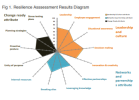 You are a research team working at university admissions and
consulting industry. You are assigned to prepare a report to the
board of ABC univesity located at Istanbul on how to improve
university’s resilience to hazards including natural disasters such
as earthquakes.
The university for the last five years have been fueled by
international enrollment growth. But the risk of an hazard could
change the landscape of university admissions for the foreseeable
future.
Your team conducted a health check resilience...
You are a research team working at university admissions and
consulting industry. You are assigned to prepare a report to the
board of ABC univesity located at Istanbul on how to improve
university’s resilience to hazards including natural disasters such
as earthquakes.
The university for the last five years have been fueled by
international enrollment growth. But the risk of an hazard could
change the landscape of university admissions for the foreseeable
future.
Your team conducted a health check resilience...
Imagine sitting in class on a warm spring day. You’re trying to pay attention, but your...
 Imagine sitting in class on a warm spring day. You’re trying to
pay attention, but your mind keeps wandering off, as you think
about last weekend’s amazing concert. In the distance, you hear
your professor say something about a “group project.”
Suddenly you sit up straight and start paying close attention.
Your professor wants you to work with four other students to
critique management practices at a company of your choice.
Fortunately, you have four close friends in class. You’ve...
Imagine sitting in class on a warm spring day. You’re trying to
pay attention, but your mind keeps wandering off, as you think
about last weekend’s amazing concert. In the distance, you hear
your professor say something about a “group project.”
Suddenly you sit up straight and start paying close attention.
Your professor wants you to work with four other students to
critique management practices at a company of your choice.
Fortunately, you have four close friends in class. You’ve...
 Ethical Scenario- A company uses patient DNA for research without
the patients knowledge or DNA
Explain how evidence based - research can elimnate or minimize
ethical concerns in the health care industry.
Select one of the following ethical scenarios: • A company uses patient DNA for research without the patient's knowledge or consent. • A nonprofit organization sells fetal tissue for research. (Do not assume this is illegal; this may be legal in some states or jurisdictions.) • Management invites...
Ethical Scenario- A company uses patient DNA for research without
the patients knowledge or DNA
Explain how evidence based - research can elimnate or minimize
ethical concerns in the health care industry.
Select one of the following ethical scenarios: • A company uses patient DNA for research without the patient's knowledge or consent. • A nonprofit organization sells fetal tissue for research. (Do not assume this is illegal; this may be legal in some states or jurisdictions.) • Management invites...
 You are a research team working at university admissions and
consulting industry. You are assigned to prepare a report to the
board of ABC univesity located at Istanbul on how to improve
university’s resilience to hazards including natural disasters such
as earthquakes.
The university for the last five years have been fueled by
international enrollment growth. But the risk of an hazard could
change the landscape of university admissions for the foreseeable
future.
Your team conducted a health check resilience...
You are a research team working at university admissions and
consulting industry. You are assigned to prepare a report to the
board of ABC univesity located at Istanbul on how to improve
university’s resilience to hazards including natural disasters such
as earthquakes.
The university for the last five years have been fueled by
international enrollment growth. But the risk of an hazard could
change the landscape of university admissions for the foreseeable
future.
Your team conducted a health check resilience...
 Imagine sitting in class on a warm spring day. You’re trying to
pay attention, but your mind keeps wandering off, as you think
about last weekend’s amazing concert. In the distance, you hear
your professor say something about a “group project.”
Suddenly you sit up straight and start paying close attention.
Your professor wants you to work with four other students to
critique management practices at a company of your choice.
Fortunately, you have four close friends in class. You’ve...
Imagine sitting in class on a warm spring day. You’re trying to
pay attention, but your mind keeps wandering off, as you think
about last weekend’s amazing concert. In the distance, you hear
your professor say something about a “group project.”
Suddenly you sit up straight and start paying close attention.
Your professor wants you to work with four other students to
critique management practices at a company of your choice.
Fortunately, you have four close friends in class. You’ve...
Most questions answered within 3 hours.
-
Where is the error in this code sequence?
String s1 = "Hello";
String s2 = "ello";...
asked 11 months ago -
Financial data for Joel de Paris, Inc., for last year
follow:
Joel de Paris, Inc.
Balance...
asked 11 months ago -
Consider this reaction:
Al2(SO4)3 (aq)+ BaCl3
(aq) Al2Cl6 (aq)- +
3BaSO4(s) . What is the...
asked 11 months ago -
Suppose that Savneet is considering increasing her
recent random sample from 20 car rentals to 40...
asked 11 months ago -
Trucks arrive at an unloading terminal at an average rate of 120
per hour.
Trucks arrive...
asked 11 months ago -
Why are methanol and ethanol completely soluble in water while
octanol is not very little soluble....
asked 11 months ago -
A facilities manager at a university reads in a research report
that the mean amount of...
asked 11 months ago -
When the CuSO4 is rehydrated by adding water to the anhydrous
compound, is this an endothermic...
asked 11 months ago -
A ray of sunlight is passing from diamond into crown glass; the
angle of incidence is...
asked 11 months ago -
A block of mass 0.249 kg is placed on top of a light, vertical
spring of...
asked 11 months ago -
how do the kidneys compensate in the presences of acidosis
a) trigger hyperventilate
b) reserve acid...
asked 11 months ago -
Question 501 pts
The rental rate of capital to the firm increases. Which of the
following...
asked 11 months ago