
Homework Answers
Add Answer to:
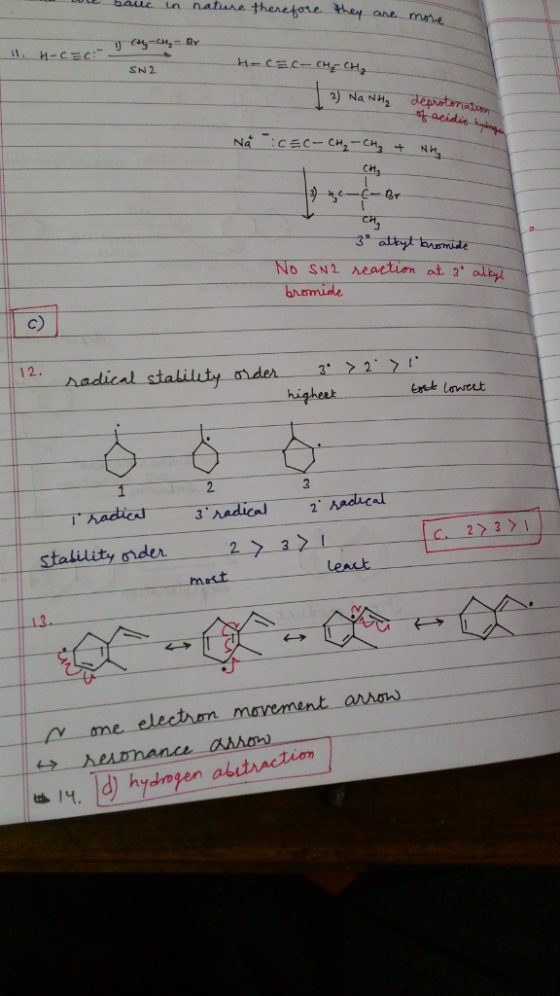
11. Which of the following best explains why the synthetic route shown below would be unsuccessful?...
Question 1 (6 points) Predict the major product(s) of the following reaction. hv ? Bra x...
 Question 1 (6 points) Predict the major product(s) of the following reaction. hv ? Bra x Br Br Br BI III IV 11 O a) IV Ob) III Oc) 1 and 11 d) 11 e) 1 Question 15 (6 points) Predict the major product(s) of the following reaction. hv ? Br2 torerna 1 HII IV a) I and IV b) ill and V c) O d) v e) II and IV Question 16 (6 points) Which term most accurately describes...
I would appreciate help on both of these questions. C. H. So, 11.0 13. Which of...
 I would appreciate help on both of these questions.
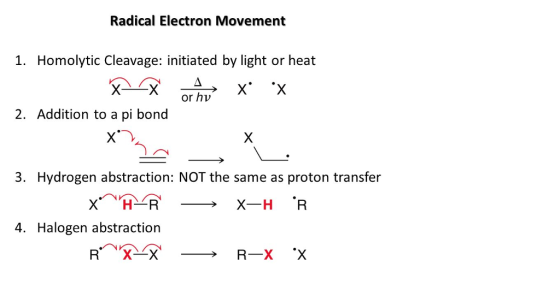
C. H. So, 11.0 13. Which of the following is the reverse of halogen abstraction in a radical mechanism? 1) MCPBA: 2) H0 a. hydrogen abstraction b. homolytic cleavage c. elimination the reverse of halogen abstraction in a radical mechanism? d. coupling e. halogen abstraction I 14. Which sequence of reagents would efficiently transform Butane, CH,CH,CH2CH3, to 2- butene, CH,CH=CHCH,? a. 1) Cl, hv; 2) NaOH b. 1) NBS, O C;...
I would appreciate help on both of these questions.
C. H. So, 11.0 13. Which of the following is the reverse of halogen abstraction in a radical mechanism? 1) MCPBA: 2) H0 a. hydrogen abstraction b. homolytic cleavage c. elimination the reverse of halogen abstraction in a radical mechanism? d. coupling e. halogen abstraction I 14. Which sequence of reagents would efficiently transform Butane, CH,CH,CH2CH3, to 2- butene, CH,CH=CHCH,? a. 1) Cl, hv; 2) NaOH b. 1) NBS, O C;...
are my answers okay? 3. Use correct arrow formalism to show a bomolytic bond cleavage of...
 are my answers okay?
3. Use correct arrow formalism to show a bomolytic bond cleavage of ethane to produce two methyl radicals. 4 pts NH 66, hr CH₂ + CH3 HC 12. Ose correct arrow formalism to draw all of the reasonable resonance structures for the radical shown below. 4 pts 33. A bromine radical can add to the bond of 2-methylpropene. Use correct arrow formalism to show this process and the expected result. 4 pts - Br Bru 34....
are my answers okay?
3. Use correct arrow formalism to show a bomolytic bond cleavage of ethane to produce two methyl radicals. 4 pts NH 66, hr CH₂ + CH3 HC 12. Ose correct arrow formalism to draw all of the reasonable resonance structures for the radical shown below. 4 pts 33. A bromine radical can add to the bond of 2-methylpropene. Use correct arrow formalism to show this process and the expected result. 4 pts - Br Bru 34....
QUESTION 2 Which term best describes the bond cleavage shown below? H3C H3C + H-R R...
 QUESTION 2 Which term best describes the bond cleavage shown below? H3C H3C + H-R R C H Homolytic Heterolytic Homogenic Addition QUESTION 3 Which term best describes the process shown below? HI H Addition Substitution Subtraction Deprotonation I-O-I I-UI
For the synthetic scheme below, please indicate the following: reagents and reaction conditions s...
 For the synthetic scheme below, please indicate the following: reagents and reaction conditions step (above/below the arrows), name of each reaction, and the generic name of each product (15 pts). for each MgBr Names of reactions: Give generic names of compounds: B: D: G: ctly draw the mechanism for the reaction above 1. The first step in that reaction is A) Deprotonation of acetylenic H atom with R-X B) Formation of acetylide anion. C) Deprotonation of acetylenic H atom with...
Mechanisms Question 1 (22 marks) (a) Consider the radical chain reactions of the alkane shown below with Br, in the...
 Mechanisms Question 1 (22 marks) (a) Consider the radical chain reactions of the alkane shown below with Br, in the presence of light. H3C HH H C-CCHS CH3 Br2 hv 2 Different mono- bromo products 25 °C + (you will need to look up the bond dissociation energy (BDE) for the types of bonds formed and broken in this reactions) (i) Give the structures of the products from the reaction and using standard arrow conventions show the series of mechanistic...
For the synthetic scheme below, please indicate the following: reagents and reaction conditions step (above/below the...
 For the synthetic scheme below, please indicate the following: reagents and reaction conditions step (above/below the arrows), name of each reaction, and the generic name of each product (15 pts). for each MgBr Names of reactions: Give generic names of compounds: B: D: G: ctly draw the mechanism for the reaction above 1. The first step in that reaction is A) Deprotonation of acetylenic H atom with R-X B) Formation of acetylide anion. C) Deprotonation of acetylenic H atom with...
Which reaction sequence would result in the conversion shown below? Which reaction sequence would result in...
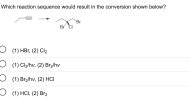 Which reaction sequence would result in the conversion shown
below?
Which reaction sequence would result in the conversion shown below? = > Br Вг Br. Ci (1) HBr, (2) C12 (1) Cly/hv, (2) Bra/hv (1) Brz/hv, (2) HCI (1) HCI, (2) Br2
Which reaction sequence would result in the conversion shown
below?
Which reaction sequence would result in the conversion shown below? = > Br Вг Br. Ci (1) HBr, (2) C12 (1) Cly/hv, (2) Bra/hv (1) Brz/hv, (2) HCI (1) HCI, (2) Br2
For the anion shown below, the number of resonance structures in which all the atoms obey...
 For the anion shown below, the number of resonance structures in which all the atoms obey the octet rule is :o: 11 с =G H3C CH3 0-I A 1 B. 2 C.3 D.4 E none of these answers is correct
please answer questions 9-12 Question 9 1 pts Which of the following statements describes the reactivity...
 please answer questions 9-12
Question 9 1 pts Which of the following statements describes the reactivity of alkynes? An alkyne is an electron-rich molecule and therefore reacts as a nucleophile. When a symmetrical internal alkyne reacts with HBr, two products are formed. Unlike alkenes, alkynes fail to undergo electrophilic addition reactions The o bonds of alkynes are greater in energy than the rt bonds and, therefore, are more reactive Alkynes react as electrophiles, whereas alkenes react as nucleophiles What is...
please answer questions 9-12
Question 9 1 pts Which of the following statements describes the reactivity of alkynes? An alkyne is an electron-rich molecule and therefore reacts as a nucleophile. When a symmetrical internal alkyne reacts with HBr, two products are formed. Unlike alkenes, alkynes fail to undergo electrophilic addition reactions The o bonds of alkynes are greater in energy than the rt bonds and, therefore, are more reactive Alkynes react as electrophiles, whereas alkenes react as nucleophiles What is...
 Question 1 (6 points) Predict the major product(s) of the following reaction. hv ? Bra x Br Br Br BI III IV 11 O a) IV Ob) III Oc) 1 and 11 d) 11 e) 1 Question 15 (6 points) Predict the major product(s) of the following reaction. hv ? Br2 torerna 1 HII IV a) I and IV b) ill and V c) O d) v e) II and IV Question 16 (6 points) Which term most accurately describes...
 I would appreciate help on both of these questions.
C. H. So, 11.0 13. Which of the following is the reverse of halogen abstraction in a radical mechanism? 1) MCPBA: 2) H0 a. hydrogen abstraction b. homolytic cleavage c. elimination the reverse of halogen abstraction in a radical mechanism? d. coupling e. halogen abstraction I 14. Which sequence of reagents would efficiently transform Butane, CH,CH,CH2CH3, to 2- butene, CH,CH=CHCH,? a. 1) Cl, hv; 2) NaOH b. 1) NBS, O C;...
I would appreciate help on both of these questions.
C. H. So, 11.0 13. Which of the following is the reverse of halogen abstraction in a radical mechanism? 1) MCPBA: 2) H0 a. hydrogen abstraction b. homolytic cleavage c. elimination the reverse of halogen abstraction in a radical mechanism? d. coupling e. halogen abstraction I 14. Which sequence of reagents would efficiently transform Butane, CH,CH,CH2CH3, to 2- butene, CH,CH=CHCH,? a. 1) Cl, hv; 2) NaOH b. 1) NBS, O C;...
 are my answers okay?
3. Use correct arrow formalism to show a bomolytic bond cleavage of ethane to produce two methyl radicals. 4 pts NH 66, hr CH₂ + CH3 HC 12. Ose correct arrow formalism to draw all of the reasonable resonance structures for the radical shown below. 4 pts 33. A bromine radical can add to the bond of 2-methylpropene. Use correct arrow formalism to show this process and the expected result. 4 pts - Br Bru 34....
are my answers okay?
3. Use correct arrow formalism to show a bomolytic bond cleavage of ethane to produce two methyl radicals. 4 pts NH 66, hr CH₂ + CH3 HC 12. Ose correct arrow formalism to draw all of the reasonable resonance structures for the radical shown below. 4 pts 33. A bromine radical can add to the bond of 2-methylpropene. Use correct arrow formalism to show this process and the expected result. 4 pts - Br Bru 34....
 QUESTION 2 Which term best describes the bond cleavage shown below? H3C H3C + H-R R C H Homolytic Heterolytic Homogenic Addition QUESTION 3 Which term best describes the process shown below? HI H Addition Substitution Subtraction Deprotonation I-O-I I-UI
 For the synthetic scheme below, please indicate the following: reagents and reaction conditions step (above/below the arrows), name of each reaction, and the generic name of each product (15 pts). for each MgBr Names of reactions: Give generic names of compounds: B: D: G: ctly draw the mechanism for the reaction above 1. The first step in that reaction is A) Deprotonation of acetylenic H atom with R-X B) Formation of acetylide anion. C) Deprotonation of acetylenic H atom with...
 Mechanisms Question 1 (22 marks) (a) Consider the radical chain reactions of the alkane shown below with Br, in the presence of light. H3C HH H C-CCHS CH3 Br2 hv 2 Different mono- bromo products 25 °C + (you will need to look up the bond dissociation energy (BDE) for the types of bonds formed and broken in this reactions) (i) Give the structures of the products from the reaction and using standard arrow conventions show the series of mechanistic...
 For the synthetic scheme below, please indicate the following: reagents and reaction conditions step (above/below the arrows), name of each reaction, and the generic name of each product (15 pts). for each MgBr Names of reactions: Give generic names of compounds: B: D: G: ctly draw the mechanism for the reaction above 1. The first step in that reaction is A) Deprotonation of acetylenic H atom with R-X B) Formation of acetylide anion. C) Deprotonation of acetylenic H atom with...
 Which reaction sequence would result in the conversion shown
below?
Which reaction sequence would result in the conversion shown below? = > Br Вг Br. Ci (1) HBr, (2) C12 (1) Cly/hv, (2) Bra/hv (1) Brz/hv, (2) HCI (1) HCI, (2) Br2
Which reaction sequence would result in the conversion shown
below?
Which reaction sequence would result in the conversion shown below? = > Br Вг Br. Ci (1) HBr, (2) C12 (1) Cly/hv, (2) Bra/hv (1) Brz/hv, (2) HCI (1) HCI, (2) Br2
 For the anion shown below, the number of resonance structures in which all the atoms obey the octet rule is :o: 11 с =G H3C CH3 0-I A 1 B. 2 C.3 D.4 E none of these answers is correct
 please answer questions 9-12
Question 9 1 pts Which of the following statements describes the reactivity of alkynes? An alkyne is an electron-rich molecule and therefore reacts as a nucleophile. When a symmetrical internal alkyne reacts with HBr, two products are formed. Unlike alkenes, alkynes fail to undergo electrophilic addition reactions The o bonds of alkynes are greater in energy than the rt bonds and, therefore, are more reactive Alkynes react as electrophiles, whereas alkenes react as nucleophiles What is...
please answer questions 9-12
Question 9 1 pts Which of the following statements describes the reactivity of alkynes? An alkyne is an electron-rich molecule and therefore reacts as a nucleophile. When a symmetrical internal alkyne reacts with HBr, two products are formed. Unlike alkenes, alkynes fail to undergo electrophilic addition reactions The o bonds of alkynes are greater in energy than the rt bonds and, therefore, are more reactive Alkynes react as electrophiles, whereas alkenes react as nucleophiles What is...
Most questions answered within 3 hours.
-
Where is the error in this code sequence?
String s1 = "Hello";
String s2 = "ello";...
asked 11 months ago -
Financial data for Joel de Paris, Inc., for last year
follow:
Joel de Paris, Inc.
Balance...
asked 11 months ago -
Consider this reaction:
Al2(SO4)3 (aq)+ BaCl3
(aq) Al2Cl6 (aq)- +
3BaSO4(s) . What is the...
asked 11 months ago -
Suppose that Savneet is considering increasing her
recent random sample from 20 car rentals to 40...
asked 11 months ago -
Trucks arrive at an unloading terminal at an average rate of 120
per hour.
Trucks arrive...
asked 11 months ago -
Why are methanol and ethanol completely soluble in water while
octanol is not very little soluble....
asked 11 months ago -
A facilities manager at a university reads in a research report
that the mean amount of...
asked 11 months ago -
When the CuSO4 is rehydrated by adding water to the anhydrous
compound, is this an endothermic...
asked 11 months ago -
A ray of sunlight is passing from diamond into crown glass; the
angle of incidence is...
asked 11 months ago -
A block of mass 0.249 kg is placed on top of a light, vertical
spring of...
asked 11 months ago -
how do the kidneys compensate in the presences of acidosis
a) trigger hyperventilate
b) reserve acid...
asked 11 months ago -
Question 501 pts
The rental rate of capital to the firm increases. Which of the
following...
asked 11 months ago