
Homework Answers
For smallest energy absorption the photon must be able to excite electron to the next shell n1 = 10 n2 = 11
E = 13.6*(1/n1^2 - 1/n2^2) = 13.6*(1/10^2 - 1/11^2) = 0.0236 eV
Add Answer to:
Question 2 (of 3) e: 0 points 5 out of 5 attem What is the smallest...
What is the smallest energy photon that can be absorbed by a hydrogen atom in its...
What is the smallest energy photon that can be absorbed by a hydrogen atom in its fifth excited state? (the answer is .1002 eV but I cannot figure out how to get that answer).
questions 1, 2, 3, 4 please answer all of them. Question 1: Which photon energies will...
 questions 1, 2, 3, 4 please answer all of them.
Question 1: Which photon energies will excite the Hydrogen atom when its electron is in the ground state (Hint: there are 5 named on the simulator, though there are more Question 2: Starting from the ground state, press the L, button twice in succession (that is, press it a second time before the electron decays). What happens to the electron? Question Complete the energy mange values for the excited state...
questions 1, 2, 3, 4 please answer all of them.
Question 1: Which photon energies will excite the Hydrogen atom when its electron is in the ground state (Hint: there are 5 named on the simulator, though there are more Question 2: Starting from the ground state, press the L, button twice in succession (that is, press it a second time before the electron decays). What happens to the electron? Question Complete the energy mange values for the excited state...
1. Express your answer in scientific notation. An x-ray photon of initial frequency 1.7 × 10¹⁹...
1. Express your answer in scientific notation. An x-ray photon of initial frequency 1.7 × 10¹⁹ Hz collides with a free electron at rest; the scattered photon moves off at 106°. What is the frequency of the scattered photon (in Hz)? 2. What is the smallest energy photon that can be absorbed by a hydrogen atom in its fifth excited state (in eV)?
1) If the electron starts out in the ground state and is excited to level E3...
 1) If the electron starts out in the ground state and is excited
to level E3 by an incoming photon, what was the wavelength of that
photon (in nm)?
a) 95.4 nm
b) 102.5nm
c) 121.5nm
d) 136.7 nm
e) 182.3 nm
2) When the electron transitioned from E1 to E3 its orbital
radius increased by a factor of:
A) 1 (It didn’t change)
B) 2
C) 3
D) 4
E) 9
3) What is the longest wavelength the hydrogen...
1) If the electron starts out in the ground state and is excited
to level E3 by an incoming photon, what was the wavelength of that
photon (in nm)?
a) 95.4 nm
b) 102.5nm
c) 121.5nm
d) 136.7 nm
e) 182.3 nm
2) When the electron transitioned from E1 to E3 its orbital
radius increased by a factor of:
A) 1 (It didn’t change)
B) 2
C) 3
D) 4
E) 9
3) What is the longest wavelength the hydrogen...
E-0.38 eV; E-0 eV) A. The electron will be raised from the ground state to the fifth "excited" state, i.e. ton-d. B. The electron will be raised from the ground state to an excited...
 E-0.38 eV; E-0 eV) A. The electron will be raised from the ground state to the fifth "excited" state, i.e. ton-d. B. The electron will be raised from the ground state to an excited state with n larger than 6, but will still be bound in the atom. The electron in the atom will drop down to the ground state. C. The electron will be removed from the atom. A gamma ray photon Eo strikes a hydrogen atom. Which of...
05 Question (4 points) When a hydrogen atom absorbs a photon of electromagnetic radiation (EMR), the...
 05 Question (4 points) When a hydrogen atom absorbs a photon of electromagnetic radiation (EMR), the internal energy of the atom increases and one or more electrons may be energized into an excited state. The release of this extra energy as the excited state electron transitions back to a lower energy state results in the emission of a photon. These energy changes are responsible for the emission spectrum of hydrogen (shown below) and are described by the Bohr equation. AE...
2) (5 points) A hydrogen atom at rest is in a state of quantum number n=6....
 2) (5 points) A hydrogen atom at rest is in a state of quantum number n=6. The electron jumps to a lower state, emitting a photon of energy 1.13 eV. (a) What is the quantum number of the state to which the electron jumped? (b) What is the ratio of the angular momentum of the electron after the emission of the photon? (c) Estimate the recoil speed of the hydrogen atom due to emission of the photon.
-/2 POINTS SERCP1128.3.P.010. MY NUTES | ASR YUUR TEACHER What is the energy in eV and...
 -/2 POINTS SERCP1128.3.P.010. MY NUTES | ASR YUUR TEACHER What is the energy in eV and wavelength in pm of a photon that, when absorbed by a hydrogen atom, could cause a transition from the n= 5 to the n=9 energy level? HINT (a) energy in eV (b) wavelength in um um
16) く !! Question 2 (0115) value: 10.00 points 1 out of 3 attem Starting with...
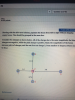 16) く !! Question 2 (0115) value: 10.00 points 1 out of 3 attem Starting with the left-most column, populate the boxes from left to right without skipping empty boxes. Ties should be grouped in the same box. Consider five charges as shown below. All of the charges have the same magnitude; the blue charges are negative, while the pink charge is positive. Rank the magnitudes of the forces between pairs of charges, and the net force on charge 2,...
 questions 1, 2, 3, 4 please answer all of them.
Question 1: Which photon energies will excite the Hydrogen atom when its electron is in the ground state (Hint: there are 5 named on the simulator, though there are more Question 2: Starting from the ground state, press the L, button twice in succession (that is, press it a second time before the electron decays). What happens to the electron? Question Complete the energy mange values for the excited state...
questions 1, 2, 3, 4 please answer all of them.
Question 1: Which photon energies will excite the Hydrogen atom when its electron is in the ground state (Hint: there are 5 named on the simulator, though there are more Question 2: Starting from the ground state, press the L, button twice in succession (that is, press it a second time before the electron decays). What happens to the electron? Question Complete the energy mange values for the excited state...
 1) If the electron starts out in the ground state and is excited
to level E3 by an incoming photon, what was the wavelength of that
photon (in nm)?
a) 95.4 nm
b) 102.5nm
c) 121.5nm
d) 136.7 nm
e) 182.3 nm
2) When the electron transitioned from E1 to E3 its orbital
radius increased by a factor of:
A) 1 (It didn’t change)
B) 2
C) 3
D) 4
E) 9
3) What is the longest wavelength the hydrogen...
1) If the electron starts out in the ground state and is excited
to level E3 by an incoming photon, what was the wavelength of that
photon (in nm)?
a) 95.4 nm
b) 102.5nm
c) 121.5nm
d) 136.7 nm
e) 182.3 nm
2) When the electron transitioned from E1 to E3 its orbital
radius increased by a factor of:
A) 1 (It didn’t change)
B) 2
C) 3
D) 4
E) 9
3) What is the longest wavelength the hydrogen...
 E-0.38 eV; E-0 eV) A. The electron will be raised from the ground state to the fifth "excited" state, i.e. ton-d. B. The electron will be raised from the ground state to an excited state with n larger than 6, but will still be bound in the atom. The electron in the atom will drop down to the ground state. C. The electron will be removed from the atom. A gamma ray photon Eo strikes a hydrogen atom. Which of...
 05 Question (4 points) When a hydrogen atom absorbs a photon of electromagnetic radiation (EMR), the internal energy of the atom increases and one or more electrons may be energized into an excited state. The release of this extra energy as the excited state electron transitions back to a lower energy state results in the emission of a photon. These energy changes are responsible for the emission spectrum of hydrogen (shown below) and are described by the Bohr equation. AE...
 2) (5 points) A hydrogen atom at rest is in a state of quantum number n=6. The electron jumps to a lower state, emitting a photon of energy 1.13 eV. (a) What is the quantum number of the state to which the electron jumped? (b) What is the ratio of the angular momentum of the electron after the emission of the photon? (c) Estimate the recoil speed of the hydrogen atom due to emission of the photon.
 -/2 POINTS SERCP1128.3.P.010. MY NUTES | ASR YUUR TEACHER What is the energy in eV and wavelength in pm of a photon that, when absorbed by a hydrogen atom, could cause a transition from the n= 5 to the n=9 energy level? HINT (a) energy in eV (b) wavelength in um um
 16) く !! Question 2 (0115) value: 10.00 points 1 out of 3 attem Starting with the left-most column, populate the boxes from left to right without skipping empty boxes. Ties should be grouped in the same box. Consider five charges as shown below. All of the charges have the same magnitude; the blue charges are negative, while the pink charge is positive. Rank the magnitudes of the forces between pairs of charges, and the net force on charge 2,...
Most questions answered within 3 hours.
-
Where is the error in this code sequence?
String s1 = "Hello";
String s2 = "ello";...
asked 11 months ago -
Financial data for Joel de Paris, Inc., for last year
follow:
Joel de Paris, Inc.
Balance...
asked 11 months ago -
Consider this reaction:
Al2(SO4)3 (aq)+ BaCl3
(aq) Al2Cl6 (aq)- +
3BaSO4(s) . What is the...
asked 11 months ago -
Suppose that Savneet is considering increasing her
recent random sample from 20 car rentals to 40...
asked 11 months ago -
Trucks arrive at an unloading terminal at an average rate of 120
per hour.
Trucks arrive...
asked 11 months ago -
Why are methanol and ethanol completely soluble in water while
octanol is not very little soluble....
asked 11 months ago -
A facilities manager at a university reads in a research report
that the mean amount of...
asked 11 months ago -
When the CuSO4 is rehydrated by adding water to the anhydrous
compound, is this an endothermic...
asked 11 months ago -
A ray of sunlight is passing from diamond into crown glass; the
angle of incidence is...
asked 11 months ago -
A block of mass 0.249 kg is placed on top of a light, vertical
spring of...
asked 11 months ago -
how do the kidneys compensate in the presences of acidosis
a) trigger hyperventilate
b) reserve acid...
asked 11 months ago -
Question 501 pts
The rental rate of capital to the firm increases. Which of the
following...
asked 11 months ago