
Homework Answers


Add Answer to:
2. Draw resonance structures for the two compounds shown below. There are four and three resonance...
14. Draw Lewis structures for the following compounds. If they exhibit resonance, draw one other resonance...
 14. Draw Lewis structures for the following compounds. If they exhibit resonance, draw one other resonance structure for a total of two structures. b. NO a. ХеО,F, d. SO с. С.Н, f. KrF e. SCI, 15. Draw three resonance structures of NO, in which the atoms are arranged in the order NNO. Indicate the formal charges in each.
1. There are four resonance structures for the N2O4 molecule. (1) Draw all the resonance structures...
1. There are four resonance structures for the N2O4 molecule. (1) Draw all the resonance structures using the skeletal structure shown below; (2) Calculate the formal charges of each atom in the molecule; (3) What is the average N-O bond order? (Please refer to example 8.10 in your book for guidance.)
14. Draw Lewis structures for the following compounds. If they exhibit resonance, draw one other resonance...
 14. Draw Lewis structures for the following compounds. If they exhibit resonance, draw one other resonance structure for a total of two structures a. XeO,F2 b. NO, c. C,H, d. SO, e. SCI. f. KrF,
(6) 5. Draw three resonance structures for the enolate of Meldrum's acid (shown below) that forms...
 (6) 5. Draw three resonance structures for the enolate of Meldrum's acid (shown below) that forms when one equivalent of NaOet is used. =1-H NaO
Review Part A Draw three resonance structures for sulfur tetroxide, SO4, whose connections are shown below....
 Review Part A Draw three resonance structures for sulfur tetroxide, SO4, whose connections are shown below. (This is a neutral molecule; it is not sulfate ion.) Assign formal charges to the atoms in each structure. O O 0—5—0 Sulfur tetroxide Draw all possible resonance structures by copying the skeleton shown. Edit bonds and charges to complete each resonance structure. Use the plus (S) and minus lone pairs of electrons will adjust automatically. ) charge buttons to indicate formal charges at...
Four resonance structures of the following cation are possible. Two resonance forms are given below, but...
 Four resonance structures of the following cation are possible. Two resonance forms are given below, but they are incomplete. Complete the given structures by adding nonbonding electrons and formal charges. Draw the two remaining resonance structures (in any order), including nonbonding electrons and formal charges HaC Ha H3 Which structure is the most stable (lowest energy) resonance contributor?
Three resonance structures of the following structure are possible. One resonance form is given below. Draw...
 Three resonance structures of the following structure are possible. One resonance form is given below. Draw the remaining resonance structures, in any order, including nonbonding electrons. Omit curved arrows.
(a) Draw two resonance structures of the cation shown below,shifting only one electron pair in...
 (a) Draw two resonance structures of the cation shown below,
shifting only one electron pair in each step. Be sure to include
the formal charge on structures B and C.(b) Use curved-arrow notation on the given structure A to show its
conversion to structure B, and then on structure B to show its
conversion to structure C.
(a) Draw two resonance structures of the cation shown below,
shifting only one electron pair in each step. Be sure to include
the formal charge on structures B and C.(b) Use curved-arrow notation on the given structure A to show its
conversion to structure B, and then on structure B to show its
conversion to structure C.
2. Draw two additional resonance structures for the species below.
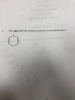 2. Draw two additional resonance structures for the species below.
Are the two structures shown in resonance with each other? (meaning, are they resonance structures of...
 Are the two structures shown in resonance with each other? (meaning, are they resonance structures of each other?) yes O no, they are constitutional isomers resonance is related to electrons, not compounds No answer text provided.
 14. Draw Lewis structures for the following compounds. If they exhibit resonance, draw one other resonance structure for a total of two structures. b. NO a. ХеО,F, d. SO с. С.Н, f. KrF e. SCI, 15. Draw three resonance structures of NO, in which the atoms are arranged in the order NNO. Indicate the formal charges in each.
 14. Draw Lewis structures for the following compounds. If they exhibit resonance, draw one other resonance structure for a total of two structures a. XeO,F2 b. NO, c. C,H, d. SO, e. SCI. f. KrF,
 (6) 5. Draw three resonance structures for the enolate of Meldrum's acid (shown below) that forms when one equivalent of NaOet is used. =1-H NaO
 Review Part A Draw three resonance structures for sulfur tetroxide, SO4, whose connections are shown below. (This is a neutral molecule; it is not sulfate ion.) Assign formal charges to the atoms in each structure. O O 0—5—0 Sulfur tetroxide Draw all possible resonance structures by copying the skeleton shown. Edit bonds and charges to complete each resonance structure. Use the plus (S) and minus lone pairs of electrons will adjust automatically. ) charge buttons to indicate formal charges at...
 Four resonance structures of the following cation are possible. Two resonance forms are given below, but they are incomplete. Complete the given structures by adding nonbonding electrons and formal charges. Draw the two remaining resonance structures (in any order), including nonbonding electrons and formal charges HaC Ha H3 Which structure is the most stable (lowest energy) resonance contributor?
 Three resonance structures of the following structure are possible. One resonance form is given below. Draw the remaining resonance structures, in any order, including nonbonding electrons. Omit curved arrows.
 (a) Draw two resonance structures of the cation shown below,
shifting only one electron pair in each step. Be sure to include
the formal charge on structures B and C.(b) Use curved-arrow notation on the given structure A to show its
conversion to structure B, and then on structure B to show its
conversion to structure C.
(a) Draw two resonance structures of the cation shown below,
shifting only one electron pair in each step. Be sure to include
the formal charge on structures B and C.(b) Use curved-arrow notation on the given structure A to show its
conversion to structure B, and then on structure B to show its
conversion to structure C.
 2. Draw two additional resonance structures for the species below.
 Are the two structures shown in resonance with each other? (meaning, are they resonance structures of each other?) yes O no, they are constitutional isomers resonance is related to electrons, not compounds No answer text provided.
Most questions answered within 3 hours.
-
Where is the error in this code sequence?
String s1 = "Hello";
String s2 = "ello";...
asked 10 months ago -
Financial data for Joel de Paris, Inc., for last year
follow:
Joel de Paris, Inc.
Balance...
asked 10 months ago -
Consider this reaction:
Al2(SO4)3 (aq)+ BaCl3
(aq) Al2Cl6 (aq)- +
3BaSO4(s) . What is the...
asked 10 months ago -
Suppose that Savneet is considering increasing her
recent random sample from 20 car rentals to 40...
asked 10 months ago -
Trucks arrive at an unloading terminal at an average rate of 120
per hour.
Trucks arrive...
asked 10 months ago -
Why are methanol and ethanol completely soluble in water while
octanol is not very little soluble....
asked 10 months ago -
A facilities manager at a university reads in a research report
that the mean amount of...
asked 10 months ago -
When the CuSO4 is rehydrated by adding water to the anhydrous
compound, is this an endothermic...
asked 10 months ago -
A ray of sunlight is passing from diamond into crown glass; the
angle of incidence is...
asked 10 months ago -
A block of mass 0.249 kg is placed on top of a light, vertical
spring of...
asked 10 months ago -
how do the kidneys compensate in the presences of acidosis
a) trigger hyperventilate
b) reserve acid...
asked 10 months ago -
Question 501 pts
The rental rate of capital to the firm increases. Which of the
following...
asked 10 months ago