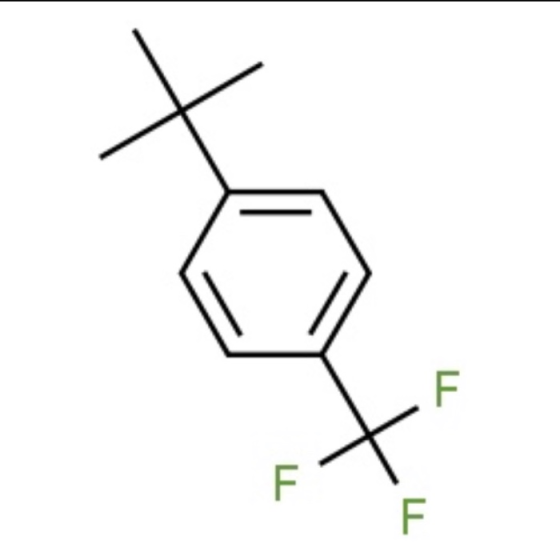
Where would the site for Electropholic Aromatic Substitution occur for the molecule shown below?
Homework Answers
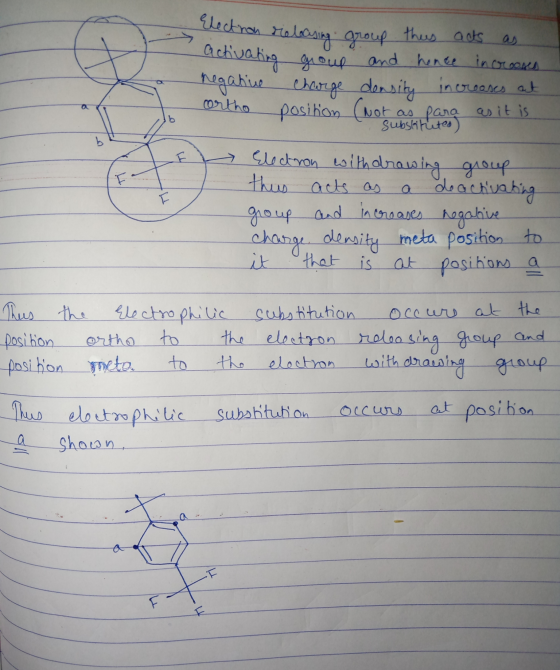
Here the electrophillic aromatic substitution reaction occurs it means that the attack of electrophile takes place.The attack of electrophile will be done at that position in which electron density is more.
The electron density depends on the type of substituent attached i.e whether it is a activating or deactivating group.
Add Answer to:
Where would the site for Electropholic Aromatic Substitution occur
for the molecule shown below?
where would the electrophile end up if the following molecule underwent an electrophilic aromatic substitution reaction....
 where would the electrophile end up if the following molecule
underwent an electrophilic aromatic substitution reaction.
QUESTION 9a: Where would the electrophile end up if the following molecule underwent an electrophilic aromatic substitution reaction? Briefly explain your reasoning
where would the electrophile end up if the following molecule
underwent an electrophilic aromatic substitution reaction.
QUESTION 9a: Where would the electrophile end up if the following molecule underwent an electrophilic aromatic substitution reaction? Briefly explain your reasoning
perform an aromatic substitution reaction with this molecule. Please provide the recipe, the mechanism (arrow pushing),...
 perform an aromatic substitution reaction with this
molecule. Please provide the recipe, the mechanism (arrow pushing),
and the product.
why would the chosen position be affected?
" NH2 NH zorom
perform an aromatic substitution reaction with this
molecule. Please provide the recipe, the mechanism (arrow pushing),
and the product.
why would the chosen position be affected?
" NH2 NH zorom
DRAW ALL THE RESONANACE STRUCTURES THAT WOULD RESULT FROM ELECTROPHILIC AROMATIC SUBSTITUTION OF THE ORTHO, META,...
 DRAW ALL THE RESONANACE STRUCTURES THAT WOULD RESULT
FROM ELECTROPHILIC AROMATIC SUBSTITUTION OF THE ORTHO, META, AND
PARA POSITIONS OF THE AROMATIC COMPOUND SHOWN BELOW. IDENTIFY ANY
PARTICULAR STABLE OR UNSTABLE INTERMEDIATES AND DETERMINE IF THE
SUBSTITUTION IS ORTHO, PARA, OR META DIRECTING BASED ON THE
RELATIVE STABILITY OF THE INTERMEDIATES.
-t Br meta.
DRAW ALL THE RESONANACE STRUCTURES THAT WOULD RESULT
FROM ELECTROPHILIC AROMATIC SUBSTITUTION OF THE ORTHO, META, AND
PARA POSITIONS OF THE AROMATIC COMPOUND SHOWN BELOW. IDENTIFY ANY
PARTICULAR STABLE OR UNSTABLE INTERMEDIATES AND DETERMINE IF THE
SUBSTITUTION IS ORTHO, PARA, OR META DIRECTING BASED ON THE
RELATIVE STABILITY OF THE INTERMEDIATES.
-t Br meta.
Create and show an example of two Electrophilic Aromatic Substitution mechanisms shown below: Show the full...
Create and show an example of two Electrophilic Aromatic Substitution mechanisms shown below: Show the full mechanism. Thank you. (leave out the activation of the electrophile) 1) Alkylation: 2) Acylation:
4. Is this molecule aromatic? Explain why or why not. For each molecule below, predict whether...
 4. Is this molecule aromatic? Explain why or why not. For each molecule below, predict whether the molecule would be expected to show aromatic character or not. Explain your answer in each case. 5. (f 6. Is this molecule aromatic, antiaromatic, or nonaromatic? Explain.
4. In Chapter 18 we will learn about the electrophilic aromatic substitution reaction shown below. structure...
 4. In Chapter 18 we will learn about the electrophilic aromatic substitution reaction shown below. structure of the product of the reaction based on the data given below Predict the Br2 AlBr3 Product Molecular Formula: CH1302Br Calculate the units of unsaturation-(2C+ N + 2-X-H)/2 where X is any halogen. 13C NMR (ppm): 9.7, 19.9,29.5, 73.6,123.0, 128.9, 129.6,132.0, 132.3,135.9,165.9 List at least one thing you can learn from the 13C NMR data Indicate the functional group and specific bond that each...
The trisubstituted product below was synthesized in one step from an electrophilic aromatic substitution of a...
 The trisubstituted product below was synthesized in one step
from an electrophilic aromatic substitution of a disubstituted
benzene ring. Draw the disubstituted benzene starting material that
would give this regioisomeric product.
The trisubstituted product below was synthesized in one step from an electrophilic aromatic substitution of a disubstituted benzene ring. Draw the disubstituted benzene starting material that would give this regioisomeric product. HOOC COOH NO2
The trisubstituted product below was synthesized in one step
from an electrophilic aromatic substitution of a disubstituted
benzene ring. Draw the disubstituted benzene starting material that
would give this regioisomeric product.
The trisubstituted product below was synthesized in one step from an electrophilic aromatic substitution of a disubstituted benzene ring. Draw the disubstituted benzene starting material that would give this regioisomeric product. HOOC COOH NO2
6. (9 pts) In regards to an electrophilic aromatic substitution reaction, define the 3 compounds shown...
 6. (9 pts) In regards to an electrophilic aromatic substitution reaction, define the 3 compounds shown below as either: a) Activating, ortho, para director b) Deactivating, ortho para director, c) Activating, meta director, d) Deactivating, meta director. CH -ОН -N-CH3 CH3 7. Answer a-c for compounds A-F below dos a. (5 pts) Which compound(s) have an aromatic carbocation intermediate if it underwent an Snl or E1 reaction? b. (5 pts) Which compound(s) would have an anti-aromatic carbocation intermediate if it...
1. (0.3pts) Identify the most reactive site(s) on the substituted arenes below toward electrophilic aromatic substitution...
 1. (0.3pts) Identify the most reactive site(s) on the substituted arenes below toward electrophilic aromatic substitution SO, NO2 2. (0.7pts) For each functional group, identify the description that best matches the group's substituent effects. Some of the statements below will require more than one answer to be fully correct. CO" -OH + Br -CH2CH3 collon të na pécon tim a. Donates electrons by hyperconjugation and does not donat lectrons by resonar BO b. Withdraws electrons inductively and withdraw c. Deactivates...
For the structures shown below, state the number of pi electrons present in the molecule. Is...
 For the structures shown below, state the number of pi electrons
present in the molecule.
Is the molecule aromatic according to the Huckel criteria? If the molecule were planar, would it be antiaromatic?
For the structures shown below, state the number of pi electrons
present in the molecule.
Is the molecule aromatic according to the Huckel criteria? If the molecule were planar, would it be antiaromatic?
 where would the electrophile end up if the following molecule
underwent an electrophilic aromatic substitution reaction.
QUESTION 9a: Where would the electrophile end up if the following molecule underwent an electrophilic aromatic substitution reaction? Briefly explain your reasoning
where would the electrophile end up if the following molecule
underwent an electrophilic aromatic substitution reaction.
QUESTION 9a: Where would the electrophile end up if the following molecule underwent an electrophilic aromatic substitution reaction? Briefly explain your reasoning
 perform an aromatic substitution reaction with this
molecule. Please provide the recipe, the mechanism (arrow pushing),
and the product.
why would the chosen position be affected?
" NH2 NH zorom
perform an aromatic substitution reaction with this
molecule. Please provide the recipe, the mechanism (arrow pushing),
and the product.
why would the chosen position be affected?
" NH2 NH zorom
 DRAW ALL THE RESONANACE STRUCTURES THAT WOULD RESULT
FROM ELECTROPHILIC AROMATIC SUBSTITUTION OF THE ORTHO, META, AND
PARA POSITIONS OF THE AROMATIC COMPOUND SHOWN BELOW. IDENTIFY ANY
PARTICULAR STABLE OR UNSTABLE INTERMEDIATES AND DETERMINE IF THE
SUBSTITUTION IS ORTHO, PARA, OR META DIRECTING BASED ON THE
RELATIVE STABILITY OF THE INTERMEDIATES.
-t Br meta.
DRAW ALL THE RESONANACE STRUCTURES THAT WOULD RESULT
FROM ELECTROPHILIC AROMATIC SUBSTITUTION OF THE ORTHO, META, AND
PARA POSITIONS OF THE AROMATIC COMPOUND SHOWN BELOW. IDENTIFY ANY
PARTICULAR STABLE OR UNSTABLE INTERMEDIATES AND DETERMINE IF THE
SUBSTITUTION IS ORTHO, PARA, OR META DIRECTING BASED ON THE
RELATIVE STABILITY OF THE INTERMEDIATES.
-t Br meta.
 4. Is this molecule aromatic? Explain why or why not. For each molecule below, predict whether the molecule would be expected to show aromatic character or not. Explain your answer in each case. 5. (f 6. Is this molecule aromatic, antiaromatic, or nonaromatic? Explain.
 4. In Chapter 18 we will learn about the electrophilic aromatic substitution reaction shown below. structure of the product of the reaction based on the data given below Predict the Br2 AlBr3 Product Molecular Formula: CH1302Br Calculate the units of unsaturation-(2C+ N + 2-X-H)/2 where X is any halogen. 13C NMR (ppm): 9.7, 19.9,29.5, 73.6,123.0, 128.9, 129.6,132.0, 132.3,135.9,165.9 List at least one thing you can learn from the 13C NMR data Indicate the functional group and specific bond that each...
 The trisubstituted product below was synthesized in one step
from an electrophilic aromatic substitution of a disubstituted
benzene ring. Draw the disubstituted benzene starting material that
would give this regioisomeric product.
The trisubstituted product below was synthesized in one step from an electrophilic aromatic substitution of a disubstituted benzene ring. Draw the disubstituted benzene starting material that would give this regioisomeric product. HOOC COOH NO2
The trisubstituted product below was synthesized in one step
from an electrophilic aromatic substitution of a disubstituted
benzene ring. Draw the disubstituted benzene starting material that
would give this regioisomeric product.
The trisubstituted product below was synthesized in one step from an electrophilic aromatic substitution of a disubstituted benzene ring. Draw the disubstituted benzene starting material that would give this regioisomeric product. HOOC COOH NO2
 6. (9 pts) In regards to an electrophilic aromatic substitution reaction, define the 3 compounds shown below as either: a) Activating, ortho, para director b) Deactivating, ortho para director, c) Activating, meta director, d) Deactivating, meta director. CH -ОН -N-CH3 CH3 7. Answer a-c for compounds A-F below dos a. (5 pts) Which compound(s) have an aromatic carbocation intermediate if it underwent an Snl or E1 reaction? b. (5 pts) Which compound(s) would have an anti-aromatic carbocation intermediate if it...
 1. (0.3pts) Identify the most reactive site(s) on the substituted arenes below toward electrophilic aromatic substitution SO, NO2 2. (0.7pts) For each functional group, identify the description that best matches the group's substituent effects. Some of the statements below will require more than one answer to be fully correct. CO" -OH + Br -CH2CH3 collon të na pécon tim a. Donates electrons by hyperconjugation and does not donat lectrons by resonar BO b. Withdraws electrons inductively and withdraw c. Deactivates...
 For the structures shown below, state the number of pi electrons
present in the molecule.
Is the molecule aromatic according to the Huckel criteria? If the molecule were planar, would it be antiaromatic?
For the structures shown below, state the number of pi electrons
present in the molecule.
Is the molecule aromatic according to the Huckel criteria? If the molecule were planar, would it be antiaromatic?
Most questions answered within 3 hours.
-
Where is the error in this code sequence?
String s1 = "Hello";
String s2 = "ello";...
asked 10 months ago -
Financial data for Joel de Paris, Inc., for last year
follow:
Joel de Paris, Inc.
Balance...
asked 10 months ago -
Consider this reaction:
Al2(SO4)3 (aq)+ BaCl3
(aq) Al2Cl6 (aq)- +
3BaSO4(s) . What is the...
asked 10 months ago -
Suppose that Savneet is considering increasing her
recent random sample from 20 car rentals to 40...
asked 10 months ago -
Trucks arrive at an unloading terminal at an average rate of 120
per hour.
Trucks arrive...
asked 10 months ago -
Why are methanol and ethanol completely soluble in water while
octanol is not very little soluble....
asked 10 months ago -
A facilities manager at a university reads in a research report
that the mean amount of...
asked 10 months ago -
When the CuSO4 is rehydrated by adding water to the anhydrous
compound, is this an endothermic...
asked 10 months ago -
A ray of sunlight is passing from diamond into crown glass; the
angle of incidence is...
asked 10 months ago -
A block of mass 0.249 kg is placed on top of a light, vertical
spring of...
asked 10 months ago -
how do the kidneys compensate in the presences of acidosis
a) trigger hyperventilate
b) reserve acid...
asked 10 months ago -
Question 501 pts
The rental rate of capital to the firm increases. Which of the
following...
asked 10 months ago