
Homework Answers
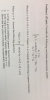
![i=1571 from this A-15 ] for eigen values we have a relation SI-A1=0 Iss07 5 -5 -21 1-o oss | 5 J 5+5 21 | 05 Sil 18+5)(5-1) +](http://img.homeworklib.com/questions/4d30ccf0-aabc-11eb-bd9f-abd81a76bff4.png?x-oss-process=image/resize,w_560)
Add Answer to:
Use the Lyapunov equation method to determine whether the following system is asymptotically stable:
13. Use a Lyapunov function to show that the origin is globally asymptotically stable: x' =...
 13. Use a Lyapunov function to show that the origin is globally asymptotically stable: x' = -y - xemy y' = x - y Hint: Try V = x2 + y2. x' = 2y – 2.3 y = –23 – 45 Hint: Try V = ax+ + by2 for an appropriate choice of a, b > 0.
Consider the following nonlinear dynamic system, with a possible potential candidate function. Use the given Lyapunov function, us such function (Lyapunov Direct) approach to; (5 Marks): Show that th...
 Consider the following nonlinear dynamic system, with a possible potential candidate function. Use the given Lyapunov function, us such function (Lyapunov Direct) approach to; (5 Marks): Show that the system is globally stable around the origin (5 Marks): The origin is globally asymptotically stable. (5 Marks): Only SKETCH a possible Phase Plan, as based on (a), (b). a. b. c.
Consider the following nonlinear dynamic system, with a possible potential candidate function. Use the given Lyapunov function, us such function...
Consider the following nonlinear dynamic system, with a possible potential candidate function. Use the given Lyapunov function, us such function (Lyapunov Direct) approach to; (5 Marks): Show that the system is globally stable around the origin (5 Marks): The origin is globally asymptotically stable. (5 Marks): Only SKETCH a possible Phase Plan, as based on (a), (b). a. b. c.
Consider the following nonlinear dynamic system, with a possible potential candidate function. Use the given Lyapunov function, us such function...
Each of the following equations specifies an LTID system. Determine whether these systems are asymptotically stable, un...
 Each of the following equations specifies an LTID system. Determine whether these systems are asymptotically stable, unstable, or marginally stable. 9.6-1 (a) yk 20.6y[k + 1] - 0.16y[k] = f k + 1 - 2flk] (b) (Е? (c) (E 1Ey{k] = (E + 2)fjk] (d) yk2y(k]0.96y(k - 2] 2flk - 1] +3f(k - 3] (e) (E2- 1)(E +E+1)уk] 3DEflk] +1)yk fk]
Each of the following equations specifies an LTID system. Determine whether these systems are asymptotically stable, unstable, or marginally...
Each of the following equations specifies an LTID system. Determine whether these systems are asymptotically stable, unstable, or marginally stable. 9.6-1 (a) yk 20.6y[k + 1] - 0.16y[k] = f k + 1 - 2flk] (b) (Е? (c) (E 1Ey{k] = (E + 2)fjk] (d) yk2y(k]0.96y(k - 2] 2flk - 1] +3f(k - 3] (e) (E2- 1)(E +E+1)уk] 3DEflk] +1)yk fk]
Each of the following equations specifies an LTID system. Determine whether these systems are asymptotically stable, unstable, or marginally...
#3 Find the fixed points and determine whether each Vattraiting (asymptotically stable) or repelling a) SX12...
 #3 Find the fixed points and determine whether each Vattraiting (asymptotically stable) or repelling a) SX12 43-X b) xax =) (A) = *-*
#3 Find the fixed points and determine whether each ws Vottraiting (asymptotically stable) or a) S09243-**...
 #3 Find the fixed points and determine whether each ws Vottraiting (asymptotically stable) or a) S09243-** b) xxx c) *) 2 x?- repelling
Problem 2.Given the following dynamic system Given the Lyapunov (energy) function: V = 1. What is...
 Problem 2.Given the following dynamic system Given the Lyapunov (energy) function: V = 1. What is the definiteness (positive definite PD, negative definite ND, PSD, NSD) of? 2. What is the definiteness of V - dl 3. Based on Lyapunov Stability theorem, is the system stable? 4. Using the eigenvalues technique, is the system stable? dt
Problem 2.Given the following dynamic system Given the Lyapunov (energy) function: V = 1. What is the definiteness (positive definite PD, negative definite ND,...
Problem 2.Given the following dynamic system Given the Lyapunov (energy) function: V = 1. What is the definiteness (positive definite PD, negative definite ND, PSD, NSD) of? 2. What is the definiteness of V - dl 3. Based on Lyapunov Stability theorem, is the system stable? 4. Using the eigenvalues technique, is the system stable? dt
Problem 2.Given the following dynamic system Given the Lyapunov (energy) function: V = 1. What is the definiteness (positive definite PD, negative definite ND,...
Problem 1 (25 pts): Consider the following non-linear autonomous system Where a>o,b0,c 0,d >0 and...
 Problem 1 (25 pts): Consider the following non-linear autonomous system Where a>o,b0,c 0,d >0 and k >a. Consider the following Lyapunov Function: Where p >0. Answer the following questions: . Is V(x) a good candidate Lyapunov function? Explain 2. Is the origin at least stable? Explain (Hint: set p c) 3. Show that the system is Globally Asymptotically Stable.
Problem 1 (25 pts): Consider the following non-linear autonomous system Where a>o,b0,c 0,d >0 and k >a. Consider the following Lyapunov...
Problem 1 (25 pts): Consider the following non-linear autonomous system Where a>o,b0,c 0,d >0 and k >a. Consider the following Lyapunov Function: Where p >0. Answer the following questions: . Is V(x) a good candidate Lyapunov function? Explain 2. Is the origin at least stable? Explain (Hint: set p c) 3. Show that the system is Globally Asymptotically Stable.
Problem 1 (25 pts): Consider the following non-linear autonomous system Where a>o,b0,c 0,d >0 and k >a. Consider the following Lyapunov...
3 [15 pts Consider the Lorenz system given by xy-B2, z = where σ, ρ, β > 0 are constants. For ρ (0.1), using the Lyapunov function V(x, y, z) = ρ「2 + ơy2 + ơz?, show that the origin is globally a...
 3 [15 pts Consider the Lorenz system given by xy-B2, z = where σ, ρ, β > 0 are constants. For ρ (0.1), using the Lyapunov function V(x, y, z) = ρ「2 + ơy2 + ơz?, show that the origin is globally asymptotically stable. (Hint. You may need to use the Invariance Principle as well.) στ
3 [15 pts Consider the Lorenz system given by xy-B2, z = where σ, ρ, β > 0 are constants. For ρ (0.1), using...
3 [15 pts Consider the Lorenz system given by xy-B2, z = where σ, ρ, β > 0 are constants. For ρ (0.1), using the Lyapunov function V(x, y, z) = ρ「2 + ơy2 + ơz?, show that the origin is globally asymptotically stable. (Hint. You may need to use the Invariance Principle as well.) στ
3 [15 pts Consider the Lorenz system given by xy-B2, z = where σ, ρ, β > 0 are constants. For ρ (0.1), using...
Problem 2 (25 pts): Consider the following non-linear autonomous system Consider a quadratic Lyap...
 Problem 2 (25 pts): Consider the following non-linear autonomous system Consider a quadratic Lyapunov function in the form And study the stability of the system as function of the parameter k. More specifically 1. Show that the origin is Globally Asymptotically Stable for k 0. 2. Assume kヂ0. Is the origin still stable? Provide an interpretation.
Problem 2 (25 pts): Consider the following non-linear autonomous system Consider a quadratic Lyapunov function in the form And study the stability of the...
Problem 2 (25 pts): Consider the following non-linear autonomous system Consider a quadratic Lyapunov function in the form And study the stability of the system as function of the parameter k. More specifically 1. Show that the origin is Globally Asymptotically Stable for k 0. 2. Assume kヂ0. Is the origin still stable? Provide an interpretation.
Problem 2 (25 pts): Consider the following non-linear autonomous system Consider a quadratic Lyapunov function in the form And study the stability of the...
1 (c) (12 pts) Consider the logistic equation IP 3 Use phase portrait analysis to classify the equilibrium solutions as asymptotically stable, 10 unstable or semi-stable. (ii) Find the general so...
 1 (c) (12 pts) Consider the logistic equation IP 3 Use phase portrait analysis to classify the equilibrium solutions as asymptotically stable, 10 unstable or semi-stable. (ii) Find the general solution to the ODE. (The solution may be expressed in implicit form.)
1 (c) (12 pts) Consider the logistic equation IP 3 Use phase portrait analysis to classify the equilibrium solutions as asymptotically stable, 10 unstable or semi-stable. (ii) Find the general solution to the ODE. (The solution may be...
1 (c) (12 pts) Consider the logistic equation IP 3 Use phase portrait analysis to classify the equilibrium solutions as asymptotically stable, 10 unstable or semi-stable. (ii) Find the general solution to the ODE. (The solution may be expressed in implicit form.)
1 (c) (12 pts) Consider the logistic equation IP 3 Use phase portrait analysis to classify the equilibrium solutions as asymptotically stable, 10 unstable or semi-stable. (ii) Find the general solution to the ODE. (The solution may be...
 13. Use a Lyapunov function to show that the origin is globally asymptotically stable: x' = -y - xemy y' = x - y Hint: Try V = x2 + y2. x' = 2y – 2.3 y = –23 – 45 Hint: Try V = ax+ + by2 for an appropriate choice of a, b > 0.
 Consider the following nonlinear dynamic system, with a possible potential candidate function. Use the given Lyapunov function, us such function (Lyapunov Direct) approach to; (5 Marks): Show that the system is globally stable around the origin (5 Marks): The origin is globally asymptotically stable. (5 Marks): Only SKETCH a possible Phase Plan, as based on (a), (b). a. b. c.
Consider the following nonlinear dynamic system, with a possible potential candidate function. Use the given Lyapunov function, us such function...
Consider the following nonlinear dynamic system, with a possible potential candidate function. Use the given Lyapunov function, us such function (Lyapunov Direct) approach to; (5 Marks): Show that the system is globally stable around the origin (5 Marks): The origin is globally asymptotically stable. (5 Marks): Only SKETCH a possible Phase Plan, as based on (a), (b). a. b. c.
Consider the following nonlinear dynamic system, with a possible potential candidate function. Use the given Lyapunov function, us such function...
 Each of the following equations specifies an LTID system. Determine whether these systems are asymptotically stable, unstable, or marginally stable. 9.6-1 (a) yk 20.6y[k + 1] - 0.16y[k] = f k + 1 - 2flk] (b) (Е? (c) (E 1Ey{k] = (E + 2)fjk] (d) yk2y(k]0.96y(k - 2] 2flk - 1] +3f(k - 3] (e) (E2- 1)(E +E+1)уk] 3DEflk] +1)yk fk]
Each of the following equations specifies an LTID system. Determine whether these systems are asymptotically stable, unstable, or marginally...
Each of the following equations specifies an LTID system. Determine whether these systems are asymptotically stable, unstable, or marginally stable. 9.6-1 (a) yk 20.6y[k + 1] - 0.16y[k] = f k + 1 - 2flk] (b) (Е? (c) (E 1Ey{k] = (E + 2)fjk] (d) yk2y(k]0.96y(k - 2] 2flk - 1] +3f(k - 3] (e) (E2- 1)(E +E+1)уk] 3DEflk] +1)yk fk]
Each of the following equations specifies an LTID system. Determine whether these systems are asymptotically stable, unstable, or marginally...
 #3 Find the fixed points and determine whether each Vattraiting (asymptotically stable) or repelling a) SX12 43-X b) xax =) (A) = *-*
 #3 Find the fixed points and determine whether each ws Vottraiting (asymptotically stable) or a) S09243-** b) xxx c) *) 2 x?- repelling
 Problem 2.Given the following dynamic system Given the Lyapunov (energy) function: V = 1. What is the definiteness (positive definite PD, negative definite ND, PSD, NSD) of? 2. What is the definiteness of V - dl 3. Based on Lyapunov Stability theorem, is the system stable? 4. Using the eigenvalues technique, is the system stable? dt
Problem 2.Given the following dynamic system Given the Lyapunov (energy) function: V = 1. What is the definiteness (positive definite PD, negative definite ND,...
Problem 2.Given the following dynamic system Given the Lyapunov (energy) function: V = 1. What is the definiteness (positive definite PD, negative definite ND, PSD, NSD) of? 2. What is the definiteness of V - dl 3. Based on Lyapunov Stability theorem, is the system stable? 4. Using the eigenvalues technique, is the system stable? dt
Problem 2.Given the following dynamic system Given the Lyapunov (energy) function: V = 1. What is the definiteness (positive definite PD, negative definite ND,...
 Problem 1 (25 pts): Consider the following non-linear autonomous system Where a>o,b0,c 0,d >0 and k >a. Consider the following Lyapunov Function: Where p >0. Answer the following questions: . Is V(x) a good candidate Lyapunov function? Explain 2. Is the origin at least stable? Explain (Hint: set p c) 3. Show that the system is Globally Asymptotically Stable.
Problem 1 (25 pts): Consider the following non-linear autonomous system Where a>o,b0,c 0,d >0 and k >a. Consider the following Lyapunov...
Problem 1 (25 pts): Consider the following non-linear autonomous system Where a>o,b0,c 0,d >0 and k >a. Consider the following Lyapunov Function: Where p >0. Answer the following questions: . Is V(x) a good candidate Lyapunov function? Explain 2. Is the origin at least stable? Explain (Hint: set p c) 3. Show that the system is Globally Asymptotically Stable.
Problem 1 (25 pts): Consider the following non-linear autonomous system Where a>o,b0,c 0,d >0 and k >a. Consider the following Lyapunov...
 3 [15 pts Consider the Lorenz system given by xy-B2, z = where σ, ρ, β > 0 are constants. For ρ (0.1), using the Lyapunov function V(x, y, z) = ρ「2 + ơy2 + ơz?, show that the origin is globally asymptotically stable. (Hint. You may need to use the Invariance Principle as well.) στ
3 [15 pts Consider the Lorenz system given by xy-B2, z = where σ, ρ, β > 0 are constants. For ρ (0.1), using...
3 [15 pts Consider the Lorenz system given by xy-B2, z = where σ, ρ, β > 0 are constants. For ρ (0.1), using the Lyapunov function V(x, y, z) = ρ「2 + ơy2 + ơz?, show that the origin is globally asymptotically stable. (Hint. You may need to use the Invariance Principle as well.) στ
3 [15 pts Consider the Lorenz system given by xy-B2, z = where σ, ρ, β > 0 are constants. For ρ (0.1), using...
 Problem 2 (25 pts): Consider the following non-linear autonomous system Consider a quadratic Lyapunov function in the form And study the stability of the system as function of the parameter k. More specifically 1. Show that the origin is Globally Asymptotically Stable for k 0. 2. Assume kヂ0. Is the origin still stable? Provide an interpretation.
Problem 2 (25 pts): Consider the following non-linear autonomous system Consider a quadratic Lyapunov function in the form And study the stability of the...
Problem 2 (25 pts): Consider the following non-linear autonomous system Consider a quadratic Lyapunov function in the form And study the stability of the system as function of the parameter k. More specifically 1. Show that the origin is Globally Asymptotically Stable for k 0. 2. Assume kヂ0. Is the origin still stable? Provide an interpretation.
Problem 2 (25 pts): Consider the following non-linear autonomous system Consider a quadratic Lyapunov function in the form And study the stability of the...
 1 (c) (12 pts) Consider the logistic equation IP 3 Use phase portrait analysis to classify the equilibrium solutions as asymptotically stable, 10 unstable or semi-stable. (ii) Find the general solution to the ODE. (The solution may be expressed in implicit form.)
1 (c) (12 pts) Consider the logistic equation IP 3 Use phase portrait analysis to classify the equilibrium solutions as asymptotically stable, 10 unstable or semi-stable. (ii) Find the general solution to the ODE. (The solution may be...
1 (c) (12 pts) Consider the logistic equation IP 3 Use phase portrait analysis to classify the equilibrium solutions as asymptotically stable, 10 unstable or semi-stable. (ii) Find the general solution to the ODE. (The solution may be expressed in implicit form.)
1 (c) (12 pts) Consider the logistic equation IP 3 Use phase portrait analysis to classify the equilibrium solutions as asymptotically stable, 10 unstable or semi-stable. (ii) Find the general solution to the ODE. (The solution may be...
Most questions answered within 3 hours.
-
Where is the error in this code sequence?
String s1 = "Hello";
String s2 = "ello";...
asked 10 months ago -
Financial data for Joel de Paris, Inc., for last year
follow:
Joel de Paris, Inc.
Balance...
asked 10 months ago -
Consider this reaction:
Al2(SO4)3 (aq)+ BaCl3
(aq) Al2Cl6 (aq)- +
3BaSO4(s) . What is the...
asked 10 months ago -
Suppose that Savneet is considering increasing her
recent random sample from 20 car rentals to 40...
asked 10 months ago -
Trucks arrive at an unloading terminal at an average rate of 120
per hour.
Trucks arrive...
asked 10 months ago -
Why are methanol and ethanol completely soluble in water while
octanol is not very little soluble....
asked 10 months ago -
A facilities manager at a university reads in a research report
that the mean amount of...
asked 10 months ago -
When the CuSO4 is rehydrated by adding water to the anhydrous
compound, is this an endothermic...
asked 10 months ago -
A ray of sunlight is passing from diamond into crown glass; the
angle of incidence is...
asked 10 months ago -
A block of mass 0.249 kg is placed on top of a light, vertical
spring of...
asked 10 months ago -
how do the kidneys compensate in the presences of acidosis
a) trigger hyperventilate
b) reserve acid...
asked 10 months ago -
Question 501 pts
The rental rate of capital to the firm increases. Which of the
following...
asked 10 months ago