![13. Which of the following is not a legal identifier? A. firstName B. _name- C. $name D. 1stName 14. Given the code below, what is the output? class Main int a 10 public static void main(Stringt] args) f new Main().print)h public void print) int a = 8; System.out.print(a)i A. 10 B. output is unpredicatable C. 8 D. compilation fails](http://img.homeworklib.com/questions/ad8bdeb0-adc0-11eb-8967-cd245677c987.png?x-oss-process=image/resize,w_560) Please solve 13 & 14
Please solve 13 & 14Homework Answers
13) Which of the following is not a legal identifier?
Answer: Option d) 1stName
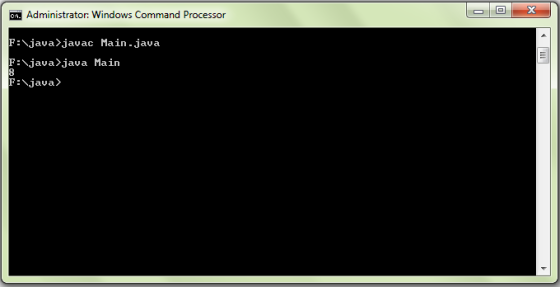
14) Answer: Option c) 8
Program:
import java.io.*;
class Main // Here the class name is Main
{
int a=10; // Here we are initializing the value of variable a as
10
public static void main(String[] args)
{
new Main().print( ); // Here we are calling the print( )
method
}
public void print( ) // Definition of print( ) method
{
int a=8; // Here we again initializing the value of variable a as
8
System.out.print(a); // Here we are printing the value of a in
print( ) method
}
}
Output:
Add Answer to:
Please solve 13 & 14
13. Which of the following is not a legal identifier? A....
output What is the output of the following: class Access public int x; private int y...
 output
What is the output of the following: class Access public int x; private int y public void cal(int x, int y) { this.x = x + 1; this.y = y; } public void print() { System.out.print(""+y); } } class AccessSpecifier { public static void main(String args[]) { Access obj = new Access(); obj.cal(2, 3); System.out.print(obj.x); obj.print(); } } 33 Compilation error 23 None of the available choices Runtime error
output
What is the output of the following: class Access public int x; private int y public void cal(int x, int y) { this.x = x + 1; this.y = y; } public void print() { System.out.print(""+y); } } class AccessSpecifier { public static void main(String args[]) { Access obj = new Access(); obj.cal(2, 3); System.out.print(obj.x); obj.print(); } } 33 Compilation error 23 None of the available choices Runtime error
In each of the following questions, first use NetBeans IDE to run the code (if there...
In each of the following questions, first use NetBeans IDE to run the code (if there is an error fix it) then take a screenshot of the output and paste it under (A). In (B), justify the output you obtained in (A). - 9. Given the following: public class WorkingSheet { public static void main(String[] args) { B myB = new B(); A myA = new B(); System.out.print(myB instanceof A); System.out.print(myB instanceof C); System.out.print(myA...
1. public class Threads5 { 2. public static void main (String[l args) 3. new Thread(new Runnable()...
 1. public class Threads5 { 2. public static void main (String[l args) 3. new Thread(new Runnable() 4. public void run() 5. System.out.print("bar"); 6. start(; 7 What is the result? A. Compilation fails. B. An exception is thrown at runtime. C. The code executes normally and prints "bar". D. The code executes normally, but nothing prints
please evaluate the following code. this is JAVA a. class Car { public int i =...
please evaluate the following code. this is JAVA a. class Car { public int i = 3; public Car(int i) { this.i = i; } } ... Car x = new Car(7), y = new Car(5); x = y; y.i = 9; System.out.println(x.i); b. class Driver { public static void main(String[] args) { int[] x = {5, 2, 3, 6, 5}; int n = x.length; for (int j = n-2; j > 0; j--) x[j] = x[j-1]; for (int j...
The following individual two programs are using while loop in order to print a specific output:...
The following individual two programs are using while loop in order to print a specific output: The outputs of the first program are: 10 9 8 5 4 The outputs of the second program are: 123456789 Using the Table 3.1 below, allocate the error(s) of each line of two programs and type of error: The first program: public Main { public static void main(String args[]){ int i=10 while(i>4){ System.out.print(i); i++; } } } The second program: public class Main {...
The following individual two programs are using while loop in order to print a specific output:...
The following individual two programs are using while loop in order to print a specific output: The outputs of the first program are: 10 9 8 5 4 The outputs of the second program are: 123456789 Using the Table 3.1 below, allocate the error(s) of each line of two programs and type of error: The first program: public Main { public static void main(String args[]){ int i=10 while(i>4){ System.out.print(i); i++; } } } The second program: public class Main {...
What is the Java output? Part One: class Driver { public static void main(String[] args) {...
What is the Java output? Part One: class Driver { public static void main(String[] args) { int a = 5; int b = 3; if (a < b || a * 2 < b) System.out.print(a - b); System.out.print(b + a); } } Part Two: class Driver { public static void main(String[] args) { int a = 5; int b = 8; if (a < b) if (a * 2 < b) System.out.print("foo"); else System.out.print("bar"); else System.out.print("buz"); } }
1. What is the output when you run printIn()? public static void main(String[] args) { if...
1. What is the output when you run printIn()? public static void main(String[] args) { if (true) { int num = 1; if (num > 0) { num++; } } int num = 1; addOne(num); num = num - 1 System.out.println(num); } public void addOne(int num) { num = num + 1; } 2. When creating an array for primitive data types, the default values are: a. Numeric type b. Char type c. Boolean type d. String type e. Float...
Which of the following are valid array declarations? a. int[] array- new int[10]; b. double [array...
 Which of the following are valid array declarations? a. int[] array- new int[10]; b. double [array double[10]; c. charl charArray "Computer Science"; None of the above Analyze the following code: class Test public static void main(Stringl] args) System.out.println(xMethod(10); public static int xMethod(int n) System.out.println("int"); return n; public static long xMethod(long n) System.out.,println("long"); return n The program displays int followed by 10 The program displays long followed by 10. The program does not compile. None of the above. tions 3-4 are...
Question 2 What is the EXACT output of this code: class B { public B{ System.out.print("B");...
 Question 2 What is the EXACT output of this code: class B { public B{ System.out.print("B"); } } class A extends B{ public A(int t) { super(); System.out.print("A"); } } public class Test{ public static void main(String[] args) { A a = new A(3); } }
 output
What is the output of the following: class Access public int x; private int y public void cal(int x, int y) { this.x = x + 1; this.y = y; } public void print() { System.out.print(""+y); } } class AccessSpecifier { public static void main(String args[]) { Access obj = new Access(); obj.cal(2, 3); System.out.print(obj.x); obj.print(); } } 33 Compilation error 23 None of the available choices Runtime error
output
What is the output of the following: class Access public int x; private int y public void cal(int x, int y) { this.x = x + 1; this.y = y; } public void print() { System.out.print(""+y); } } class AccessSpecifier { public static void main(String args[]) { Access obj = new Access(); obj.cal(2, 3); System.out.print(obj.x); obj.print(); } } 33 Compilation error 23 None of the available choices Runtime error
 1. public class Threads5 { 2. public static void main (String[l args) 3. new Thread(new Runnable() 4. public void run() 5. System.out.print("bar"); 6. start(; 7 What is the result? A. Compilation fails. B. An exception is thrown at runtime. C. The code executes normally and prints "bar". D. The code executes normally, but nothing prints
 Which of the following are valid array declarations? a. int[] array- new int[10]; b. double [array double[10]; c. charl charArray "Computer Science"; None of the above Analyze the following code: class Test public static void main(Stringl] args) System.out.println(xMethod(10); public static int xMethod(int n) System.out.println("int"); return n; public static long xMethod(long n) System.out.,println("long"); return n The program displays int followed by 10 The program displays long followed by 10. The program does not compile. None of the above. tions 3-4 are...
 Question 2 What is the EXACT output of this code: class B { public B{ System.out.print("B"); } } class A extends B{ public A(int t) { super(); System.out.print("A"); } } public class Test{ public static void main(String[] args) { A a = new A(3); } }
Most questions answered within 3 hours.
-
Where is the error in this code sequence?
String s1 = "Hello";
String s2 = "ello";...
asked 11 months ago -
Financial data for Joel de Paris, Inc., for last year
follow:
Joel de Paris, Inc.
Balance...
asked 11 months ago -
Consider this reaction:
Al2(SO4)3 (aq)+ BaCl3
(aq) Al2Cl6 (aq)- +
3BaSO4(s) . What is the...
asked 11 months ago -
Suppose that Savneet is considering increasing her
recent random sample from 20 car rentals to 40...
asked 11 months ago -
Trucks arrive at an unloading terminal at an average rate of 120
per hour.
Trucks arrive...
asked 11 months ago -
Why are methanol and ethanol completely soluble in water while
octanol is not very little soluble....
asked 11 months ago -
A facilities manager at a university reads in a research report
that the mean amount of...
asked 11 months ago -
When the CuSO4 is rehydrated by adding water to the anhydrous
compound, is this an endothermic...
asked 11 months ago -
A ray of sunlight is passing from diamond into crown glass; the
angle of incidence is...
asked 11 months ago -
A block of mass 0.249 kg is placed on top of a light, vertical
spring of...
asked 11 months ago -
how do the kidneys compensate in the presences of acidosis
a) trigger hyperventilate
b) reserve acid...
asked 11 months ago -
Question 501 pts
The rental rate of capital to the firm increases. Which of the
following...
asked 11 months ago