Show the mechanism for the epoxide ring opening.
a) 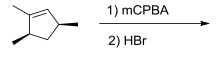
b) 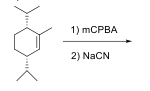
Homework Answers


Add Answer to:
Show the mechanism for the epoxide ring opening.
a)
b)
1) mCPBA 2) HBr 1) mCPBA...
a. Is ring opening of the epoxide in cortisol regiospecific? b. Is ring opening of the...
a. Is ring opening of the epoxide in cortisol regiospecific? b. Is ring opening of the epoxide in arene oxides stereospecific? What features of the molecule led you to your choice? (Explain in 5 words or less.)
Epoxide Ring Opening Post Lab Questions: 1 Reflux conditions are problematic when performing acid catalyzed epoxide...
 Epoxide Ring Opening Post Lab Questions: 1 Reflux conditions are problematic when performing acid catalyzed epoxide ring opening reactions. Provide the potential side product(s) that would result from carrying out the following reaction under reflux conditions. You must be sure to show the side products of both the major and minors products of the reaction below: . 3PO4 Methanol Reflux
Base-catalyzed ring opening of an epoxide with CH3O- as the nucleophile forms a molecule with: Base-catalyzed...
 Base-catalyzed ring opening of an epoxide with CH3O- as the
nucleophile forms a molecule with:
Base-catalyzed ring opening of an epoxide with CH30-as the nucleophile forms a molecule with: o (epoxide) Two ether groups A conjugated diene Two hydroxyl groups An alkene and a hydroxyl group Hydroxyl group and an ether
Base-catalyzed ring opening of an epoxide with CH3O- as the
nucleophile forms a molecule with:
Base-catalyzed ring opening of an epoxide with CH30-as the nucleophile forms a molecule with: o (epoxide) Two ether groups A conjugated diene Two hydroxyl groups An alkene and a hydroxyl group Hydroxyl group and an ether
1. Why is the expected epoxide NOT formed in the absence of a buffer? -mCPBA is...
1. Why is the expected epoxide NOT formed in the absence of a buffer? -mCPBA is not reactive without the buffer -The buffer acts as a catalyst -The buffer prevents a nucleophile from attacking the epoxide oxygen -Acidic solutions provide a reactive environment in which the epoxide oxygen is protonated and the ring is opened 2. What product is expected to form in the absence of a buffer? -4-chlorobenzoate ester -trans-anethole oxide -only entropy knows -3-chlorobenzoate ester
Identify the correct product of the epoxide ring-opening reaction below 1) NaSH 2) но он но...
 Identify the correct product of the epoxide ring-opening reaction below 1) NaSH 2) но он но Он но HS SH HS
Which of the following amines can be prepared by ring opening of an epoxide with sodium...
 Which of the following amines can be prepared by ring opening of an epoxide with sodium amide followed by reduction? OH NH2 OH NH2 OH HO -NH N 3 a. only 1 b. only 1 and 2 c. only 1 and 4 d. 1, 2, 3 and 4
please show arrow pushing if possible 57. Regio- and stereoselective, base-catalyzed (NaOH, H20) epoxide ring opening to form a 1,2-diol (S11.9B) 57. Regio- and stereoselective, base-catalyze...
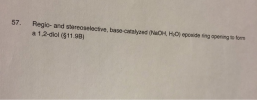 please show arrow pushing if possible
57. Regio- and stereoselective, base-catalyzed (NaOH, H20) epoxide ring opening to form a 1,2-diol (S11.9B)
57. Regio- and stereoselective, base-catalyzed (NaOH, H20) epoxide ring opening to form a 1,2-diol (S11.9B)
please show arrow pushing if possible
57. Regio- and stereoselective, base-catalyzed (NaOH, H20) epoxide ring opening to form a 1,2-diol (S11.9B)
57. Regio- and stereoselective, base-catalyzed (NaOH, H20) epoxide ring opening to form a 1,2-diol (S11.9B)
How would you write the mechanism for the opening of an epoxide for 1,2-epoxy-1-methylcyclopentane with methanol...
How would you write the mechanism for the opening of an epoxide for 1,2-epoxy-1-methylcyclopentane with methanol and sulfuric acid.
Complete the mechanism for the base-catalyzed opening of the epoxide below by adding any missing atoms,...
 Complete the mechanism for the base-catalyzed opening of the
epoxide below by adding any missing atoms, bonds, charges,
nonbonding electron pairs, and curved arrows.
Complete the mechanism for the base-catalyzed opening of the epoxide below by adding any missing atoms, bonds, charges, nonbonding electron pairs, and curved arrows.
Complete the mechanism for the base-catalyzed opening of the
epoxide below by adding any missing atoms, bonds, charges,
nonbonding electron pairs, and curved arrows.
Complete the mechanism for the base-catalyzed opening of the epoxide below by adding any missing atoms, bonds, charges, nonbonding electron pairs, and curved arrows.
The acetylide ion attacks the epoxide, opening up the strained, three-membered ring and creating an alkoxide...
 The acetylide ion attacks the epoxide, opening up the strained, three-membered ring and creating an alkoxide ion. After the reaction is complete, a proton source is used to protonate the alkoxide ion. In a synthesis, these two steps must be shown separately, because the acetylide ion will not survive in the presence of H30t. Using this information, complete the reaction diagram to propose a plausible synthesis for the following compound using acetylene as your only source of carbon atoms: Soep...
 Epoxide Ring Opening Post Lab Questions: 1 Reflux conditions are problematic when performing acid catalyzed epoxide ring opening reactions. Provide the potential side product(s) that would result from carrying out the following reaction under reflux conditions. You must be sure to show the side products of both the major and minors products of the reaction below: . 3PO4 Methanol Reflux
 Base-catalyzed ring opening of an epoxide with CH3O- as the
nucleophile forms a molecule with:
Base-catalyzed ring opening of an epoxide with CH30-as the nucleophile forms a molecule with: o (epoxide) Two ether groups A conjugated diene Two hydroxyl groups An alkene and a hydroxyl group Hydroxyl group and an ether
Base-catalyzed ring opening of an epoxide with CH3O- as the
nucleophile forms a molecule with:
Base-catalyzed ring opening of an epoxide with CH30-as the nucleophile forms a molecule with: o (epoxide) Two ether groups A conjugated diene Two hydroxyl groups An alkene and a hydroxyl group Hydroxyl group and an ether
 Identify the correct product of the epoxide ring-opening reaction below 1) NaSH 2) но он но Он но HS SH HS
 Which of the following amines can be prepared by ring opening of an epoxide with sodium amide followed by reduction? OH NH2 OH NH2 OH HO -NH N 3 a. only 1 b. only 1 and 2 c. only 1 and 4 d. 1, 2, 3 and 4
 please show arrow pushing if possible
57. Regio- and stereoselective, base-catalyzed (NaOH, H20) epoxide ring opening to form a 1,2-diol (S11.9B)
57. Regio- and stereoselective, base-catalyzed (NaOH, H20) epoxide ring opening to form a 1,2-diol (S11.9B)
please show arrow pushing if possible
57. Regio- and stereoselective, base-catalyzed (NaOH, H20) epoxide ring opening to form a 1,2-diol (S11.9B)
57. Regio- and stereoselective, base-catalyzed (NaOH, H20) epoxide ring opening to form a 1,2-diol (S11.9B)
 Complete the mechanism for the base-catalyzed opening of the
epoxide below by adding any missing atoms, bonds, charges,
nonbonding electron pairs, and curved arrows.
Complete the mechanism for the base-catalyzed opening of the epoxide below by adding any missing atoms, bonds, charges, nonbonding electron pairs, and curved arrows.
Complete the mechanism for the base-catalyzed opening of the
epoxide below by adding any missing atoms, bonds, charges,
nonbonding electron pairs, and curved arrows.
Complete the mechanism for the base-catalyzed opening of the epoxide below by adding any missing atoms, bonds, charges, nonbonding electron pairs, and curved arrows.
 The acetylide ion attacks the epoxide, opening up the strained, three-membered ring and creating an alkoxide ion. After the reaction is complete, a proton source is used to protonate the alkoxide ion. In a synthesis, these two steps must be shown separately, because the acetylide ion will not survive in the presence of H30t. Using this information, complete the reaction diagram to propose a plausible synthesis for the following compound using acetylene as your only source of carbon atoms: Soep...
Most questions answered within 3 hours.
-
Where is the error in this code sequence?
String s1 = "Hello";
String s2 = "ello";...
asked 10 months ago -
Financial data for Joel de Paris, Inc., for last year
follow:
Joel de Paris, Inc.
Balance...
asked 10 months ago -
Consider this reaction:
Al2(SO4)3 (aq)+ BaCl3
(aq) Al2Cl6 (aq)- +
3BaSO4(s) . What is the...
asked 10 months ago -
Suppose that Savneet is considering increasing her
recent random sample from 20 car rentals to 40...
asked 10 months ago -
Trucks arrive at an unloading terminal at an average rate of 120
per hour.
Trucks arrive...
asked 10 months ago -
Why are methanol and ethanol completely soluble in water while
octanol is not very little soluble....
asked 10 months ago -
A facilities manager at a university reads in a research report
that the mean amount of...
asked 10 months ago -
When the CuSO4 is rehydrated by adding water to the anhydrous
compound, is this an endothermic...
asked 10 months ago -
A ray of sunlight is passing from diamond into crown glass; the
angle of incidence is...
asked 10 months ago -
A block of mass 0.249 kg is placed on top of a light, vertical
spring of...
asked 10 months ago -
how do the kidneys compensate in the presences of acidosis
a) trigger hyperventilate
b) reserve acid...
asked 10 months ago -
Question 501 pts
The rental rate of capital to the firm increases. Which of the
following...
asked 10 months ago