
Homework Answers
Add Answer to:
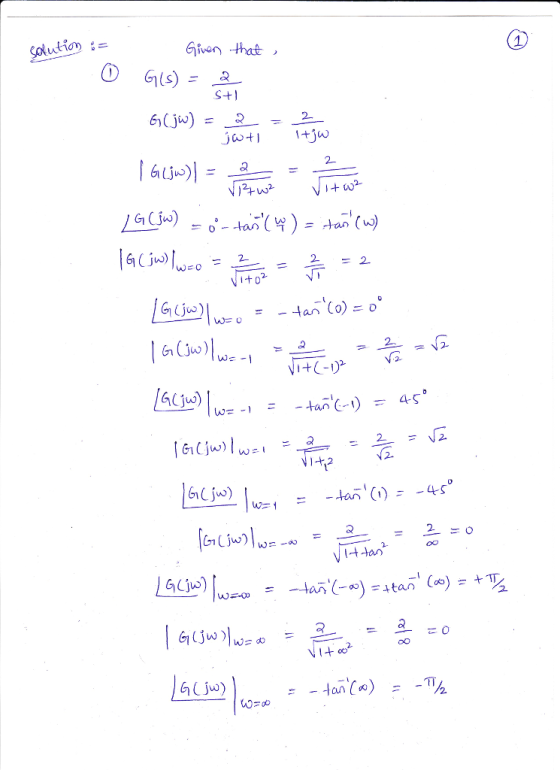
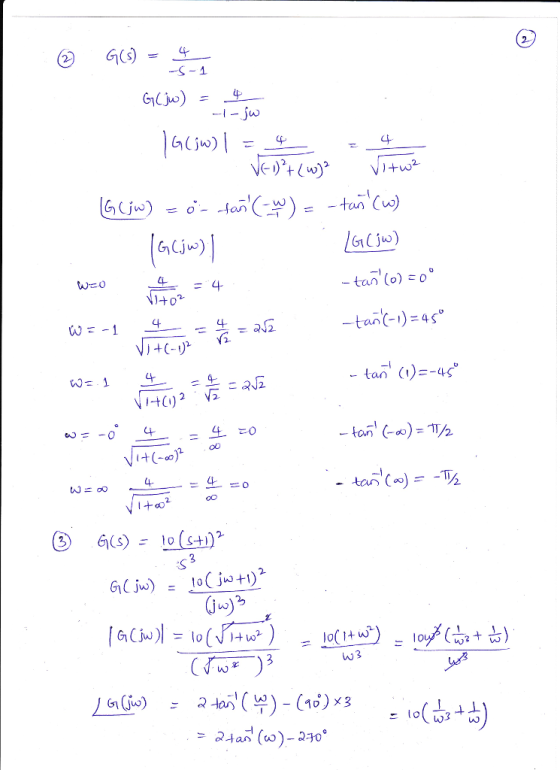
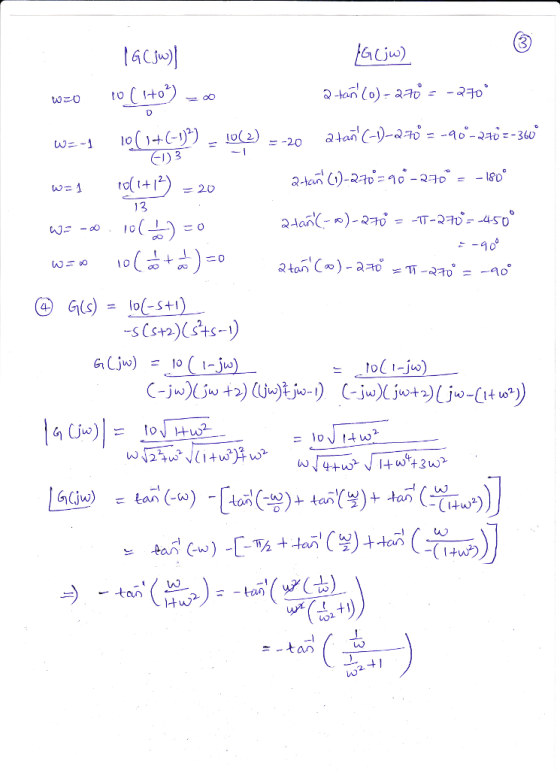
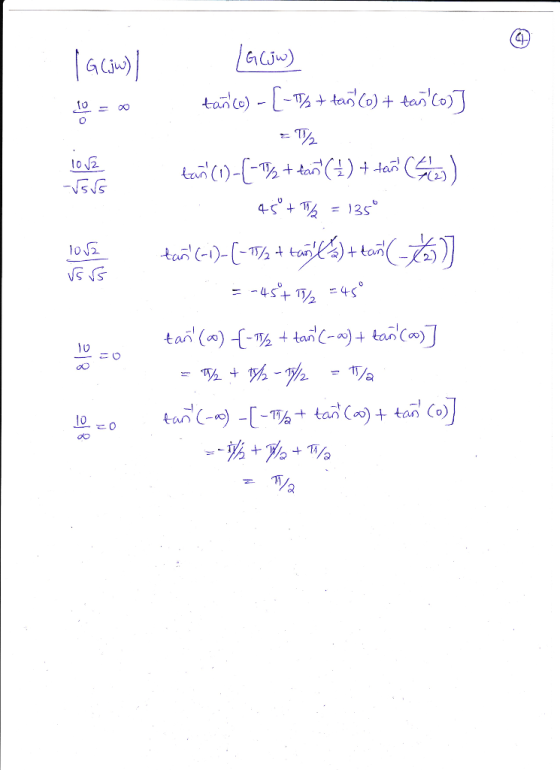
#2) For each of the following s-domain functions let s Jo, (phase angle)interms ofω b) evaluate...
(1) Evaluate the integral (r-1) min(a, y) dy dr, Jo Jo where min(x, y) is the minimum value of r ...
 q2 please
(1) Evaluate the integral (r-1) min(a, y) dy dr, Jo Jo where min(x, y) is the minimum value of r and y. (2) Let f,g : R → R be functions of one variable such that f" and g" are continuous. Show that (f"(x)-g"(y)) dydx = f(0) + g(0)-f(2)-9(2) + 2f'(2) + 2g'(0). o Jo (3) Let a > 0. In spherical coordinates, a surface is defined by r = 2acos φ for 0 φ 1. Find the...
q2 please
(1) Evaluate the integral (r-1) min(a, y) dy dr, Jo Jo where min(x, y) is the minimum value of r and y. (2) Let f,g : R → R be functions of one variable such that f" and g" are continuous. Show that (f"(x)-g"(y)) dydx = f(0) + g(0)-f(2)-9(2) + 2f'(2) + 2g'(0). o Jo (3) Let a > 0. In spherical coordinates, a surface is defined by r = 2acos φ for 0 φ 1. Find the...
The functions of f and g are given. Evaluate f o g and find the domain...
 The functions of f and g are given. Evaluate f o g and find
the domain of the composite function f o g.
Test: Unit Test #1-Algebra This Question: 1 pt The functions fand g are given. Evaluate fo g and find the domain of th 2 5 fx) x+1 900)-x ()(Simplify your answer.) The domain of f g is (Type your answer in interval notation.) Ente
The functions of f and g are given. Evaluate f o g and find
the domain of the composite function f o g.
Test: Unit Test #1-Algebra This Question: 1 pt The functions fand g are given. Evaluate fo g and find the domain of th 2 5 fx) x+1 900)-x ()(Simplify your answer.) The domain of f g is (Type your answer in interval notation.) Ente
The functions fand g are given. Find each of the following functions and determine their domain....
 The functions fand g are given. Find each of the following functions and determine their domain. (Enter your answer for each domain using interval notation.) (x) = 3x + 4 and g(x)=2x-3 (a) (f+)x) function (f+)() - domain (b) (- 9)x) function (f - 9)x) = domain C) (f. 9x) function (f)(x) = domain function domain
Question 2: Given the below s-plane, and that H(2)=10. Answer the following questions: jo j 0...
 Question 2: Given the below s-plane, and that H(2)=10. Answer the following questions: jo j 0 -4 -3 -2 -1 j a. Find the zeros and poles of the system? b. What is the transfer function H(S)? C. What is the impulse response (in S-domain only)? d. What is the step response (in S-domain only)?
Finding the Domain of Radical Functions Determine the domain for each of the following functions. Write...
 Finding the Domain of Radical Functions Determine the domain for each of the following functions. Write your answer in Interval Notation and as an Inequality. Radical Function Domain written in Interval Notation Domain written as an Inequality 1 2 f(3) = V160 - 18 9(2) = 107–13. - 16 f(x) = - 17 + 174 + 12 p(x) = v=3 + 10% DE VIDA
1. Let f and g be functions with the same domain and codomain (let A be...
1. Let f and g be functions with the same domain and codomain (let A be the domain and B be the codomain). Consider the following ordered triple h = (A, B, f LaTeX: \cap ∩ g) (Note: The f and g in the triple refer to the "rules" associated with the functions f and g). Prove that h is a function. Would the same thing be true if, instead of intersection, we had a union? If your answer is...
Problem 5: Evaluate log(x) Jo 4+2 0 3. Show that 2x cos(e) Jo 1-cos(0) Problem 5: Evaluate log(x) Jo 4+2 0 3. Show that 2x cos(e) Jo 1-cos(0)
 Problem 5: Evaluate log(x) Jo 4+2 0 3. Show that 2x cos(e) Jo 1-cos(0)
Problem 5: Evaluate log(x) Jo 4+2 0 3. Show that 2x cos(e) Jo 1-cos(0)
Problem 5: Evaluate log(x) Jo 4+2 0 3. Show that 2x cos(e) Jo 1-cos(0)
For each transfer function G(s) below, find the polar representation for G(jo), given by M (a)ejp...
 For each transfer function G(s) below, find the polar representation for G(jo), given by M (a)ejp(a). Note that the magnitude M and phase φ are functions of the frequency a n he Frequency resPonse? ind lhe
For each transfer function G(s) below, find the polar representation for G(jo), given by M (a)ejp(a). Note that the magnitude M and phase φ are functions of the frequency a n he Frequency resPonse? ind lhe
For each transfer function G(s) below, find the polar representation for G(jo), given by M (a)ejp(a). Note that the magnitude M and phase φ are functions of the frequency a n he Frequency resPonse? ind lhe
Problem 4: (30) From the given Bode magnitude diagram, (a) Construct the transfer function G(s). 1), find the steady-state response y (b) If input utos(0.l ) The slope of 20logolG jo) at ω < 0.-th...
 Problem 4: (30) From the given Bode magnitude diagram, (a) Construct the transfer function G(s). 1), find the steady-state response y (b) If input utos(0.l ) The slope of 20logolG jo) at ω < 0.-the slope of 2010giolG jo) at 0.1 < ω < I The slope of 201°golG jo) at ω > 4000-the slope of 2010giolGUo) at 400 < ω < 4000 20log1G(jo) -40 60 80 10 10' 4 10 40 10 400 10 4000 10 w(rad/sec)
Problem 4:...
Problem 4: (30) From the given Bode magnitude diagram, (a) Construct the transfer function G(s). 1), find the steady-state response y (b) If input utos(0.l ) The slope of 20logolG jo) at ω < 0.-the slope of 2010giolG jo) at 0.1 < ω < I The slope of 201°golG jo) at ω > 4000-the slope of 2010giolGUo) at 400 < ω < 4000 20log1G(jo) -40 60 80 10 10' 4 10 40 10 400 10 4000 10 w(rad/sec)
Problem 4:...
Let g(2) = sin() A) Graph the function y = g(2) B) What is the domain...
 Let g(2) = sin() A) Graph the function y = g(2) B) What is the domain of g? C) What is the range of g? D) Find the two angles where g(x) = 0 E) Find an angle where g(x) = - 1 and another where g(x) = 1.
 q2 please
(1) Evaluate the integral (r-1) min(a, y) dy dr, Jo Jo where min(x, y) is the minimum value of r and y. (2) Let f,g : R → R be functions of one variable such that f" and g" are continuous. Show that (f"(x)-g"(y)) dydx = f(0) + g(0)-f(2)-9(2) + 2f'(2) + 2g'(0). o Jo (3) Let a > 0. In spherical coordinates, a surface is defined by r = 2acos φ for 0 φ 1. Find the...
q2 please
(1) Evaluate the integral (r-1) min(a, y) dy dr, Jo Jo where min(x, y) is the minimum value of r and y. (2) Let f,g : R → R be functions of one variable such that f" and g" are continuous. Show that (f"(x)-g"(y)) dydx = f(0) + g(0)-f(2)-9(2) + 2f'(2) + 2g'(0). o Jo (3) Let a > 0. In spherical coordinates, a surface is defined by r = 2acos φ for 0 φ 1. Find the...
 The functions of f and g are given. Evaluate f o g and find
the domain of the composite function f o g.
Test: Unit Test #1-Algebra This Question: 1 pt The functions fand g are given. Evaluate fo g and find the domain of th 2 5 fx) x+1 900)-x ()(Simplify your answer.) The domain of f g is (Type your answer in interval notation.) Ente
The functions of f and g are given. Evaluate f o g and find
the domain of the composite function f o g.
Test: Unit Test #1-Algebra This Question: 1 pt The functions fand g are given. Evaluate fo g and find the domain of th 2 5 fx) x+1 900)-x ()(Simplify your answer.) The domain of f g is (Type your answer in interval notation.) Ente
 The functions fand g are given. Find each of the following functions and determine their domain. (Enter your answer for each domain using interval notation.) (x) = 3x + 4 and g(x)=2x-3 (a) (f+)x) function (f+)() - domain (b) (- 9)x) function (f - 9)x) = domain C) (f. 9x) function (f)(x) = domain function domain
 Question 2: Given the below s-plane, and that H(2)=10. Answer the following questions: jo j 0 -4 -3 -2 -1 j a. Find the zeros and poles of the system? b. What is the transfer function H(S)? C. What is the impulse response (in S-domain only)? d. What is the step response (in S-domain only)?
 Finding the Domain of Radical Functions Determine the domain for each of the following functions. Write your answer in Interval Notation and as an Inequality. Radical Function Domain written in Interval Notation Domain written as an Inequality 1 2 f(3) = V160 - 18 9(2) = 107–13. - 16 f(x) = - 17 + 174 + 12 p(x) = v=3 + 10% DE VIDA
 Problem 5: Evaluate log(x) Jo 4+2 0 3. Show that 2x cos(e) Jo 1-cos(0)
Problem 5: Evaluate log(x) Jo 4+2 0 3. Show that 2x cos(e) Jo 1-cos(0)
Problem 5: Evaluate log(x) Jo 4+2 0 3. Show that 2x cos(e) Jo 1-cos(0)
 For each transfer function G(s) below, find the polar representation for G(jo), given by M (a)ejp(a). Note that the magnitude M and phase φ are functions of the frequency a n he Frequency resPonse? ind lhe
For each transfer function G(s) below, find the polar representation for G(jo), given by M (a)ejp(a). Note that the magnitude M and phase φ are functions of the frequency a n he Frequency resPonse? ind lhe
For each transfer function G(s) below, find the polar representation for G(jo), given by M (a)ejp(a). Note that the magnitude M and phase φ are functions of the frequency a n he Frequency resPonse? ind lhe
 Problem 4: (30) From the given Bode magnitude diagram, (a) Construct the transfer function G(s). 1), find the steady-state response y (b) If input utos(0.l ) The slope of 20logolG jo) at ω < 0.-the slope of 2010giolG jo) at 0.1 < ω < I The slope of 201°golG jo) at ω > 4000-the slope of 2010giolGUo) at 400 < ω < 4000 20log1G(jo) -40 60 80 10 10' 4 10 40 10 400 10 4000 10 w(rad/sec)
Problem 4:...
Problem 4: (30) From the given Bode magnitude diagram, (a) Construct the transfer function G(s). 1), find the steady-state response y (b) If input utos(0.l ) The slope of 20logolG jo) at ω < 0.-the slope of 2010giolG jo) at 0.1 < ω < I The slope of 201°golG jo) at ω > 4000-the slope of 2010giolGUo) at 400 < ω < 4000 20log1G(jo) -40 60 80 10 10' 4 10 40 10 400 10 4000 10 w(rad/sec)
Problem 4:...
 Let g(2) = sin() A) Graph the function y = g(2) B) What is the domain of g? C) What is the range of g? D) Find the two angles where g(x) = 0 E) Find an angle where g(x) = - 1 and another where g(x) = 1.
Most questions answered within 3 hours.
-
Where is the error in this code sequence?
String s1 = "Hello";
String s2 = "ello";...
asked 11 months ago -
Financial data for Joel de Paris, Inc., for last year
follow:
Joel de Paris, Inc.
Balance...
asked 11 months ago -
Consider this reaction:
Al2(SO4)3 (aq)+ BaCl3
(aq) Al2Cl6 (aq)- +
3BaSO4(s) . What is the...
asked 11 months ago -
Suppose that Savneet is considering increasing her
recent random sample from 20 car rentals to 40...
asked 11 months ago -
Trucks arrive at an unloading terminal at an average rate of 120
per hour.
Trucks arrive...
asked 11 months ago -
Why are methanol and ethanol completely soluble in water while
octanol is not very little soluble....
asked 11 months ago -
A facilities manager at a university reads in a research report
that the mean amount of...
asked 11 months ago -
When the CuSO4 is rehydrated by adding water to the anhydrous
compound, is this an endothermic...
asked 11 months ago -
A ray of sunlight is passing from diamond into crown glass; the
angle of incidence is...
asked 11 months ago -
A block of mass 0.249 kg is placed on top of a light, vertical
spring of...
asked 11 months ago -
how do the kidneys compensate in the presences of acidosis
a) trigger hyperventilate
b) reserve acid...
asked 11 months ago -
Question 501 pts
The rental rate of capital to the firm increases. Which of the
following...
asked 11 months ago