
Homework Answers
Add Answer to:
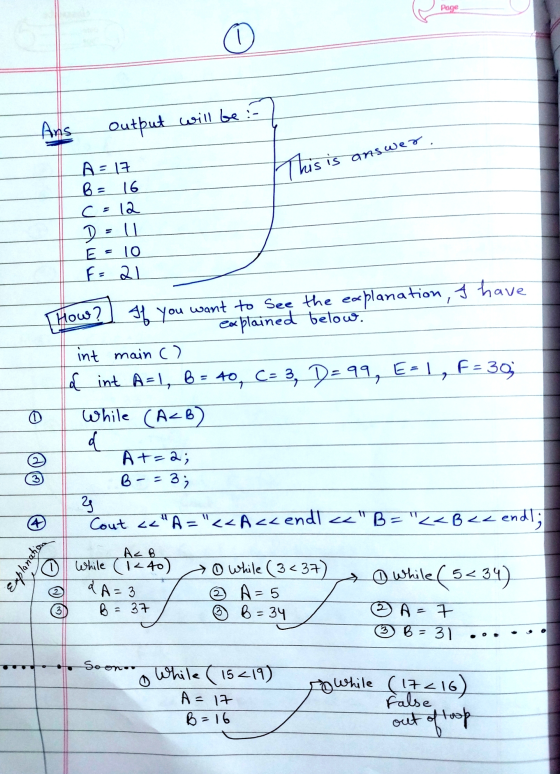
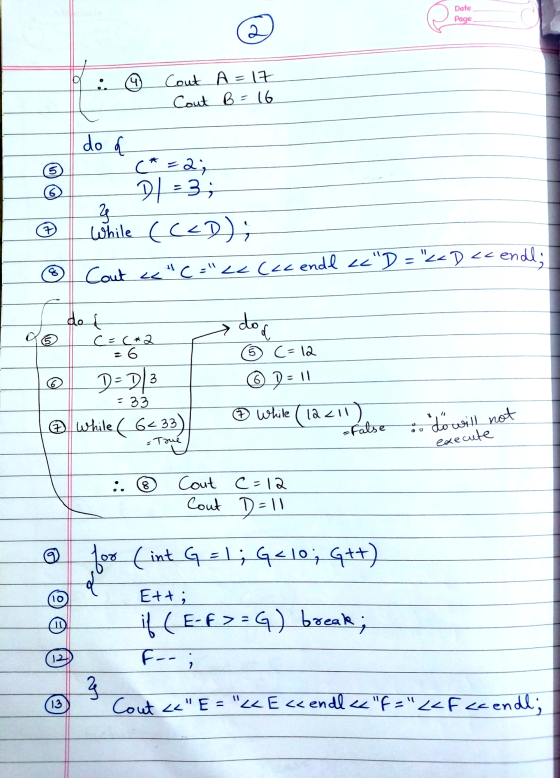
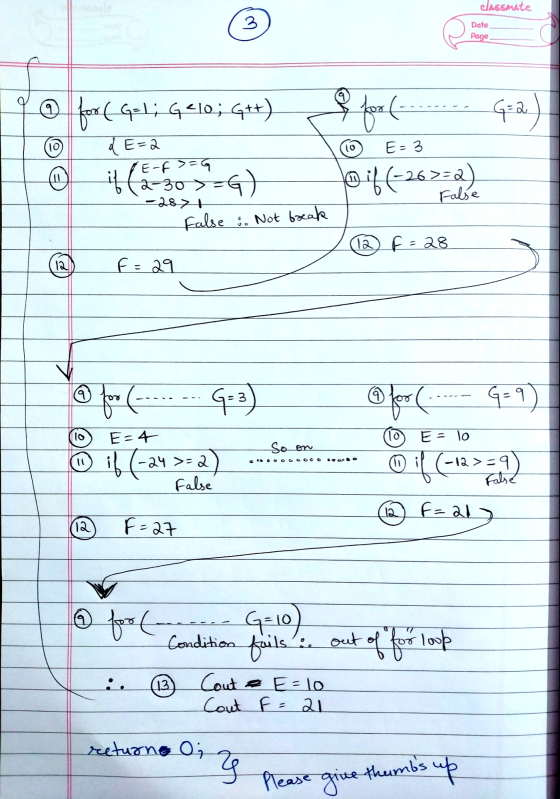
Page 2 (18 points) Determine the output of the following program. 1/ Sample Test #2 -...
Extra Credit: What is the output of the following program? (5 points) #include <iostream> using namespace...
 Extra Credit: What is the output of the following program? (5 points) #include <iostream> using namespace std; int main ( char greetingl6]- ('H', 'e', T, T, 'o', 0'); cout <<"Greeting message: " cout< greeting << endl return 0;
C++ output 6) What is the exact output of the following program? #include <iostream> using namespace...
 C++ output
6) What is the exact output of the following program? #include <iostream> using namespace stdi void zolo(int &a, int sb) int main int x = 5, y =8; zolo(x,y)i cout << "x " << x << endl ; cout << "y = "" << y << endl ; return o: void zolo(int &a, int &b) int v1 = b + a; ' int v2 = b-a; 3 a=v1;13
C++ output
6) What is the exact output of the following program? #include <iostream> using namespace stdi void zolo(int &a, int sb) int main int x = 5, y =8; zolo(x,y)i cout << "x " << x << endl ; cout << "y = "" << y << endl ; return o: void zolo(int &a, int &b) int v1 = b + a; ' int v2 = b-a; 3 a=v1;13
1. What is wrong with the following C++ program? #include <iostream> int main() { a =...
 1. What is wrong with the following C++ program? #include <iostream> int main() { a = 4; b = 6; cout << a << "+" << b << "=" << a+b; return 0; 2. What is wrong with the following C++ program? What was its intended output? #include <iostream> using namespace std; int main() { cout << "What is larger? e pi or pi e?" << endl; double ans1 = exp(pi); double ans2 = pi exp(1.); cout << "epi is...
[10pts] 7) What is the output of the following program? In other words, what is printed...
 [10pts] 7) What is the output of the following program? In other words, what is printed to the screen when you run it? #include <iostream> #include <queue> using namespace std int main) char qu[5] ('a, 'b',c'd','e' queue <char> q int N = 4; char ch for(int í - 0:ì < 5;++1) q.push(qu (]) for (int ǐ 0;i < N;++i) { = ch q.front); q push(ch): q.pop while(!q.emptyO) f cout << q.front ) <<endl; q.pop )
a) Hand-trace the following program and determine and write down what is the output of the...
a) Hand-trace the following program and determine and write down what is the output of the code. b) Run the code and compare the program output to your hand-traced result obtained from part (a). #include <iostream> #include <iomanip> using namespace std; void f(); int x = 5; int main() { cout << "x = " << x << endl; int x = 6; cout << "x = " << x << endl; { int...
B) draw the runtime stack fall the steps (a) write the output of the following program....
 B) draw the runtime stack fall the steps
(a) write the output of the following program. The output must include everything that a computer may produce on its screen, including the prompts, input, output, and their positions. Suppose the input integers are 1 and 2, in this order. (b) Draw the run time stack for every step of execution on the next page. You need to mark the return address(es) yourself. #include <iostream> using namespace std; int a; int b;...
B) draw the runtime stack fall the steps
(a) write the output of the following program. The output must include everything that a computer may produce on its screen, including the prompts, input, output, and their positions. Suppose the input integers are 1 and 2, in this order. (b) Draw the run time stack for every step of execution on the next page. You need to mark the return address(es) yourself. #include <iostream> using namespace std; int a; int b;...
Question 28 What is the output of the following program? Assume code is correct. #include <iostream>...
 Question 28 What is the output of the following program? Assume code is correct. #include <iostream> using namespace std; int main() { int i = 1,j,x = 5, y = 4; while (i <= y) { for (j = 0; j <= y2; j++) cout << 'Z'; cout << endl; i=i+1; } return 0; 3 B IV AA-I E333 X X, B, GT 12pt Paragraph
Consider the following C++code snippet and what is the output of this program? # include<iostream> using...
 Consider the following C++code snippet and what is the output of this program? # include<iostream> using namespace std; void arraySome (int[), int, int); int main () const int arraysize = 10; int a[arraysize]-1,2,3,4,5, 6,7,8,9,10 cout << "The values in the array are:" << endl; arraySome (a, 0, arraySize) cout<< endl; system ("pause") return 0; void arraySome (int b[], int current, int size) if (current< size) arraySome (b, current+1, size); cout << b[current] <<""; a) Print the array values b) Double...
4. (10 pts) Show the output of the following program: (list the program outputs in the...
 4. (10 pts) Show the output of the following program: (list the program outputs in the order as they would appear on screen) #include <iostream> using namespace std; int Mystery(int); int main() int x=2, y: y=Mystery(x - 1)+1; cout << "x="«x«", y="«y < endl; y=Mystery( 2 *x); cout << "x="«x«", y="«y < endl; return 0; int Mystery (int num) int y=5; // This is a regular local variable, not a static local variable int result; y=y+num; cout << "y=" <y<",...
#include <iostream> using namespace std; - // Guess the output for the below program. // Assume...
 #include <iostream> using namespace std; - // Guess the output for the below program. // Assume address of a,b,c as 4004, 4008, 4016 respectively. int main() { float a = 12.5; int b = 10; double c = 3.1412; float aptr = &a; int *bptr = &b; double *cptr = &c; cout << "value of variable a,b,c:"<< a <<""<<b<<""<<<<<endl; cout << "Address of variable a,b,c:"<<&a<<""<<&b<<""<<&c << endl; cout << "value of aptr, bptr, cptr:" << aptr <<""<<bptr <<"" << cptr...
 Extra Credit: What is the output of the following program? (5 points) #include <iostream> using namespace std; int main ( char greetingl6]- ('H', 'e', T, T, 'o', 0'); cout <<"Greeting message: " cout< greeting << endl return 0;
 C++ output
6) What is the exact output of the following program? #include <iostream> using namespace stdi void zolo(int &a, int sb) int main int x = 5, y =8; zolo(x,y)i cout << "x " << x << endl ; cout << "y = "" << y << endl ; return o: void zolo(int &a, int &b) int v1 = b + a; ' int v2 = b-a; 3 a=v1;13
C++ output
6) What is the exact output of the following program? #include <iostream> using namespace stdi void zolo(int &a, int sb) int main int x = 5, y =8; zolo(x,y)i cout << "x " << x << endl ; cout << "y = "" << y << endl ; return o: void zolo(int &a, int &b) int v1 = b + a; ' int v2 = b-a; 3 a=v1;13
 1. What is wrong with the following C++ program? #include <iostream> int main() { a = 4; b = 6; cout << a << "+" << b << "=" << a+b; return 0; 2. What is wrong with the following C++ program? What was its intended output? #include <iostream> using namespace std; int main() { cout << "What is larger? e pi or pi e?" << endl; double ans1 = exp(pi); double ans2 = pi exp(1.); cout << "epi is...
 [10pts] 7) What is the output of the following program? In other words, what is printed to the screen when you run it? #include <iostream> #include <queue> using namespace std int main) char qu[5] ('a, 'b',c'd','e' queue <char> q int N = 4; char ch for(int í - 0:ì < 5;++1) q.push(qu (]) for (int ǐ 0;i < N;++i) { = ch q.front); q push(ch): q.pop while(!q.emptyO) f cout << q.front ) <<endl; q.pop )
 B) draw the runtime stack fall the steps
(a) write the output of the following program. The output must include everything that a computer may produce on its screen, including the prompts, input, output, and their positions. Suppose the input integers are 1 and 2, in this order. (b) Draw the run time stack for every step of execution on the next page. You need to mark the return address(es) yourself. #include <iostream> using namespace std; int a; int b;...
B) draw the runtime stack fall the steps
(a) write the output of the following program. The output must include everything that a computer may produce on its screen, including the prompts, input, output, and their positions. Suppose the input integers are 1 and 2, in this order. (b) Draw the run time stack for every step of execution on the next page. You need to mark the return address(es) yourself. #include <iostream> using namespace std; int a; int b;...
 Question 28 What is the output of the following program? Assume code is correct. #include <iostream> using namespace std; int main() { int i = 1,j,x = 5, y = 4; while (i <= y) { for (j = 0; j <= y2; j++) cout << 'Z'; cout << endl; i=i+1; } return 0; 3 B IV AA-I E333 X X, B, GT 12pt Paragraph
 Consider the following C++code snippet and what is the output of this program? # include<iostream> using namespace std; void arraySome (int[), int, int); int main () const int arraysize = 10; int a[arraysize]-1,2,3,4,5, 6,7,8,9,10 cout << "The values in the array are:" << endl; arraySome (a, 0, arraySize) cout<< endl; system ("pause") return 0; void arraySome (int b[], int current, int size) if (current< size) arraySome (b, current+1, size); cout << b[current] <<""; a) Print the array values b) Double...
 4. (10 pts) Show the output of the following program: (list the program outputs in the order as they would appear on screen) #include <iostream> using namespace std; int Mystery(int); int main() int x=2, y: y=Mystery(x - 1)+1; cout << "x="«x«", y="«y < endl; y=Mystery( 2 *x); cout << "x="«x«", y="«y < endl; return 0; int Mystery (int num) int y=5; // This is a regular local variable, not a static local variable int result; y=y+num; cout << "y=" <y<",...
 #include <iostream> using namespace std; - // Guess the output for the below program. // Assume address of a,b,c as 4004, 4008, 4016 respectively. int main() { float a = 12.5; int b = 10; double c = 3.1412; float aptr = &a; int *bptr = &b; double *cptr = &c; cout << "value of variable a,b,c:"<< a <<""<<b<<""<<<<<endl; cout << "Address of variable a,b,c:"<<&a<<""<<&b<<""<<&c << endl; cout << "value of aptr, bptr, cptr:" << aptr <<""<<bptr <<"" << cptr...
Most questions answered within 3 hours.
-
Where is the error in this code sequence?
String s1 = "Hello";
String s2 = "ello";...
asked 11 months ago -
Financial data for Joel de Paris, Inc., for last year
follow:
Joel de Paris, Inc.
Balance...
asked 11 months ago -
Consider this reaction:
Al2(SO4)3 (aq)+ BaCl3
(aq) Al2Cl6 (aq)- +
3BaSO4(s) . What is the...
asked 11 months ago -
Suppose that Savneet is considering increasing her
recent random sample from 20 car rentals to 40...
asked 11 months ago -
Trucks arrive at an unloading terminal at an average rate of 120
per hour.
Trucks arrive...
asked 11 months ago -
Why are methanol and ethanol completely soluble in water while
octanol is not very little soluble....
asked 11 months ago -
A facilities manager at a university reads in a research report
that the mean amount of...
asked 11 months ago -
When the CuSO4 is rehydrated by adding water to the anhydrous
compound, is this an endothermic...
asked 11 months ago -
A ray of sunlight is passing from diamond into crown glass; the
angle of incidence is...
asked 11 months ago -
A block of mass 0.249 kg is placed on top of a light, vertical
spring of...
asked 11 months ago -
how do the kidneys compensate in the presences of acidosis
a) trigger hyperventilate
b) reserve acid...
asked 11 months ago -
Question 501 pts
The rental rate of capital to the firm increases. Which of the
following...
asked 11 months ago